
The game industry returned to real growth in 2025, and that was reflected in the successful games that we saw this year.
The string of indie hits continued, with the success of Clair Obscur: Expedition 33 from the 30-person Sandfall Interactive in Montpellier, France.
As usual, carving out to play massive games like Clair Obscur is always a challenge, but when the game is good enough, somehow I find the time for it. I also found time for Ghost of Yotei and ARC Raiders this year — two rare excellent games that I would give five stars out of five. But I have long stopped trying to play massive numbers of games in a year, given my duties in writing business stories and helping secure speakers for our events, which are my main jobs.
My pile of shame continues to grow, but I don’t feel so bad about it when I find a single game that consumes my attention for a long time. I found that short list of games that captivated me again this year, and the results were surprising.
Our team has their own favorites, yet I am putting my own list together as I have for the past 14 years or so. The competition for my time was more severe than ever, with more events to organize and more travel to do during past years thanks to the global nature of the gaming business. I’ll have to commit to being more of a portable and mobile gamer to keep up, but that will have to compete with my obsession of listening to science fiction books on Audible on my iPhone or watching streaming videos.
Yet I still believe that you have to play games to be a good game journalist and bring some authenticity to the subject. Remaining a part of these conversations about the best games is a way to stay wired into this community. (Check out our story where I played ARC Raiders with Patrick Soderlund of Embark Studios and former Nexon CEO Owen Mahoney while playing the game).
While on the road, I continued to pour a lot of hours into the mobile gamed Total Battle, where I’m in a clan. I didn’t try to play exhaustively at home. Rather than focus on every new release, I spent my time on the games that I wanted to play and tried out some of the games everyone was talking about.
And I was happy to see the success of game adaptations for the movies and TV, like the start of Fallout Season 2 and The Last of Us Season 2. Until Dawn, however, was not so great, compared to the game. I’m looking forward to watching more of those into the new year. I like how these adaptations are spreading the love of gaming culture far and wide into the global mass market.
I hope you are staying safe during the holidays with your family and friends, and let’s hope you can find the game to play and celebrate your gaming passions. And so here are my favorite games of 2025.
My previous favorites are here: 2024, 2023, 2022, 2021, 2020, 2019, 2018, 2017, 2016, 2015, 2014, 2013, 2012, and 2011.
In each story below, the links go to any reviews or major stories about the games. Some of the videos are of my own gameplay. Here’s the list in reverse order. Disclosure: The game makers gave me copies of their games for review purposes.
10) Split Fiction
Developer: Hazelight
Publisher: EA Originals
Platforms: PlayStation 5, Nintendo Switch 2, Xbox Series X and Series S, Windows, GeForce Now
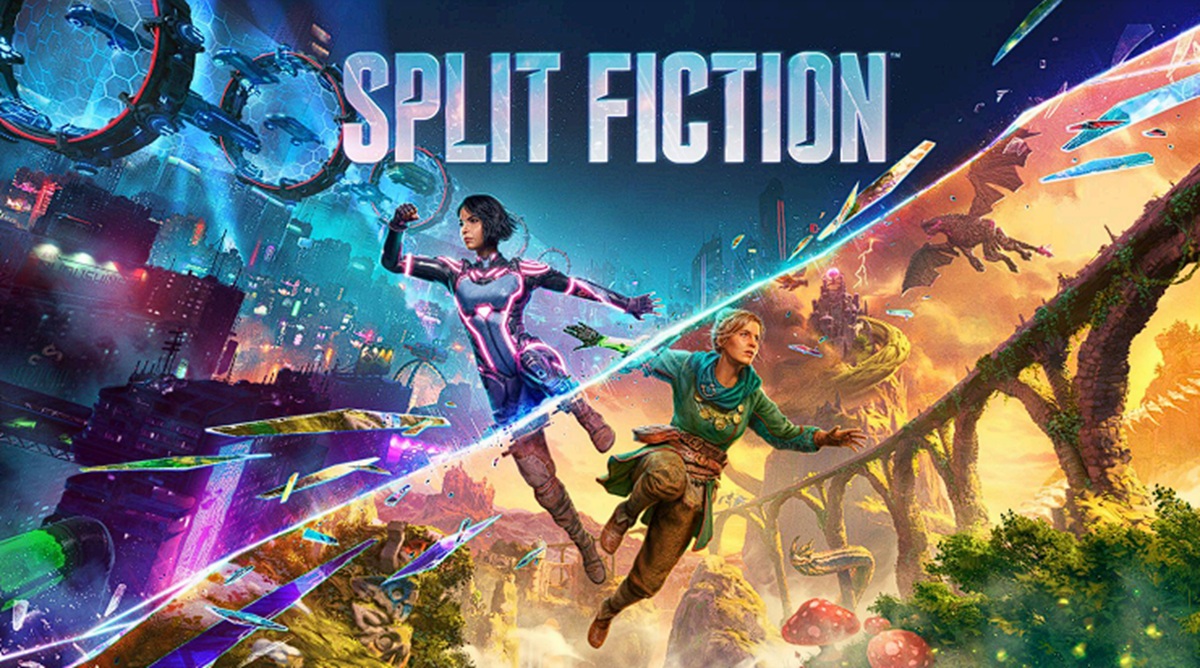
Hazelight has a lock on the couch co-op action adventure genre, where you can play with a friend on a split-screen TV or remotely. And this year’s family friendly title, Split Fiction, carries on the tradition that started with titles like A Way Out in 2018 and It Takes Two in 2021.
This latest game from Josef Fares starts uot with the humor of a couple of book authors who immediately can’t stand each other. You play as Mio and Zoe — two authors, one sci-fi, one fantasy. They’re like oil and vinegar when it comes to personalities. But they’re thrown together into a common catastrophe. Only by working together — with one player helping the other — can they get out of it.
The two visit a simulation tech company where they are promised a publishing deal. The writers become trapped in their own stories after being hooked up to a machine designed by an evil book “simulation” publisher who wants to steal their creative ideas.
To escape with their minds intact, they have to overcome their differences to crash the system that holds them. The hard part is learning to work together, and this notion from the story holds true in the game as well, as you have to cooperate to with your game partner to accomplish the right feats to keep progressing.
Mio is not particularly friendly, but she has an accurate, skeptical instinct toward the company’s intentions. Zoe is a lot more trusting and is willing to accept any indignity to get published. A glitch happens as they try to step into the CEO’s evil machine and they fall into the same fantasy world, with Mio appearing inside Zoe’s story world through a glitch. They start trying to find their way out by following the glitch, which alternately takes them into different fantasy or sci-fi worlds.
As you might know, split-screen games are very hard to pull off. It’s like using one game console to display two different games at once on the same screen. That pushes the computing resources to the limit, and the developer has to ratchet down the quality of the graphics to keep the dual frame rates up. Fortunately, with the animated style of the game, the quality looks pretty good, as it is built on Epic Games’ Unreal Engine 5.
Split Fiction’s has an array of ever-changing mechanics that keeps both players on the edge of the couch. Both Mio and Zoe have to recognize the scenes from their stories that the simulation is visualizing as virtual worlds. And they have to work their way through the lush fantasy spaces and sci-fi skylines.
The gameplay starts out fairly easy, but it gets more difficult. And then late in the game, there’s a gameplay innovation that just makes the game so much more joyful. Looking forward to seeing more from Fares and Hazelight.
9) Sword of the Sea
Developer: Giant Squid
Publisher: Giant Squid
Platforms: PlayStation 5, Windows
Giant Squid’s Sword of the Sea is a great way to scratch the itch for those who didn’t get to play enough Journey, the game from Thatgamecompany with a silent protagonist that told a great story so many years ago.
It’s almost like a spiritual sequel, as you start surfing through the sand, sort of like a snowboarder in SSX. Except you’re not riding on a snowboard. You ride on a sword, gliding above the sand as if you were on a hoverboard.
Oddly enough, the experience of snowboarding was the inspiration for Matt Nava, creative director on the game and founder of Giant Squid. He told me that he was inspired by being both a snowboarder and a surfer and the sensation of moving fast. When you’re in that moment, he said that these extreme sports become meditative. It’s about being back in nature and connecting with it.
As we saw in earlier silent games like Flower, you use your surfing skills to convert a sandy desert to a beautiful watery place in Sword of the Sea.
While you wield a sword as a mysterious character in Sword of the Sea, you don’t use it in violence. As that character, you are searching for something.
The game has beautiful music, but you play the game in silence. There’s no dialogue. No spoken narrative. It’s like the video game version of a poem, or a silent film. In the game, you move around, solve puzzles, and when you do so you convert the sand to sea water. It’s a bit short, and it remains mysterious. But it’s satisfying gameplay and pretty chill.
I noted it was odd how Giant Squid was hitting its stride with this game, while the rest of the industry was struggling due to lack of funding, high costs and changing gamer tastes. But Nava revealed in our conversation that Giant Squid was on the brink for a while until PlayStation backed the company. It was heartening to hear that a big company was willing to step up and save a great small company from a tough ending. And we’re lucky to be able to play the resulting game.
8) Death Stranding 2: On the Beach
Developer: Kojima Productions
Publisher: Sony Interactive Entertainment
Platforms: PlayStation 5, Windows
Hideo Kojima is the driving force behind the Death Stranding series, and this game feels like he channeled his creativity with more control, producing a more polished work of epic world building and storytelling.
One of the main things that Kojima fixed was the combat. It was often too clunky and difficult to do things like reload weapons or switch weapons in the original. Boss fights were very strange affairs, and the gigantic hours-long cut scenes toward the end of the original were incomprehensible.
Yet there are so many creative moments where you think only Kojima could conjure such a crazy scene, and there were more such scenes throughout Death Stranding 2, like sentient sock puppets sitting on shoulders or serving as ties for the characters. There are improvements in transportation across vast spaces and better production values overall.
7) Call of Duty: Black Ops 7
Developer: Treyarch/Raven Software
Publisher: Activision
Platforms: Windows, PlayStation 4, PlayStation 5, Xbox One, Xbox Series X|S
You could blame Far Cry for the weird and hallucinogenic campaign of Call of Duty: Black Ops 7. Under the premise of a drug-induced haze or mental breakdown hallucination, the Far Cry games gave us weird first-person shooter experiences. Under the same kind of hallucination and AI-driven crazed experiences, Black Ops 7 throws so many weird experiences at us, like fighting Raoul Menendez with giant machetes that fall from the sky, or shooting at the Marine Harper, who becomes a 100-feet-tall giant. Players cried enough and no more, forcing Activision to issue an apology and a vow to never release two Black Ops or two Modern Warfare games in a row again.
Yet there was a whole lot of good action underneath the spectacularly bad experiences. I had some wonderful multiplayer matches where the sci-fi guns felt great — much like the guns in a modern combat game. You could play the single-player campaign as a three-player co-op campaign. But it was so odd there were four main characters and you can only play three in co-op.
I enjoyed mowing down players with my assault guns, shotguns and sniper rifles. I was slightly deflated to discover that the multiplayer matches were a lot easier because Activision decided to get rid of skill-based matchmaking for many of the matches unless you specifically wanted to play with high-skilled peers. This shift was a crowd pleaser, but a lot of the hardcore purists were disappointed.
Yet there was a lot of solid core gameplay here. The Zombies experience was very satisfying and harrowing as you took your truckload of heroes from one survival arena to another. It was, in fact, the standout experience of this year’s game. And for all of its wacky scenes, the sci-fi campaign where AI was the enemy was more emotionally charged and better than Battlefield 6’s story. And standard multiplayer was also very well done.
But I’m glad that Activision is reacting to the negative feedback to the over-the-top hallucinations and may be forced to give us great combat experiences in the future.
6) Keeper
Developer: Double Fine Productions
Publisher: Xbox Game Studios
Platforms: Xbox Series X/S, Windows, Xbox Game Pass / Game Pass Ultimate
Keeper reminded me of the zany and beautiful art of Flower, the breakout hit from Thatgamecompany, which was also a wordless but emotional experience. Keeper had much different parentage, as it came from Double Fine Productions, a division of Microsoft since its acquisition in 2019.
Tim Schafer, CEO of Double Fine, credited the creativity of Lee Petty, creative lead on Keeper, for tapping his wild imagination to push through the game about a walking lighthouse inside a big corporate giant like Microsoft.
The apocalyptic world of Keeper isn’t pretty, but it’s colorful. In this game, the imagery and atmospheric narrative carries the whole experience, as there are no words spoken or written in the game. It’s the visuals and atmosphere that make the game into an unforgettable experience.
In the game, you have a walking lighthouse. It walks, or rather staggers around, on four legs, guided only by a seabird. Keeper is set in a kind of psychedelic world. It has beautifully stylized imagery. At the outset, we encounter a lighthouse that, after many years of being dormant, gets awakened by a colorful and exotic seabird being chased by an otherworldly swarm.
The lighthouse blasts a beam of light at the swarm and scares them away, and the seabird perches atop the lighthouse. Then the lighthouse flops to the ground. But it grows four legs that couldn’t possibly hold up the lighthouse. It walks and uses its light to save the bird and there are many times the bird returns the favor. There are untold numbers of variations on this kind of gameplay experience throughout the game.
In the game, you’ll notice the humans are gone. It’s like the apocalypse came and wiped out the humans and the world is recovering. And the humans are no longer in charge of the world. I never would have predicted I would so enjoy impersonating a lighthouse in such ways. I’m so glad that such chill yet emotional games can get funding, even from corporate giants like Microsoft.
When you think about what it has going for it, it’s the weirdness of wordless emotional storytelling, surreal worldbuilding, strange heroes, atmospheric puzzles and an artistic sensibility. The walking lighthouse is really a walking wonder.
It’s another wonderful triple-A experience coming from a team that is much smaller than most triple-A teams. I think it’s a rare treat for games who appreciate titles like Flower and Journey and more along the wordless path, which is among the most creative in all of gaming.
5) Doom: The Dark Ages
Developer: id Software
Publisher: Bethesda Softworks
Platforms: PlayStation 5, Xbox Series X and Series S, Windows, GeForce Now, Xbox Cloud Gaming
Doom: The Dark Ages was a prequel to Doom Eternal, which debuted in 2020 as a sequel to Doom 2016. It had all of the shooting thrills and innovation we have come to expect from id Software, now a division of Microsoft’s Bethesda.
It’s a long single-player game with a sometimes perplexing story about the medieval war against hell, where the Slayer uses a shield with a built-in buzzsaw and melee weapons to chain together attacks that bring down the biggest of demons. You still get an arsenal of modern shotguns, super shotguns, grenade launchers, rocket launchers, shredders that fire steel bolts, implaers that fire precision spikes, accelerator plasma rifles with explosive rounds, cyclers that shock enemies, pulverizers that launch crushed skulls in a wide arc, ravagers that are for close-range shooting, chainshots that can be charged for massive impact, and the Ballistic Force Crossbow. The latter BFC kills just about everything on the screen.
But you can really get into the “medieval” play if you just embrace your shield (which you can throw as an amazingly effective offensive weapon) and your melee weapons. It is the combo of all of those guns, the shield and melee weapons that enables you to defeat just about any enemy. You have to cycle through them in rapid succession to get the right cascading effect that can take down the best-protected enemies.
The shield has a saw that eats through enemies, immobilizing them while you dash up to them and hit them with a melee weapon like a mace and chain. The shield also has a grappling hook mechanic that can get you across barriers and chasms. It’s a brilliant tool, kind of like a platform for many styles of offense and defense.
You need all those weapons because of the pantheon of enemies from Hell. The simple ones are imps who hurl projectiles at you that can injure you if you’re too tied up dealing with other threats. The zombies are the same way, but slow and mindless. The soldiers are infantry with rapid-fire weapons and shields.
With many of the demons, you can beat them until you reach their stun point and they turn purple. Once they do, you can finish them with a Glory Kill melee blow that generates maximum amounts of health, ammo and armor for you.
The game’s graphics have advanced enough where the battle spaces are huge and there can be tons of enemies in the field, like you’re fighting a whole army all at once. The game has the largest battle space id has ever created in a Doom game.
Every now and then, there are missions that require you to mount up on your flying cybernetic dragon, dubbed the Mecha Dragon, which has a heavy projectile weapon on top of it.
As in previous games, you can defeat anything just through the right form of aggression, as you get everything you lose back in the form of rewards for killing enemies. For instance, you get health, armor and ammo for free by taking out one enemy after another.
The game gives you so many different ways that you can slaughter demons. The ending was a little underwhelming and could have been a lot more difficult.
While the game could be very difficult, I appreciate the thinking that went into making the game more flexible to make the game accessible for all Slayers. At some point, you become over-powered and the ending becomes easier than it should be. But you can calibrate that yourself by ratcheting up the difficulty. I’d love to see id get another multiplayer version someday from id.
4) Battlefield 6
Developer: Battlefield Studios
Publisher: Electronic Arts
Platforms: PlayStation 5, Xbox Series X and Series S, Windows, GeForce Now
Battlefield 6 did so much to restore the glory of a franchise that had gone astray in its last iteration. Teams led by Vince Zampella, the executive vice president at EA who tragically died in a car accident just before Christmas, rallied together and produced a game that was battle-tested by millions of players before its official launch.
The title’s single-player narrative was acceptable yet not great, and the overall game was grounded in the reality of modern warfare. It delivered massive battles where you died over and over again and were revived by players acting as medics. Sometimes you never knew exactly where the front line was and where the enemy was shooting from. I enjoyed getting into tanks and causing havoc with massive guns, or taking out those tanks as a solo engineer carrying an anti-tank weapon. The scale of the fights and battlefields was so impressive and the graphics were perhaps the best I’ve seen in a modern combat game.
The game won an award at The Game Awards for best audio design, and that’s one of its best features that makes the battle so immersive. Explosions shake you and shock you into a state of momentary panic, before the world of debris and dust settles and you can figure out what just happened to you.
Destruction and physics-based emergent gameplay — like shooting a rocket into a stone building to bring it down on top of a team of soldiers — takes the realism of modern warfare to a new level. There are so many “Only in Battlefield” moments that involve unbelievable feats of heroism that you can see on social media. For a game that took four years to get done, Battlefield 6 was the rare title that beat Call of Duty in a head-to-head competition.
3) Clair Obscur: Expedition 33
Developer: Sandfall Interactive
Publisher: Kepler Interactive
Platforms: PlayStation 5, Xbox Series X/S, Windows, GeForce Now, Xbox Cloud Gaming
I skipped Sandfall Interactive’s Clair Obscur: Expedition 33 when it first came out. I was never the greatest fan of repetitive turn-based combat games. But it developed a gravitational force that swept me into its orbit.
Now that I’ve played it, the game has perhaps the closest ties I’ve seen yet between a work of high gaming art and the traditional arts like Impressionist paintings or operas. It has a haunting yet beautiful opera-like score and original songs that capture the somber emotions of a doomed world and its doomed expeditions aimed at salvation. It’s got a painterly aesthetic and is set in a world of artists, all repressed by the goddess-like Paintress who has put the world on a death spiral.
Each forlorn expedition of a handful of heroes tries to stop the inevitable countdown. But each year, the Paintress defeats the crusaders and turns into ashes everyone who has reached a certain age. The remaining residents of the city of Lumiere don’t die; rather, they just fade into tattered papers that in turn evaporate into nothingness.
Each character among the protagonists tries in their own way to deal with the existential doom: Gustave, Lune, Maelle, Sciel, Monoco and Verso. They know that each one of them will likely fall, but the others must go on to try to stop the Paintress. While the combat does get repetitive, the depth and variety of enemies requires your constant attention to the duels along the way. If you survive, you live to fight yet another duel. The bravery of the protagonists amidst the backdrop of the saddest of no-win existential nightmares is what makes the game so emotionally powerful. Toward the end, the game gets exceedingly difficult, but I learned very late that the combination of visuals and sound will help you parry an attack against you at exactly the right time.
In a year filled with ambitious RPGs, Clair Obscur: Expedition 33 stands out as a meditation on mortality that uses interactivity to deepen its impact rather than distract from it. And it deserved every award it won at The Game Awards, including Best Story and Game of the Year. The game was notably stripped of its award at the Indie Game Awards for its use of AI, but upon close examination I don’t think that was warranted.
2) ARC Raiders
Developer: Embark Studios
Publisher: Nexon
Platforms: PlayStation 5, Xbox Series X/S, Windows, GeForce Now
ARC Raiders was one of the surprise hits of the year. It was in the works for nearly seven years, and the development cycle involved some big pivots — so much so that Embark Studios’ The Finals was pushed ahead of ARC Raiders in the release schedule.
It began as a single-player game but then the team found more fun in multiplayer and co-op play. It was set in a deadly post-apocalyptic world where the world’s surface was dominated by ARCs, or artificial intelligence robots. These flying or ground-based AI evolved to be deadly, so much so that the humans had to hide from them or gang up on giant ARCS to bring them down. That was a big source of fear for the players. So the players take great risks moving from the underground haven of Speranza to the surface. They can capture loot in runs to the surface, but lose everything if they’re killed.
Another source of tension was other human players. You can never tell if you can trust them or not. Players can use proximity chat to voice their intentions, like saying “Friendly” to other stray players that they encounter. But players can betray strangers and shoot them for their loot. As you proceed carefully on your looting run, you have to pay attention to your proximity to extraction points and to the sounds that you hear around you. If it is the sound of a Raider in the next room, or the emergent alarms of birds flocking into the air or a car alarm going off, you have to take the cues that danger lurks around the corner. These are more sources of tension.
Lastly, players have to make it to an extraction point with their loot. The exit elevator or train is loud and takes a long time to arrive. Lots of people who hear the noise can come to the extraction point and try to stop the extraction, resulting in the highest tension point. All of this tension makes the 15-minute to 30-minute runs to the surface harrowing. It’s a lot like the underground world of Fallout Shelter or the above-ground open world of Fallout 4, but ARC Raiders concentrates only on the highest tension points of those games. In that way, it’s almost like a horror game without all of the blood and guts.
And underground, you can craft items from the loot you find above ground and get blueprints for weapons that you use to take out the mightiest of ARCs. It’s a unique shooter, light on lore for the moment, with chill moments where you can loot and chat with your co-op partners, and survive tense do-or-die moments that make the game thrilling. If you haven’t tried it, you’re missing one of the best co-op shooters ever.
1) Ghost of Yotei
Developer: Sucker Punch Productions
Publisher: Sony Interactive Entertainment
Platforms: PlayStation 5
I chose this one for its story, and it’s why I gave this game five out of five stars. It’s a simple tale about revenge that a woman undertakes after she’s been working as a mercenary for 16 years. As a young girl, Atsu had to endure the horror of the murder of her family, who were slaughtered by the Yotei Six next to the old tree at her home in the Yotei region in the far north of Japan.
Ghost of Yotei is a wonderful experience, full of memorable moments, classic samurai duels and big battles, and some amazing visual effects that outdo the original.
There are a half-dozen villains to track down in the revenge journey. But each one is different and the faction of the criminal gang leaders must be taken down before you get a chance at taking out a big one. The story follows the haunted, lone mercenary Atsu as she seeks revenge against the Yotei Six amid the beautiful, rugged landscapes of northern Japan. Yet this is more than just a revenge fantasy.
The villains have only gotten stronger while Atsu was away, and they are cocky and well protected. But Atsu has her samurai blade, a spear and her bow as allies in the revenge tale. Some of those she hunts are pathetic characters, and some are unremorseful and pure evil. The villains’ reactions to being hunted down and slaughtered are so varied, from indignation to fatalism. Each tale is so well written, and the range of emotions that Atsu endures adds to her moral dilemma, as she has to choose between family and vengeance.
The combat is ferocious, and I had to fight some battles over and over. Yet I rarely had to leave a fight and build myself back up before going back to the same battle. The balance between stealth and open battle was well executed, and neither gives Atsu an edge. She always has to fight for her life.
It’s a wonderful feeling when you finally bring down a boss out against the odds. Yet the game is more forgiving in the fights than Souls games, where one bad move can make you lose a fight and restart.
And while this is an open world, it’s not so much like a checklist map game. You can play without opening a map at all, but you always know where to go for your next mission in the revenge tale. By comparison, revenge stories like Assassin’s Creed: Shadows and Ghost of Tsushima fell short because there was always too large a gap between the main story missions. I got fed up with Shadows after I had to postpone my revenge mission to set up my household. The side missions piled up in Tsushima and sidetracked you too much. Not so with Yotei, and you can hide from the authorities as needed. Erika Ishii’s great voice acting adds to the gravity of Atsu’s journey. All of these elements come together to make a great story.