
The traditional approach to game development and publishing is facing growing challenges. As budgets rise, discoverability becomes harder and players spend more time with established games, smaller studios are finding new ways to compete.
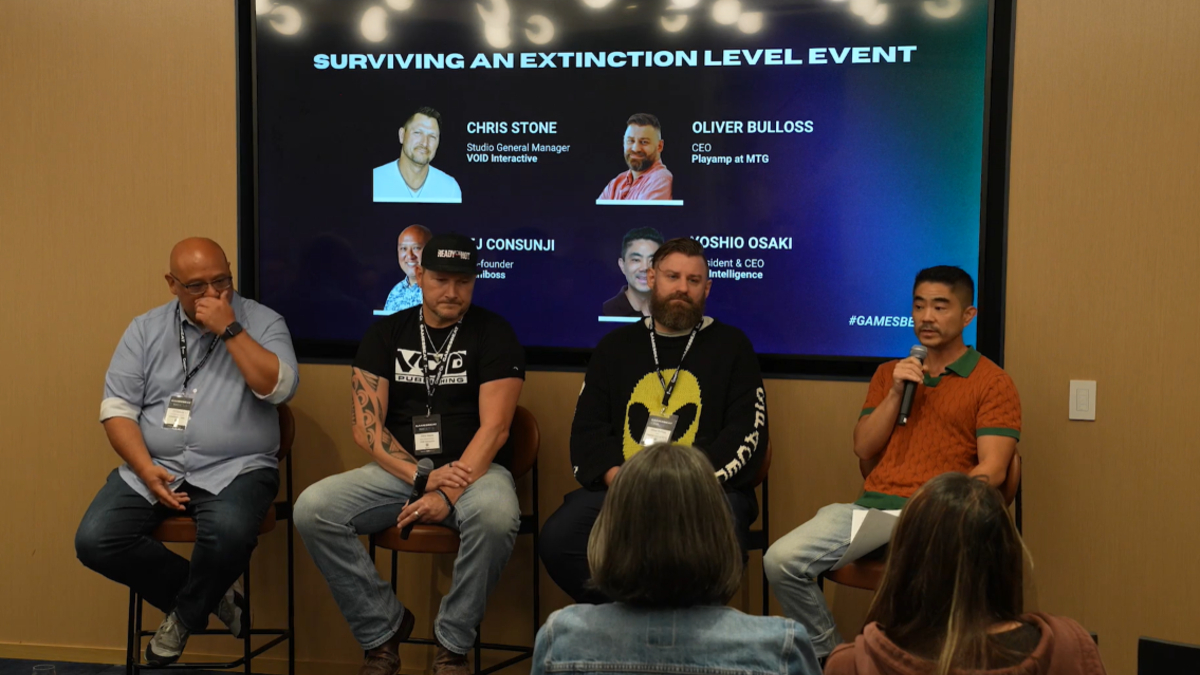
At GamesBeat Next 2026, industry leaders discussed how independent and double-A studios can adapt their development and marketing strategies, take smarter risks and find new routes to commercial success.
Moderated by Yoshio Osaki, the president and CEO of IDG Intelligence, the panel featured Chris Stone, the studio general manager of VOID Interactive; Oliver Bulloss, the chief executive officer of Playamp at MTG; and TJ Consunji, the co-founder of Miniboss.
The discussion began with the growing importance of independent and double-A studios. Osaki noted that the segment is becoming an increasingly important source of player growth and new intellectual property, even as discoverability becomes more challenging.
For Stone, who has spent more than 30 years working across major publishers including Electronic Arts, Activision, and Sony, moving from triple-A development to VOID Interactive required a change in approach.
“There’s just you don’t need to do that,” he said, reflecting on the budgets and large teams traditionally associated with triple-A development. Instead, Stone argued that studios can achieve high production values by building relationships with specialist partners and bringing in resources when they are needed.
That approach helped VOID Interactive bring Ready or Not to console. Rather than presenting the game as a three-year-old PC release, the studio worked with Miniboss to reposition it as a fresh launch, complete with new key art and branding.
The strategy helped the game reach a new audience while building on its existing PC community. Stone said the game’s distinctive identity was central to its success, particularly its darker, more realistic approach to tactical shooting.
Consunji said smaller studios do not need to match the spending power of major publishers to compete. They need to understand what makes their games different and communicate that clearly.
For Ready or Not, Miniboss helped develop the positioning around the idea of players being able to “feel the weight of the badge”, emphasising the responsibilities and rules of engagement associated with playing as a SWAT officer.
“We kind of believe that all games deserve that triple-A strategy and execution, even if they don’t have the budget,” Consunji said.
The panel also explored how larger organisations can maintain creative independence. Bulloss, who oversees six studios and around 2,000 people at Playamp, argued that being publicly traded does not necessarily mean becoming overly corporate.
“We empower our studios to build the games they want to build,” he said.
Playamp deliberately spreads its investments across genres and platforms, rather than relying on a handful of expensive projects. However, Bulloss said studios must understand where autonomy ends, particularly around financial reporting, cybersecurity and shared marketing infrastructure.
For him, transparency during acquisitions is essential. Founders need to understand what changes when their studios become part of a larger organisation, rather than expecting everything to remain as it was before.
The conversation then turned to competition from major releases, with the panel considering how smaller games should approach the launch of Grand Theft Auto VI.
Bulloss said the challenge is not simply competing for attention in a crowded market, but convincing players to leave games in which they have already invested years of time. Players compare new releases against established games as they exist today, he argued, rather than judging them against what those games looked like when they first launched.
“You have to offer something super compelling to pull them away from that game,” Bulloss said.
The panel also considered what triple-A publishers could learn from smaller studios. Consunji called for more experimentation and a return to unusual, distinctive projects, while Stone encouraged publishers to take smaller bets and remain agile when something is not working. Bulloss argued that bigger budgets and larger teams do not automatically produce better games. Instead, limiting resources can force developers to concentrate on what players actually value.
Ultimately, the panel’s message was that success in a difficult games market does not necessarily require spending more. Smaller studios can compete by finding a distinctive identity, making thoughtful investments and working with experienced partners who understand both the creative and commercial sides of the industry.