
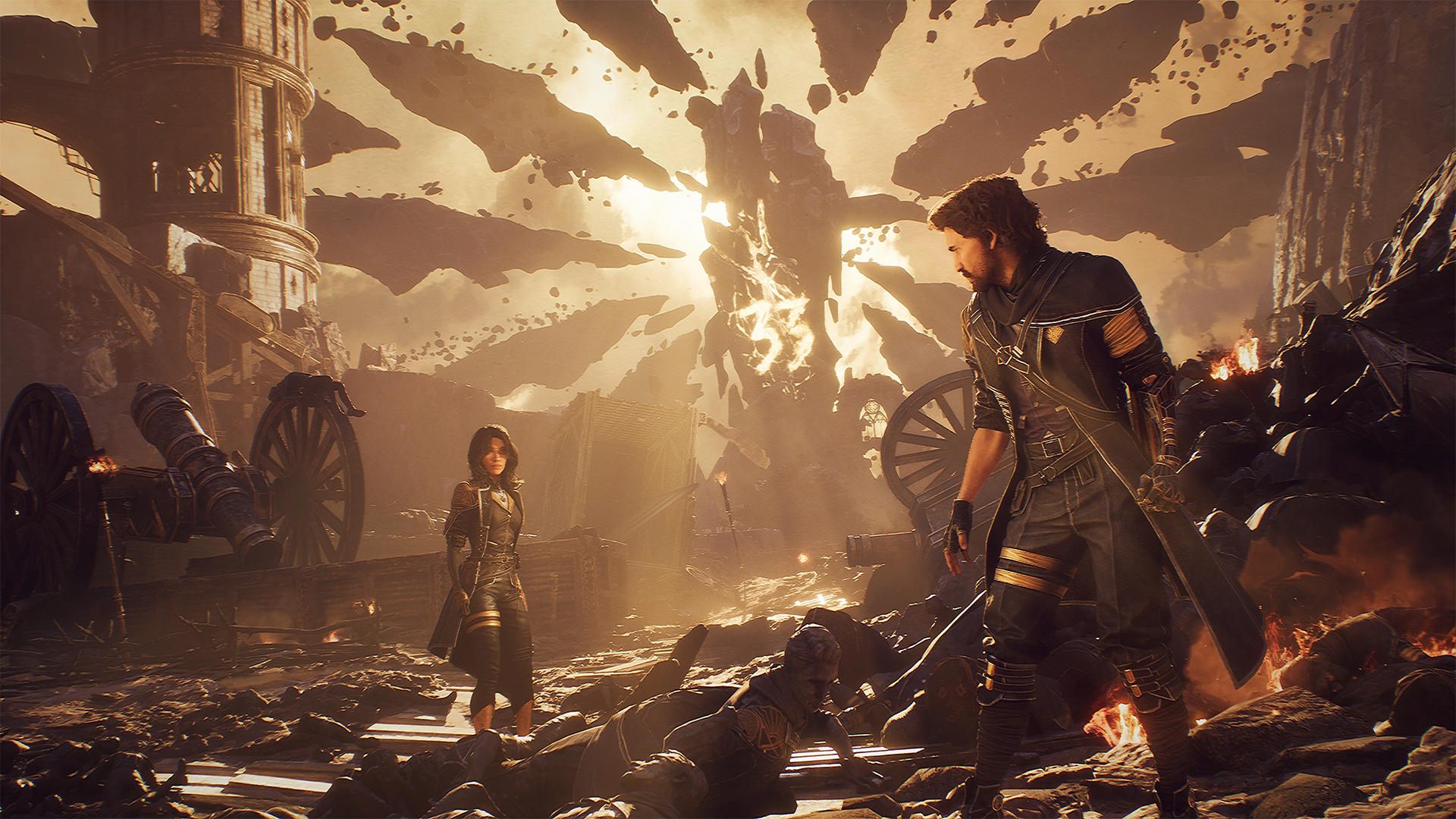
Fresh after winning Game of the Year at The Game Awards, Sandfall Interactive’s Clair Obscur: Expedition 33 picked up the lesser known top awards from the Indie Game Awards. But it was stripped of its title hours later over its use of generative AI.
The organizers of the The Indie Game Awards show announced Clair Obscur as the winner on Saturday, but they revoked the wins for Game of the Year and Debut Game after the team said it used early generative AI tools for temporary placeholder textures in pre-production. Insider Gaming first reported the revocation of the awards for the role-playing game.
Some assets made it into the final game, launched in April 2025, but they were removed within five days and replaced by custom work.
Still, that was enough to violate the rules against AI use in games at The Indie Game Awards. It’s a pretty big turnabout for a game that also won 10 awards at Geoff Keighley’s The Game Awards.
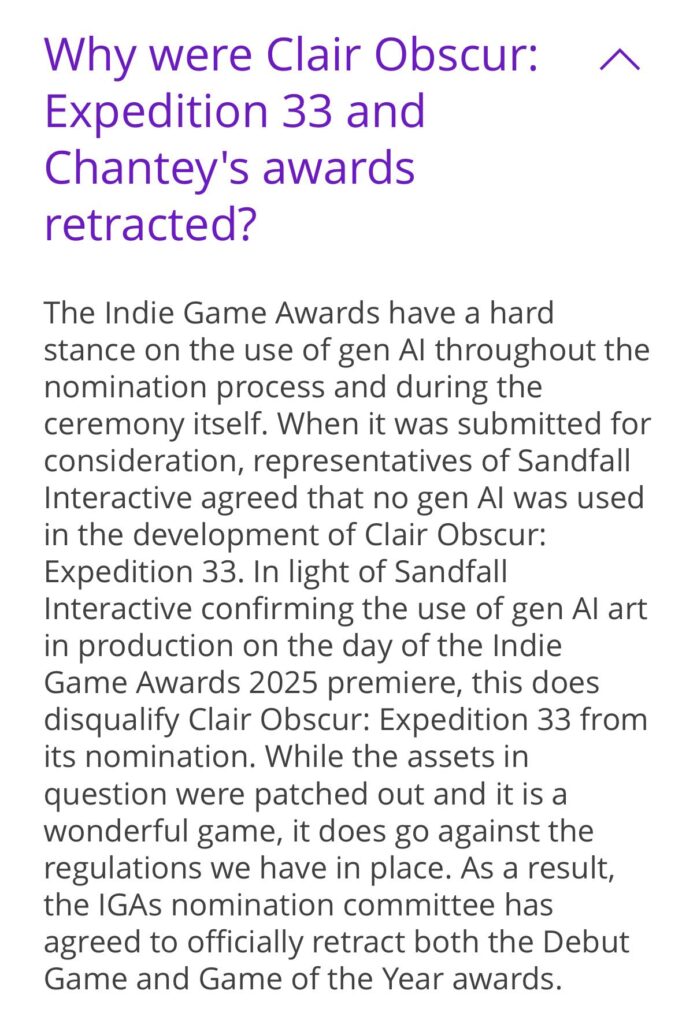
“The Indie Game Awards have a hard stance on the use of gen AI throughout the nomination process and during the ceremony itself,” a statement on the Indie Game Awards’ website said. “When it was submitted for consideration, representatives of Sandfall Interactive agreed that no gen AI was used in the development of Clair Obscur: Expedition 33. In light of Sandfall Interactive confirming the use of gen AI art in production on the day of the Indie Game Awards 2025 premiere, this does disqualify Clair Obscur: Expedition 33 from its nomination.”
The awards have now been given out to Blue Prince and Sorry We’re Closed instead. Expedition 33 sold more than three million copies in its first 33 days.
Word spread on Twitter that Blue Prince also used GenAI, but publisher Raw Fury said that was not the case.
Update: Palmer Luckey, founder of ModRetro, also said Chancey’s developers lost the Indie Vanguard award at the Indie Game Awards. He noted that the award was taken away because the game was sold by ModRetro (among other outlets like itch and GameStop), which reportedly used military drone parts to make its handheld game machines.
Clearly, this rescinding of awards is going to spark a major conversation about games and AI tools, including whether AI tools should be used at all, or if the focus on human job creation and the quality of the tools and the resulting game should be part of that conversation. Here’s one example of that conversation here.