
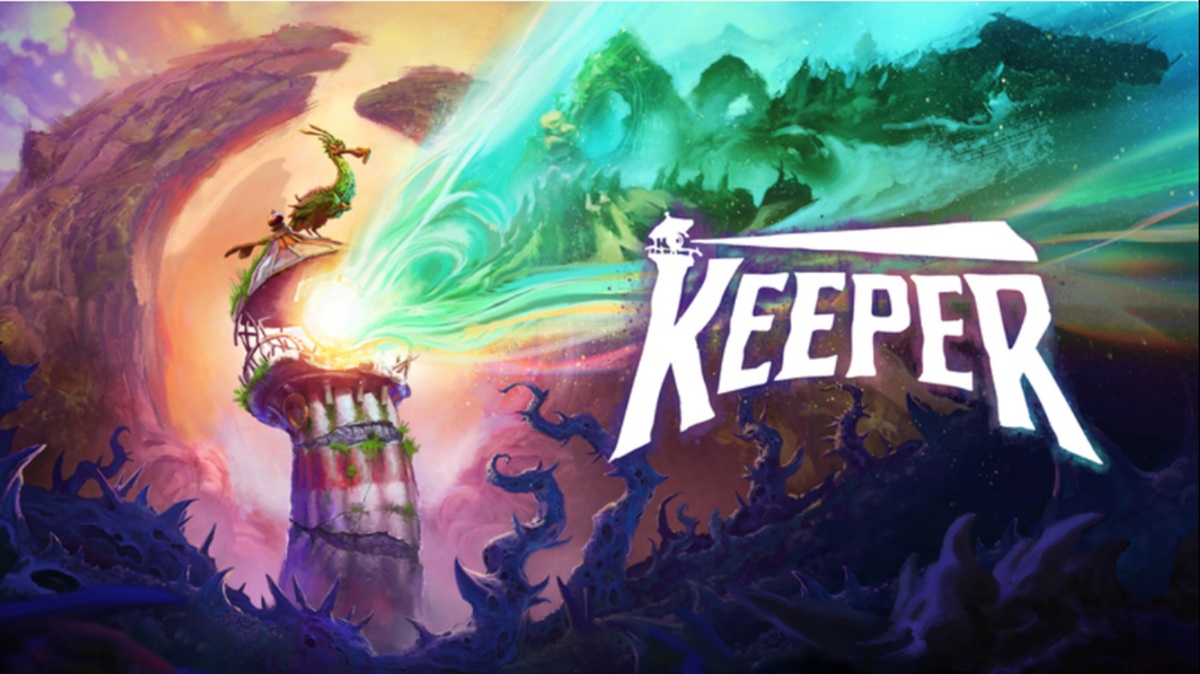
I finished playing Keeper this week and it reminded me of the zany and beautiful art of Flower, the breakout hit from Thatgamecompany, which was also a wordless but emotional experience.
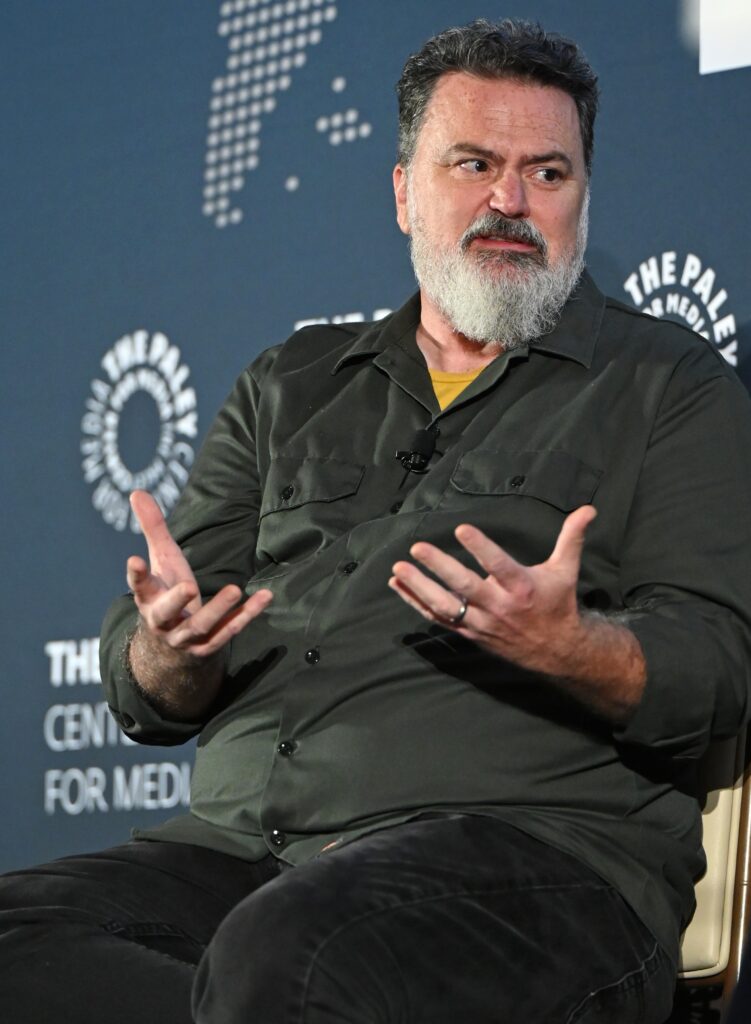
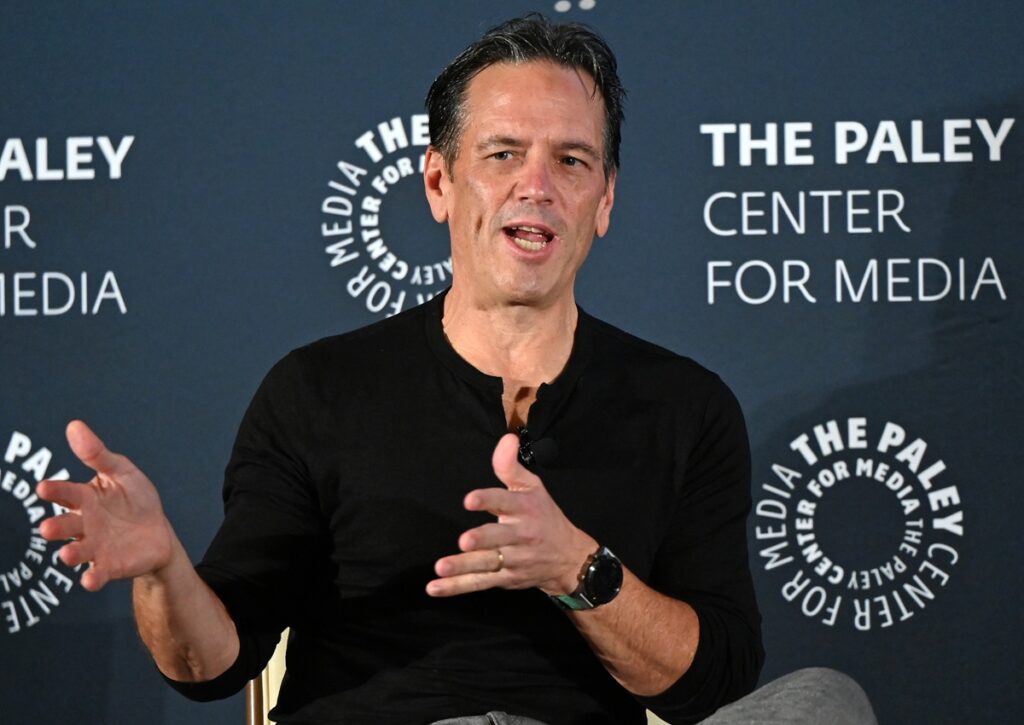
It came from Double Fine Productions, a division of Microsoft since its acquisition in 2019. And it so happened that I heard Tim Schafer, founder of Double Fine, talk last week with Phil Spencer, CEO of Microsoft Gaming, at the Paley Summit in Palo Alto, California.
“I used to work at LucasArts. The thing I learned there is that they didn’t make bets on ideas so much as they made bets on people,” said Schafer, speaking at the Paley Summit.
While Schafer runs the studio, he credits Lee Petty, the creative and project lead on Keeper, for making it happen. It turns out Petty had a wild imagination, and his ideas were crazy. So crazy, I’m not sure how he got the pitch about a walking lighthouse approved.
This is a review of Keeper, informed by the discussion among Scahfer and Spencer, which was moderated by Gabriela Tafur of Idilio TV. But unlike your typical consumer review, this review incorporates a lot of the business discussion that gives us an idea on how to foster more games like it where the focus is on pure creativity.
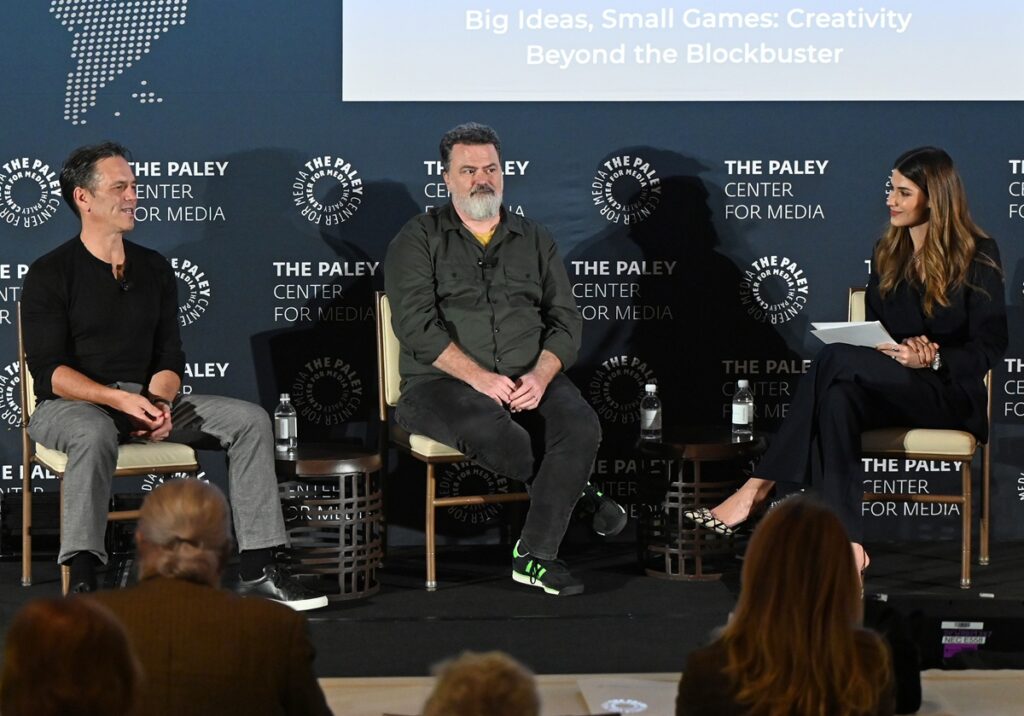
Schafer placed his bet on Petty, who created zany art for so many Double Fine games over 20 years. Petty gave a distinct look to games like Psychonauts, Psychonauts 2, Day of the Tentacle Remastered, Full Throttle Remastered, Grim Fandango Remastered, Brutal Legend, Broken Age, Costume Quest, Once Upon a Monster, and more. They share in common a lot of unusual imagery and an indie sensibility. You could recognize a Double Fine game based on its wacky gameplay and art, and other studios could learn from that.
Schafer joked, “It goes without saying that all the games next year will have walking lighthouses. That’s one thing in the future I’m sure about.”
Having played and finished the game, I would say that’s not such a bad idea.
A silent film
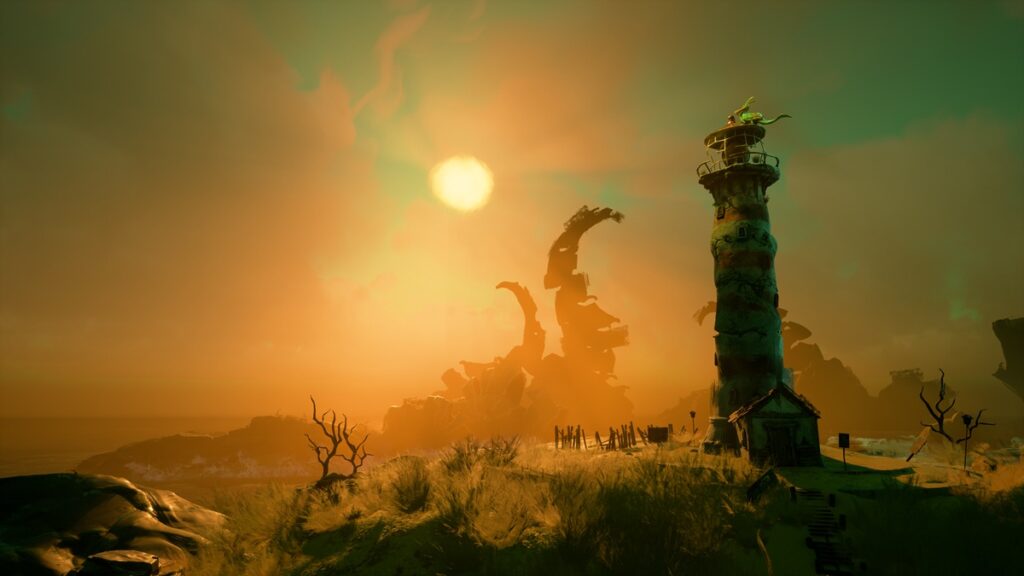
In this game, the imagery and atmospheric narrative carries the whole experience, as there are no words spoken or written in the game.
In addition to Flower, there is a long list of games where there is no dialogue. They include Little Nightmares, Inside, Limbo, Journey, Monument Valley, Hyper Light Drifter, Unravel, Jusant and Planet of Lana. In movies, there’s also a tradition of no-dialogue films like Flow and Shaun the Sheep. In so many of these works, it’s the visuals and atmosphere that make the game into an unforgettable experience.
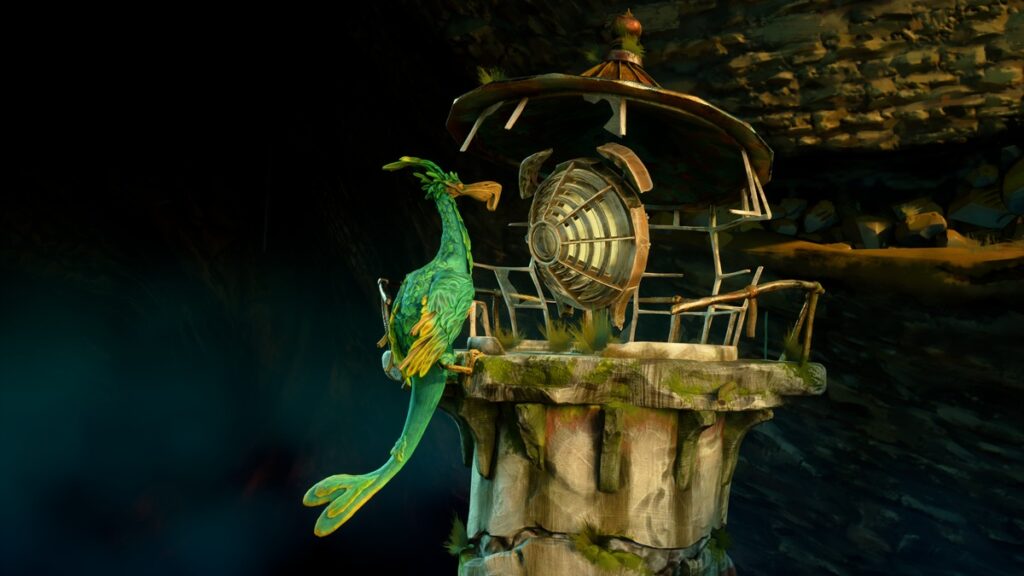
In the game, you have a walking lighthouse. It walks, or rather staggers around, on four legs, guided only by a seabird.
It’s hard to believe this is coming from a giant company like Microsoft. By contrast, Flower (2007) was made by Thatgamecompany with a half-dozen people while the follow-up Journey (2012) was made with just 11. There are more than 160 people on the credits of Keeper (perhaps 60 of them at Microsoft). That’s a sign of inflation in gaming costs, for sure, but it’s also small for an indie experience that feels like a triple-A game these days.
It is interesting to see what enabled Petty to carry this game to fruition. His studio head, Schafer, has had a long career, starting at LucasArts. He worked on the somewhat normal adventure game The Secret of Monkey Island, and then peeled off to do Day of the Tentacle. Then he went off to do the entirely zany Grim Fandango, a noir adventure game that celebrated Dia de Los Muertos.
Schafer moved further into the surreal and offbeat realm with Psychonauts, and then he went full throttle into Full Throttle and then the fully insane with Brütal Legend, which featured the voice of Jack Black in a heavy metal-themed action and strategy game.
He veered into even more non-traditional games with Kickstarter-supported titles like Broken Age. At some point, he started wearing suits and became respectable enough to get the money to undertake Psychonauts 2, which he tricked Microsoft into publishing. Microsoft acquired Double Fine in 2019, and Psychonauts 2 made it out the door in 2021. It wasn’t clear what Double Fine was up to, but now it has just released Keeper.
It’s also interesting to see how the game and Double Fine itself had a benefactor in Spencer, the Microsoft games chief.
The game
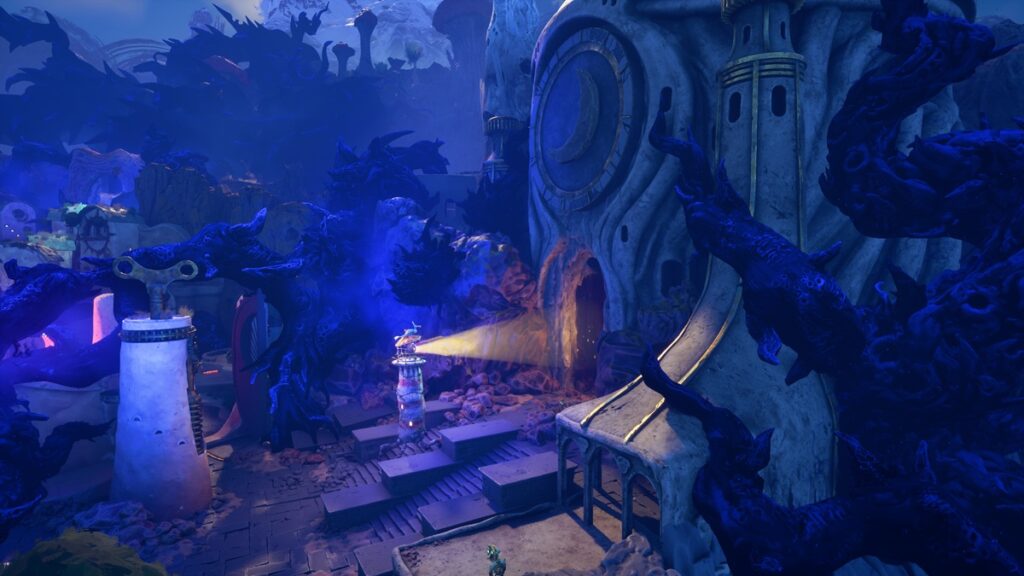
Keeper is set in a kind of psychedelic world. It has beautifully stylized imagery. At the outset, we encounter a lighthouse that, after many years of being dormant, gets awakened by a colorful and exotic seabird being chased by an otherworldly swarm.
The lighthouse blasts a beam of light at the swarm and scares them away, and the seabird perches atop the lighthouse. Then the lighthouse flops to the ground. But it grows four legs that couldn’t possibly hold up the lighthouse.
But they do. You start walking and it’s a challenge to stay steady and keep the lighthouse vertical.
The seabird comes back as a companion and then the adventure starts. The crumbling lighthouse wanders around the crazy world.
One interesting thing is that the game is on rails, but the point of view of the environment constantly changes. So while you walk down a straight path, the viewpoint changes. Sometimes you see the lighthouse from behind. Sometimes you see it from the front. The viewpoint focuses on the shot of the lighthouse that is most emotional.
The title launches this month on Xbox Series X|S, Xbox PC, Xbox Cloud, Xbox Play Anywhere, or on day one with Game Pass. It’s also available on Steam. Numerous parties said the game had four to six hours of gameplay, but I played it for a dozen hours. There was one point where I got stuck and had to look up how to solve a problem in the open world part of the game.
The game is so crazy that the Xbox execs greenlit it. In our briefing, Schafer said he had not been to Gamescom since the launch of Brütal Legend 16 years earlier. He noted that Petty was a talented artist who joined back in those days and became a great leader.
“Lee was always trying to do something different with every game. And I was talking to Lee about what his next game should be, and he was thinking about how our situation has changed since we joined Xbox,” Schafer said in a press briefing at Gamescom. “And we said, ‘Well, we’re no longer pitching to publishers all the time, and we have support and finances now.”
And so they hatched a conspiracy to do something really weird and that no other publisher in the world would ever sign. They wanted the project to make a strong artistic statement and to be completely unique. During the pandemic, Petty wondered if the virus would wipe out humanity. But he saw that nature didn’t care. Life was still going on among the trees, the birds and other natural things.
Petty wrote, “I thought of the mycelium, the vast underground networks that connect fungi, and how they are also used by trees to share nutrients and communicate with
each other.”
It was something that could be used for communication between species.
“That really inspired a lot of the game that you’re going to see here today,” Schafer said.
Schafer said that Petty was a “really weird guy” who likes surrealist painters (like Max Ernst and Salvador Dali) and David Cronenberg films. Petty liked movies The Dark Crystal and Nausicaä of the Valley of the Wind.
He said Petty liked visuals that were unsettling or unusual or unexpected. In the game, you’ll notice the humans are gone. It’s like the apocalypse came and wiped out the humans and the world is recovering. And the humans are no longer in charge of the world.
Petty took this setting and intentionally set out to create a weird but “chill experience.” There are seabirds nearby and it looks like a strange storm is brewing. The lighthouse flops around, gets up, and follows its call of the mountain. It starts marching upward and the seabird goes along. The bird becomes the lighthouse’s constant companion.
“Believe it or not, it’s going to get much weirder than what you can see today,” Schafer said back during the demo in Germany.
And it did.
You start interacting with the lighthouse’s light, the seabird and the movement of the lighthouse’s legs. It’s not much to go on, but that’s how you solve puzzles. The lighthouse is a kind of force for good, and it’s trying to rid the world of the bad stuff. You start exploring and try to get rid of those things. Over time, the lighthouse goes through transformations.
Asked what the inspiration was for the walking lighthouse, Schafer said it was Petty’s doing.
“Lee’s process was inspired by those superhero painters,” Schafer said. “He was really just messing around with randomness and messing around with Unreal and trying all the new environments and just having different types of characters move with the environments.”
The lighthouse was a background character at first and then Petty pulled it to the front and center. There’s a lot of peril in the game, and even scenes that can make people cry. But there’s no combat and no way to fail. There are no boss fights. With that kind of description, I’m not sure which hardcore gamers will succeed in finishing this game. But you have to admit. They just might be hooked on the game because it’s so weird and not at all like the stone-faced copycat combat games that have flooded the market.
I was drawn to the game in part because it was short. I wanted to play something that would help me pass the time. But it turned out to be so much more entertaining than I thought. The lighthouse is symbolic in many ways, and it was nice to see the depth of the relationship between the seabird and the lighthouse.
When you think about what it has going for it, it’s the weirdness of wordless emotional storytelling, surreal worldbuilding, strange heroes, atmospheric puzzles and an artistic sensibility.
How Keeper got made
I have to stop and wonder. Microsoft laid off thousands of people in the wake of its acquisition of Activision Blizzard and the accompanying downturn in the game industry. And yet Spencer chose to keep this game, Keeper, and the Double Fine studio going. I wondered why.
In the panel, Schafer dropped a hint. Schafer recalled the words of blockbuster filmmaker Jonathan Nolan, who among many other things write the Batman script. Nolan said they keep movies on time and on budget “because when you don’t lose money, you can be really experimental with your narrative. You can take strange risks with your story.”
“That’s part of it. Being careful about what risks you’re taking. Making sure you’re risking the parts that matter, like doing a story that’s something only you can do,” Schafer said.
This is one of those cases where this game, Keeper, might have died on the vine if Double Fine wasn’t part of a larger company.
In considering joining the Xbox organization, Schafer said he wondered how to keep Double Fine’s unique culture intact. He recalled, ‘Everyone said, “No, we want you to stay who you are.” That’s been true all these years. Creatively, we can say, ‘We want to make a game about a walking lighthouse.’ And they say, ‘That sounds cool.’
Schafer added, “When you’re an independent game studio, you’re always shaking the bushes for money. You’re always trying to get money, all the time. Having that be more stable has allowed us to ask the question: what would we do if we weren’t constantly afraid? Well, let’s make that lighthouse game.”
It helps that Double Fine has a long history of getting support from its community, either through Kickstarter campaigns or other ways.
“We did our first crowdfunding launch in 2012. It was huge. All those fans wanted to follow the development,” Schafer said. “We let them look at our concept art. We had a much higher-bandwidth interaction with our community. It changed everything for us, because we realized — it’s not just, we make the art and you consume it. It’s more like you’re in it together. They felt much more invested and engaged in what we were doing.”
Double Fine even had a documentary crew work alongside developers as they were making Psychonauts 2. They created a 26-episode documentary on YouTube.
“We tell the whole story of game development. We put ourselves out there as human beings. There’s a kind of mission statement that we have. People don’t realize that video games are made by human beings,” Schafer said. “There’s a lot of people who really care about them so much. They’re these labors of love. We want people to see that in these documentaries. But it means letting people see–I think there’s a tendency for people to share their experiences as a media company in a very positive way. But they think that might alienate people who don’t see you as human beings. I’m just saying, it’s okay.”
“When we do something creative, it inspires our fans to be creative,” Schafer said. “I want to make something like that! We hear from people who have launched their own creative careers from seeing a work of art that we’ve made. There’s a lot more back and forth.”
The result of the decades of doing original work is that there are now fans of Double Fine, rather than an individual creator or a particular franchise, Spencer said.
“You want to make sure that in the platform there’s a way to show your love of Double Fine, even without knowing or being able to predict what their next thing might be,” Spencer said. “Their next thing is very different from Keeper. But we have a ton of fans that are fans of Double Fine first.”
That’s far different from the love people have for franchises like Minecraft or Fortnite or Call of Duty, Spencer said.
“It’s a business imperative as well as a creative imperative. We see the most success when those communities are thriving. More and more in gaming — and I think this is true across all media — we find that those communities span modalities,” Spencer said. “It’s not that people are fans of Minecraft the video game. You also have the movie that came out this year and was incredibly successful.”There have been literally a trillion views of Minecraft videos on YouTube. That’s crazy to think about. Those are all part of the Minecraft community. People will engage with modern franchises across so many different fronts, whether it’s making their own user-generated content or all the other ways these franchises show up.”
Spencer said that, for platforms, this creates both opportunity and challenge. How do you allow somebody to be a fan of something that isn’t single media?
“It’s across all these different storefronts and platforms. But that’s the real strength of modern franchises,” Spencer said. “How do you allow people to show their love and engage with the things they love the most across so many different screens? That’s what we’re focused on in our endeavors. How do you make sure Xbox is able to connect players and creators across different screens? It’s the power of these franchises.”
Spencer noted it’s important to have studios like Double Fine with crazy games like Keeper, with its walking lighthouse, to inspire other creators across Microsoft and the industry.
Schafer returned to early lessons of his career.
“You nurture an environment where people are developing and becoming talented and becoming people you trust to run a project, like Lee Petty, who came up with the idea of the walking lighthouse,” Schafer said. “I trust that person to run with an idea. We’re a very inspiration-led studio in some ways. We trust this idea that’s been resonating, that we’ve been talking about for years. There’s a reason we keep coming back to it. If it resonates with us, hopefully it will resonate with other people.”
So what do I think about the game? Schafer’s own words from the panel made me think about what an accomplishment Keeper is.
He said, “Video games let you enter a world. They’re not just a linear story, a series of pictures. We let the player fall into this world and explore what they want to explore. They can say, ‘What’s behind this tree? What’s under this rock?’ Because of that, we have to build these robust worlds that stand up to inspection from a player who doesn’t want to do what you want them to do.”
Conclusion
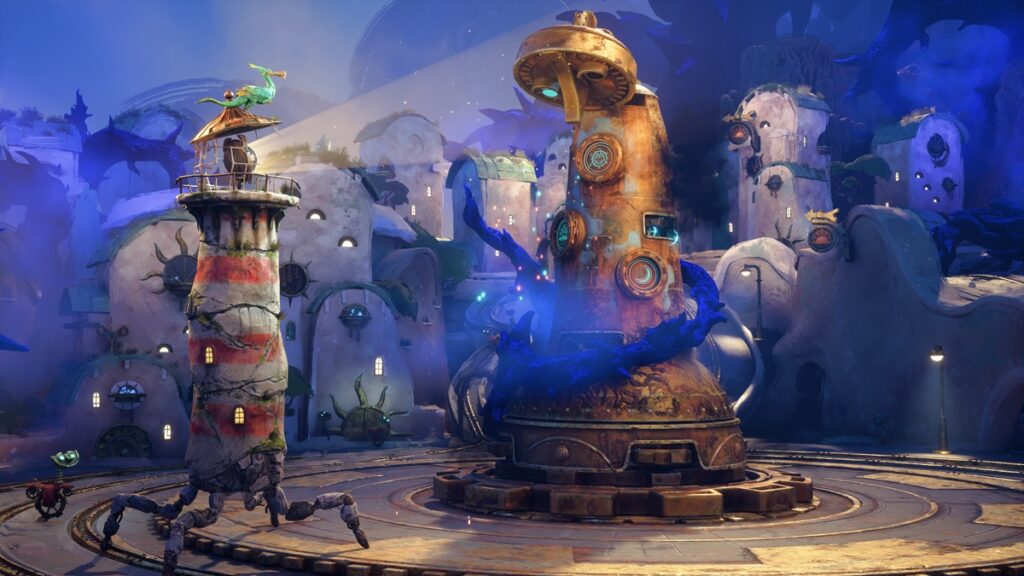
With Keeper, Double Fine succeeded in creating a wonderful world with different kinds of mechanics that allow the players to explore the world. They can discover the backstory in some way, but the wordlessness also leaves many things you encounter as a mystery.
I wish they could explain more about that world, but I can also respect the decision to make a wordless world that could speak for itself. There are small flaws in the game. Sometimes it’s not obvious where you need to go next. That leads to a lot of wandering, but it’s tolerable because it makes you think of new ways to solve a puzzle.
But it’s a wonderful triple-A experience coming from a team that is much smaller than most triple-A teams. I think it’s a rare treat for games who appreciate titles like Flower and Journey and more along the wordless path, which is among the most creative in all of gaming. I hope you enjoy it as much as I did.
I give it four stars out of five.

Disclosure: Microsoft gave me a copy of Keeper for the purpose of this review.