
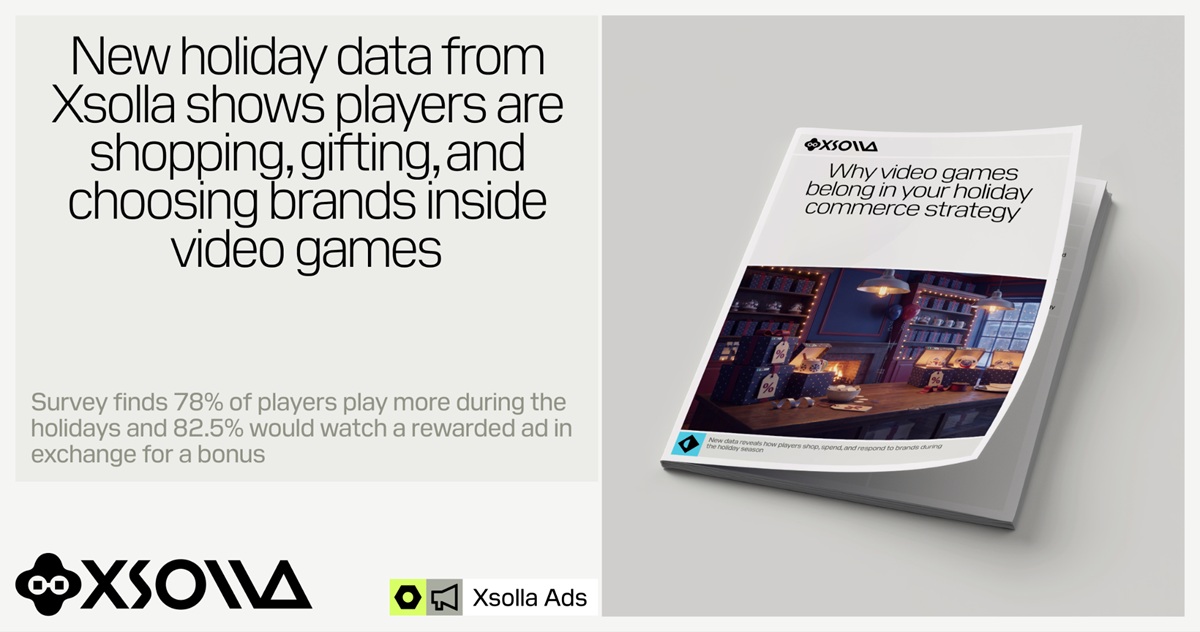
Xsolla, a global commerce company, revealed new data and insights on how players shop, spend, and respond to brands during the holiday season.
Titled “Why Video Games Belong in Your Holiday Commerce Strategy,” the report draws on direct answers from more than 4,000 players, gathered through opt-in rewarded surveys on Xsolla Offerwall. Players chose to take part and received a reward for sharing, which makes the data first-party and consent-based.
The research builds on the conversation Xsolla opened at Advertising Week New York 2026 about how brands can reach players in more ways through video games. Combined with Xsolla’s insights into in-game purchasing behavior across an audience of over 300 million players, the survey shows an engaged audience with established spending habits: 84% of respondents call themselves gamers, 92% play mobile games, and 63% spend money in games.
It gives marketers specific data on when players are most active, what they plan to buy, and which ad formats they welcome during the year’s busiest shopping period.
The findings also highlight seasonal shifts in play habits and holiday purchasing preferences:
- Play time rises with the season: 78% of players say they play more during the holidays, 67% play more on weekdays, and 65% play more during the day, which points to weekday lunch breaks and commutes as key windows for reaching them.
- Holiday shopping in video games is largely about other people: 61% of players shop mostly for others rather than themselves, and 78% prefer giving or receiving gifts in person over having them shipped. The report recommends brands connect online purchases to in-person gifting through pickup options, gift wrap, and clear gifting messages.
- Players are open to brand ads during the holidays: 82.5% said they would watch a rewarded ad in exchange for a bonus offer, and respondents prefer short, frequent ad formats over longer ones.
Many players are also thinking well beyond video games while they play. During the holidays, they weigh everyday purchases and gifts across categories including household items, beauty, toys, and apparel, giving brands a chance to put their products in front of new shoppers who are still deciding what to buy.
“Players are not only playing games more this season, but they are also shopping, planning gifts, and deciding which brands earn their attention,” said Chris Hewish, president of Xsolla, in a statement. “Rewarded formats work because players choose them. When a brand gives something valuable back, the player gets a better experience, and the brand earns a stronger result.”
The report closes with five steps for brand marketers planning holiday campaigns in video games: use short rewarded formats, promote the product rather than an app install, merchandise household essentials, stay active all season with a focus on weekdays, and connect online shopping to in-person gifting.
The full report, “Why Video Games Belong in Your Holiday Commerce Strategy,” is available at xsolla.com/holiday-ebook.