

Ludus AI has raised $1.3 million to support its generative AI copilot for Unreal Engine developers.
The round includes funding from technology investors, including Hartmann Capital, Artificial Agency, Hard2Beat, and 24Ventures. The funding will support continued development of Ludus AI’s proprietary technology and help lower the technical barriers Unreal Engine presents to developers and studios.
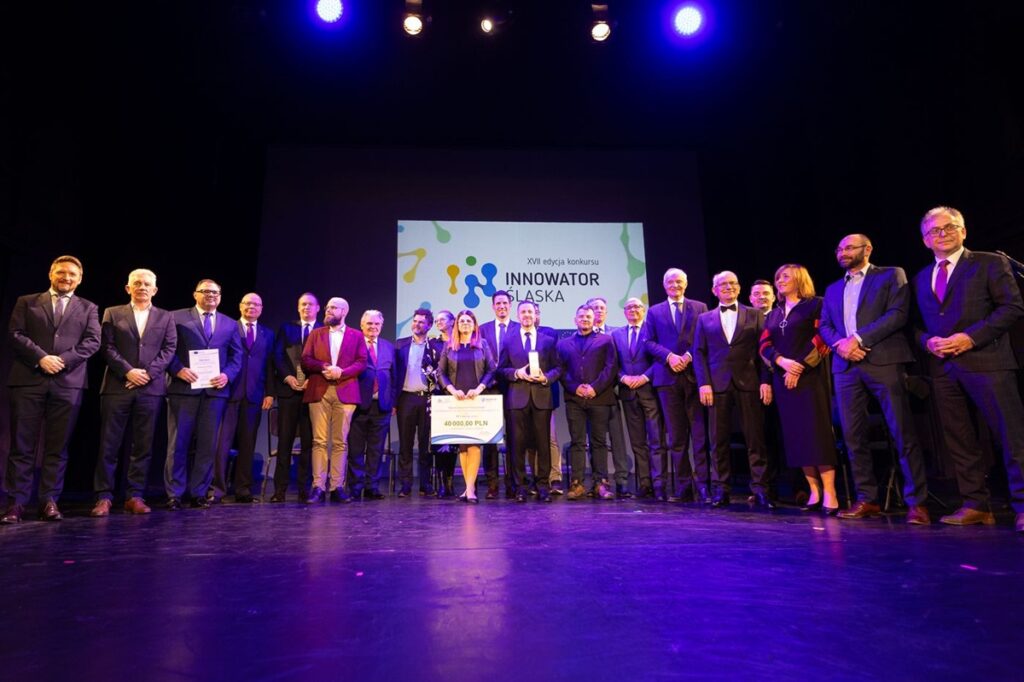
The company has also received industry recognition, winning the Feedback Battle at the Game Industry Conference and earning the Silesian Innovator Award. In addition, AMD has recently become Ludus AI’s official hardware technology partner.
Origins

Ludus AI is a technology company based in southern Poland. It’s introducing a next-generation solution for the 3D game and visualization industry. Founded by Piotr Penar, former CEO of DreamStorm Studios, the company focuses on simplifying the creation of high-quality content in Unreal Engine through the use of artificial intelligence.
Penar started the company in 2024 and it has 10 people.
While Unreal Engine is widely regarded as one of the most powerful tools for building 3D experiences, its complexity creates meaningful barriers for creators. Extensive documentation and intricate workflows often result in longer production cycles and higher costs.
“I had my own game studio, and I grew it to 60 team members, and I basically saw all the problems with modern game development in person,” Penar said. “The iteration times were high. There were high quality expectations yet bigger and bigger issues with iteration and it became more complicated. I saw it first hand.”
He later joined a 300-person Polish game studio and saw the challenges of creating with Unreal, where 20% to 80% of the time and material created for a game never actually winds up in the final product. A lot of work goes into deciding what is fun and what’s not.
“I decided that I need to do something about it, because I felt the problem firsthand, and I saw that it scales with the organizations. Our goal is to basically do a text-to-prototype solution and then a text-to-video-game solution,” Penar said.
Product and Uniqueness
Asked about the concern people have about generative AI tools and whether they will eliminate game developer jobs, Penar said his focus is on creating a tool game developers can use.
“Our goal is to support developers by reducing the time spent on prototyping and iteration, rather than replacing them,” he said. “We believe the most valuable asset an artist has is their vision. Our mission is to simplify the tools needed to bring that vision to life, making it easier for anyone to express themselves through the games they create. We want AI to handle the mundane tasks so that developers can focus entirely on their creativity.”
Game development studios currently spend tens of thousands of hours in the prototyping and blueprint creation stage in Unreal Engine. Ludus AI has created a comprehensive set of tools that significantly speed up this work inside Unreal Engine.
The company started giving users AI-driven project and blueprint analysis, chat based access to engine knowledge base, but has since expanded to allowing developers to automatically create 3D objects and game logic through blueprints or C++ code in virtual spaces through simple text prompts. These tools not only accelerate the flow of studios of all sizes, but also help onboard the next 100 million non-technical game developers to the industry.
It can help both artists and developers operate independently from each other. Penar said it may take hours for a human developer to understand something like visual scripting and perhaps a couple of minutes for the AI to do it. You can also ask it to do something like generate assets for a cottage by a lake and it can come up with candidates that you can use as inspiration for creating assets yourself, Penar said.
With Ludus, devs can download a plugin, install it and unpack it into the game engine. Then there is a menu option to launch a chat window inside the engine. You can log in, ask Ludus questions, and it will gather knowledge about your project. You can ask how shooting works in a particular game or find animations in the project. It can be very helpful for both newcomers and advanced developers.
“Ludus can read a blueprint, read the logic and read the assets. It will provide you with a senior-level explanation, including the knowledge of how Unreal Engine works from the inside out, and then, when it provides you an answer, you can also ask to execute the edits. It can change the blueprint code,” Penar said.
Junior developers gain clear guidance, while senior developers gain back time. By reducing the effort spent on repetitive tasks and early prototyping, studios can redirect that time toward creative problem-solving and the implementation of new ideas. This benefits both development teams and the players who experience the final product.
Importantly, this technology is not intended to replace developers. It is a productivity tool. While it represents one of the most advanced tools available today for Unreal Engine development, effective use still requires a solid understanding of both Unreal Engine and the fundamentals of AI.
Ludus AI solutions are used across multiple industries, reflecting the broad adoption of Unreal Engine wherever real-time visualization or simulation is required. Game studios use the technology to accelerate development timelines. Architectural firms use it to rapidly produce interactive visualizations. Training and simulation providers use it to build more advanced and realistic environments. The platform is also applied in the automotive sector for user interface design, and in film production for the creation of virtual sets.
Evidence of demand
The company has already released the first version of its solution and is gaining strong traction across the industry. Ludus AI has more than 26,000 users and plans to expand further into international markets. In the coming months, the company will focus on scaling its platform, improving product stability, and expanding its feature set.
The VCs were impressed with the evidence of demand, as the company organically was able to reach 26,000 registered users with no major marketing campaigns or ads, Penar said.
“Those were developers looking for a solution to their burning problem. And we saw in 2025, we saw a 10 times increase in our revenue. We saw a 10 times increase in user count. So basically, over the span of one year, we had growth between 10% to 30% month over month. And it’s not stopping,” Penar said.
He added, “This was the evidence that our product is needed. And then we got big brands, big names, coming in that were asking to do a trial of our solution in their newest productions. This wa also the moment we saw that we solve problems that are both experienced by small dev teams but also by the biggest ones in the world.”
Ludus also has a strong Discord community with thousands of developers.
Current projects under way
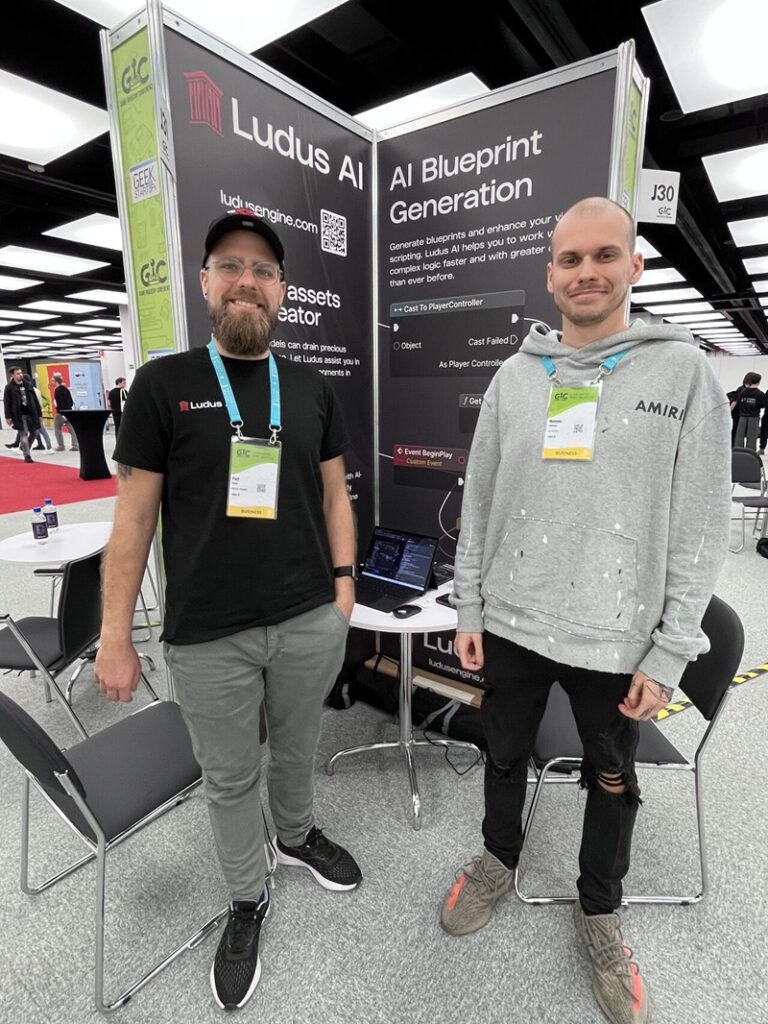
Development will center on its most widely used and effective capabilities, including the creation of 3D assets and Unreal Engine Blueprints directly from natural language prompts within the engine.
Mateusz Lichocki, head of marketing at Ludus, said in an interview that Ludus can do a review of an Unreal Engine project and generate a PDF report with analysis of the entire project. It can point out C++ memory problems, file naming problems and identify assets that are duplicated or missing. It’s a free to use tool for getting to know how Ludus analyzes a project.
“The main benefits are for studios and developers using it. Just imagine the chaos inside the studio and how management has to know what developers are doing all the time. With these reports, you can check out what the developers have changed on the project. It’s a very powerful tool,” Penar said.
With bigger brands, the company can also handle compliance, running Ludus on their projects so it can verify whether anything is leaking from a company’s servers. This will be releaed next month as a core offering for bigger studios so they can control their data.
Ludus is also able to offer a custom version of Ludus for specific game engines. Penar said that the company has seen a vast increase in AI model capabilities in the past couple of years and it is not locked into a single AI model.
“We believe that the key right now is to build all the infrastructure, the interface, the connections between the engine and the AI for it to be able to operate properly,” Penar said. “Unreal Engine has half a million functions, classes, variables. It’s such a big engine that you need to build an entire layer of software and optimization between the AI and the engine. Our goal is to excel at this connection point between LLMs and the engine, so that in the future, when a new model comes, we can quickly switch and bring all the knowledge, all the infrastructure, all the tools with us.”
When there is a new breakthrough in an area like audio generation or programming, then Ludus will be able to take advantage of it and build it into the engine.