
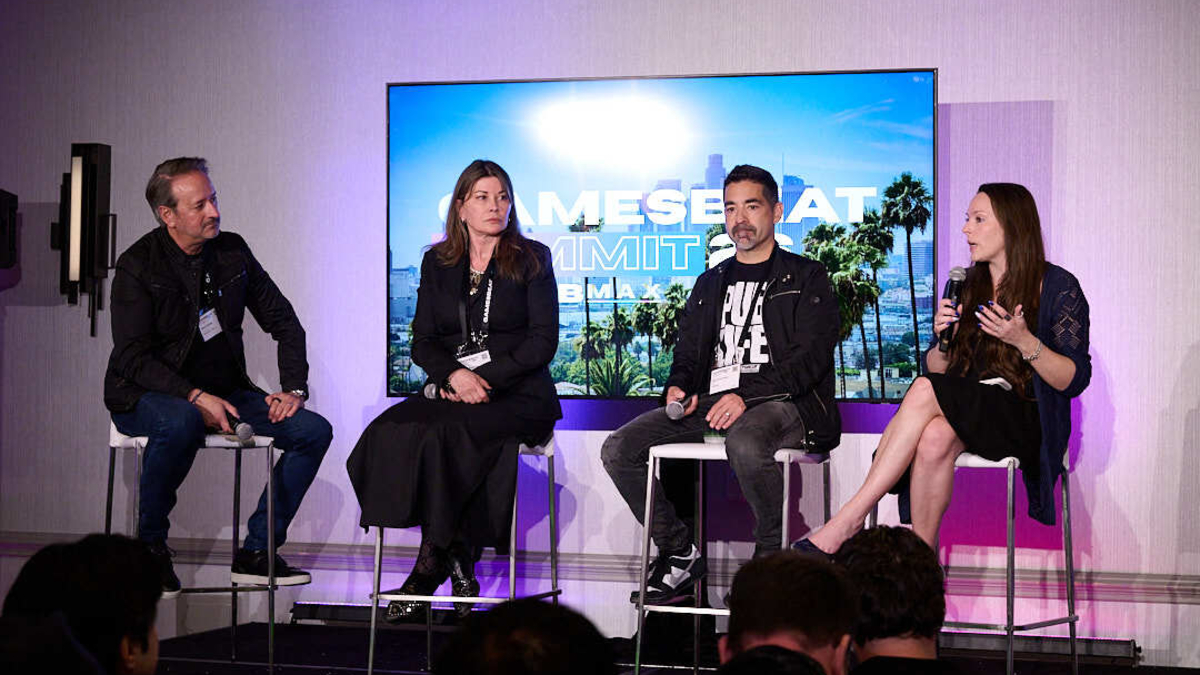
The games that dominate today — Fortnite, Roblox, and others — aren’t just successful titles; they’re adaptive platforms that evolve with their communities. During a panel discussion at last month’s GamesBeat Summit in Los Angeles, a group of experts explored how studios can shift from traditional launch-and-pray models to designing systems that support long-term flexibility and growth.
The panelists included Annapurna executive vice president and head of games Leanne Loombe, Publsh co-founder and chief executive officer Ben Granados, and Tripp, Inc. founder and chief executive officer Nanea Reeves, who examined what it means to build infrastructure for adaptability, create shorter feedback loops, and foster communities that shape a game’s evolution. Whether developers are working on a live service title or contemplating the next project’s long-term potential, this discussion challenged assumptions about what “finished” means and how to design for longevity from day one.
The panel kicked off with a question about live service products versus more curated premium titles. Moderator Mark Stanley asked Loombe about her experience developing more curated, premium games after spending time working on live service products, and how the evolution between these two styles has felt.
“I don’t think it’s either-or,” Loombe said early in the discussion. “I think live service games can be incredible businesses and really successful, and I think premium, completable games can also be extremely successful. The thing I’ve observed, though, over the last handful of years is that a lot of publishers and developers are copying the same formulas when it comes to live service games and players are concentrated on a very small number of live service games, and there’s only so many hours in the day for players, and we’re trying to create more and more content that is ever-consuming.”
Loombe said that she was betting that players would want to player premium, distinct, and completable games between their forever games, rather than looking to “templatize” the success of live service games instead of innovating.
“I think that’s a real challenge for us right now in our industry. So, for me, just focusing on more of the completable premium experiences, I believe, is where we can stand out,” Loombe said. “Harry Potter or Ghost of Yōtei — these games are still breaking out and selling millions of copies, and these are completable games. I think players want both. We just need to figure out how to deliver on that.”
The topic moved on to how communities impact development, with Ben Granados speaking about the balance involved in listening to a game’s community.
“You do want to listen to your audience, you do want to listen to the vocal minority, but you also don’t want to build and plan and program just around that vocal minority, because you’re going to need more than that to create success commercially for your games and for your products,” Granados said during the panel discussion. “Feedback often times is very emotional, and when we say just feedback, it is important, but it’s also super important not to over-index against that feedback. It’s what you do with that feedback that really matters.”
Moderator Mark Stanley then transitioned into a question for Nanea Reeves, asking how Tripp differentiates between engagement that’s specific to wellness, versus engagement that’s compulsion.
“When we started Tripp, I thought, ‘Could you architect experiences that went for the emotion first, and use the gameplay mechanics as secondary?’ — and then we had to really focus on engagement because we’re a subscription app,” Reeves said. “Then we started getting these emails, especially during the pandemic, where people were saying, “Bruh, this is helping me massively right now,” and you know our audience is 60% male audience; for a wellness application, that is unheard of. So, that really goes to show what is the benefit to the end user.”