
Presented by ESA
What does the future of the video game industry look like, and who gets to define it?
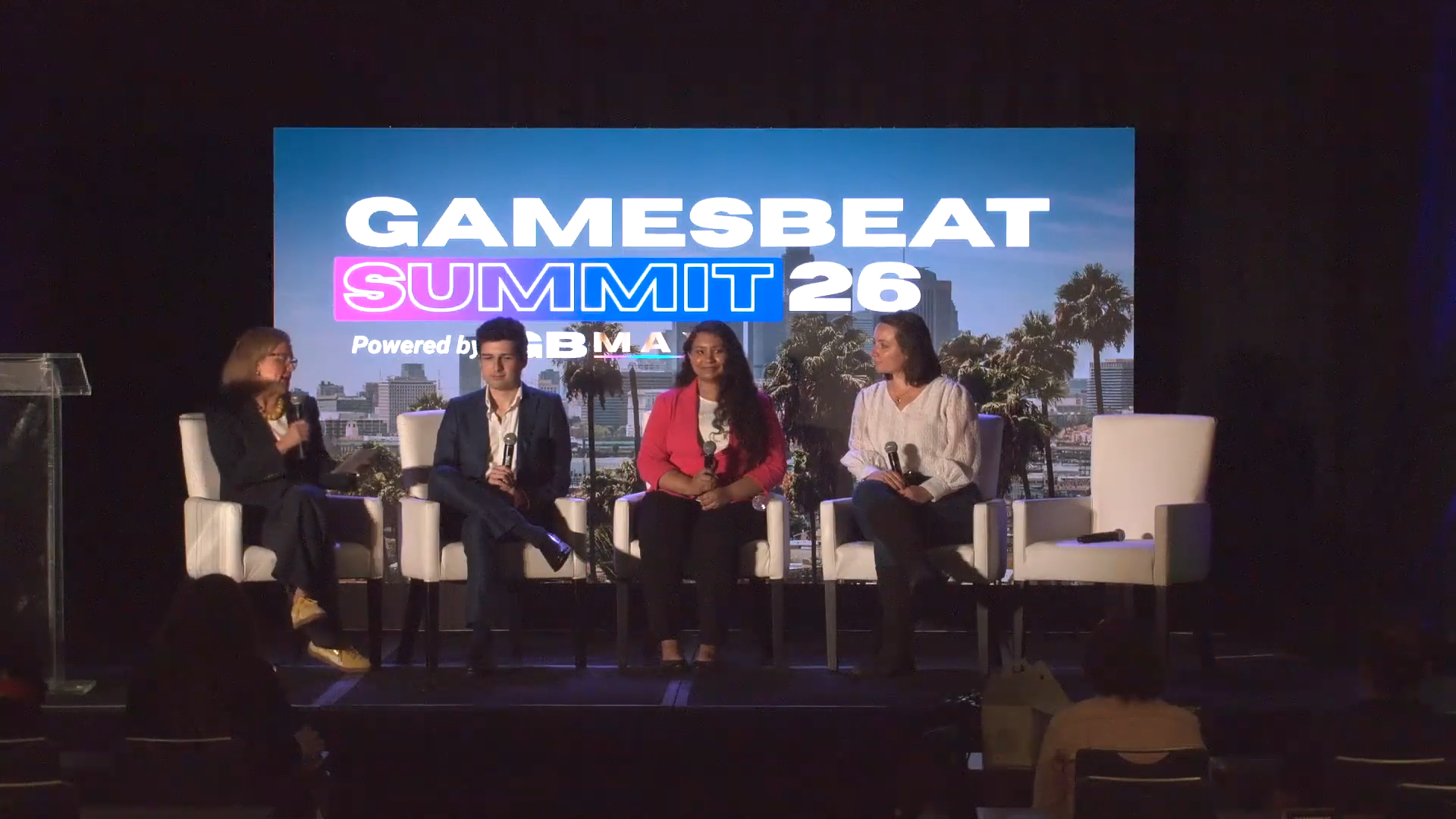
At GamesBeat Summit, Sue Madden, executive director of the Entertainment Software Association Foundation, was joined by Julien Camaraza, game designer at Riot Games; Desiree Bragg, an ESA Foundation Scholar; and Anne Shoemaker, founder and CEO of Fullflower Studio, to explore how a new generation of creators is reshaping how games are built, played, and experienced.
The Fresh Voices panel featured Camaraza, Bragg, and Shoemaker, who shared perspectives on entering the industry, learning on the job, and how tools and platforms are lowering barriers to creation. Madden guided the conversation around how early career experiences are translating into real-world development roles.
From classroom to studio to live games
Camaraza described his transition into professional game development at Riot Games as more seamless than expected. The collaborative pace and rapid iteration cycles felt familiar from his time building games in school, where projects often had to be completed in just weeks.
“It’s really not super different,” he said. “I think that lack of surprise was a surprise.”
Shoemaker took a different path into development, discovering game creation through playing and experimenting on Roblox. She said she began identifying ways games could be improved and eventually explored building them herself using tools that made creation more accessible.
“When I opened up their engine for the first time, their studio, they had so many free assets for me to use as someone with no programming background, no art background,” she said.
The shift toward platform-agnostic development
The panel also touched on broader industry shifts, particularly the breakdown of traditional platform boundaries.
Camaraza pointed to the long-standing segmentation between mobile, console, and PC gaming, noting how newer experiences are challenging those distinctions. He highlighted games like Fortnite as examples of experiences that have reshaped expectations around distribution and scale.
“Fortnite really broke down the door,” he said. “It said, ‘No, you have an account, so you can play it on any of these devices. We don’t really care.’”
He also noted that he played Hades II on Android, a platform not officially supported by Supergiant Games, as another sign that platform barriers continue to erode.
Shoemaker added that developing within Roblox inherently pushes creators toward cross-platform thinking from the start, since games are designed to be accessible across devices by default.
Bragg took the conversation in a different direction when responding to a question about what she would change within the industry. She emphasized the need for developers, engineers, and industry stakeholders to move with intention as they adopt new tools such as AI.
“We need to have a little more perspective,” she said. “How we go about using those tools as an engineer […] I have to make sure I’m using those tools responsibly.”
Looking toward the future
Near the conclusion of the session, Madden encouraged audience members to reach out to, work with, and help guide young professionals like those on stage. She said the young professionals she engages with are eager for mentorship.
“If you have the time and are willing, I think that helping these individuals transition, find opportunity, and simply provide guidance would be helpful.”