
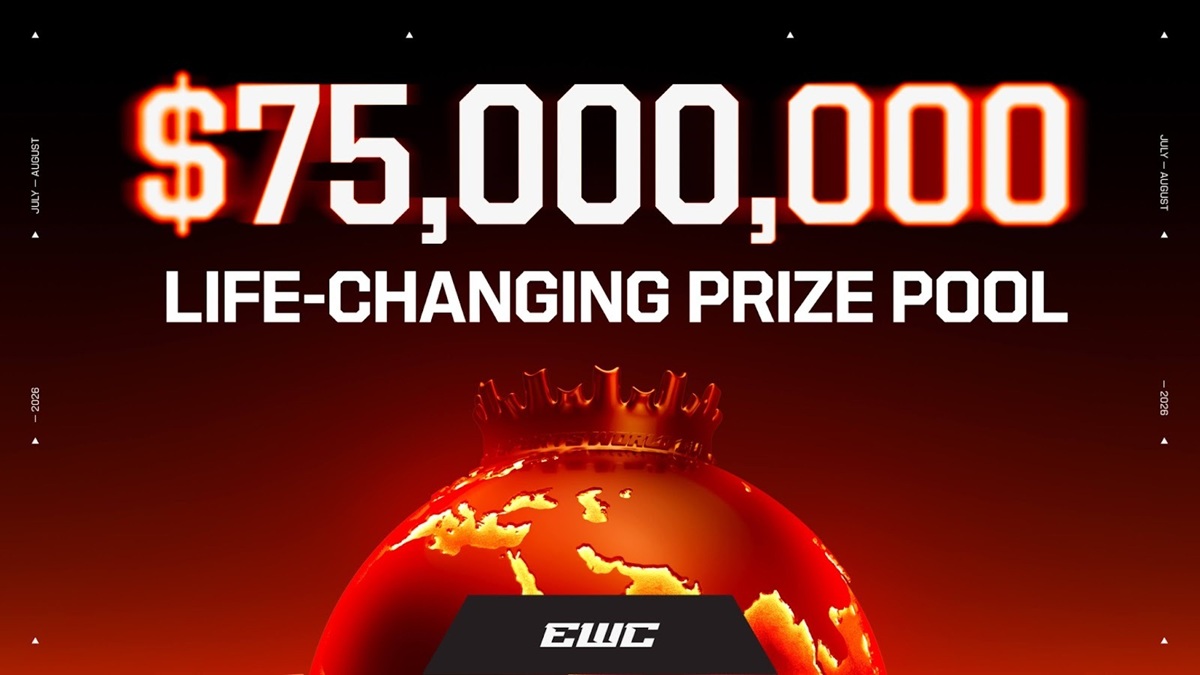
The Esports World Cup Foundation (EWCF) announced a “life changing” total prize pool of $75 million for this year’s event in Riyadh, Saudi Arabia.
The group also revealed the full game lineup and schedule for the Esports World Cup 2026 (EWC), the world’s largest esports event, set to return in its third year from July 6 through August
23. More than 2,000 players and 200 esports clubs from over 100 countries will compete in 25 tournaments across 24 games over seven weeks to crown the next Esports World Cup Club Champion.
The record-breaking prize pool reflects the evolution of the EWC as a premier sporting event and the anchor multi-title competition within the global esports ecosystem, the group said.
Delivered at scale for a third year through an established, cross-game format, the EWC brings together the world’s best players, Clubs, games and a global community of fans through a shared calendar that sets the rhythm of the global esports season.
“The life-changing prize pool exists to support the people at the heart of esports: the players and the Clubs that invest in them year after year,” said Ralf Reichert, CEO of the Esports World Cup Foundation, in a statement. “EWC is different because of the Club Championship. One title crowns a champion. EWC crowns the ultimate cross-game Club Champion.”
In 2026, the EWC Club Championship, the EWC’s flagship cross-game competition, will award $30 million to the top 24 Clubs, an increase of $3 million year-on-year. The winning club will receive $7 million, with increased prize allocations distributed across the remaining top finishing positions. Last year’s club Championship title was decided in the final week of competition, with seven clubs remaining in contention entering the closing stages.
Individual Game Championships will each carry their own prize pools, with combined allocations exceeding $39 million. The remainder of the prize pool will be distributed through a combination of club and player awards, including MVP awards for each tournament and the Jafonso Award for players or Clubs that win a Game Championship after advancing from a Last Chance Qualifier, as well as through qualifying events hosted by partnered publishers and organizers ahead of the EWC 2026 main event in Riyadh.
“We are bringing some different talent into the mix as well, whether it be athletes, musicians, actors, who have an authentic connection to gaming, but help us to reach to that more, broader and mainstream audience,” said Mike McCabe, COO of the Esports World Cup Foundation, in a press briefing. “We’re increasing the prize pool from just over $70 million last year to $75 million this year. We’ll see over 200 clubs. We’ve really leaned in and continue to focus on the global multi-title focus of EWC, and that storyline that we can build through the connected club championship.”
The event will take place across seven weeks, with plenty of time for unique content.
Alongside the prize pool, EWCF will continue to operate ecosystem support programs, including the EWCF Club Partner Program and the Road to EWC qualification system. The 2026 Club Partner Program will again support a lineup of 40 top global esports organizations, while publisher-led circuits, tournaments, and grassroots events provide the foundation for the Road to EWC, giving more players and Clubs defined qualification pathways to compete in Riyadh.
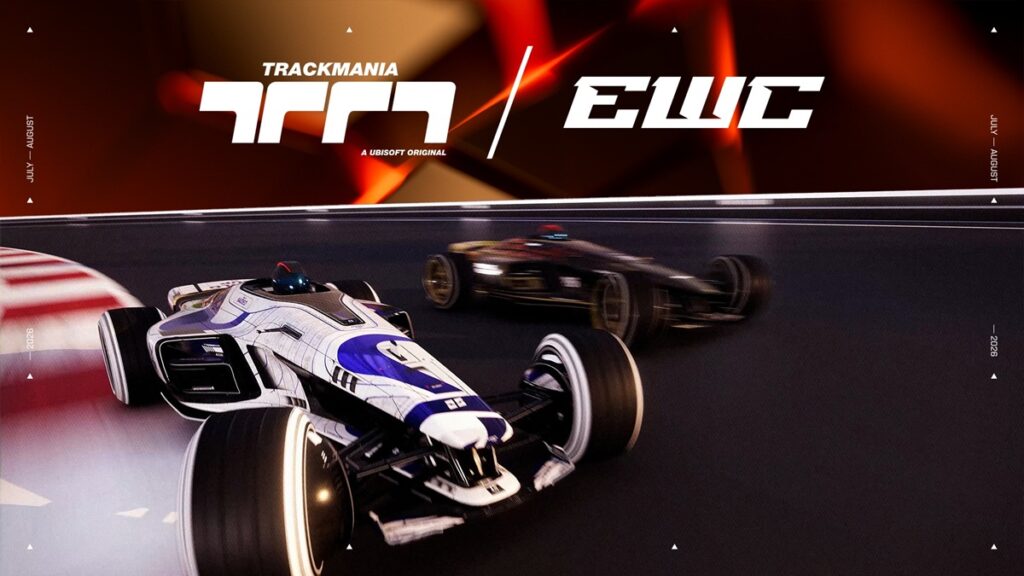
Twenty-four competitive titles, including new additions Fortnite and Trackmania, will showcase the best Clubs, players and talent the esports world has to offer on stage at EWC 2026 in Riyadh this summer. The EWC 2026 lineup of games features: Apex Legends, Call of Duty: Black Ops 7, Call of Duty: Warzone, Chess, Counter-Strike 2, Crossfire, Dota 2, EA Sports FC 26, Fatal Fury: City of the Wolves, Fortnite, Free Fire, Honor of Kings, League of Legends, Mobile Legends: Bang Bang, Overwatch 2, PUBG: Battlegrounds, PUBG Mobile, Rocket League, Street Fighter 6, Teamfight Tactics, Tekken 8, Tom Clancy’s Rainbow Six Siege X, Trackmania, and Valorant.
EWC 2026 competitions will be staged across seven weeks and multiple arenas, allowing several game championships to take place in parallel with a coordinated, multi-venue schedule designed to enhance fan experience and viewership across the lineup.
Tickets for EWC 2026 will be available starting January 22, 2026 at esportsworldcup.com, and through EWC 2026 international ticketing partners: Webook, India, Damai, and Tixr. Early Bird tickets include Weekly Access Passes, Premium Tournament Passes, and Hospitality Packages for the Esports Embassy, the EWC’s premium on-site hospitality destination.
The announcement builds on the landmark success of the Esports World Cup 2025. In its second year, EWC reached 750 million viewers worldwide and generated 350 million hours watched, with peak concurrent viewership of 7.98 million during the League of Legends at EWC ‘25 tournament.
Coverage was delivered across 28 platforms through 97 broadcast partners and more than 800 channels in 35 languages. Twenty-five tournaments spanning 24 games featured more than 2,000 players representing approximately 200 Clubs from over 100 countries. In Riyadh, the EWC and its Festival welcomed more than three million visitors over the seven-week event.
Expanding the EWC and the market for esports
“In 2025 we actually scaled to 25 tournaments,” said Esports World Cup Foundation’s chief games officer Fabian Scheuermann, in a press briefing. “We had 24 games. And there was a moderate growth. Our ambition is that we capture all important competitive titles globally and the ones that are there to stay, so that clubs have their planning cycle and they can really invest in those titles.”
The goal is to create stability so every team can invest more into the Esports World Cup. “We want to have community diversity, making sure that all competitive genres are covered in the right way. And there you will also see some changes regarding this for 2026 when it comes to titles.”
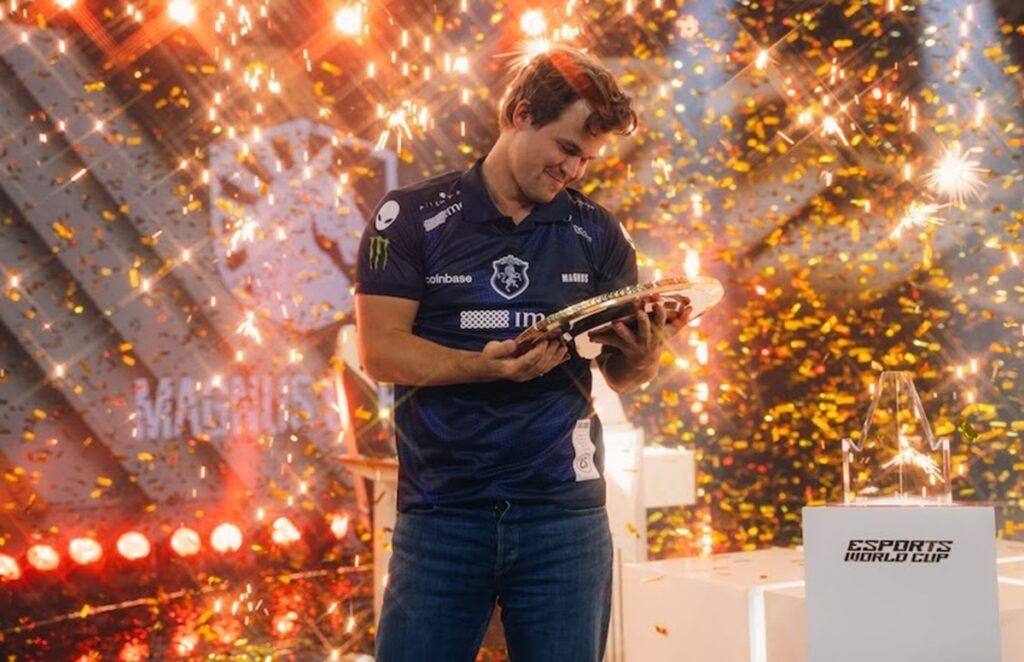
Crossfire is important for markets like China. The Esports Nations Cup, where teams are organized by nationality, will integrate with the EWC at some point, and so there has to be coordination on the games being played. Last year, the EWC added chess with star player Magnus Carlsen, but the attendance was light. Still, the game was worth it in part because it attracted a different kind of attendee than the usual esports audience, Scheuermann said.
Rainbow Six Siege will become a co-hosted title, rather than a third-party title. Fortnite has been added, and Trackmania will replace Rennsport.
“Chess hasn’t historically been endemic in esports, but we really felt strongly that it was an opportunity, and it deserved its place there,” McCabe said. “When we look at the scale of the digital chess community around the world and how it continues to grow, then from our perspective, it was worth that investment. It’s something that we’re continuing to invest in.”
Scheuermann said that there are different measures of hitting goals for the EWC, such as broadcast viewership, ticket sales, merchandise sales, and attracting tourists to the kingdom. There are emerging fan bases that the EWC wants to encourage, like fandom in India, where fans are passionate about supporting their players. And Saudi Arabia also wants to create jobs through game development, publishing, localization and more.
“One of the core objectives of the foundation is to support the esports ecosystem in driving growth across esports,” said McCabe. “We work very closely with the industry to try to support more pathways for players, operators, and for other people to ultimately make esports more competitive. But our targets are absolutely [growing the fandom to be on par with] real world traditional sports.”
McCabe was asked if the EWC could expand its event to other countries. So far, that isn’t happening for the next couple of years, but the group continues to evaluate the opportunity. The Esports Nations Cup will likely get off the ground and try to find another host country for 2028.
“That’s already a commitment that we’ve made and that we’re working towards,” McCabe said. “The desire is to spread the ecosystem around the world.”
McCabe said it is heartening that governments are leaning in and realizing that esports is a growth opportunity and it is something good to support from a community standpoint.
“[Esports] is one facet of many things that governments now are looking and taking gaming and game development more seriously, because pretty much everybody who’s born into the planet is playing games in some way,” McCabe said. “In Saudi Arabia, 75% of the population is under 35 and 70% of that population identifies as gamers.”
The ultimate aim is to make esports into a comparable tier one sporting ecosystem like tennis or soccer, McCabe said.
“We are growing esports to where it should be,” he said.
Is esports and the EWC becoming sustainable?
Asked how esports can get to sustainability, McCabe said the EWC doesn’t share its profitability targets. But he said it is definitely on track, and the multi-year investments are continuing.
“We’re able to build and evolve those relationships over time, then we’re able to work and expand the types of sponsors, the categories of sponsorship within esports that haven’t historically existed before,” McCabe said. “So sponsorship is definitely moving in the right direction. Ticket sales are increasing beyond our expectations, which is also positive as well. And then broadcast and other revenue streams, merchandise, and other things. So yes, we’re on the path to where we projected to be for 2030.”
In addition, since EWC is a nonprofit, it has other aims in mind too like growing tourism in Saudi Arabia and creating more jobs in the region in digital markets. Sponsors like Hilton hotels are coming in as non-endemic to esports.
“Sponsorship, ticketing, broadcast, merchandise and other revenue streams are what we’re looking to explore in the future,” McCabe said. “And they’re all definitely going in the right direction.”
Scheuermann said the organization is trying to attract more women into the esports ecosystem, and he noted, “It can’t be only us who are supporting women. If there is a robust ecosystem, if they’re growing, we’re super happy to include them in the future,” he said. But the leaders did not specifically address LGBTQ+ audiences or players.