

CES 2026 came to a close yesterday in Las Vegas, after six grueling days for press folks like me.
I wrote 55 stories that run during CES and I walked 96,421 steps, or 45 miles across the show floors in the Las Vegas Convention Center, Venetian Expo, the Wynn, Paris, the Bellagio and Mandalay Bay hotels and more during the show.
One thing was already clear before I went to the show — even with the pullback of some major companies from the show floor. We’re in a huge Cambrian explosion of AI products — many of them from Chinese companies — that are showing up in every part of the show.
The Consumer Technology Association, which puts on the show, expected comparable attendance to the 142,465 that showed up a year ago. [Update] In fact, it drew more than148,000 attendees, up 4% from a year ago. I was one of 6,900 journalists at the show. My mission as usual was to walk the floors and find the best stuff at the show. There were 4,100 exhibitors across 2.6 million square feet of exhibit space.
At or ahead of CES 2025, I recorded dozens of press events, interviews, and sessions. My conclusion is not so different from last year. The robots are coming. They’re pretty wonky now, but I can see them getting better. I can’t say there were any fantastic humanoid robots at the show this year — nor were there flying cars — and so they are not yet on my list. But the potential is there, as you can see in my Nvidia Vera Rubin post below.

In 2025, I walked 46.79 miles, or 105,433 steps, over 5.5 days. The year before that, in 2024, I walked 46.78 miles, or 105,407 steps, over six days compared with 38.81 miles (or 87,447 steps) in 2023. My feet are sore, but an arch prosthetic helped me out this year.
This year, I moderated a CES panel on the future of and alternatives to triple-A gaming as represented by Night Street Games, Nex Playground, Virtuos and even Ubisoft’s own Anno team. I have a lot more stories to write based on interviews I did at the show. This story is about the coolest tech I saw in Las Vegas. If you had some FOMO from not going to the show, maybe this list of items will help you feel better.
As I said going into the show, I was hoping this would be a magical year for new technology, triggered by the gift of generative AI and agentic AI. Nvidia CEO Jensen Huang promised this time that this year we would see much smarter robots that would benefit from all of the synthetic testing in digital twins. Huang and Nvidia executives Rev Lebaredian and Dion Harris (whom I interviewed at the show) said that promise will be fulfilled this year as swarms of robots hit the market.
Now it’s time to begin to analyze and make some sense of this tsunami of products, services and ideas that surfaced at CES. I hope you like these ideas, whether they are concepts or finished products. Here’s my list from last year at CES 2025, CES 2024, CES 2023 and the year before at CES 2022.
This year,the CTA expected expected to have more than 4,500 exhibitors across 2.5 million net square feet of space. This year, the emphasis was on AI of course, as well as the foundational companies that make it possible like Nvidia, AMD, and PC distribution companies like Lenovo. This list isn’t evaluated in terms of competitiveness in the market or best cost or pricing. It’s simply about the things I liked at the show and the people behind them.
Lego Smart Play
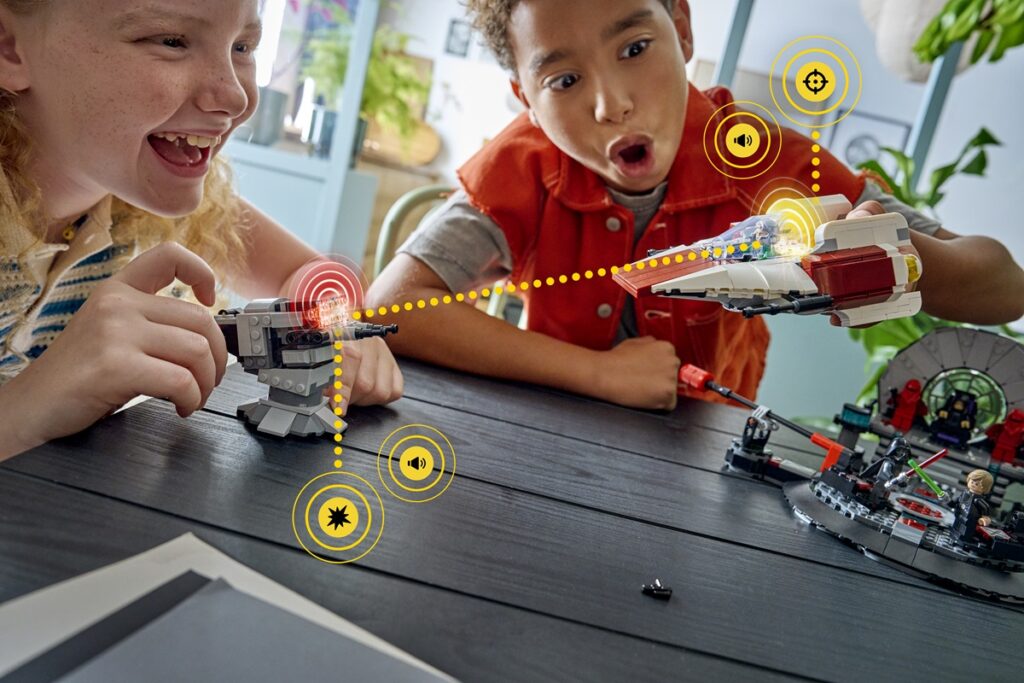
It’s funny that one of the most interesting products at the show came from Lego, a 94-year-old company.
The Lego Smart Brick is just plastic 2×4 Lego brick, but it has a transparent top and a custom chip inside with wireless charging and sensors like a gyroscope, microphones and a sound maker. The gadgets are backed by 20 patents and a partnership with Disney on Star Wars.
It’s one of the biggest changes to Lego since the introduction of the modern Lego brick in 1958 and the Minifigure in 1978. In this case, you can bring Darth Vader close to the toys and the Imperial theme music starts playing. The bricks can detect each other’s proximity and bring the toys to life in a way that could delight kids. Lego Smart Play is a responsive play experience.
Neurable
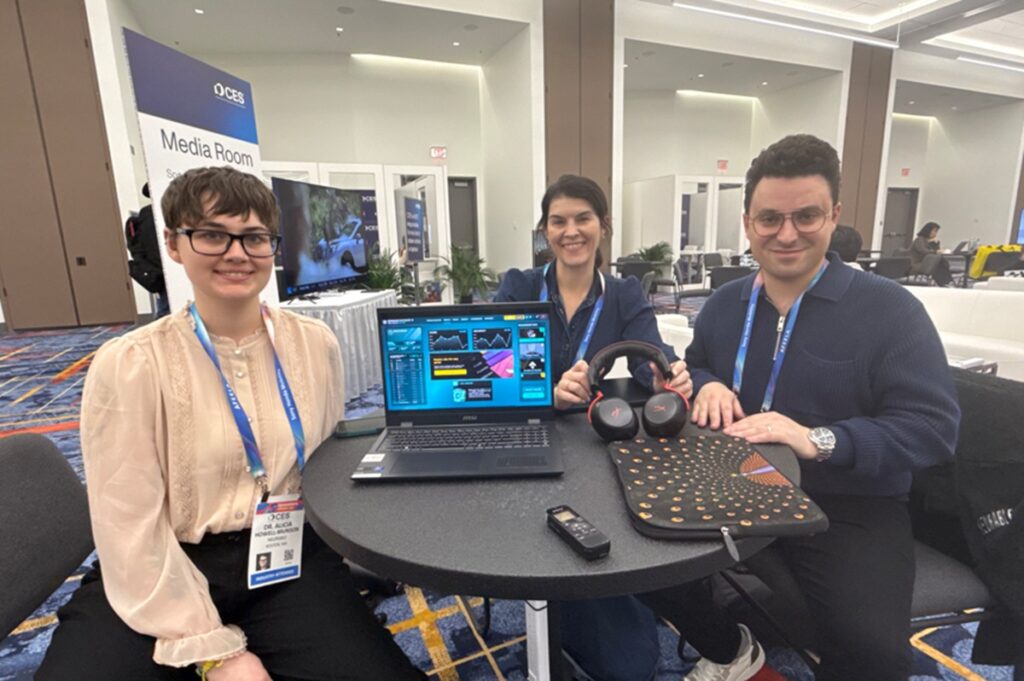
Born from academic research on the power of play, Neurable showed up at CES 2026 with a partnership wit HP’s HyperX gaming brand. They’re developing a gaming headset outfitted with neurotechnology.
Neurable embeds brainwave sensors in the cups of a HyperX gaming headset and interprets brain activity in real time. I did a test with it and played a round of Aimlabs on a laptop that captured my responses (using just a laptop trackpad). Neurable recorded how fast I aimed at targets, my accuracy rate, and the total time it took me to take out targets. Then I did a short meditation with Neurable where I concentrated on images and counted numbers while doing it. This focused concentration put me in a state of flow, or intense focus.
Then I played a round of Aimlabs again and all of my numbers went up. My accuracy went from 90% to 97%, my points scored was far higher, and the time it took me to get through it was about 20% faster. In my first play, I scored 16,096 points and had 90.1% accuracy with a reaction time of 919 milliseconds. You can see how much better the second round was in this image.
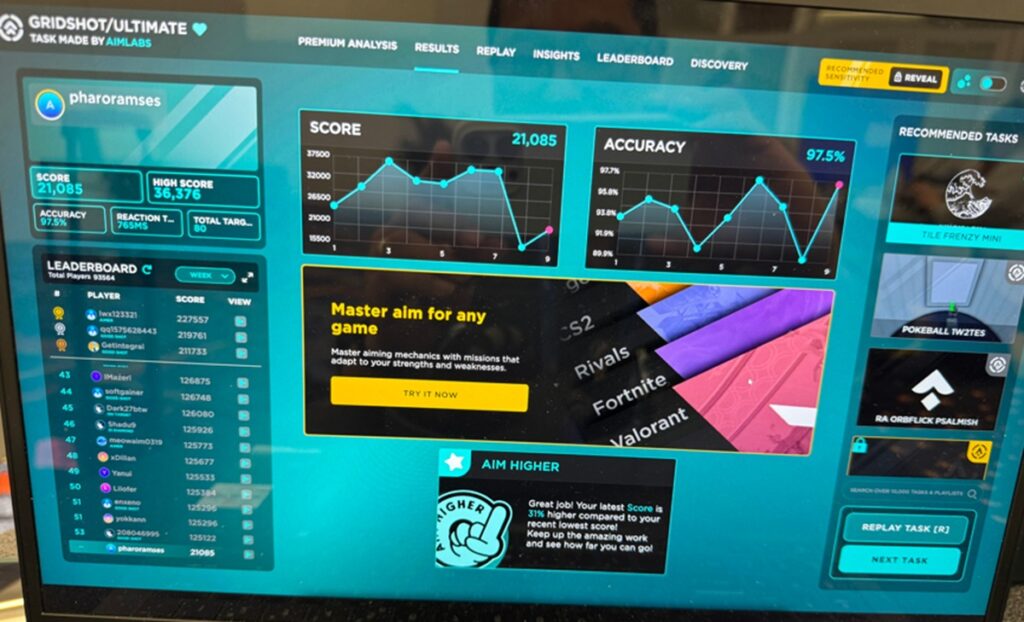
It’s just one test, but it’s a sign of the power of concentration. This uses principles of neurofeedback to improve reaction time and reduce error in gameplay. It works with collegiate athletes, esports stars, and common players.
Neurable has been in the works for ten years, after the team first collaborated with HTC in virtual reality and Master & Dynamic in headphones. Now it’s going after the gamers via the partnership with HP’s HyperX.
It made me believe that with some training and some meditation, I could easily improve my performance in a first-person shooter game. Neurable has raised $65 million to date.
Dnsys exoskeleton
There were lots of exoskeletons on display at CES. But I took some time to try out the Dnsys leg and knee exoskeletons, which you can strap on quickly. The leg exoskeleton, which has a Death Stranding 2 promo partnership, can last for eight hours of walking, while the knee exoskeleton helps you climb up stairs and lasts for five hours.
As I walked with the leg exoskeleton, I could feel it lifting my whole leg upward so that the muscles of my leg didn’t have to work as hard. And while wearing the knee exoskeleton, I was able to climb stairs more easily. In this way, the exoskeleton technology is great for accessibility, enabling elderly or mobility-challenged people to walk farther than they ordinarily could and with less hardship.
The exoskeletons sell for $799 to $1,000. Dnsys cut a promotional deal with Hideo Kojima’s Kojima Productions, whose game Death Stranding 2 features a mail carrier who travels with heavy package loads. The carrier uses an exoskeleton to help him carry huge stacks of packages for great distances. It’s a great brand fit, and it sells for $2,000. Perhaps it’s no surprise that this is another product from a Chinese company.
Coro smart breastfeeding monitor
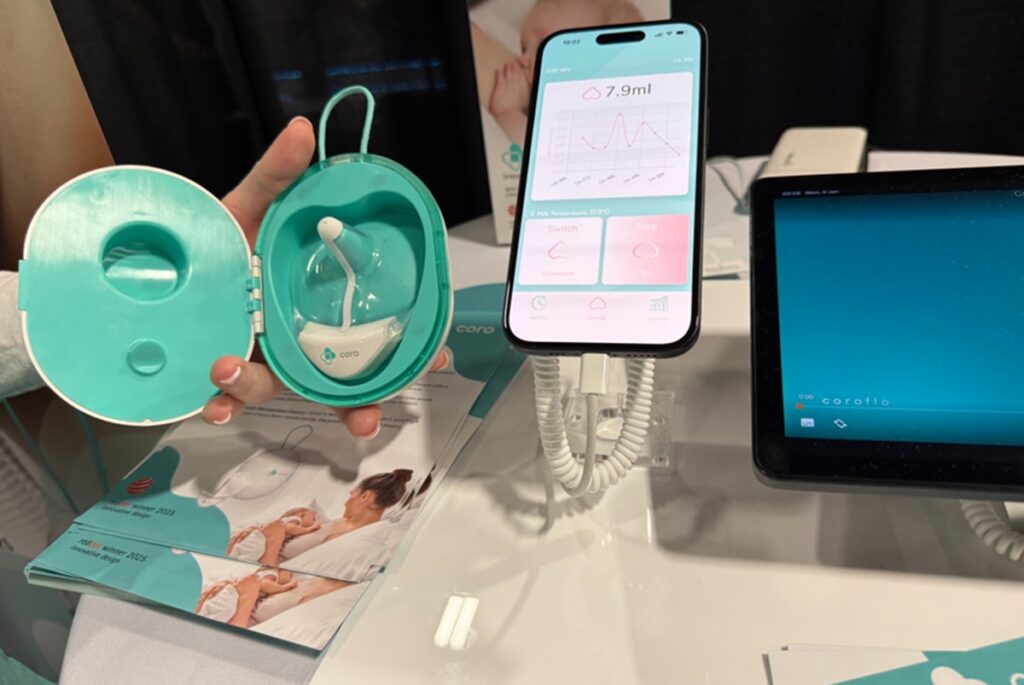
Tech products used to be marketed only at young men. But in the past decade or so, the marketing umbrella has broadened, now it’s common to find products that cater to women. One such product at the show was Coro’s smart nipple shield. Not only does it protect women from the sharp grip of a newborn. It also measures the flow of milk that flows through the shield as the baby feeds.
Coro turns this into a real-time data feed for an app, which parents can view as a baby feeds. It can give peace of mind to those with premature babies about whether the baby is getting enough milk with each feeding.
It has a thin silicone shield with a built-in flow sensor. It tracks accurately to a hundredth of a milliliter. The analytics from the data can tell parents about the adequacy of feedings, track patterns and provide oher insights.
It’s the brainchild of wife-and-husband team Helen Barry, a doctor, and her husband Jamie Travers. They had a small baby and had to take the baby in regularly to measure weight gain, as that was the only way to tell if it was getting enough milk. Then they tried to solve the problem so other parents could deal with challenges like premature babies more easily. Rosanne Longmore joined them as a cofounder of Coro.
Allergen Alert

Allergen Alert was born from a severe allergy. Margot Roche had a severe allergy to milk and eggs. She tried to avoid these foods, but going out to eat she found it was easy to be exposed to them through food contamination at restaurants and stores. And so her mother Benedicte Astier and the Allergent Alert team went into action to develop a test.
They can take a sample of food and immediately determine if it has any of nine common allergens that can cause severe reactions in those who are allergic to them. Allergies are getting worse around the world. And so this tech can be useful to the 250 million or so people with severe allergies around the world. Every 10 seconds, the company said, someone is admitted to the emergency room for anaphylaxis.

Allergen Alert’s mini lab absorbs a sample. Then it runs the test and reports the results on your smartphone app. The company said it can test for the presence of gluten, wheat, milk, soya, fish, shellfish, eggs, sesame, peanuts and tree nuts. The idea is to restore someone’s confidence in going out to eat without the danger of an allergic attack.
Lenovo Legion Pro Rollable
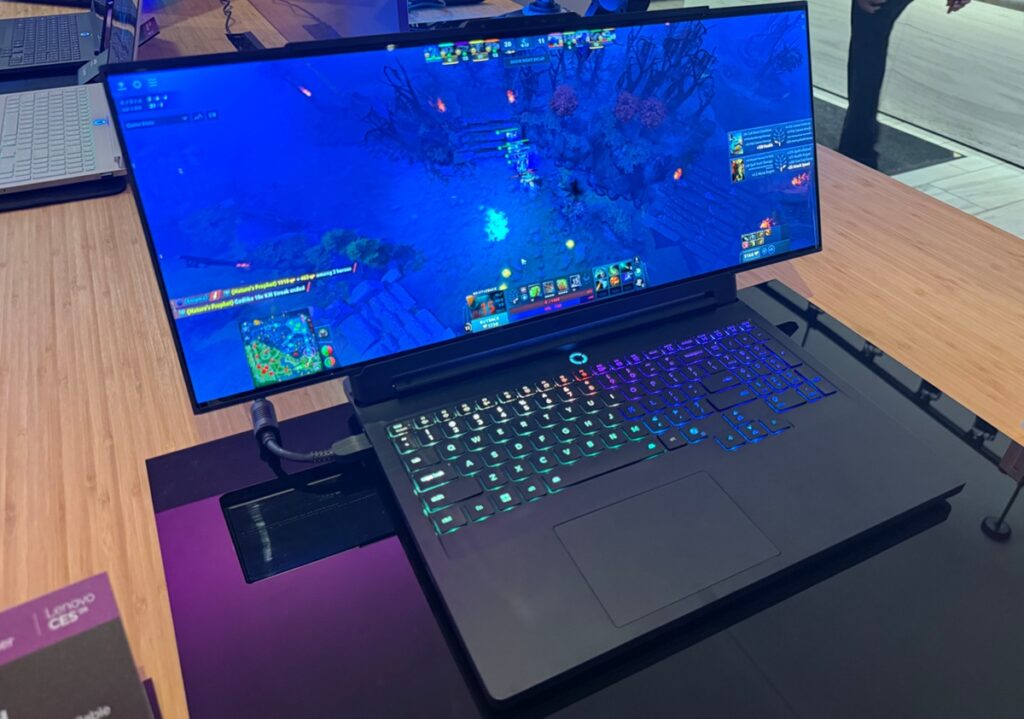
This is a gaming laptop with rollable display, meaning it can unroll itself and extend the screen’s length from 16 inches to 23.8 inches. It makes multitasking easer but it also allows you to play games with more screen space.
You just touch a button and the screen widens while in the middle of a game. It started out as a standard Legion Pro 7i gaming laptop with an Nvidia RTX 5090 GPU. As it rolls out horizontally, you can choose whether or not to use a 21:9 aspect ratio or an ultra-wide 24:9 ratio. You can just as easily shrink the screen back to a 16-inch normal laptop.
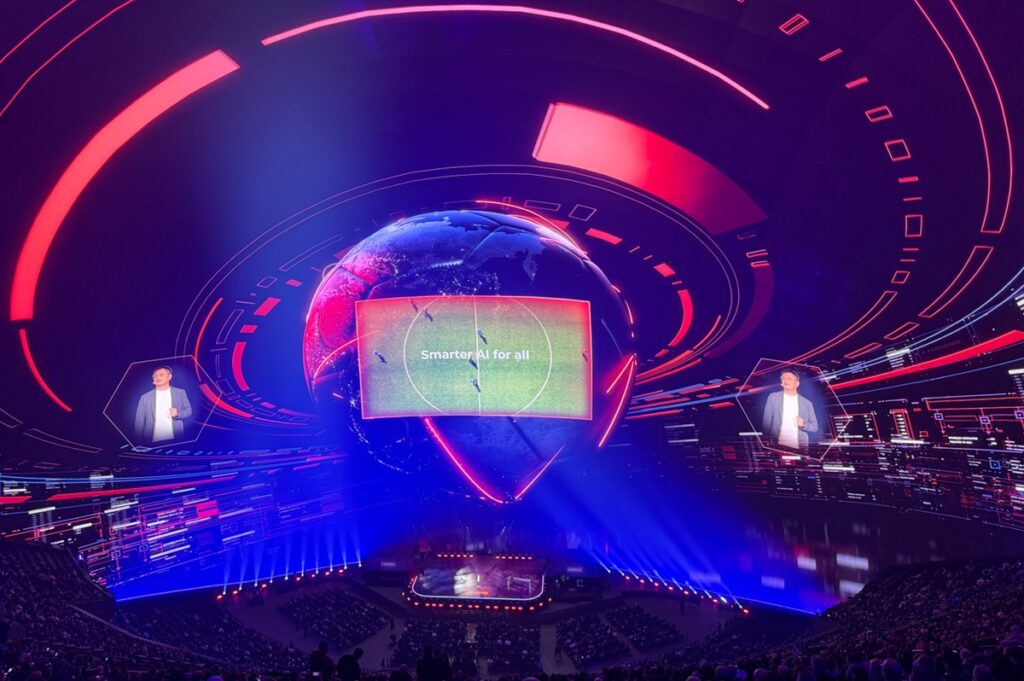
This is just one of many concepts that Lenovo had at the show, as it trotted out as many new ideas and products as it could for the keynote that Lenovo CEO Yuanqing Yang gave at The Sphere, ahead of a concert at the Las Vegas venue by Gwen Stefani. The Chinese company is one of many that flexed its brand awareness at the show.
LG Wallpaper TV
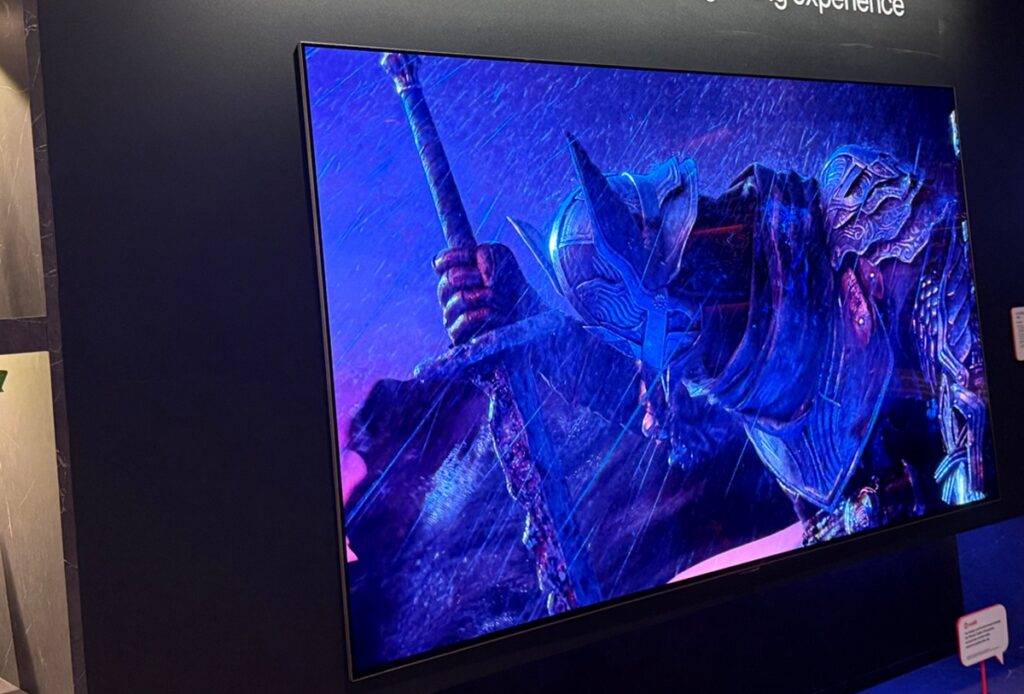
The LG W6 wireless television made a grand entry during the first press briefing of CES. The Wallpaper TV is just 9.9 millimeters thick, and it uses LG’s advanced OLED panel, the Primary RGB Tandem 2.0.
The TV can blend into a wall with your other art work in a living room. The device uses a wireless connections box, and that means there won’t be a huge bunch of wires leading into the TV. It can still deliver full-quality 4K HDR images.
Pricing is to be determined, but this long-teased TV is expected soon. Needless to say, LG used gaming to show off the TV.
Lollipop Star

Lollipop Star was among the weirdest innovations I came across at CES. At the Pepcom party, a company rep pulled me over to the booth and explained why a lollipop was part of the show.
I opened the strawberry-flavored lollipop with the picture of Ice Spice and the song Munch, Baddie Baddie, Big Buy.” I sucked on the lollipop for a while and the rep told me to bite down on the plastic/lollipop. As I did so, music started to play. But no one else could hear it, and it wasn’t coming in through my ears.

Rather, it was coming in through bone conduction. The bones of my teeth carried the vibrations of the music to the bones of my ear. The bone conducted the music to my ears, much the same way that Meta Ray-Ban’s glasses convey sound via the bones of your head through the side frames of the glasses. The sound was soft, and the rep gave me ear plugs so I could hear it better. It was pretty creative and wacky at the same time.
You can buy a Lollipop Star for $8.99. Lava Tech Brands created it to merge the notions of taste and sound by embedding bone condution technology in the lollipop stick.
Pebble
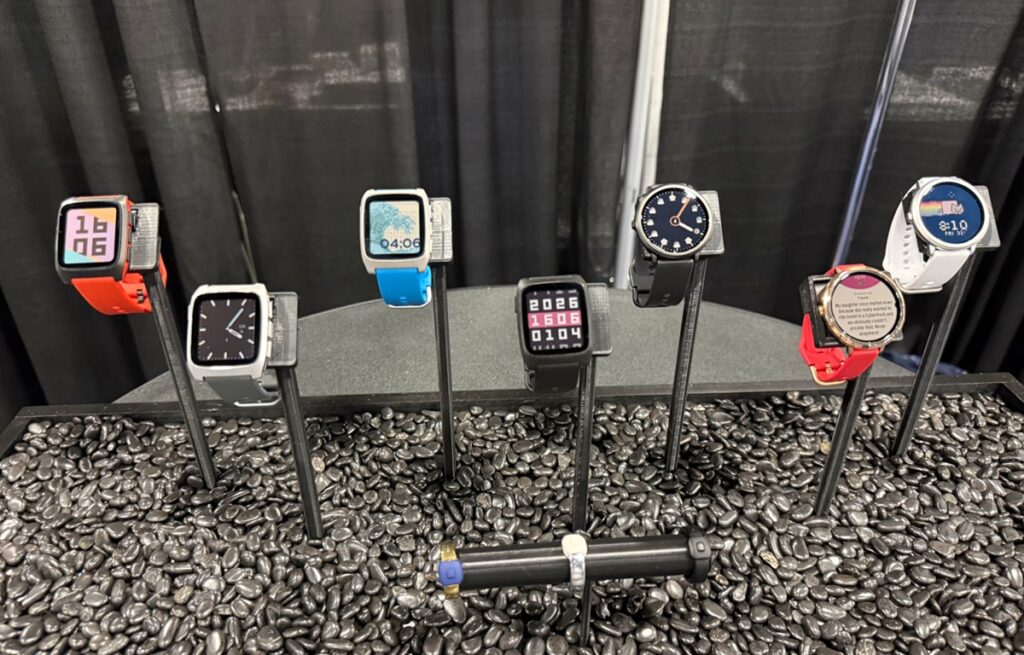
Eric Migicovsky took a long journey to get back to CES. An engineer and entrepreneur, Magicovsky started Pebble in 2012 after a successful Kickstarter campaign that raised $10.3 million.
He pioneered the wearable market with products like the Pebble smartwatch. After struggles in the market, Migicovsky shut down the company and sold the intellectual property to Fitbit in 2016 for $23 million. But the effort fizzled there and it ceased in 2018. Google acquired Fitbit in 2021. In a brief interview with GamesBeat at CES 2026, Migicovsky said he asked Google to open source the Pebble technology and it did so in January 2025.
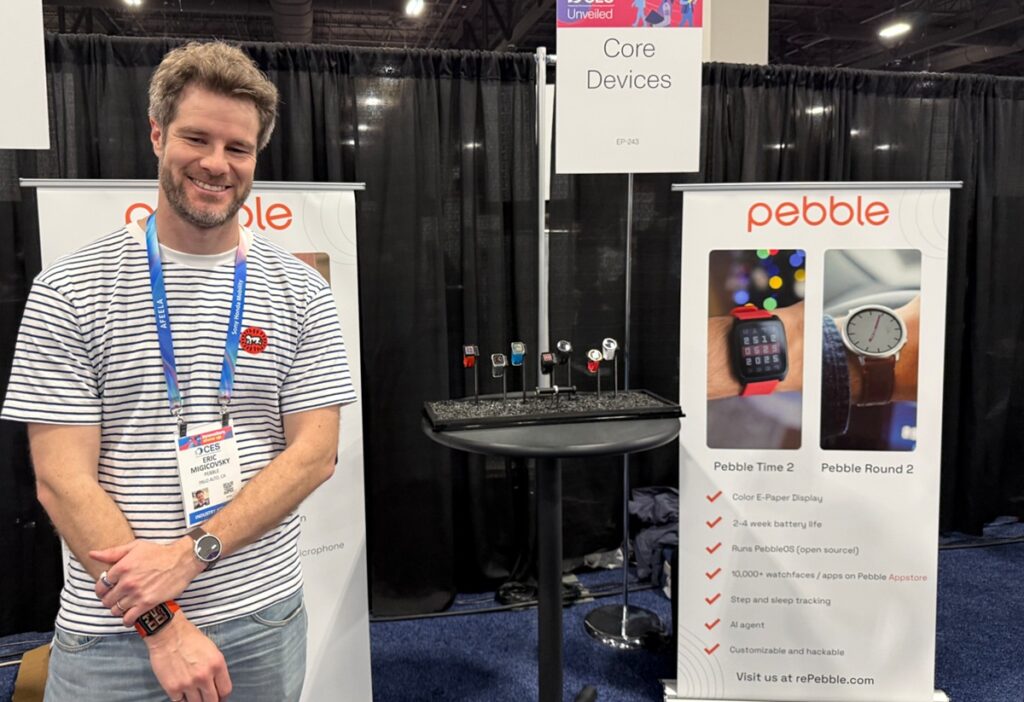
“They published it to GitHub, and then we started making watches again,” said Migicovsky.
Migicovsky had taken a nine-year break. Then he bought the brand back.
“In the intervening years between we sold the company and when we restarted it, I tried every other smartwatch out there to see if there would be an adequate replacement for what I love,” he said.
And so he restarted Pebble and formed Core Devices to make new Pebble gear. (His company is not to be confused with a rival developer effort dubbed Rebble).Core Devices has launched two new Pebble watches — both that have enormous battery lives because they use the e-paper technology to deliver basic watch screen. It does sleep tracking and tracks your heart rate, and it also has buttons.
“The battery life lasts week instead of days,” he said. “It’s because Pebble is quite different with an e-paper screen. It’s not designed to be a replacement for your phone on your wrist. It’s meant to show you notifications time and just kind of fall back into the background, rather than being like a bright phone on your wrist.”
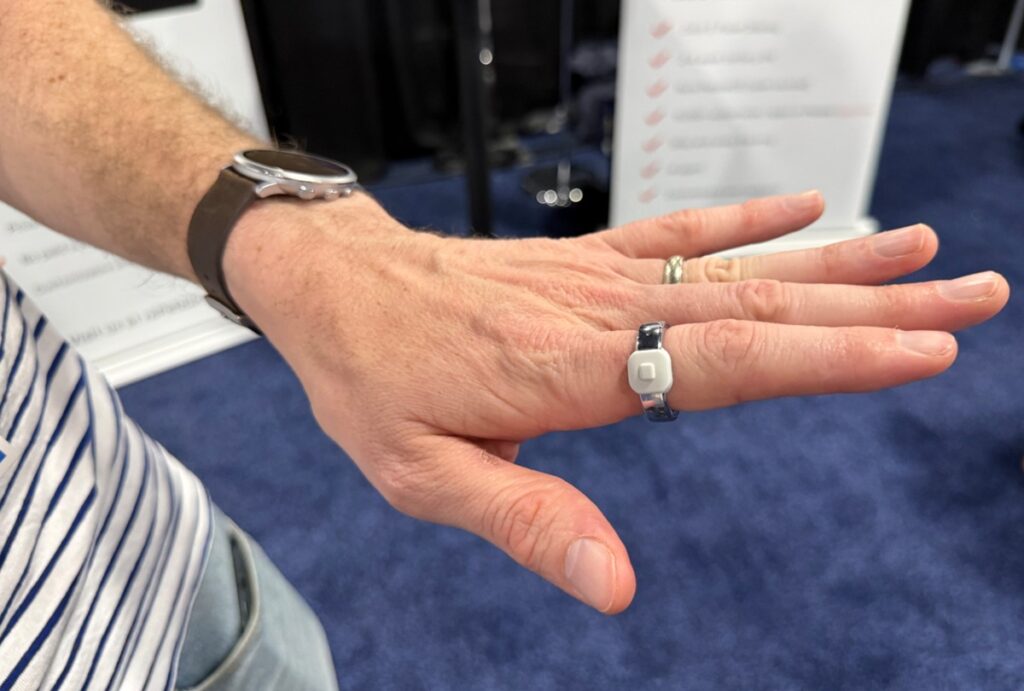
Migicovsky showed off those watches and more at CES Unveiled, and he also showed a new ring, Index, whose only purpose is to record reminders of things that you think about during the day. You can record your thoughts instantly by pressing a button on the ring.
“This was designed specifically to solve a personal problem. During the day, “I’ll have ideas and if I don’t write them down that second, they will just slip my mind. I can talk and say, ‘Remind me at 2 p.m. to pick up the kids. That’s it.”
The team doing this is just about five people.
I was also impressed with these products and I will fill them out shortly.
Razer Project Ava
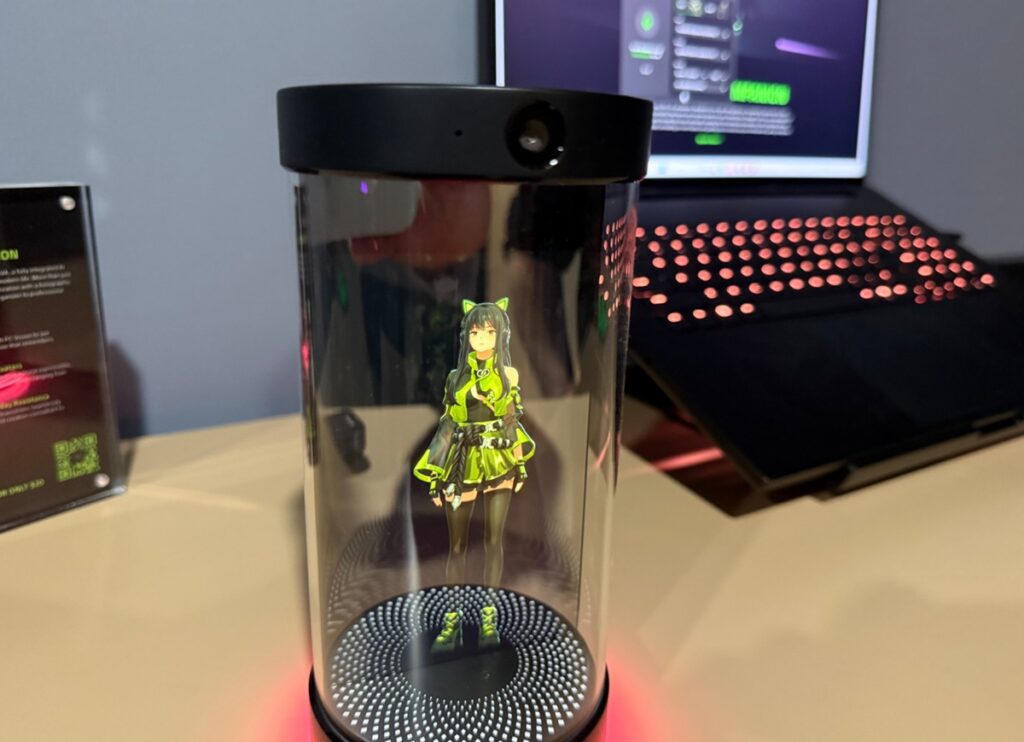
You could see Razer’s Project Ava as fascinating or creepy, depending on your view of AI companions. But this concept project from Razer is aimed at entertaining gamers with AI characters who understand gamers and how to chat with them.
We saw a demo that showed Ava could handle communications like sounding your alarm in the morning or talking about how to improve your gaming skills. Ava can also organize your schedule or consult on work tasks. Ava is a 5.5-inch talk 3D hologram who talks to you in a human voice. It’s a concept project from Razer, the gaming enthusiast company.
Nvidia Vera Rubin
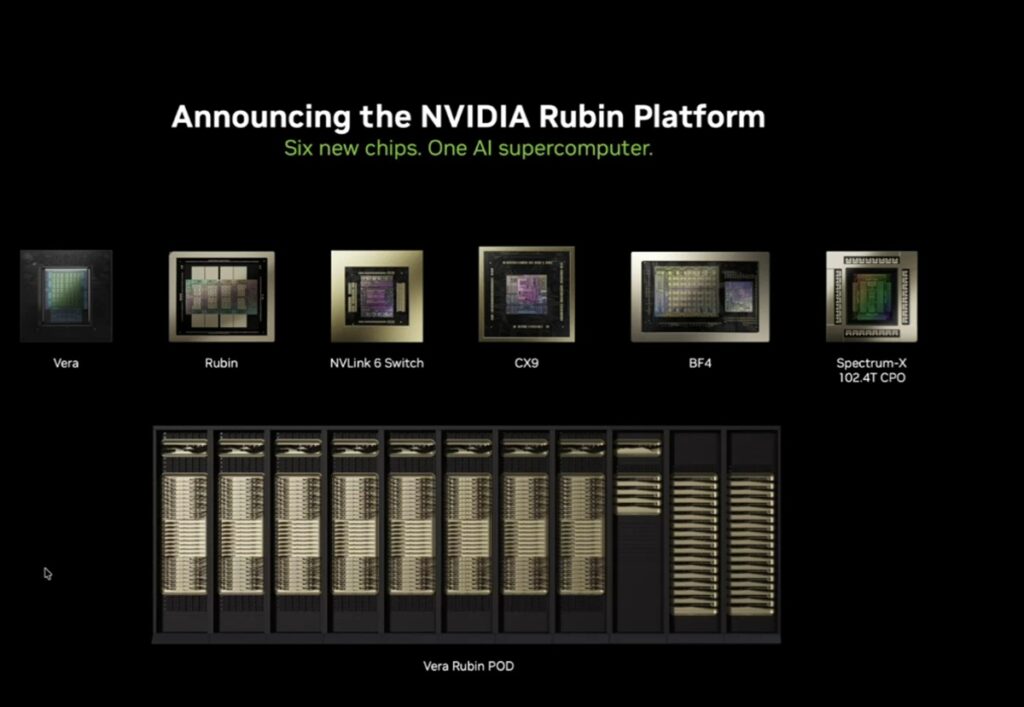
Nvidia announced its Vera Rubin AI processor and five other companion chips for the rest of the AI supercomputer platform at CES. Normally, it’s pretty hard to get excited about a semiconductor chip that isn’t really so tangible.
But chips like this one and others coming from other big chipmakers like AMD, Qualcomm and others will provide the foundation for AI infrastructure, such as huge data centers, that in turn will become the linchpin of the AI economy. The cool thing about Vera Rubin is that it can process AI tokens at a 10th of the cost of the prior generation.
Nvidia is making agentic AI into a reality by building a full software stack that includes Cosmos world models, GR00T robotics tech and its Isaac robot platform. The combination of all of the work can accelerate the creation of robots that can change the world’s economy.
This is why Nvidia is worth $4.5 trillion in the stock market. Some of this robot creation could hurt jobs, but the company and its advocates believe that the robots will address huge human shortages for workers and will not destroy human jobs. But Pandora’s box is open, and we’ll see how much the world — and technology products — will change.
Brunswick’s Simrad AI Captain
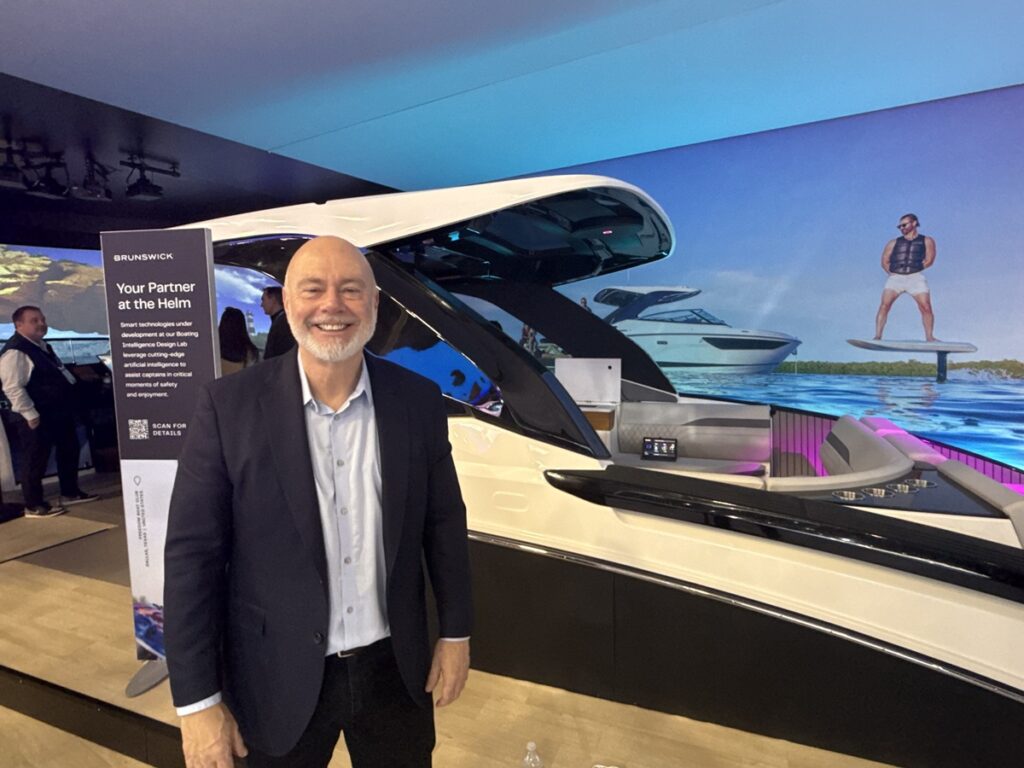
Brunswick has shown up for a few years at CES with automated boating technology. Last year, it showed off how it could use AI to guide boats into docking. That helped make it easier for larger numbers of boat owners to dock their expensive recreational boats.
And this year, the company showed up with its Simrad AutoCaptain autonomous boating system. Developed by Brunswick’s Simrad Marine Electronics, the AutoCaptain can help human captains with route planning, short-distance maneuvering and docking. These tasks are among the most stressful even for veteran captains, and so the tech is meant to alleviate human stress so people can get the job done more easily.
The AutoCaptain taps the different cameras that are already equipped on Brunswick’s boating fleet. Over time, it’s possible that more sensors for long-range vision could be added to the system.

In addition to assisting seasoned captains with difficult maneuvers, Simrad also lets more amateur pilots take the helm, allowing an AI copilot to guide them through things like autonomous docking, real-time navigation prompts, and hands-free maneuvering. This technology is a glimpse into the future of marine autonomy.
Sunled Life Science
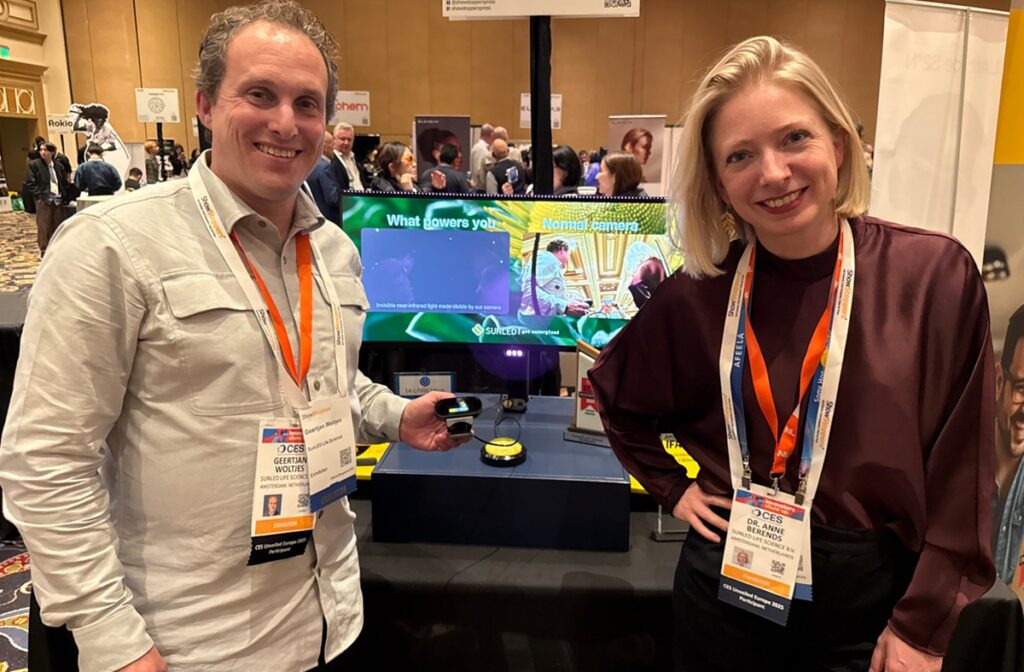
The folks at Sunled Life Science want to bring more sunshine into our lives. Anne Berends has studied the challenge of doing this for a long time, and she started the company to bring more healthy light such as near infrared into our lives.
And the company has come up with SunBooster, which looks like a webcam. The purpose of the Dutch-based company is to shine good light from the near infrared spectrum on people while they’re stuck indoors in front of computers. This is different from the need to shine blue light at people to wake them up during the day or have less blue light in the evening so they can sleep better.
Berends said that up to 50% of outdoor light consists of near-infrared light. This invisible part of the solar spectrum is healthy for us. But people spend 90% of their waking hours indoors deprived of near-infrared light as even our window glazing blocks it.
Innovega Smart Glasses
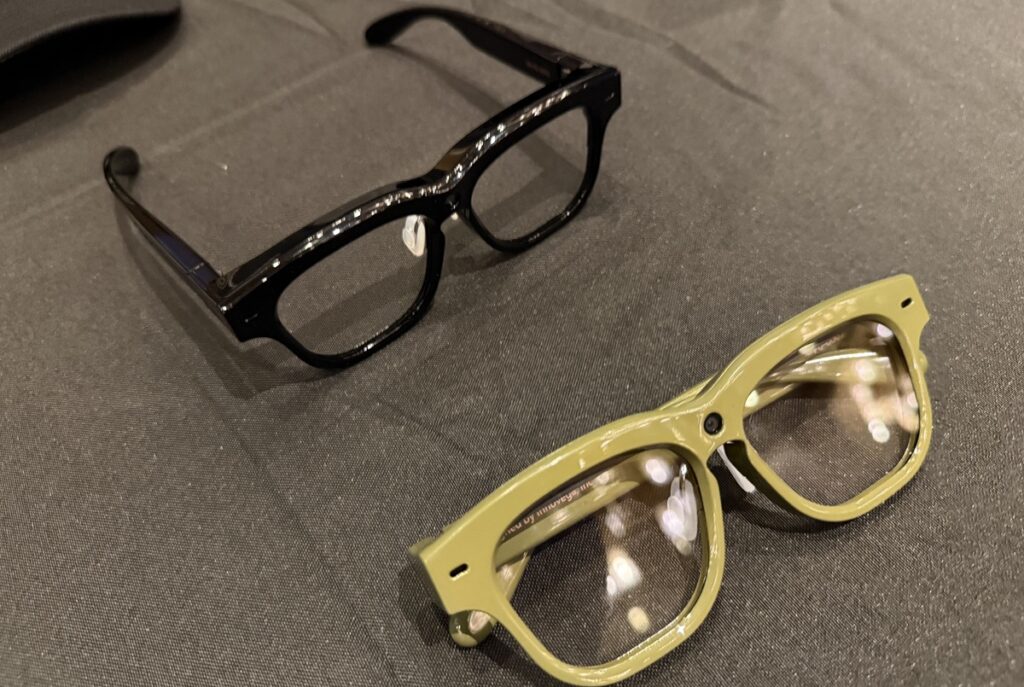
Glasses are going through big changes. IXI is showing off its autofocus glasses. But Innovega also showed off its AI-powered smart glasses for low vision.
The company is producing glasses that look like ordinary eyewear, but they can combine advanced optics and intelligent image processing to enhance what the wearer is trying to see (text, faces, screens and environments) while staying fully aware of the real world.
More than 295 million people around the world live with moderate to severe vision impairment, yet assistive tools for low vision remain bulky or impractical. Innovega wants to change that. The smart glasses use a built-in camera to capture what’s in front of the wearer. This image can be adjusted in rel time to match an individual’s vision needs, helping important details stand out while keeping the rest of the world visible. It’s designed to help support the vision that people already have.
The company hopes to launch its glasses in 2026.
Nex Playground: An update on the fourth game console
Last year, I predicted that the Nex Playground, a motion-sensing game machine, could be the fourth game console in the living room.
This year I caught up again with Nex CEO David Lee, president Thomas Kang, and vice president of publishing Stephen Saiz.
They noted that my prediction came true. A year ago, it had sold only 150,000 units. But during the holidays, Nex outsold the Xbox Series X/S in the U.S. on Black Friday. So far, it has sold 800,000 units and is now expanding into Canada. Nex expects the $250 machine (with a $89 subscription for all games for a year or $49 for three months) will be in 5,800 stores in 2026.
Kang reminded me they’re a mission-driven company focused on families. They want to get them to play together the way that the Nintendo Wii did with a motion-based controller. But Nex uses more modern camera tech to turn your whole body into a game controller. This fulfills the other side of the mission, which is to get kids and families exercising together in their own living rooms.
And this year at CES, I played a game of tennis on the Nex Playground — with another player on another machine. This raises the notion of Kang playing a game across the internet with his mother in Chicago.
Here’s what I wrote about Nex last year.
Nex Playground could be the fourth gaming console

Nex Playground is a game console that debuted last year in the motion-sensing category. Nex detects your body motion so you can control games without a controller. And I played Fruit Ninja in a demo of the platform at CES 2025.
That means you can slice and chop with you hands and see the movements slicing through falling fruit in the Fruit Ninja game. There was a bit of latency I had to get used to and I was told to move my hands faster for the motion-sensing to work properly. But CEO David Lee, who did a proper demo of multiple games for me, noted that the system is meant to be highly accessible.
It’s targeting kids who are three years old to eight years old — a group that Nintendo once dominated but has now lost to smartphones. If Nex can capture this audience, and their parents, it could have a defensible niche in a market that the likes of Sony and Xbox have left behind, due to their higher-priced consoles and focus on 3D realism.
Just as Nintendo is undercutting Sony and Xbox with its cheaper Switch hybrid console, Nex hopes to undercut Nintendo on pricing, said Nex president Tom Kang.

Nex sells for just $199 and a subscription of $89 a year ($7 a month) gets you access to all the games on the platform. And if rumors of the Switch 2 are correct, Nintendo is moving upstream with a handheld gaming device that supports high-end games. That means the kids and families might opt for something like Nex, which is now in thousands of stores, instead.
In 2024, Nex sold about 140,000 units after launching on Amazon in May. That’s not much of a threat to Nintendo. But Kang said the device will be in 5,000 stores in 2025.
Kang was formerly vice president of immersive commerce at Walmart, and he decided to join San Jose, California-based Nex, which is headed by Lee, last year. Nex’s aim is to help families reconnect with the joy of movement through fun, social, and interactive content that’s accessible to all ages.

You can get five games with the system at the outset. And the system can provide all 34 games for subscribers. Lee said the company plans to release 20 games annually.
Up to four people can play together, and about half of all sessions are multiplayer. The fare includes arcade games, sports games, fitness games, and education.