
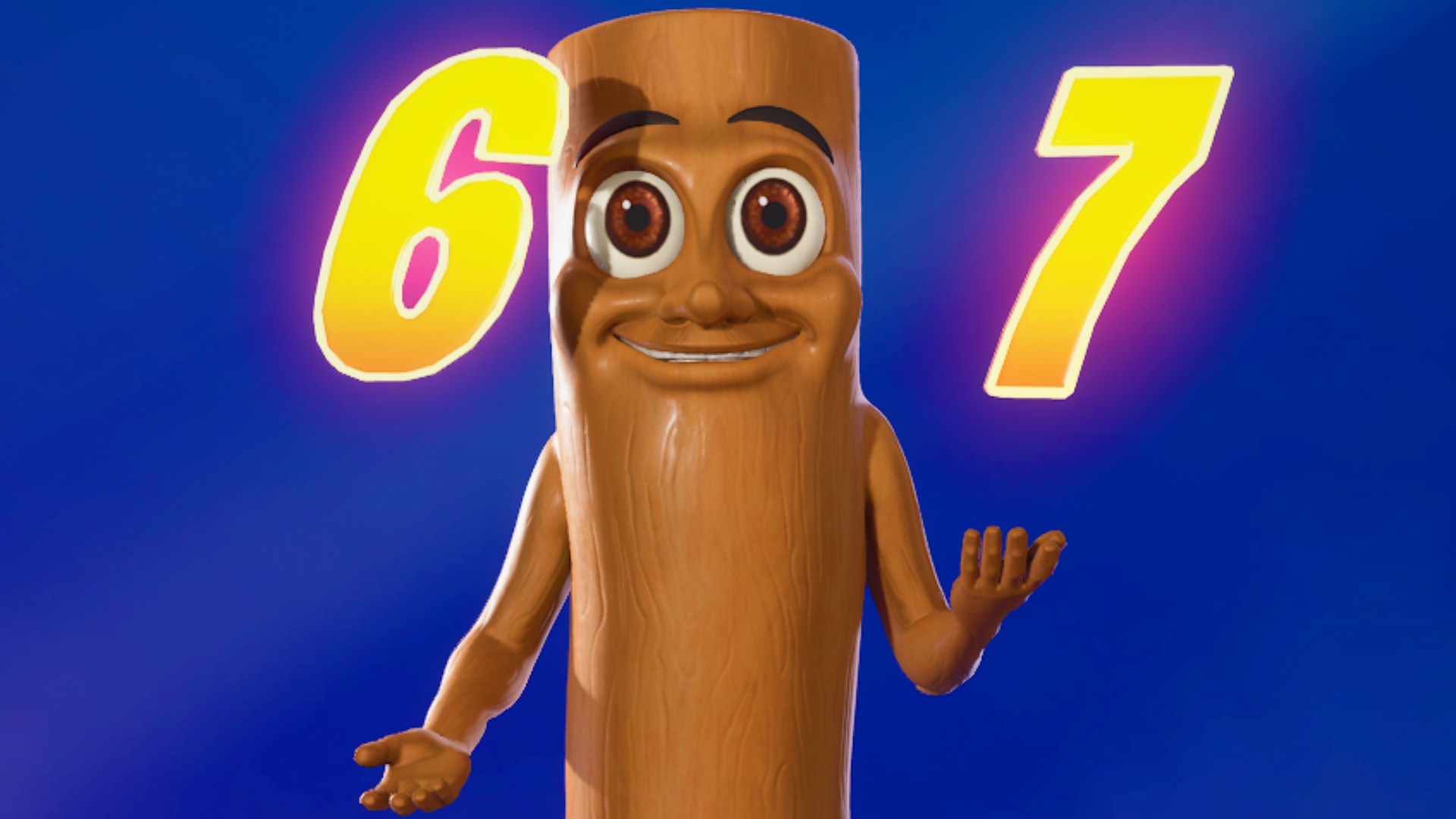
The ongoing legal dispute over the rights to AI-generated meme characters is about to enter a new phase.
It’s been eight months since Spyder Games, one of the companies behind the prominent Roblox experience Steal a Brainrot, sued the French company Mementum Labs over Mementum’s claims to own the so-called “Italian brainrot” character Tung Tung Tung Sahur. Both sides of the ongoing dispute over Italian brainrot ownership believe they are in the right, with Spyder Games arguing that Mementum Labs is unable to meet the human-authorship requirement for copyright and Mementum disputing this claim while pointing to the longstanding history of digital creators owning and profiting from their memes.
There is a significant amount of money on the line. The owners of viral characters like Tung Tung Tung Sahur stand to rake in hundreds of thousands or even millions of dollars through brand deals, merchandise, and in-game integrations like Fortnite’s Tung Tung Tung Sahur skin, which Epic Games released in early April as an official partnership with Mementum Labs. Mementum says it represents Fernanda Bagas Indrastata, also known as Noxa, the Indonesian creator who originated Tung Tung Tung Sahur.
Here’s a rundown of the latest developments and next steps in the legal dispute over ownership of AI-generated brainrot content.
The latest developments
On April 24, Mementum Labs filed a counterclaim to Spyder Games’ lawsuit that significantly changed the nature of the case. Spyder’s primary position in its initial November 2025 lawsuit was that it did not believe Mementum could legally claim copyright rights to AI-generated characters like Tung Tung Tung Sahur. Mementum’s April counterclaim asserts that these characters do have protectable, human-created elements — and that Mementum has valid trademark rights to its characters, expanding the battle beyond copyright law.
Spyder and Mementum are embroiled in another set of dueling claims and counterclaims. On June 10, Mementum filed a motion to dismiss Spyder’s copyright lawsuit after issuing a covenant not to sue Spyder for copyright infringement over specified uses of the disputed characters, arguing that this rendered the copyright dispute moot.
One reason why Mementum Labs decided to expand its focus into trademark rights is because trademark law is focused on how characters are actively used in commerce, as opposed to copyright law, which focuses more on the creative process behind a character, according to Steven Stein, a litigation partner at the legal firm Greenberg Glusker, which is representing Mementum Labs in the ongoing dispute.
“We absolutely believe that we have a copyright to these characters in the United States, but we’re not actually choosing to engage with Steal a Brainrot in that fight, and that isn’t the fight that we ever wanted to have,” Stein said in an interview with GamesBeat.
Mementum views its Tung Tung Tung Sahur licensing deal with Epic Games as “critical” validation of its commercial trademark by a major entity doing business in the gaming space, per Stein.
“Mementum celebrates its creators’ characters being used on social media and as memes — we love that, that’s great, because these characters were born of that culture,” Stein said. “It’s a little different when a big company takes your characters and generates more than eight figures in revenue every month.”
Spyder Games’ legal team is unfazed by the case’s expansion in scope to trademark law, believing the change in legal framework does not impact the underlying philosophical battle the company is waging against the concept of individual ownership of AI-generated content. In an interview with GamesBeat, Aaron Moss, a lawyer representing Spyder Games in the lawsuit and the writer of the copyright law blog Copyright Lately, framed the expansion to trademark law as a tacit admission by Mementum that the company’s copyright argument was too weak to include in its counterclaim. On May 15, Spyder filed a motion to dismiss Mementum’s counterclaims.
“Not only do they not assert a copyright claim, they executed a covenant not to sue, which is something you don’t see all that often, but is designed to essentially moot a controversy, which they are trying to do,” Moss said. “So, not only do they not want to bring an affirmative copyright claim against us — they do not want us to create law that will essentially neuter their business.”
As for Mementum’s licensing agreements with entities like Epic Games, Moss framed the deals as “naked licensing,” saying Mementum’s practice of retroactively granting licensing agreements to games using Tung Tung Tung Sahur could ultimately undermine its claims in court.
“To maintain a trademark, you need to exercise quality control. If you have a licensee, they need to follow a style guide; they need to be making sure that it meets the brand guidelines,” he said. “But here, they just took all these uses as they came, because they were ongoing before Mementum even got onto the scene.”
On the horizon
At this stage of the legal battle between Spyder Games and Mementum Labs, only one outcome appears to be assured: that the lawsuit is going to get dragged out for quite some time. On July 21, the judge granted each party leave to file amended pleadings — an amended complaint for Spyder and an amended counterclaim for Mementum. Moss told GamesBeat that he anticipated his side would likely file another motion to dismiss after this latest round of pleadings, using the same legal argument as before.
For now, both parties in the case are gearing up for a hearing on September 23, when the judge will hear arguments on exactly which legal claims are allowed to continue. Both Mementum’s motion to dismiss the copyright dispute and Spyder’s motion to dismiss Mementum’s counterclaims are on the docket for September 23.
Even if the U.S. court case reaches a decision in the coming year, the question of rights outside the United States to characters like Tung Tung Tung Sahur could continue to be debated in courts outside the United States for years to come.
“I don’t necessarily see the endgame here for Steal a Brainrot, because we still have a full suite of rights abroad,” Stein said. “I see that it’s been reported that there’s a film development deal for Steal a Brainrot, and it’s like, ‘well, how are you going to do those things abroad, if we have those rights?”
Another aspect of the case that is still up in the air is whether Mementum would have to give up any of the revenue the company has already generated from its claim to own Tung Tung Tung Sahur in the case of a legal defeat. In U.S. law, monetary awards in trademark infringement cases are less common than injunctive relief, according to Rose Kautz, an attorney at the law firm Hanson Bridgett, in an interview with GamesBeat.
The messaging war
On July 13, Mementum published a legal filing against another entity that had registered a trademark for Tung Tung Tung Sahur in the European Union. The filing outlined the prompts Noxa had entered into DALL-E AI to create his original image of Tung Tung Tung Sahur — a key element in the legal debate over the character’s human authorship. To create the image, Noxa used the initial prompt “draw a pentungan sahur with a face and legs,” following it up with additional prompts including ““neighborhood watch post kentungan,” “neighborhood watch post club,” and “a patrol pentungan with a single human leg,” according to Mementum’s filing.
In an emailed statement, Stein said the creative process behind Tung Tung Tung Sahur was not limited to a single prompt, with Noxa going through “numerous iterations, experiments, selections, refinements, and creative decisions before arriving at the final result.” He flagged a July 9 report published by the French Ministry of Culture that cited “Brainrot” characters as an example of AI-generated content whose creative process involved a significant amount of human authorship, as well as an October 2025 change to Italian copyright law stating content created with the assistance of AI tools was eligible for copyright protection as long as it is the result of the author’s own intellectual effort.
“We’re seeing a growing convergence among European institutions and lawmakers around the principle that the use of AI is fully compatible with copyright protection where there is genuine human creative contribution,” Stein said.
As the legal dispute over AI-generated meme ownership plays out, both sides of the case are concerned over the optics of the case, with both the plaintiff and defendant positioning themselves as warriors in a broader moral crusade. Moss framed the case as a battle to prevent Mementum and other entities from stifling creators’ use of AI-generated memes, which he described as developed and owned by the public; Stein described Mementum’s position as fighting for all creators’ ability to assert and monetize the rights to their content. In a fight over prominent and popularly beloved meme characters, both sides are keenly aware of the importance of being framed as the “good guy.”
“You can win in the court of law, and lose in the court of public opinion,” Kautz said. “If these lawsuits drag on for years, and this fad is over in six months, some businesses might ask — is it worth it?”