
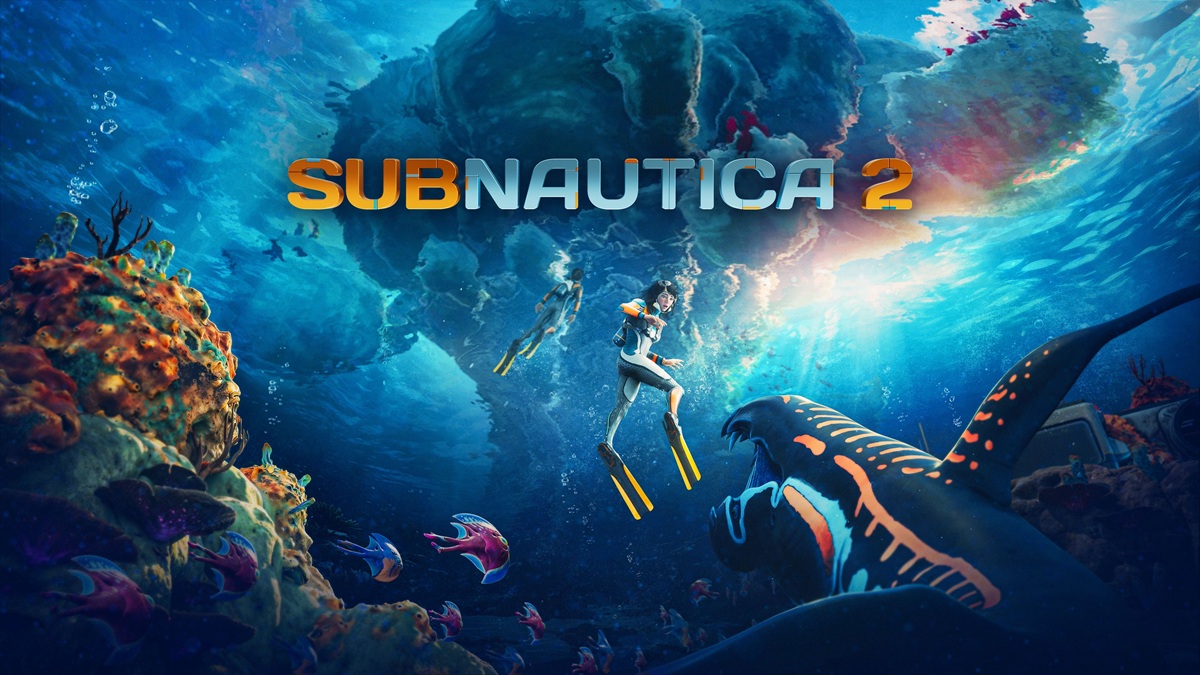
Subnautica 2 is launching into early access today, and we got a deep dive into the features of the game from the Unknown Worlds development team leaders.
The sci-fi underwater survival game has been the No. 1 wishlisted game on Steam for nine consecutive months, and it is remarkably good shape considering it was the subject of lawsuits between Unknown Worlds’ founders and the parent company Krafton. That lawsuit continues, but the game is moving forward in spite of that turmoil.
You can get the game on Steam on the PC and Xbox Series X/S consoles for $30 in the early access form. The game has five million wishlists. The game will be in early access for at least two years, said Unknown Worlds lead game designer Anthony Gallegos in a press briefing.
The sequel introduces a new alien ocean world, expanded survival systems, and for the first time in the series, optional four-player co-op. The creators have once again focused on creating an immersive world for players to explore. While it simply looks like an undersea adventure, it takes place on an alien world that is completely different from the alien world of the first Subnautica, which launched in 2018 after four years of early access.
Created by Unknown Worlds, founded by Charlie Cleveland and Max McGuire, Subnautica 2 is the official sequel to the Subnautica series, which has sold more than 18.5 million copies worldwide and helped define the ocean survival genre. The game has ranked No.1 on Steam’s wishlist for nine consecutive months since September 2025, making it one of the most highly anticipated titles of the year.
Set on a new alien world within the Subnautica universe, the game builds on the core exploration and survival experience with new systems and cooperative play. The game is made in Unreal Engine 5, and it has underwater lighting and an environmental adaptation system that allows players to evolve their bodies to survive changing conditions, expanded base building, new underwater vehicles, and encounters with massive deep-sea creatures.
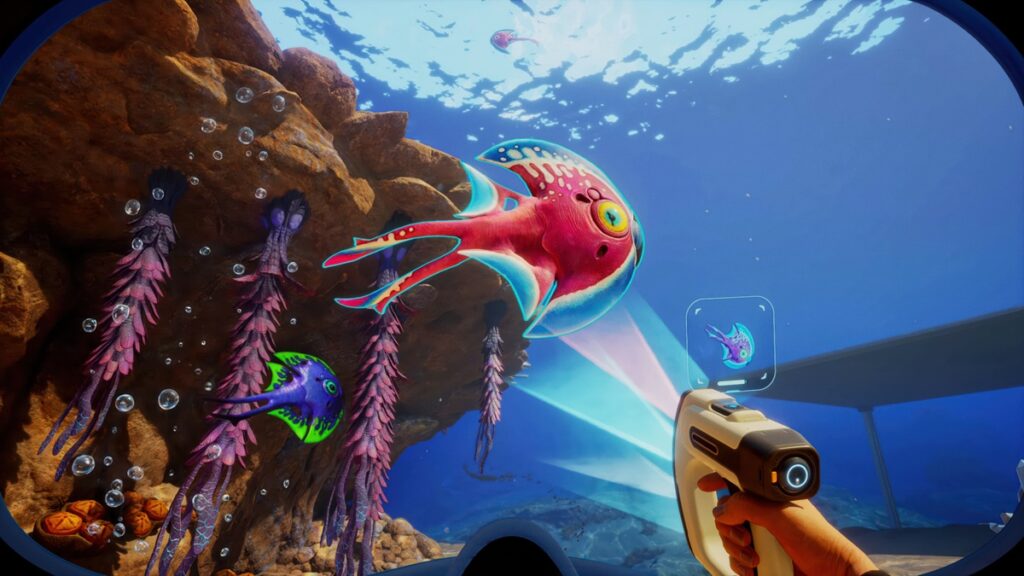
The game has more pixel density thanks to Epic Games’ Nanite technology and better lighting details with the Lumen technology. The game was built from scratch in the engine, Gallegos said.
It’s interesting to see the release happen amid the litigation. For now, the legal case favors the founders of Unknown Worlds, Charlie Cleveland and Max McGuire, and the studio’s CEO Ted Gill. A judge in the lawsuit recently reinstated them after they were fired and sued by Krafton last year for allegedly failing to fulfill their obligations.
The fired leaders countersued, the judge ordered Krafton to reinstate Gill and extend the window for the $250 million bonus through September. As a result of the early access launch, it looks like the Unknown Worlds leaders have earned that bonus, though the matter will be settled for sure in court. The team declined to answer questions about the case and focused just on the game.
Developer comments
Gallegos said the series is known as a survival game, but he said the team thinks of it as an exploration game as you journey through an alien world. It leans into non-violent play, but players have the tools to make their own choices — and craft their own weapons. There’s no quest log in the game by design.
“We want players to feel self directed,” Gallegos said.
As far as the design goes, Gallegos said the team knew people wanted more of the same core experience, but the freshness in the experience comes from new world, with a new story, new creatures and new game systems.
Gallegos said it’s still about survival at the core. You start the game by exploring underwater without oxygen tank. You have to take the risk of cave diving and collect good loot. The more you do, the more you gain resources. You can use a 3D printer to print things that you need to survive, like oxygen tanks.
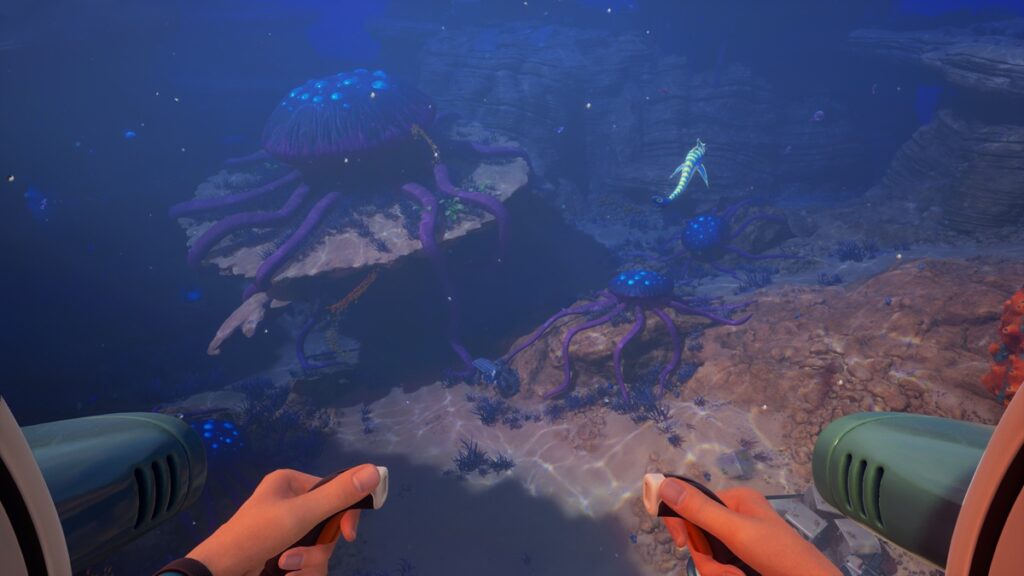
Gallegos showed off some of the alien life like a hammerhead. You can gain adaptations that help you survive in the world by interacting with native plants. You start out unable to digest the proteins on the planet, but then you find ways to adapt.
You can obtain tools like a multi-tool/scanner that can tell you about objects you find. There was a failed human colony on the planet, and you wake up in the world. You have to uncover the mystery of what happened.
“The player is unraveling the mystery of what happened to this colony of people that came before them,” Gallegos said.
Despite the co-op play, the game has isolation at its core, like the game Everybody Has Gone to the Rapture, where the objects remain but people are gone.
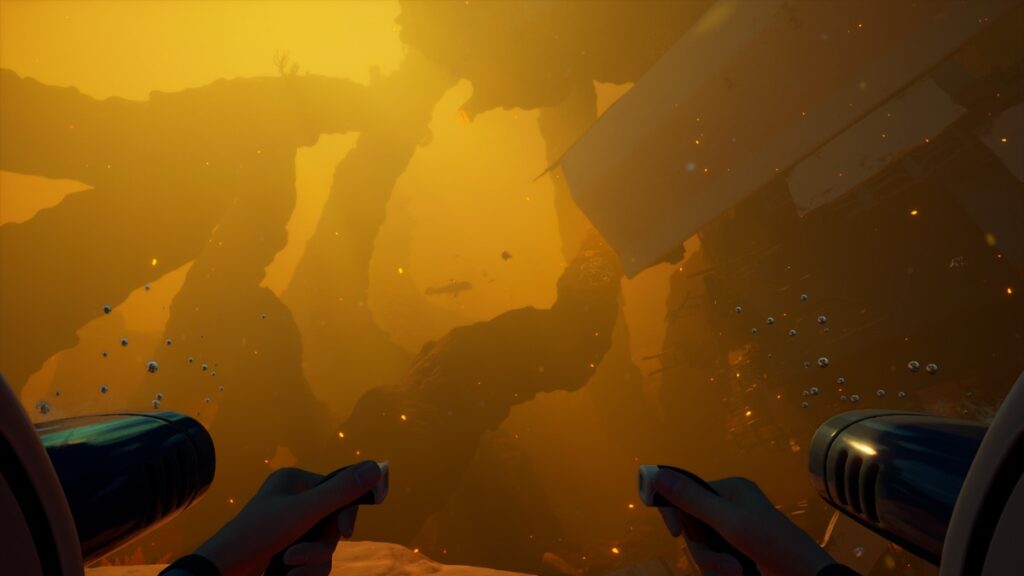
Gallegos said the game gets far darker and scarier in deep water. It adds tension as you can see dark and blurry moving creatures in the background as they swim towards you. You can see alien algae blooms and your job is to figure out how to cure the infestations.
Scott McDonald, creative media producer, said in the press briefing that some creatures are infected and as a result are aggressive. Presumably, curing them will make them more friendly to you.
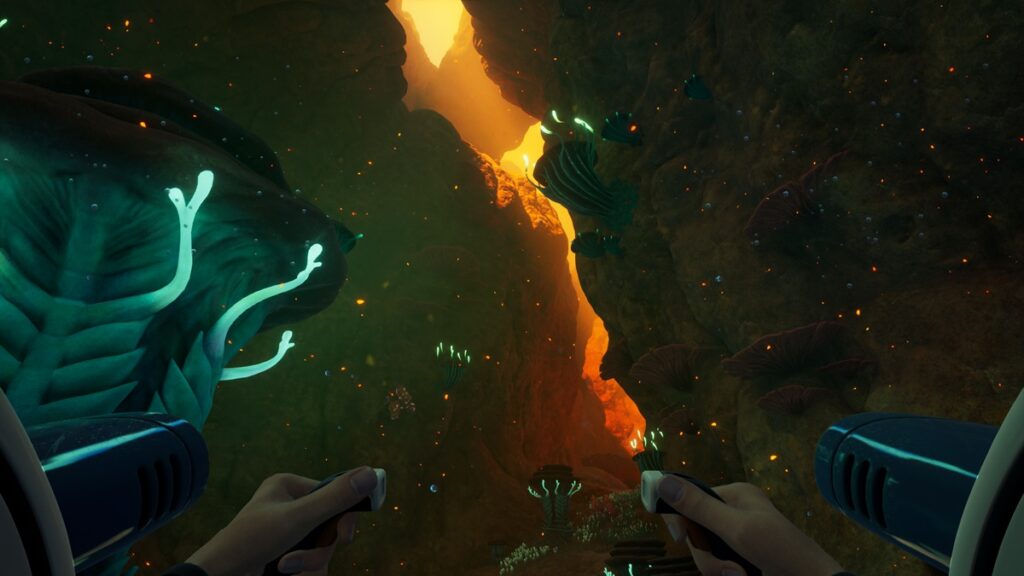
There a fast new vehicle you can use to explore, and you can build a base that has your own personalized expression. You start with a square base, but you can pull and shape it so that it takes on a different look.
For Subnautica 2, there’s a 1.1 update for quality of life, improved gameplay, rex gameplay, vehicle docking, the voice log system, biomod slots, a storage cache and the ability to sprint.
The 1.2 update is a co-op centric update. It has base building tool improvements, and pinned recipe system improvements. It focuses on quality of life, and it will have proximity voice chat for the 1.2 release. Players want this a lot, McDonlad said. There are new player revive systems and more.
The future includes new creatures, leviathans, new vehicles and the first chapter of the story as well as future chapters.
Gallegos said players the multi-tool is like a replacement for the knife. Players will be able to craft objects like fins, air tanks, and more. They can use the scanner to acquire blueprints and learn more about the world.
“You can scan creatures and read lengthy PDAs about their taxonomy, taxonomy and their history in the world,” Gallegos said. “We know that a lot of fans treat this game like the equivalent of a David Attenborough show about Earth.”
There’s an AI presence in the game as you can communicate via audio with an intelligence that can help guide you. On some areas, there’s a lot of light because of the bioluminescence of creatures and plants.
“One of the most interesting things for us is that we’re launching with survival gameplay, and we’re launching with creative mode at the start of early access. And so I know that we’re going to see people make some pretty weird and wild bases,” Gallegos said.
The co-op play offers the opportunity for people who wouldn’t have otherwise played the games solo or maybe found them too scary to play alone, he said. Gallegos swam through the world and showed off creatures like leviathans, including a giant coral crab. There’s something called a Collector, which is aggressive and is best avoided.
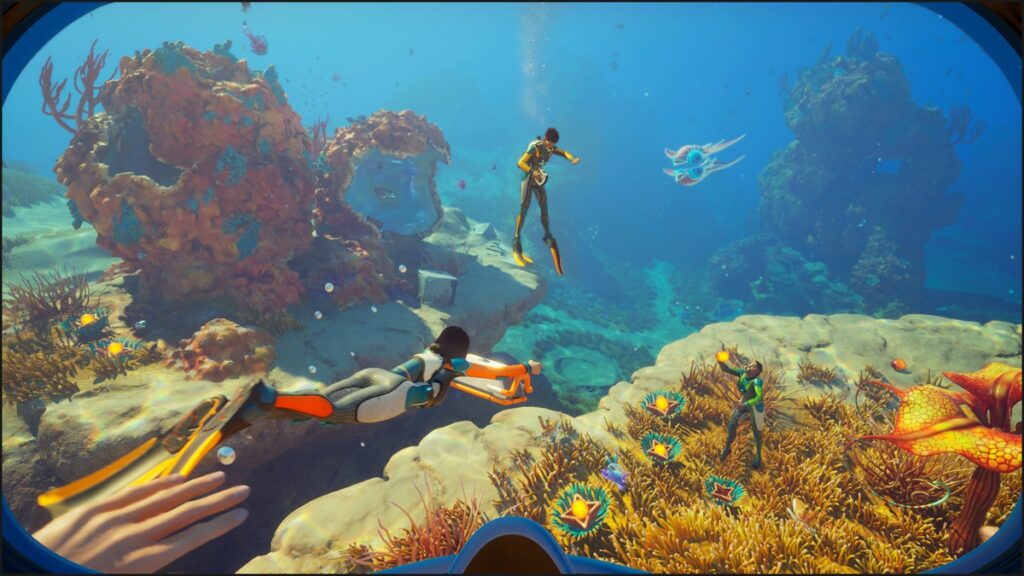
As far as co-op play goes, one person hosts. But at any time, all the players can save the game. If the host leaves, then you can boot up the game again, become the new host, and then keep playing with friends. You can invite other people who weren’t in the previous session. The game remembers the inventory you have on a given save.
Gallegos said the game is able to take advantage of more powerful CPUs compared to the first game, and the use of Unreal Engine 5 makes the world feel more reactive. There’s also more use of genetic manipulation in the second game.
One of the questions focused on whether there would be more intelligent creatures that could be considered companions in the game. The first game had the cuttlefish that people loved. But there’s no cuttlefish in this game because it’s a new alien planet.
“We understand that the fantasy that they have is that they want to develop a relationship with something in the world they could develop over time,” Gallegos said. “For us, it’s a question whether or not that creature will be biological or mechanical.”
Gallegos said the core design philosophy was to make sure that “we were making a player driven exploration game like that was the basis of everything we did. Was players should feel like they’re getting to make the choices of how they want to spend their time and doing player driven exploration. But we also wanted to make sure that there was just enough guidance for them.”