
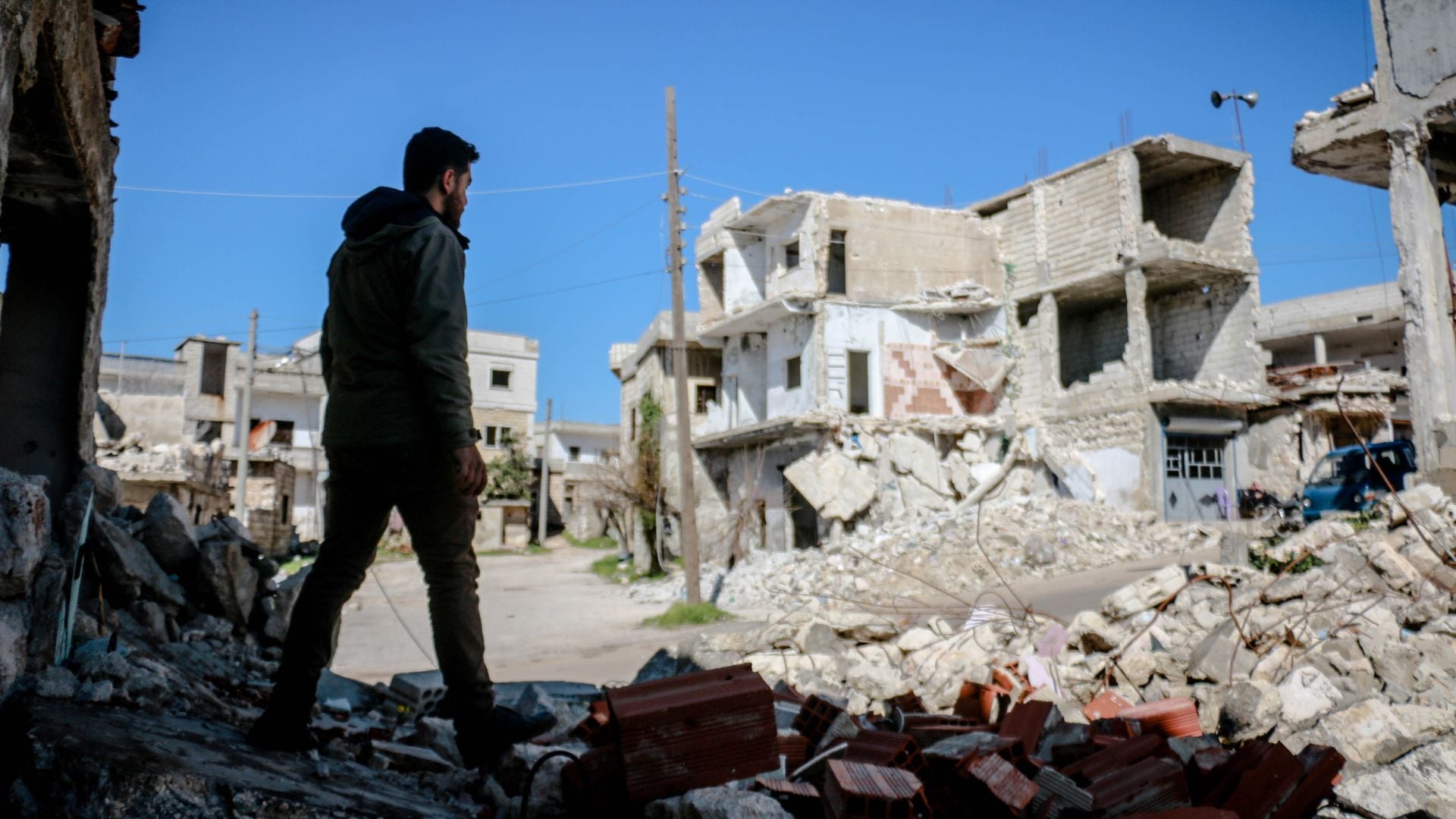
The ongoing wars in the Middle East have disrupted all levels of the region’s gaming industry.
The Middle East has been a focal point of armed conflict for years, with fighting in the region increasing after the October 7 attacks in 2023 and heating up further following the start of the United States and Israel’s war against Iran in February 2026. During the same period, the gaming industry in the Middle East has grown considerably. Player spending in mobile games in the region increased by 18 percent year-over-year from 2024 to 2025, and the Saudi Arabian government has invested billions of dollars into gaming and esports in support of its broader Vision 2030 initiative, largely through Savvy Games Group, the gaming division of the Saudi Arabian Public Investment Fund.
At a macro level, the wars in the Middle East have already had a significant effect on the region’s gaming and esports industry. In March, Savvy Games Group chief executive officer Brian Ward expressed concerns about the ongoing wars’ negative impact on perceptions of safety in the Middle East in an interview with Bloomberg; last month, the annual Esports World Cup, which was scheduled to take place in Riyadh, announced a last-minute move to Paris due to these safety concerns.
Studios and individual game makers in the Middle East are feeling the impact of war, too. Over the past few weeks, GamesBeat has spoken to six game makers and studio representatives active in the Middle East to learn how their lives and work have been affected by the wars in the region. Here are some of the key takeaways.
Government-suggested work-from-home
In areas of the Middle East threatened by missile and drone attacks, some game makers have been forced to temporarily shift their teams from in-office collaboration to work-from-home. For three weeks in March, for example, the government of Qatar encouraged workers in the country to work from home — and the country’s burgeoning gaming sector was not spared from the recommendation. The Qatar-based Mezan Studios ordered its team to work from home accordingly, which Mezan head of studio Tony Davis said resulted in production delays for the company.
“Obviously, while things are happening outside, nobody’s expected to actually be working. I certainly wasn’t working — I was checking the news and looking out the window, and staying away from the windows, as we’ve been directed to,” Davis said in an interview with GamesBeat. “So, there’s definitely been an impact, when you realize that it’s a very unfortunate situation, and it’s a very unusual situation for most people in the region.”
Travel troubles
Airlines have cancelled flights to regions throughout the Middle East over the past year, although some have begun to gradually restore service to the region in recent months. With major global game industry conferences like the D.I.C.E. Summit and GDC Festival of Gaming occurring during this period of travel disruption, game makers across the Middle East have found it much more difficult than usual to attend these tentpole industry events, with some developers routing their travel through multiple legs to make it to California and others simply choosing to sit out major industry events in 2026.
“I can’t begin to even tell you about the delays, the cancellations, and the rebookings that we had to do, going in and out of the U.S.,” said one game developer working in Saudi Arabia, who told me that airlines’ decisions to cancel flights had impacted their ability to easily travel outside the region for industry events and requested anonymity due to the political sensitivities of discussing the impact of the war on the region.
Difficulty focusing on creative work
For game makers in the hardest-hit areas of the Middle East, simply carving out any time or mental space to work on creative work can be all but impossible amid rising violence and the ongoing struggle to survive. In 2025, Palestinian game maker Rasheed Abueideh crowd funded $244,000 to develop Dreams on a Pillow, an adventure game based on the experiences of people living in the occupied Palestinian territories; in April 2026, he launched a second crowdfunding campaign that has raised over $60,000 so far.
Dreams on a Pillow was originally slated for a release in late 2026. In an interview with GamesBeat last month, Abuiedeh said that his game was on track to be complete by the end of 2027, and that his production timeline has been disrupted repeatedly by Israel’s occupation of Palestine, requiring him to fit development work into his off hours instead of focusing on the project full-time.
“It’s not an easy thing to do creative work while you are living in a crisis mode — while you are under occupation,” Abuiedeh said. “Everything is limited to you, so you have to work maybe 12 hours just to survive as a human, or to provide anything for you and your family. So, you don’t have the luxury to do creative work.”
Investor caution
Game companies located in the Middle East have had to contend with increased wariness from potential investors. It’s no secret that the wars in the Middle East have disrupted all forms of business in the region, and this has particularly affected technological development in countries like Israel, which have diverted a large chunk of its workforce to the war effort over the past year. In an interview with GamesBeat last month, Tal Sela, the CEO of the Tel-Aviv-based gaming and AI tech company Playo.ai, said that he was “seeing longer investment cycles” in gaming start-ups across the region due to the war, both for large and small companies
“When you’re talking about a company with 10 employees that needs a small round, you’re already looking at uncertainty — and in wartime, uncertainty can become much more dramatic. If I’m an investor, and this company just had 70 percent of its workforce go into the reserve, that’s a problem,” Sela said. “We didn’t have that problem, but I definitely have heard of a lot of start-ups that had to close shop and will be sold for scraps.”
Sela told GamesBeat that frequent missile attacks had forced workers in Israel to halt their work and go to bomb shelters multiple times per day, placing a psychological toll on the country’s game industry.
”Five times a day, you’re working, and now you have to stop your work, protect your family, hear all these booms, hope everything’s okay, and then run back to work,” Sela said. “It was a real psychological challenge.”
Effects outside the Middle East
Game companies headquartered in the Middle East are not the only companies in the space that have been impacted directly by the wars in the region. Amid the broader rise of the gaming industry in the Middle East, global game companies and studios that have set up satellite studios or development arms to take advantage of the influx of capital into the region now have to contend with keeping their staff safe during the ongoing armed conflict.
Following the outbreak of the war in Iran in February 2026, for example, Nexon temporarily moved Nexpace, the company’s blockchain gaming subsidiary, from Abu Dhabi to Korea in order to protect its team. Nexpace CEO Sunyoung Hwang described the studio’s move as a “precautionary step to ensure the safety of our team during a period of regional uncertainty” in an email to GamesBeat.
“Our confidence in the UAE as a long-term base for Web3 innovation remains strong,” Hwang said. “We continue to view the market as a solid foundation for sustained growth, supported by regulatory clarity, a growing game development ecosystem, and continued government investment in digital infrastructure.”