
The legalities of creators and the rules that talent agencies must abide by probably aren’t the favorite subjects of most people in gaming. But it turns out the legal details really matter, particularly when litigation arises among parties where talent promotes popular video games.
Some companies representing artists, creators, game makers and other talent seem to have forgotten that the Talent Agencies Act of California (1978), and a similar law in New York, actually exist. The legal history of the act and its enforcement show that a single agent should not represent both a brand seeking talent and an artist looking for brand sponsorships.
Yet lawyers and other experts in the space say that this appears to happen routinely in today’s game industry that brings together brands, traditional game makers, gaming influencers, esports athletes and makers of user-generated content.
We’ll have a roundtable on this subject at our GamesBeat Next 2026 event, which is coming on November 2-3, 2026 in San Francisco (25% ticket discount here: GBNEXT26_SPEAKER_25). Our speakers include moderator Yoshio Osaki, president of IDG Intelligence; Andy Lunique, triple-A Creator expert; Alex Owen, general counsel, Leviathan Core, Stikler, EasyCampaign; George DePree, CEO, Leviathan Core, Stikler, EasyCampaign; and Dan Rogers, senior partner at Premack Rogers Downs.
In a nutshell, the laws states that any single party with a conflict of interest should not be representing both talent and brands seeking that talent at the same time.
“Since the clear object of the [Talent Agencies Act] is to prevent improper persons from becoming [talent agents] and to regulate such activity for the protection of the public, a contract between an unlicensed [agent] and an artist is void,” the courts ruled back in 1967 in a case dubbed Buchwald v. Superior Court. That ruling still applies today.
And it means if an agency in the gaming or tabletop space has been procuring brand deals for a creator without a talent agency license, their commission agreement isn’t just vulnerable to challenge; it may be treated as if never legally existed, and therefore unenforceable in whole or in part, according to a brief written by Noah Downs, a partner at Premack Rogers Downs.
The creator can walk away from such a contract, and the talent agency in question cannot collect commissions on any contracts that originate under such claims. (The Downs brief notes that it does not constitute legal advice).
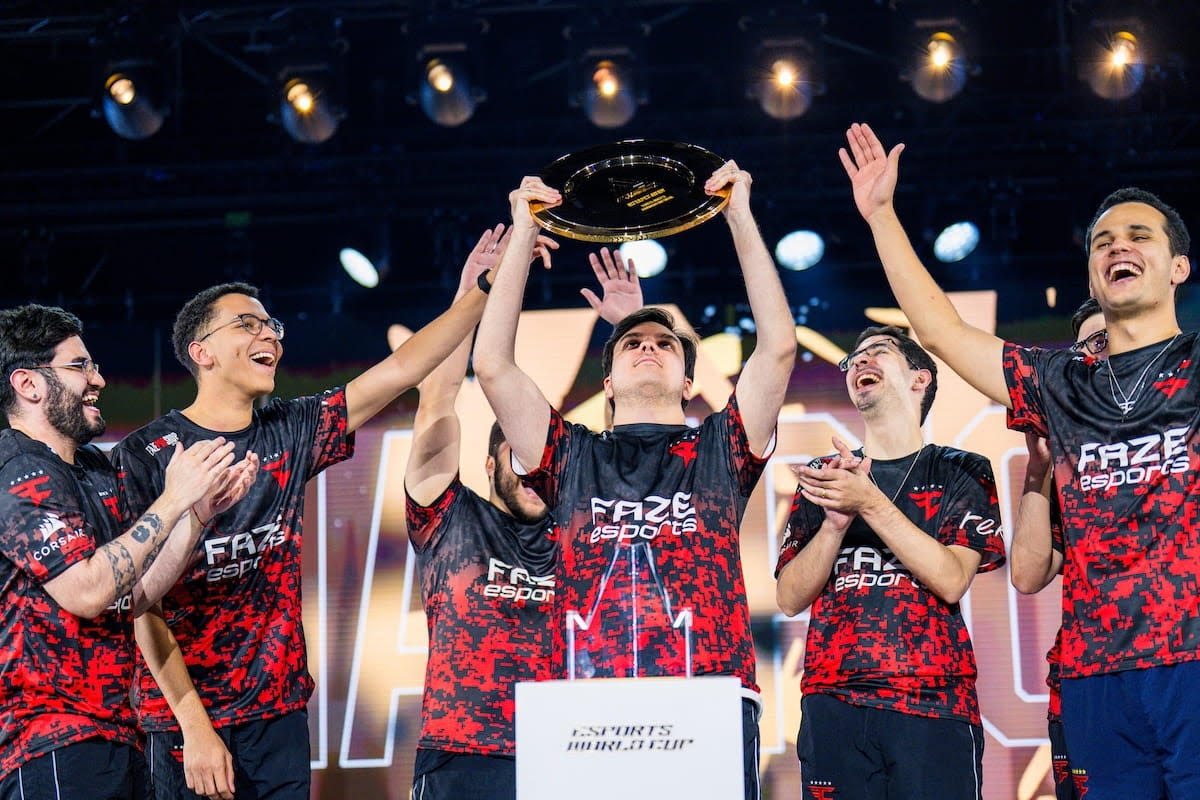
The TAA has already been applied to esports talent disputes. Turner “Tfue” Tenney sued esports organization FaZe Clan in 2019, arguing that FaZe was effectively acting as an unlicensed talent agency while representing him. Tfue believed that FaZe was taking an inappropriate share of his earnings. That case was settled in 2020.
Under the California act, a talent agency must get a license from the California Labor Commissioner, which is part of the Division of Labor Standards Enforcement. They have to do that before arranging employment for artists. Those agents also have to disclose the contracts that they sign with the artists and also disclose the commissions they take. The commissions charged by the agents must be approved by the Labor Commissioner. There’s a distinction between talent agents and talent managers. While agents simply procure work for artists, the managers do broader work including career planning, brand development, business strategy, PR advice and long-term career management. Managers are not licensed under the act, but managers have to act as managers, not as agents, in order to be exempt from the act.
(The key differences between California and New York: A talent manager generally cannot procure employment for an artist without being a licensed talent agent in California. But in New York, a personal manager may procure employment for an artist if it is merely incidental to the manager’s primary management activities).
The significance of the compliance with the Talent Agencies Act

George DePree, CEO of Leviathan Core and Stikler and EasyCampaign, said in an interview with GamesBeat that there are delineations between talent managers and talent agents that are important.
He noted that the TAA regulates individuals who are procuring business on behalf of an entertainer, talent, content creator, particularly if they’re operating the agency from California, or if the talent is in California. That’s when they’re subject to the Talent Agencies Act.
“We’ve seen over the past decade that people will call themselves talent managers to bypass any sort of oversight regulation” as agents, Depree said.
The state has an official registry where all talent agencies are required to register with the state of California if they have California talent or if they are located in California. That includes agents like UTA, CAA, WME and more.
New York as its own talent agencies law, and so does the United Kingdom. Disputes in California often go through the California Labor Commission. Depree believes that knowledge of the TAA is critical for modern game, creator and esports talent to understand. He believes there is a lot of money at stake in following the letter of the law. There’s no federal talent agent law in the U.S. Depree believes the European Union could weigh in with more international protections for artists, as some countries already have specific regulations barring conflict of interest and respect for the fiduciary duty established between a client and their representative.
“This is really about elevating an industry and making sure that the creators are not being exploited, that the people operating within the space are doing so fairly and appropriately. And it’s for those who don’t have a resource that they can turn to and say, ‘Well, yes, this is ‘This is something that I absolutely need to check into.'”
The reality of where the industry is positioned
The case of Tfue vs FaZe Clan and other matters inspired Harris Peskin, a partner at ESG Law and an expert in the talent agency space, to study the subject. I did an interview with Peskin, whose firm represents esports teams such as 900 Thieves, TSM, Team Liquid, and Cloud9 Esports. He is writing a long legal briefing on the subject of the TAA, and he has studied all of the cases that Downs brings up in his legal brief.
The Talent Agencies Act of of 1978 traces its origin back to the early 1900s, when Hollywood was in its infancy. California established a law in the 1900s saying the Department of Labor Standards Enforcement would be the state agency, with its California Labor Commissioner, which would determine whether or not artists are being taken advantage of by talent agents.
“The part that is clear is that the creators are are covered under this law,” Peskin said.
The TAA was created by lawmakers who wanted to deal with unscrupulous talent agents who took advantage of artists. The case law runs in a fairly clean line from 1967, before the TAA was enacted, to 2025. It gets to the meaning of agency.
If someone is acting on your behalf as a talent agency, they have obligations to avoid a conflict of interest. As an example, the talent agent will help artists — whether in entertainment or games or the new world of creators and influencers — find work. But those same agents cannot represent brands or sponsors and bring them into direct contact with the talent. Why not? Because they could collect a commission from a brand on one side and then collect a commission from the artist on the other side. The result could be a big commission for the agent, and relatively smaller shares for the talent and the brands.
And so it really matters how talent agents actually work to procure employment or engagements for artists. There isn’t a specific provision that says how much a talent agent can charge for a commission. But that is a big factor in discussions around applying the TAA to the new industries.
Peskin said, “If I procure employment for an artist, but the artist is my employee, then am I acting as the artist’s agent?”
Various lawsuits have sought to address this question, especially as the laws original created for the motion pictures industry are applied to new industries like game makers, video creators, esports players, YouTubers, Twitch streamers, TikTokers, influencers, actors and musicians. (It’s worth noting a separate law addresses pro athletes in California).
It’s a big industry problem if companies managing talent are failing to register as agents. Then, if they book business, they may legally have to play all of their commission money back to the talent if they are found to be unlicensed agents.
Why it really matters for talent companies to register as talent agents

Downs represents a considerable number of artists in the industry as well as some agencies in the business.
Downs said that the state of California has a rich history of being the center of talent in the form of Hollywood, and there are a lot of agents in the state. Some of them take a large percentage of commissions on deals that they secure for the talent — to the point where artists complain that they’re indentured servants. With the rise of unionization and collaboration among the talent, many contracts now limit the percentage that agents can take. Much of the legit talent agencies have settled on 10% or 20% as a base commission.
But Downs is concerned about bad actors that are taking hidden percentages. If an agent represents an artist, they take a percentage of that artist’s income. But they can also bring deals to the artist and may not disclose that they are taking a cut of that deal because they represent the interests of the brand or party doing the sponsorship.
“You have situations where you have talent that is working with an agency, where the agency is the exclusive agent for the brand too, and they’re getting paid on both ends of the deal, which is an inherent, obvious conflict of interest, and it reduces the transparency in the industry as a whole, creates favoritism, and it actually is a negative for brands as well,” Downs said in our interview.
In such a case, if a brand puts $200,000 into a deal, and the agent takes 20% of that. Then they offer $160,000 to the artist, and the agent takes 20% of that, then the artist actually gets about $128,000. The artist — if it’s a creator in this case — puts in about enough effort that generates brand impressions for the brand that are worth about $128,000. Then the brand can wind up complaining that they never got their $200,000 worth of that sponsorship deal.
“If you call this kind of company a talent agent, then all of a sudden they have to be representing to their talent that they are their agents,” Downs said.
It’s possible that if the artist sues the talent agency and that agency isn’t registered, that agency could lose all of its revenue generated through that artist, Downs said.
“[The agency] could lose control their talent,” Downs said.
The legal analysis of the Talent Agencies Act and its relevance to games, esports and creators

Are there loopholes that allow talent agents to play both sides today? Not according to a case dubbed Waisbren v. Peppercorn Productions, Inc. from 1995. Based on that precedent, a gaming agency might argue: “We’re primarily a management company. We advise on career strategy, handle scheduling, and manage social accounts. We only occasionally reach out to brands on the creator’s behalf.”
After the Waisbren case was adjudicated, that argument now fails, the brief from Downs said. Even single, isolated acts of unlicensed procurement have been sufficient to trigger TAA violations, with courts rejecting any meaningful ‘de minimis’ threshold arguments, the brief said.
Artists can void a management contract even if a one-year statute of limitations has passed
And in a case dubbed Styne v. Stevens in 2001, the issue arose whether an artist can cite the Talent Agencies Act to void a management contract even after the one-year statute of limitations has run its course. The manager argued the answer was no, because the artist had waited too long to complain. The California Supreme Court disagreed.
An artist who is sued for breach of a management contract can always raise TAA invalidity as a defense, regardless of how old the agreement is. The one-year clock only applies when the artist is the one filing affirmatively to seek disgorgement or restitution, the brief from Downs said.
The Styne case held a creator can’t be “locked in” to a dual-representation arrangement by the passage of time. If a gaming agency signed a creator to an unlicensed procurement agreement three years ago and now wants to enforce it, the creator can raise the TAA defense today. The agency cannot simply wait out the clock, the brief said.
Artists can void contracts if their talent agents are unlicensed
In 2008, The California Supreme Court ruled in a case about a dispute between personal manager Marathon Entertainment and actress Rosa Blasi, who sought to void her management contract on the grounds that Marathon had procured employment without a license.
The brief said Marathon conceded some procurement but argued the contract shouldn’t be voided entirely because the procurement was minor relative to the legitimate management services rendered.
The court landed in an interesting place, the brief said. On the void-vs.-severable question, it held that the Labor Commissioner has equitable discretion — a contract need not be voided in its entirety if the illegal procurement provisions can be severed from the lawful management services. But on the core liability question, the court left no wiggle room:
The ruling said, “The Act establishes its scope through a functional, not a titular, definition. It
regulates conduct, not labels; it is the act of procuring (or soliciting), not the title of one’s business, that qualifies one as a talent agency and subjects one to the Act’s licensure and related requirements.”
Based on the findings, the conduct-based standard is critical for the gaming and tabletop industry, where the same company often brands itself as a “management agency,” a “talent collective,” or a “creator partnership.” None of those labels matter. What matters is whether they pitched a creator to a brand. If they did, they were acting as a talent agent under the TAA, license or not.
Marathon also introduced severability as a potential escape valve, though its availability depends heavily on whether unlawful procurement can be meaningfully separated from otherwise lawful management services. The Labor Commissioner can sever illegal provisions, but only where the manager genuinely devoted the bulk of the relationship to lawful counseling. An agency whose primary pitch to creators is “we have brand relationships” is not going to benefit from Marathon’s severability doctrine, the brief said.
A commission can be voided if a talent manager pitching an artist also secures a brand partnership for that artist
Modern cases also continue this legal narrative, including a case in 2021 dubbed Echo Lake Management LLC v. Meg Deloatch.
Echo Lake Management, a personal management company, brought a commission claim against its client, actress Meg Deloatch. Deloatch fought back on TAA grounds, arguing that Echo Lake had been doing the work of an unlicensed talent agent throughout their relationship by pitching and securing employment for her.
The Labor Commissioner agreed. Echo Lake’s procurement activities (i.e., actively reaching out to secure engagements) violated the TAA, and its commission agreement with Deloatch was voided accordingly. Disgorgement of commissions followed.
The brief said Echo Lake is important because it’s a post-Marathon application that shows how the severability doctrine plays out in practice. Echo Lake couldn’t benefit from Marathon’s nuance because procurement was too central to what it actually did for its clients. The determination reinforces that the test isn’t just “what percentage of your time do you spend counseling vs. procuring,” but whether procurement was a genuine feature of your value proposition to the client.
For agencies in the gaming and creator space that market themselves to creators by emphasizing their brand rolodex, Echo Lake is highly instructive and applicable.
Gaming personalities are artists

A case called Beaudoin v. Macalpin before the California Labor Commissioner established that gaming personalities are protected under the Talent Agencies Act as artists.
Beaudoin was an online personality in the gaming space. She hosted a one-hour online news program and built a following large enough to attract brands interested in product placements and endorsements. Her manager, Macalpin, began submitting her for those deals without a talent agency license.
The Labor Commissioner held that Beaudoin qualified as an “artist” under Labor Code § 1700.4(b) as “a popular online personality and aspiring television and motion picture actor.” Macalpin was found to have violated the TAA. Critically, the Commissioner also held Macalpin individually liable (not just the management entity) because he commingled personal and corporate funds and operated without meaningful separation between himself and his company.
The brief said this Beaudoin case answers the threshold question for our industry: are gaming and online personalities the kind of “artists” the TAA was designed to protect? Almost certainly, yes. The determination also cited the standard for piercing the corporate veil. Individual liability attaches when there is “such unity of interest and ownership that the separate personalities of the corporation and the individual no longer exist” and where treating the acts as only the corporation’s would produce an inequitable result.
For principals of gaming management companies (the founders, sellers, and deal-makers) Beaudoin is a warning that they can be held personally responsible alongside their companies.
Another case before the California Labor Commissioner is Beaty vs. Aiello.
Beaty was an Instagram influencer who signed with manager Aiello, who then procured brand deals and product endorsement arrangements through Beaty’s social media accounts without holding a talent agency license. Beaty petitioned to void the contract under the TAA, the brief said.
The Labor Commissioner held that Beaty qualified as an artist. The reasoning extended TAA protection beyond traditional entertainment platforms to social media specifically, articulating a principle that became important in Pan: “Whether the clothing or featured product is shown on television, a movie theater, or an online posting on social media is immaterial as the TAA makes no distinction between the forum,” the commissioner rule.
The determination also restated the intent-of-the-legislature test: the TAA covers those who “perform creative services in connection with an entertainment enterprise,” with the caution that not every person with a social media account qualifies.
Beaty broadens the Beaudoin holding beyond gaming-specific personalities to social media influencers generally, provided their work involves creative services in an entertainment context. For the tabletop and gaming industries specifically, this matters because the landscape includes not just streamers and YouTubers but also Instagram and TikTok personalities reviewing games, running sponsored tabletop campaigns, and creating branded content for publishers and game companies.
Beaty and Beaudoin together establish that the platform doesn’t determine whether the TAA applies, but rather that the nature of the creative work does, the brief said.
The definitive gaming and creator economy decision related to the Talent Agencies Act

In August 2025, the California Labor Commissioner ruled in a case dubbed Pan et al. v. Inf1uence LLC & Alexandre Baljian.
Ten gaming content creators, primarily League of Legends streamers and YouTube personalities with several million combined subscribers, signed “talent contracts” with Inf1uence LLC, operated by Alexandre Baljian. The contracts were explicit: Inf1uence would “use all reasonable efforts to procure and negotiate employment” for the creators in the “internet entertainment industry,” a term the contracts defined to include Twitch, YouTube, social media, and commercial use of the creators’ names and likenesses.
Inf1uence packaged and pitched the creators to third-party brands, booked deals, and collected payments directly from advertisers. The creators rarely saw the money. Baljian claimed the funds were frozen in bank accounts. That turned out to be false. Brands confirmed they had paid Inf1uence in full. Baljian was never a licensed talent agent, the brief said.
The Labor Commissioner addressed underlying questions in five issues: 1) whether the creators were artists under the TAA; 2) whether Inf1uence’s conduct constituted unlicensed procurement; 3) whether the statute of limitations barred relief; 4) whether disgorgement was available; and 5) whether Baljian was personally liable. The creators won on all five.
Here’s the part on status as “artists.” Citing Beaudoin and Beaty, and applying the liberal-construction canon from Waisbren, the Labor Commissioner held that gaming influencers who “carefully crafted their image, personality and created their videos, often with a team of editors” are artists under § 1700.4(b).
The determination was careful to note this is not a blanket rule: The commissioner said, “We are not holding… that anyone who calls themselves a social media influencer and anyone who posts content on social media sites is an ‘artist’ within the meaning of the TAA. Here, petitioners carefully crafted their image, personality and created their videos, often with a team of editors. The final product was creative in nature….”
Regarding unlicensed procurement, the commissioner applied Marathon’s conduct-based standard, finding that packaging and pitching creators to brands, soliciting offers, accepting deals on their behalf, and collecting commissions as their “exclusive talent agent” was squarely procurement under § 1700.4(a). The fact that the contracts themselves used the word “agency” and described Baljian’s duties in terms of soliciting offers and negotiating contracts made this particularly straightforward. On limitations, disgorgement, and personal liability.
Under Styne, the statute of limitations didn’t bar the creators’ defense, the brief said. On disgorgement (the affirmative claim) the Labor Commissioner applied equitable tolling because Baljian’s ongoing misrepresentations (the Bank of America story) prevented the creators from discovering the violations. The doctrine of continuous accrual applied.
The total damages owed were $224,764.50 across all ten petitioners, covering unpaid earnings, unlawfully retained commissions, and 10% annual interest. Baljian was held personally liable under the same alter ego analysis as Beaudoin.
The brief said Pan is the most comprehensive recent application of the TAA to the gaming and creator economy. It brings together, in one determination: gaming creators are artists, brand-deal procurement is TAA-regulated activity, the California Labor Commissioner is willing to look past corporate structures to hold individuals accountable, and (most relevant to the dual-representation argument) the explicit finding that an entity simultaneously positioned as the creator’s representative and the deal-closer with brands is operating as an unlicensed talent agent.
Note also what the contract in Pan looked like: it called Inf1uence the creators’ “exclusive talent agent” and required it to “use all reasonable efforts to procure and negotiate employment.” Agencies in the gaming space that use similar language in their management agreements have essentially written their own TAA violation into the document.
Amendarez v. Unico Talent Management, Inc. & Gershon Gabel
Another relevant case was Almendarez v. Unico Talent Management, Inc. & Gershon Gabel from 1999. It involved conflict of interest and unlicensed procurement — The manager who negotiated his own deal into his client’s contract.
Renan Almendarez (“El Cucuy,” and at the time one of the top Spanish-language radio personalities in Los Angeles) signed a management agreement with Gershon Gabel of Unico Talent Management in late 1995. The contract said Gabel would counsel and advise; it expressly prohibited him from procuring employment. What followed was fourteen months of Gabel doing almost nothing but procuring employment, while simultaneously engineering deals that benefited his own separate business ventures at Almendarez’s direct expense.
The clearest example: when KSCA came to hire Almendarez, Gabel conducted all negotiations, including salary, bonus structure, cars, and the works. But buried in the deal was a condition Gabel had made non-negotiable: KSCA had to give Gabel a fixed block of free advertising airtime during Almendarez’s show, which Gabel would use to promote his own legal referral business. When KSCA’s general manager had earlier offered Almendarez $250,000 with a $250,000 bonus schedule, Gabel waved it off and the actual deal landed at $150,000 and Gabel’s ad minutes. As Gabel’s own financial advisor testified, the advertising minutes were received “in lieu of commissions, the brief said.
Almendarez, realizing the scope of what had happened, filed a petition to void the management agreement and disgorge what Gabel had taken. The Labor Commissioner found the 1995 Management Agreement void ab initio for unlicensed procurement. The more complicated question was the 1997 “loan” agreement, which Gabel claimed was a separate debt repayment schedule, not part of the management relationship. The Labor Commissioner looked through the form to the substance: the advertising minutes were compensation for management services, not loan repayment. The agreement was partially voided, and Gabel was ordered to pay $271,100 in disgorgement plus $67,750 in interest for a total of $338,850.
“Respondent (was) well aware that the value of free advertising considerably outweighed the 20% commission he would receive pursuant to the express terms of the [Management Agreement], negotiated for minutes with petitioner’s employer as direct compensation for his management efforts. Not once did respondent consider an employment agreement for his client without procuring advertising minutes,” the court said in Almendarez v. Unico Talent Management (1999).
Why it matters here
Almendarez is the conflict-of-interest case. Every other case on this list involves a manager who overstepped into agent territory. Almendarez involves a manager who overstepped into agent territory specifically to extract value for himself, conditioning his client’s employment on a side deal that paid the manager directly, at the cost of a better offer for the artist, the brief said.
This is the structure that may be created when an agency represents both a content creator and the brand offering them a deal, because the agency sits at the table on both sides. Its financial incentive is to close the deal, not necessarily to maximize what the creator gets out of it. Gabel didn’t get Almendarez the $250,000 offer; he got himself advertising minutes. A dual-representation agency presents a significant risk of creating conflicts of interest. As Almendarez shows, these agencies have a concrete, documented track record of resolving that conflict in its own favor.
The case is also notable for the commissioner’s willingness to pierce through sophisticated contract drafting. Gabel had his attorney draft the 1997 agreement to look like a loan rather than a commission structure. The commissioner looked at what actually happened (who got what, and why) and called it what it was. That approach is directly relevant to gaming and tabletop agencies that may try to characterize dual-representation fees as something other than commissions.
Unlicensed Procurement & Severability — The “I only closed deals she found” defense, and why it doesn’t work
The brief also cited the case of Meuse v. L.A. Entertainment, Inc. & Jim Ervin from 2021 before the California Labor Commissioner.
Jessica Meuse, a musician, signed a Personal Management Agreement with Jim Ervin of L.A.
Entertainment in March 2017. The contract was explicit that Ervin was not an agent and would not procure employment for her. He then spent two and a half years doing exactly that by negotiating and signing performance contracts on her behalf at multiple venues, booking band members, and in at least one contract listing himself as both manager and agent.
Ervin’s defense had a creative wrinkle: he argued that Meuse had solicited most of the engagements herself, reaching out to venues through email and social media. Since she found the gigs, he claimed, his role in “completing” the contracts didn’t constitute procurement. The Labor Commissioner was not persuaded. Negotiating the terms and signing the agreements is exactly what “brings about” employment under the TAA. An artist’s initial outreach to a venue doesn’t give an unlicensed manager license to then take over negotiations and execute the deal.
The Personal Management Agreement was voided in its entirety. The commissioner found that Ervin’s procurement activities pervaded the entire relationship, making it impossible to disentangle the lawful management work from the unlicensed agency work. Meuse recovered $3,530 in unpaid performance fees within the one-year lookback window. The Songwriter’s and Recording Agreements were treated as separate contracts and survived, in part because procuring recording contracts is expressly exempted from the TAA.
“The mere fact that an artist sends an email or Facebook message to a potential contact for employment does not give license to an unlicensed manager to assume the role of an agent,” the commissioner found.
Why it matters here

Meuse closes a loophole that agencies in the gaming and creator space might otherwise try to use, the brief said. In that world, creators often do find their own brand opportunities because companies DM them directly, reach out through Discord, or approach them at conventions. The agency’s role is then to “handle the paperwork” or “negotiate the rate.” After Meuse, that type of conduct has been treated as procurement under the TAA. It doesn’t matter who made first contact.
Meuse is also the cleanest case on the pervasion standard for severability. Where procurement is woven throughout a management relationship (not an occasional one-off, but a repeated pattern) the contract can’t be saved by severing individual provisions. The whole thing goes. For gaming and tabletop agencies that have been booking brand deals for creators over months or years, that’s the operative standard.
Finally, Meuse’s citation to Almendarez on the costs-and-advances question is worth flagging. Ervin argued he should get credit for expenses he fronted on Meuse’s behalf. The commissioner declined, in part because his accounting was opaque and he hadn’t followed the contract’s own approval procedures.
Agencies that have been advancing money to creators by covering production costs, travel, equipment, while also procuring deals should read this section carefully, the brief said.
Final notes and summary

The through-line connecting all ten cases is straightforward: California law treats the act of connecting a creator to a paid engagement (soliciting, pitching, packaging, negotiating) as talent agency work, the brief said. This requires a license. An agency that represents both the creator and the brand isn’t just creating a conflict of interest in the ethical sense; it is, under the TAA, likely operating as an unlicensed talent agent on the creator’s side of every such deal.
The contracts governing those relationships may be void, the commissions may be recoverable by talent, and the individuals running the company may be personally liable.
The Almendarez case adds the dimension that matters most for the conflict-of-interest argument: a manager who controls both sides of a negotiation has a demonstrated tendency to resolve that conflict in his own favor, not the artist’s. Meuse closes the “they found the gig themselves” loophole. Beaudoin and Beaty established that gaming and social media personalities are artists. Pan established that brand-deal procurement in the creator economy is the same procurement the TAA has always regulated.
The question is whether the industry has caught up to the law, and the answer, based on the volume of these determinations, appears to be no, the brief said.
Legal references
California’s Talent Agencies Act (TAA), Lab. Code §§ 1700–1700.47.
Buchwald v. Superior Court | 254 Cal.App.2d 347 (1967)
Waisbren v. Peppercorn Productions, Inc. | 41 Cal.App.4th 246 (1995)
Styne v. Stevens | 26 Cal.4th 42 (2001)
Marathon Entertainment, Inc. v. Blasi | 42 Cal.4th 974 (2008)
Echo Lake Management LLC v. Meg Deloatch | California Labor Commissioner (2021)
Beaudoin v. Macalpin | TAC 48086 — California Labor Commissioner
Beaty v. Aiello | TAC 52756 — California Labor Commissioner
Pan et al. v. Inf1uence LLC & Alexandre Baljian | TAC-52870 — California Labor Commissioner
(Aug. 5, 2025)
Almendarez v. Unico Talent Management, Inc. & Gershon Gabel | TAC 55-97 —
California Labor Commissioner (Aug. 26, 1999)
Meuse v. L.A. Entertainment, Inc. & Jim Ervin | TAC-52769 — California Labor Commissioner
(Apr. 19, 2021)