

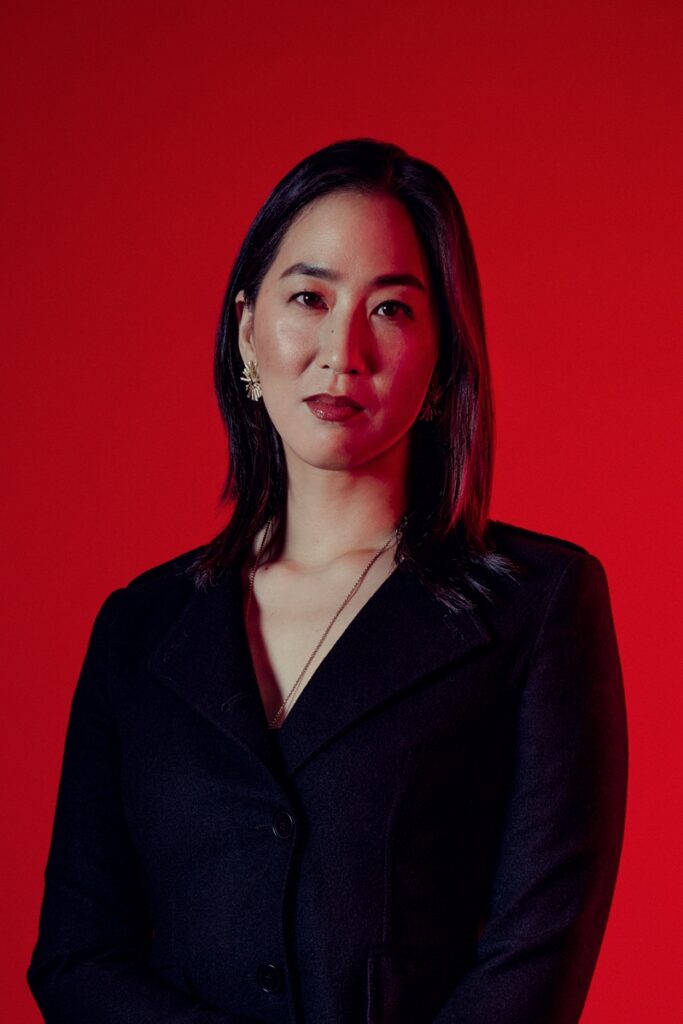
Jennifer Svedberg-Yen, the narrative lead for Clair Obscur: Expedition 33, won a BAFTA Breakthrough U.S. award, and she’s using the win to draw attention to a new fund for narrative leads in games.
This comes after she scored a big win on Clair Obscur — her first game as a narrative designer and writer after a career in private equity — a game with a strong narrative that won more than 400 awards. And she is now using her financial expertise to set up a fund dedicated to advance the art of narrative design.
The goal is to create new funding models that could nurture talent, rather than extract from it. And too often people forget that strong stories in games from The Last of Us to Resident Evil are what makes the best games so memorable.
Svedberg-Yen is still adjusting to life after Clair Obscur: Expedition 33. She discovered she won the award while sitting in a bagel shop and puzzling over a mysterious calendar invite.
But while the recognition celebrates her work on Sandfall Interactive’s breakout hit, Svedberg-Yen is already looking toward a larger mission: helping reshape how the game industry develops stories and supports creative talent. She left Sandfall back in July to focus on her new mission.
Svedberg-Yen wants to make sure that narrative is considered at the outset when a game is created. She feels that it’s too often treated as an afterthought in game development.
After consulting with numerous studios, she said she repeatedly encountered teams that viewed story as either scriptwriting or a layer added after core gameplay is complete. In her experience, that approach limits what a game can become.
“A lot of studios think of narrative as a skin,” Svedberg-Yen said. “They think you can bring someone in later to make everything make sense. But when you start from the beginning, everyone is building from the same story and the different disciplines naturally reinforce each other.”
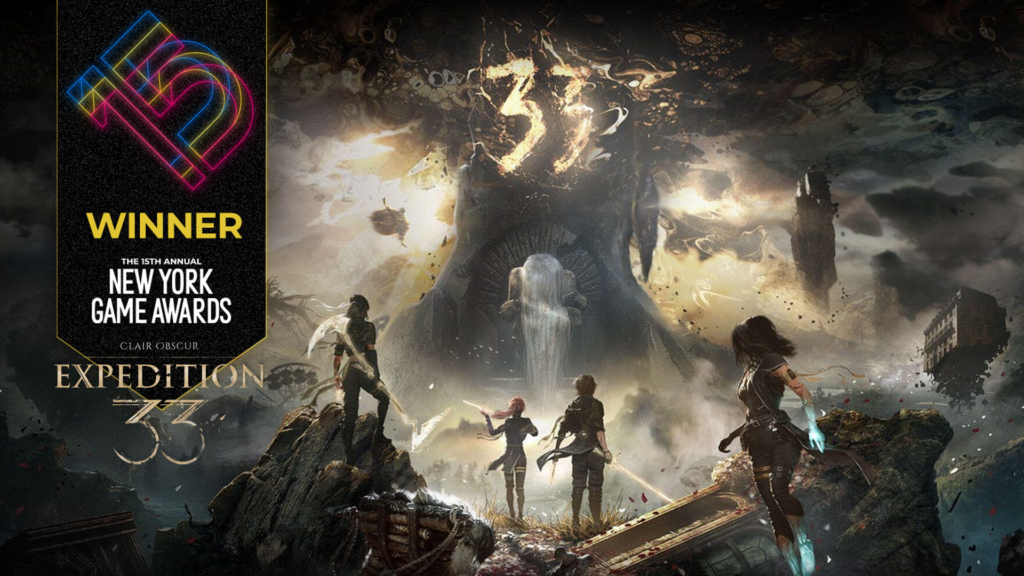
That philosophy was embedded into Clair Obscur: Expedition 33 from the start in April 2020. Svedberg-Yen joined what would eventually become Sandfall Interactive before the studio formally existed. At the time, the team consisted of only two Ubisoft developers and herself.
Together they helped shape the game’s core concept and themes, making narrative a foundational pillar rather than an accessory.
“Narrative was king,” she said. “It was always a narrative-first game.”
Going forward, Svedberg-Yen wants to finish more of her own creative works, including stories intended for film and television, while continuing to explore ways to support fellow creators.
One of her techniques for writing is to have a rich life outside of work. If you get to know and observe people and hear their stories, you can walk in their shoes and have empathy for them.
“If you’re trying to write about people, you must understand people,” she said. “To understand people you need experience and empathy.”
Here’s an edited transcript of our interview.
GamesBeat: Congratulations on the award. Did it surprise you?
Jennifer Svedberg-Yen: I was very surprised. I was sitting in a bagel shop. I actually saw the calendar invite for the briefing first. “What is this on my calendar? Wait, did I get it? Oh my gosh, I did.” It was very exciting.
GamesBeat: I saw the talk you gave at DICE Summit. We had a short chat there. I thought it was a very interesting message that you sent out to people who are trying to be creative.
Svedberg-Yen: As part of the application process, they asked us about what are some of the initiatives we want to work on, or that we’re developing. I have a couple of initiatives. One of them is more focused on our industry as a whole, because I do find that the way the games industry is structured–it’s actually a small number of people who decide what games get made, what stories get told, and by who. I find that the way the funding environment works, there’s quite a lot of voices that don’t get a chance to have access to funds, have access to support to make the games they want to make.
One of the initiatives I want to build is a narrative investment fund to focus on narrative-focused game creators, trying to bridge the gap between the seed stage and going to publishers. This is the chicken and egg question a lot of people face. To get money from publishers you need a demo, but to make a demo you need money. To get money you have to go to publishers. That’s an area where I would like to help a lot of these smaller creatives to get that seed funding so they can, in a way, de-risk themselves in the eyes of bigger investors.
In that way I can also help them build a stronger narrative foundation from the beginning. I’ve done a lot of consulting work with different studios. I’ve discovered that quite a lot of studios don’t really know how to think about narrative, or how to integrate it into their pipelines and their processes. They tend to think it’s a very narrow thing, when in fact it can influence all aspects. Part of this would also be an incubation program to help these studios develop those narrative foundations.
GamesBeat: Have you come across a lot of studios that have that very narrow view of narrative? It’s the last person they hire. It’s something they layer on top of the gameplay they’ve already built.
Svedberg-Yen: So many. Even the studios I’ve consulted for or talked to–there are some people who think that narrative is just the script. It’s just the writing. There are others who think, “We’ll get the gameplay down and then narrative can come in and make it make sense.” My perspective is, narrative should work strongly with gameplay. They need to work hand in hand. Which means you need to have narrative starting at the very beginning of the process, so that you can develop gameplay with an understanding of what the story is. Then everyone has the same jumping-off point – gameplay, art, music. All of these teams are referencing the same story. They can let their imagination go free and make a lot of things that will then work really well together. Or someone comes up with something and you can work it back into the narrative.

What a lot of studios do is they think of it more like a skin. You just bring somebody in. Some people will just say, “Throw a little narrative at it. Narrative will solve this. That will make it make sense.” But when you bring in narrative at the end, it’s like trying to solve a puzzle and make all the pieces fit, but you don’t know if there’s really a solution. Whereas if you start from the very beginning, when everyone is starting from the same jumping-off point, everything will naturally be able to tie together. A lot of studios, I feel like they’re almost scared to involve narrative early on. I think that ends up limiting them in many different ways.
GamesBeat: Were you there at the beginning of Clair Obscur?
Svedberg-Yen: Oh, yeah. I was the third person on the team. The team didn’t exist, actually. When I joined it was two guys who were still working at Ubisoft. The studio didn’t exist. It was the two co-founders and then me. Then we brought in the composer, and then the art director. Several months later we brought in the third co-founder, and then several months after that started the studio. So I was one of the founding members of the team.
We came up with the idea together from the very start. It was always, from the very beginning, a narrative-focused game. It’s a narrative-first game. That’s what the creative director always said as well. Narrative is king. I think that’s why we were able to achieve the results that we did in terms of integrating all the different pieces into a wonderful collaborative whole. There was that consistency from the very beginning.
GamesBeat: Is there something you’re shooting for when you do this?
Svedberg-Yen: We make the game that we want to play, the game we wish existed. We write the stories that interest us, that we find compelling. We write the characters that we find compelling. What was really lovely was that–I know other people had to consider market-type things. But for me, I didn’t think about what the market wanted, what the audience needed. I thought about what would be an interesting premise. What are the philosophical and emotional places that you could dig into and explore? What are the things that resonate for me, having gone through my various life experiences?
I joined in 2020, April 2020. That was right during COVID. There’s a lot of introspection, a lot of observation of the world around us and how we treat each other. Some of the themes that we focus on deal with the idea of, what is the duty that we owe to each other? How do we balance that with the duty we owe to ourselves? And related to that, watching how things were with COVID, thinking about–when you care about someone, how do you find a balance between respecting their autonomy and stepping in to prevent them from harming themselves? Trying to look out for their best interests.
That was a recurring theme at a societal level, but also something that I think all of us are familiar with, because we experience it in our family lives as well. We have loved ones we care about, whether it’s a parent-child relationship in particular–navigating that shift in how you balance those things. For me I guess you could say it was very much about, what are the things that I’m thinking about all the time?
GamesBeat: If you look at the net results in Clair Obscur, what were you most proud of as far as what worked on the narrative side?
Svedberg-Yen: A lot of things that I’m very happy that we were able to achieve–I think some of them include the vibrancy of the characters. A lot of people have told me that they felt a lot of the characters resonated with them personally. They felt that they were very three-dimensional, authentic characters. I’m very proud of our team for being able to achieve that.
I’ve received a lot of feedback from players about how the story changed their relationship with grief. It helped them process emotions they had not properly processed, or realize things about themselves for the first time. People have told me that it prompted them to make changes. It prompted them to reflect. That’s very meaningful to me. I’m very proud of that impact that we had. It was never something that I expected. I didn’t go in thinking we were going to change how people feel about X-Y-Z. It’s very humbling to know that something we created could have that level of impact.
It shows me the power of games, and the power of stories. In particular, because of the interactive element of games–the final choice that we ask players to make, to be complicit in, that allows people to truly immerse themselves in some of these philosophical dilemmas. They can analyze that for themselves. There’s a line in our game about how great art is both a window and a mirror. That’s something we were hoping would resonate with people. Through this, you see more and understand more about the rest of the world, but it also holds up a mirror to yourself. You can better understand parts of yourself.
GamesBeat: Going back to the talk about creativity, you noted how you should cultivate your non-writing life. Be curious, be empathic, and this leads you to develop taste. Do you feel like that’s some of the process you went through in preparing to write a story like this?
Svedberg-Yen: I’ve told quite a few folks who come for advice–I tell them that I don’t think I could have written something like Expedition in my 20s, or even my 30s. A lot of the ideas and different elements, how we focus on them, how we frame them, that comes through a lot of lived experience and a lot of time spent analyzing things, turning things over. Evolving how I see how and feel about certain things. Developing an understanding for how other people could see the same situation in a different light.
I very much believe that one of the most powerful things we can do to train our ability to tell a good story is actually to live a rich life, to observe others, to learn how people work. If you’re trying to write about people, you must understand people. To understand people you have to have first-hand experience, and also have empathy to understand other people’s experiences that might be different from yours. All of those are, for me at least–I know everyone has different methods. But for me that was the most instrumental.
I read a lot. I watch a lot of TV. I consume a lot of stories. I also read a lot of news. I read a lot of posts from people talking about their everyday lives. Just absorbing how different people can see the world. What keeps them up at night? How do they react to things? Seeing how they enjoy and live life. That’s all wonderful information, wonderful ways to not only enrich our own lives, but also enrich our writing ability.
GamesBeat: What do you still want to achieve in your career?
Svedberg-Yen: A lot of things. On the story side, there’s still a lot of stories I want to tell that I’m just itching to run away in the woods and find a cabin and write. That’s something I keep longing for, to have some uninterrupted time to write. Quite a few other stories. There’s two in particular that I’m working on. One that is more oriented for TV and one that’s more oriented for film, but both with game elements.
My secret idealistic, naive goal, my real inner desire–it’s a couple of things. One, I look around the game industry. A lot of what’s happening really breaks my heart. I feel that the industry is eating itself. I feel that we are losing so much institutional knowledge. We’re making it extraordinarily difficult for a younger generation of developers to have formative experiences. There’s so much disruption in the industry right now.
I come from an investment background. My original background was in private equity. I’ve seen that side. It frustrates me, because I think about it as, to use an agricultural analogy–in the past we’ve over-harvested the soil. We’ve tried to extract everything we can from the land. What we really need to do is cultivate the land. We need stewardship over the land. That means not over-harvesting. That means reinvesting in the land, in making sure there are nutrients put back into the land, so we can grow bigger and better things. I feel that we are not doing that as an industry.
It’s not that there’s an evil overlord making this happen. It’s because of market forces, because people are pursuing, in good faith, what feels like the most logical or the most reasonable, responsible path. But it’s like the prisoner’s dilemma. When multiple people pursue the optimal path for themselves, they end up at suboptimal outcomes. I feel like we’re doing that as an industry.
I don’t see any major leadership emerging in the industry to figure out how we can tackle the deeper problems. I don’t blame anybody for that, just to be clear. I think everyone has their shareholders or their stakeholders that they’re responsible to. But I want to figure out a way to find a different business model, or an augment to the existing model. Some way to get us back on stable ground and get us back to a path where we can try to invest in the industry again.

When I say “invest in the industry” I really mean investing in people. I feel that there’s a significant tendency for some in the industry to lose sight of the true value in the industry, which is its people. In the finance industry, in consulting, your assets are your people. People know that. When you think about the value of a financial firm, it’s usually in the quality of its people. It’s similar in games. But I think people have been focusing more on technological resources, AI and so on. I don’t think we’ve put enough thought into how to invest in and protect our people.
That’s my soapbox. But that’s what I would love to be able to do. Something along those lines. That’s why I want to start this narrative investment fund, to try to fill a gap. I’m not trying to compete with publishers. But I’m trying to find a way to work with them to get us back on solid ground. Above all, I really would like to champion other people and other creatives to have a chance to pursue their dreams, have a chance to make the games they want to make.
I feel very lucky in how things have happened. Everything seems very surreal. I’m very aware of the good fortune that I’ve experienced through my first game. This was my first game and my first time writing. I would love to be able to pay that forward and help other people get their games made.
GamesBeat: Do you think there’s a way that the money people can be receptive to this idea that narrative really matters? I can’t think of anyone who’s run something like a narrative fund before. This is a new idea.
Svedberg-Yen: I have floated it to a few people. I think more discussion needs to be had to understand and get everyone on the same page. But I also think that what would be interesting would be to invite people from outside of the traditional funding sources, beyond the major publishers, the major conglomerates. I think there are other potential stakeholders who would be interested in the power of stories. Particularly when we look at the power of franchises across different forms of media.
It’s no longer just games. It’s Resident Evil: The Movie, or Sonic: The Movie. It’s the Last of Us TV show. It’s books and comics. We consume stories in so many different formats. User-generated content. The amount of fan fiction and fan art that’s created is so impressive. I find that the ability to create community is one of the powerful things around IP. That’s medium-agnostic. It can be for games or TV or film and so on. That’s what we need to better understand, protect, and nourish.
When you look at lasting fandoms, the first thing that they connect to, or the part that they connect to most deeply, is invariably characters. The world may be amazing and awesome and cool, but you get there through the characters. That’s why you also see that voice actors are the face of the game and the fandoms embrace them so strongly. They’re a proxy for the characters.
Anybody who’s interested in franchises or IP as a broader potential can’t discount the power of story. That’s not to say that this is the only way to think about games. I love a lot of games that have no narrative at all. I’m not trying to say that narrative is the best or anything. But it happens to be the area where I’m more able to lend my thoughts.
I think there’s a lot of amazing potential in games. They have such a huge impact on people’s lives. I play games all the time. I’m playing Mass Effect and Mass Effect 2 right now, in honor of BioWare. That broke my heart. I really enjoy all of the different–the level of detail, the attention to detail in the narrative and the storylines. The way that they play out through the three games when you import your storylines over is incredible. I love that. I feel like that’s a remarkable achievement. I’d love to see more games like that.
I had the chance to meet Drew Karpyshyn. He’s really cool. He was the narrative lead for KOTOR and Mass Effect. He’s over doing Exodus now. He’s phenomenal. He’s such a smart, interesting person. Big fan of his work.
GamesBeat: Are you still continuing with Sandfall in some way?
Svedberg-Yen: No, I left Sandfall in July, after wrapping up some final stuff for Expedition. We’ve parted ways.
GamesBeat: Do you think getting the fund going will be more of your main thing going forward?
Svedberg-Yen: Yeah, that and also my own projects, my own stories. The strongest feeling in me right now for 2027 is I want to help. That sounds so cheesy and idealistic. I always cringe at myself for saying it. But I don’t know how else to say it and be truthful. I want to help in some way, help the industry.
GamesBeat: The industry definitely needs people who care about people-oriented things. More so than just the people who have been gatekeeping as funding and monetization experts. Those people are more represented than they should be, I think.
Svedberg-Yen: Obviously we need money to keep the lights on. People need to get paid. Because the other thing is, I don’t believe in starving artists. We should pay our people properly so everyone can have health care, have vacations. I live in Sweden now, but I used to live in California. I’m from the bay area. I grew up in San Jose. It’s very different, how the U.S. and how the Swedes approach different aspects of life.
I really appreciate being selected for BAFTA. It’s a great honor. Particularly because–BAFTA is obviously a very prestigious organization, but beyond that, knowing it was a jury of my peers is meaningful to me. Also, I feel that the BAFTA breakthrough program is incredibly generous. It represents a lot of the same ethos we were just talking about. Helping underrepresented voices, helping uplift and empower the next generation. I’m deeply appreciative of the opportunity, and I very much hope I can pay it forward.
Being a creative is hard. You feel very vulnerable sharing your work with the world, sharing a piece of yourself, your heart, your soul. But it’s something that I find is very important to the human experience. It’s very important for us to understand each other. It’s the best way of sharing understanding and building mutual understanding and mutual trust. It’s the best way of helping people understand why we might see things differently. I want to do what I can to help nurture that, to allow people to be unafraid to express their own stories. I want them to be able to be vulnerable in those ways.
Again, I know I sound idealistic, but I feel that’s our cultural legacy that extends throughout time, the stories we tell each other and how that shapes our worldview and our understanding of the world. That’s the legacy we’ll leave for our fellow humans. I’d love it if everyone could tap into their creative souls, because modern living and modern capitalism and just the weight of adult life these days–we do not encourage adults to play and be imaginative and be creative in the same ways that we would encourage kids.
I used to work in finance. We didn’t have arts and crafts or recess or science projects. We had lunch-and-learns or corporate values training. I feel like the world would be a better place if we could encourage everyone to create and tap into their creative expression. That’s my soapbox again, my closing thought.