
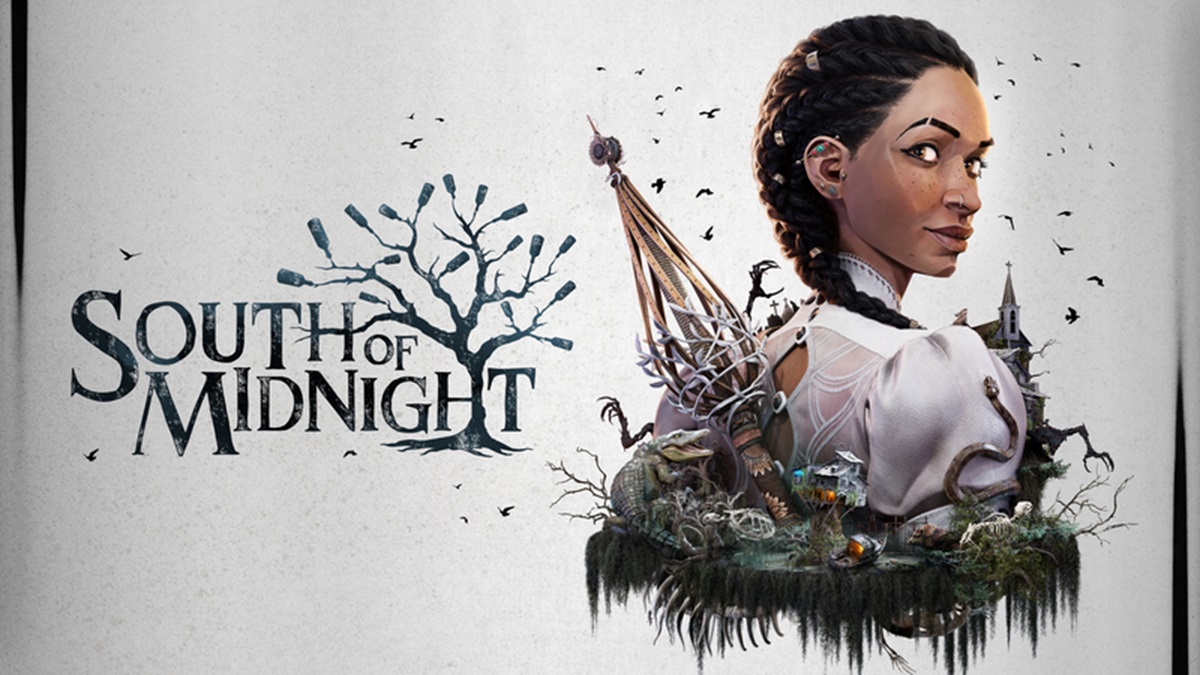
Zaire Lanier, the writer behind Compulsion Games‘ acclaimed South of Midnight game, has won a BAFTA Breakthrough U.S. award. She talked with GamesBeat about folklore, history, Black representation in games, and the power of stories that aren’t afraid to take risks.
When the Southern Gothic adventure launched, it stood out in an industry crowded with familiar settings and protagonists. Compulsion Games‘ action-adventure title immersed players in a supernatural version of the American South, following Hazel Flood, a young Black woman navigating family trauma, folklore, and monsters whose stories often proved more complicated than they first appeared. Compulsion Games recent spun out of Microsoft’s Xbox division and it is now an independent game company.
“I always hesitate when someone says, ‘Oh, you wrote South of Midnight,'” she said. “No, we wrote South of Midnight.”
That collaborative process was especially important at Compulsion, where smaller teams often meant contributors wore multiple hats. Lanier not only worked on story content, but also received lyricist credit on the game’s soundtrack, something she says would have been less likely at a larger studio with stricter divisions of labor.
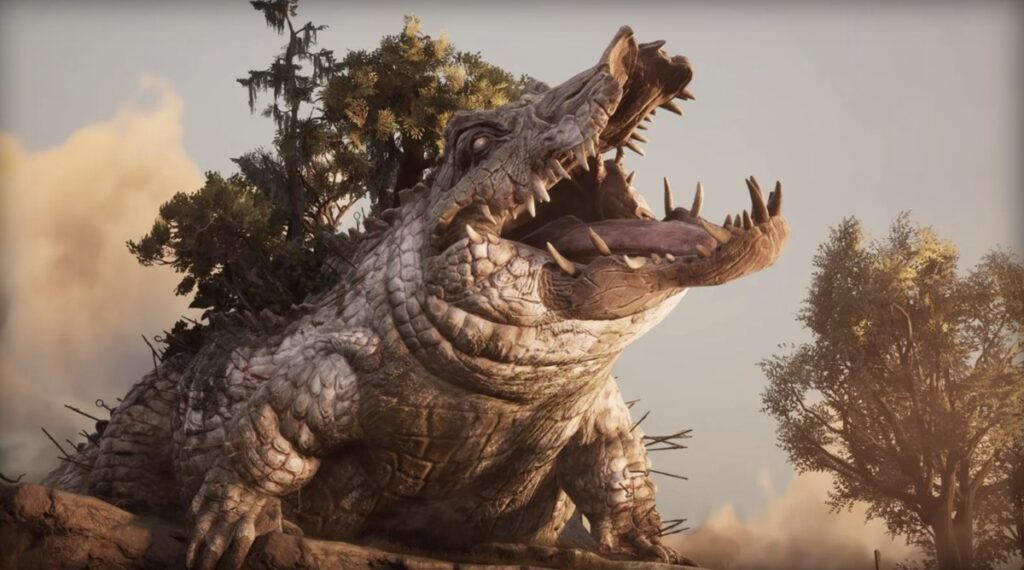
The foundations of the game were already in place when she joined the team. Former creative director David Sears had established a vision centered on Southern folklore, African American history, and a coming-of-age story built around Hazel’s relationship with her mother. Over time, however, many details evolved as the project progressed.
That combination of Southern folklore, Black history, and family drama made South of Midnight an opportunity Lanier felt she couldn’t pass up.
While South of Midnight embraces magical realism and folklore, Lanier says much of its storytelling grew from unearthing real but history.
The game references the South’s complicated legacy, including slavery, exploitative labor practices, displacement, and economic hardship, while also celebrating resilience, community, and cultural identity. There are also characters who are misunderstood and seen in a different light through a shift in perspective. Sometimes monsters aren’t really monsters.
Hazel’s adventures take her through environments inspired by locations where escaped slaves formed communities in remote swamps, places whose stories often vanished because the landscape itself resisted historical preservation.
“A lot of that is lost to history,” Lanier said.
The result is a game that functions both as a fantasy adventure and an exploration of overlooked narratives embedded within the American South.
Lanier’s path into game development was anything but traditional. She originally attended school intending to become a doctor and completed much of a biology degree before realizing medicine wasn’t the career he wanted. She discovered narrative-heavy games such as The Last of Us and Dragon Age, experiences that convinced her storytelling in games was a career worth pursuing.
She started sending resumes out and that led to her first credited game work, as a writer on Subnautica: Below Zero.
Today, despite critical acclaim and industry recognition, Lanier finds himself in the same uncertain environment facing many game developers. He is currently between projects and focused on his own writing, including work on a novel while exploring future opportunities in games, television, and film.
Lanier said the game was for people who haven’t had something like this game and needs it.
While we talked, I asked about how people had labeled the title a “DEI game.” Lanier addressed criticism from some corners that dismissed South of Midnight as a so-called “DEI game.” During that part, Lanier became emotional and she apologized for it. I said that awards should be emotional, and the game was important. It’s perhaps even more important for the younger people who are following behind her — the people who will finally see themselves and their stories represented well in a game.
Lanier also expressed concern about an industry that often struggles to support unconventional projects.
Lanier praised games such as Despelote, Consume Me, and 1000xRESIST for telling stories that might not fit traditional commercial expectations, arguing that games need room for artistic experimentation even when audiences are smaller.
“I wish there was a way that art could exist for art’s sake,” Lanier said. “I’m glad that we got to create the game. We pulled off something that I think is very special.”
Here’s an edited transcript of our interview.
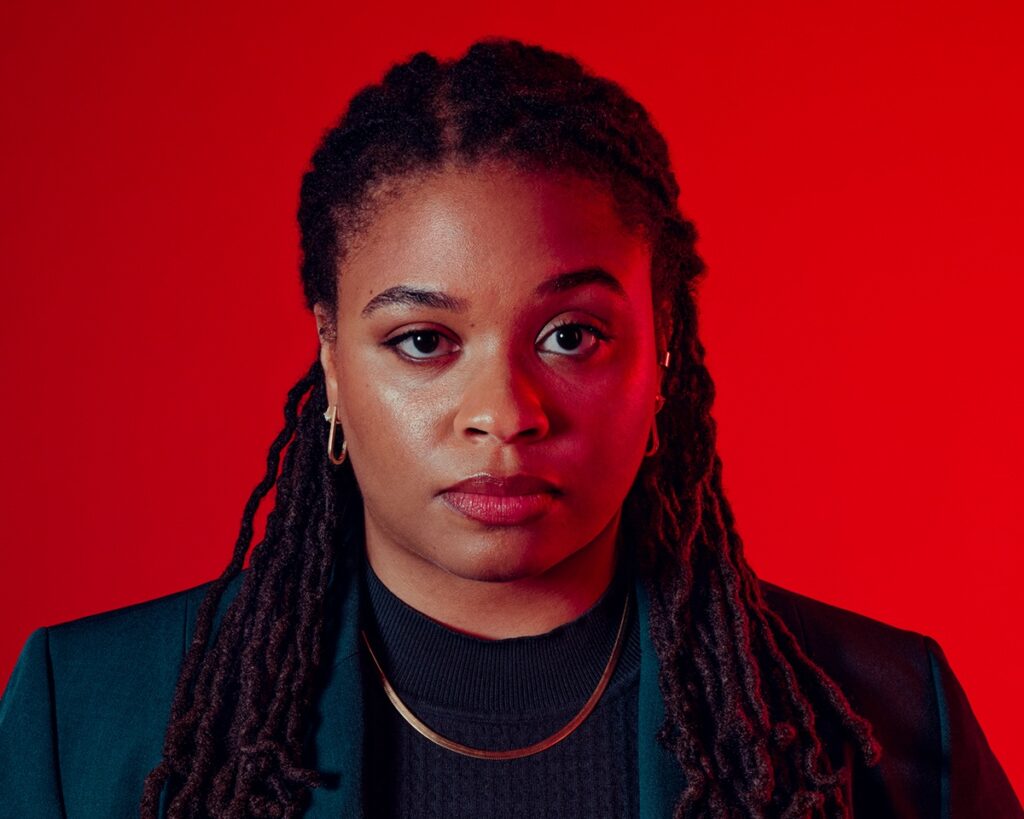
GamesBeat: Congratulations on the BAFTA award. How do you feel about it?
Zaire Lanier: I feel really good. It’s nice to see South of Midnight get validated on the stage. It won some pretty decent awards, some pretty big ones, but it’s nice for my contribution to the story and the narrative team to also be acknowledged. I’m excited to see where it takes me.
GamesBeat: On something as big as a game, how are you able to make your contribution as a writer?
Lanier: In games, nothing is really a solo effort. Our narrative team had several people. It’s all collaborative. With narrative, we got ideas from the art team, the level design team. Narrative ultimately–you have a narrative director, a lead writer, other writers. But you’re all together in a room figuring out these story beats. You make your contributions, on the individual level, with the things that you’re assigned. But even that goes through the filters of your teammates and editing.
We’re a smaller team. We got to do a little bit of everything. Some bigger companies might have a narrative designer, a writer, a technical designer. I feel like we all got to dabble in a bit of everything. That was nice, because I really got to flex my writing skills in ways that I was not expecting to. I’m a credited lyricist on the official soundtrack, which is not something I think I’d be able to do at a much bigger studio.
I’m always hesitant when someone says, “Oh, you wrote South of Midnight?” No, we wrote South of Midnight. But it’s something I had a strong hand in.
GamesBeat: Were you there from day one, or did you have to wait for the dev team to do more before you were brought in?
Lanier: I came in a couple of years into production. I was there for a year. Then I went and did a contract at another studio for a year before coming back in 2022, if I remember correctly. I was there on the project for about four years altogether.
When you’re there from the get-go, you have preproduction, which I wasn’t there for, but I was there a little bit past it. Where you start laying out a rough guideline for how the game is going to go, the different zones and levels. It gets more and more distilled as time goes on. But things are always changing on creative projects. There are aspects of the story from when I was there in 2020 and 2021 that are completely not there in the game we launched in 2025. That’s pretty normal for games, honestly.
GamesBeat: In that first year you were there, was that laying the groundwork for the story at that point?
Lanier: A lot of it was laid out. Our creative director at the time, David Sears, he had this vision for a story set in the South with Southern folktales. It was inspired by a lot of African-American folktales and history. You had zones, levels, and a rough idea of–this creature is in this zone. We know that Hazel is going to lose her mother in the hurricane. We know what’s going to happen at the end. Here are these creatures in between. What are the different narrative systems we want to have, the narrative beats we want to hit? You’re building a foundation before you start putting on all the details.
GamesBeat: It was a unique game. What about it made you want to invest so much time in it? What really hooked you?
Lanier: It was a game set in the South with a Black female main character. Just the main character already had me interested, because there aren’t very many games like that. I love video games. I love all kinds of media. I’m very much able to–I’ve identified with video games about a talking sword or a dragon. But it really intrigued me to be able to write something that touches on some of my collective history as a Black person.
Being able to write a character like Hazel, which is something I would have loved–I mean, I love her now. But that’s something I would have loved when I was 10 or 12. It was important to me to not let this opportunity pass me by. Something like that doesn’t come along very often. I can count probably on one, maybe two hands the number of Black female main protagonists in–less so in indie games, but more so on a bigger double-A or triple-A level. It just felt like a unique setting. The American South itself isn’t something that’s visited very often in games. You get a lot of stories in New York or Los Angeles or Hong Kong. I was really interested in doing something that felt very new and not as explored.
GamesBeat: I read the Deadline interview you did. That was very interesting, especially the twists involved with the Huggin’ Molly character, the spider woman. She’s perceived as a monster snatching children at first, but then from her point of view she’s sparing them from abuse. Turning that notion on its head, how did you get to that piece of the story?
Lanier: That was something–we always knew what that twist was going to be. It was just a question of how we would get there. The original version of the story is something like, “Eat your vegetables or Huggin’ Molly is going to get you.” Then we had Hazel’s mom Lacey, who works in the foster care system. When we’re first introduced to Lacey and Hazel, they’re having an argument because Lacey comes home late during a hurricane – they’re supposed to be evacuating – because she’s helping these people. Hazel has trouble understanding Lacey’s perspective, that she’s trying to help people, and Lacey is also trying to shield Hazel from all the emotions that she brings home with her.
Part of the beauty of Molly is that as Hazel begins to understand her mother more throughout the game–they’re always in a clash, mothers and daughters, parents and children. We’re different people. But she comes to understand the things her mother sees every day. So many of the stories in South of Midnight are very heavy. Hazel will even comment that she can’t imagine that her mother has to deal with these things every day and then come home and put on a brave face and take care of her. The twist is the same there with Molly, where Hazel perceives one thing – Molly is this evil person breaking up families – but really Molly and Lacey have teamed up to save these children where the system fails them.
It also speaks to some of the social commentary that South of Midnight tries to work in. We have a lot of readables about evictions and how the town is dying. There’s a factory that’s exploiting its workers. All of it ties together. But the twist with Molly, where you learn that she’s saving these kids–you find out that she saved Lacey as well, that she’s the only reason Lacey is alive. It’s part of Hazel’s character that she’s very impulsive and very passionate. She always means well, but her impulsivity leads to Molly’s death in some ways, because she doesn’t take that moment to understand.
GamesBeat: There’s something universally appealing in that kind of storytelling, where you build it around how things aren’t always as they seem.
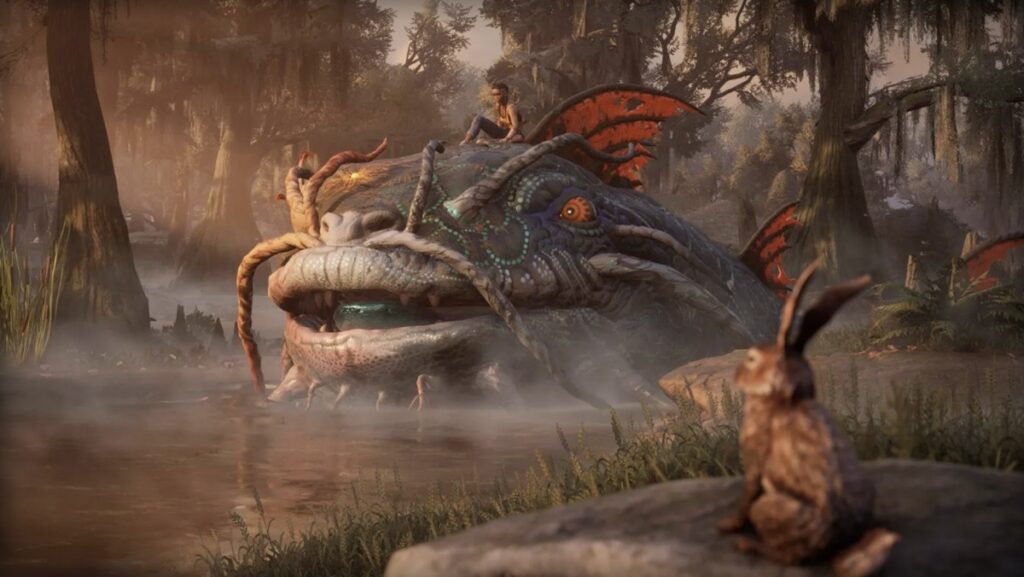
Lanier: I think that carries over with a lot of the monsters in South of Midnight. The Honey Island swamp monster and Altamaha-ha, it’s a mother and child who jumped off of a slave ship and drowned. The magic of the swamp transformed them. Laurent, the Rougarou is transformed because his father worked in a lumber mill, a company town, and when his father is shot Laurent’s rage transforms him. Every monster has a story. Even Bunny, who really is evil–you don’t agree with what she did, but you understand how she lost her child and the things she did to try to get her back.
GamesBeat: Do you feel like you’re sometimes digging for stories that are latent in history and folklore?
Lanier: I think so. A lot of the game–Hazel ends up on a slave plantation. Altamaha-ha and the Honey Island swamp monster directly reference the swamps in Georgia and Louisiana, where escaped slaves would hide and form communities before trying to go further north. A lot of that is lost to history because a swamp is a terrible place to preserve any kind of history. Settlements fell apart. But there are several things in the game that directly reference the history of the South, the good and bad parts of it. The beauty of the South and the resilience of it as well.
GamesBeat: How did you choose to go into game writing?
Lanier: It’s kind of random. When I went to school I wanted to be a doctor. I did most of a biology degree. I was pre-med. I realized I didn’t really want to do it, and I was also kind of depressed at the time. I had always been a writer, but I think with writing, it’s one of those things where you don’t know how many options there are for you. You think you can just be an English teacher or a novelist, things like that.
I ended up buying a PS3 from a guy in a parking lot off Craigslist. I got The Last of Us, Dragon Age, and a couple of other narrative games. I realized that they really touched me. I felt like I could do this. I got on Twitter and basically just started being a bit annoying. I found a couple of writers who worked on the games I liked, followed them on Twitter, and then anyone they followed who had “game writer” in their bio, I followed them too. This was back when Twitter was a lot more helpful for early career people, any career path. It was really helpful to be able to say, “Hey, what does a portfolio look like? What are some resources?”
I started making my own small games and it just snowballed from there. Eventually I got noticed and given a chance. I worked on Subnautica: Below Zero. That was my first actual game credit. Compulsion was next, on South of Midnight. That was really nice.
GamesBeat: What are you involved in now? Are you working on any new projects?
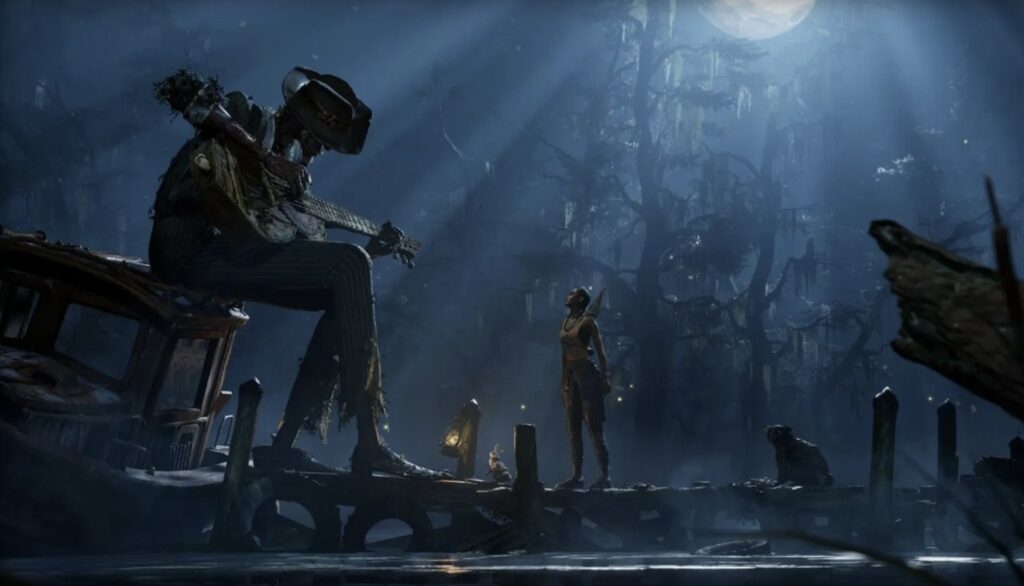
Lanier: There are some new things, potentially, but I’m under NDA. The industry is in flux. I’m officially between jobs. I’m doing my own writing right now. I hope I get some more opportunities, but for now it’s just my own creative spark keeping me going.
GamesBeat: When you do things on your own, are you interesting in things more like short stories or novels, or more game writing?
Lanier: I love games, and I would like to stay in games if I can. But I also am very open to other creative mediums. I’m working on a novel. I’d love to do something for the screen, movies or television. I’d be going from one very competitive field to another one, but it’s something I think I can do. I think the skill sets are pretty transferable. Hit me up, anybody.
GamesBeat: I talked with the creator of Despelote as well. He said that while they got a lot of attention, a lot of recognition and good critical reviews, for him that didn’t translate into lots of sales. So far it’s still an undernoticed game. Did South of Midnight feel that way as well? The critical reception was great, but it maybe didn’t generate as much on the sales side. How do you react to that kind of opportunity, where you can create something that people love, but not enough of them come around to find it?
Lanier: That’s an issue for a lot of media. Games are interesting because their cycles can be so varied. Obviously I’m not in film or TV, but I feel like if you’re shooting a 90-minute movie, everyone probably has roughly the same timeline. Depending on the amount of money you have you might do different things with VFX and so on. But in games you can have someone who does a game in a year, and then you can have someone like a Rockstar with GTA making a game over 13 years. The budget is astronomical. Hundreds of people, hundreds of contractors. It’s so varied.
I think there has to be–I don’t know if this is possible under capitalism or whatever. But I think there has to be space for games that aren’t going to appeal to the broader masses necessarily. Can there be games like Despelote? A couple years ago you had 1000xRESIST. Games that maybe have a more “niche” audience. But I don’t even think that’s necessarily always true, if people are willing to try those games. I understand you have to make a profit, but I wish there was a way that art could exist for art’s sake.
I think South of Midnight really swung for the fences in its execution. The music, the stop-motion animation style. But you’re always going to have a subset of the population that’s not going to play a game that’s featuring a Black girl from the South. I think that’s okay. If you’re going to make a game like that, it’s something you have to prepare for, or learn to market more specifically to the audience that is going to love it.
I’m not sure what can be done about that when you do have to make a profit. But I do love that games like Despelote can exist, games like Consume Me. They’re taking more chances because they’re smaller. They have to be creative and innovative in the way they do things. They’re stories that don’t need $500 million to tell them. A game about a girl with an eating disorder, a game about your relationship with soccer, I think those are beautiful things. One of my hopes is that someone with more business sense than me figures out a way to make that viable across the board, because I think it’s really important.
GamesBeat: There was some backlash against the game, people talking about how it’s a “DEI game.” When people dismiss something like that so quickly, do you have a response to that? To say, here’s why you should give this a try.
Lanier: Toni Morrison said that one of the goals of racism is to waste your time. More and more I find it a waste of time to try to convince someone of my humanity. Like I said earlier, I’ve played–one of my favorite games is Transistor. One of the characters is a talking sword, a man whose soul is trapped in a computer-chip sword. I’ve cried over aliens. I’ve laughed with ghosts, impossible creatures. I think as a minority child and adult in America, all my life most of the media fed to me has white leads. Which is fine. I love that. I love those characters. But I think if you can identify with the fantasy or the nonexistent before you can identify with a human being – if you say, “oh, South of Midnight is a Black story” – it’s a story about a relationship between a mother and daughter.
If I play Ghost of Yotei I know there are parts of Japanese culture that I’m missing because I’m not Japanese. But I love the game because the story is a human story. The stuff that I don’t know I look up and realize that it’s a really interesting part of their culture. I feel like I learned a lot. For me it’s just an opportunity to expand my horizons. Honestly I just think you’re missing out. I guess that’s my answer. Beyond that I don’t care.
GamesBeat: It is important. Maybe the people coming behind you are the ones who this game is for. Kids who haven’t seen these kinds of characters in a game before.
Lanier: That’s what keeps me going. I’ve had a couple of parents message me and say, “Oh, my daughter paused the screen and said, ‘That looks like my cousin!’” I’m going to get a little emotional here. But that’s what matters to me. I’m making it for everyone who hasn’t had something like this and needs it. I think that’s a really great thing.
GamesBeat: You’re getting an award. You should be emotional. Congratulations. Is there anything else you’d like to say on the occasion?
Lanier: I’m just really proud of the team. I’m rooting for Compulsion, whatever the next steps are. I’m glad that we got to create the game. It was wholly a team effort, working with the art team, working with the sound team. They treated every part of the game with such passion and respect. I’m glad that I was able to contribute to the story with my history. Getting to reread classics like Their Eyes Were Watching God. Watching Crooklyn. Talking to my grandparents about their experiences growing up as sharecroppers, growing up in the South. I was able to apply all that to the game, which really meant the world to me. We pulled off something that I think is very special.