

At the GDC Festival of Gaming in San Francisco, Xbox Gaming vice president Jason Ronald talked about what developers can expect to see in the console’s future. He took a moment to celebrate the 25th anniversary of the brand — the first Xbox console debuted in 2001 — and thanked developers for sharing their talent and creativity with Xbox over the past two decades.
When Microsoft released the original Xbox, Ronald said it was designed to be a premium living room experience, noting that it was the first console to ever have a hard drive built in. Since then Microsoft introduced Xbox Live for online multiplayer and a digital storefront that helped establish the digital console ecosystem that’s become standard in consoles today.
Fast forwarding to the present, Ronald brought up Microsoft’s multi-year partnership with AMD to provide chips for the next generation of Xbox devices.
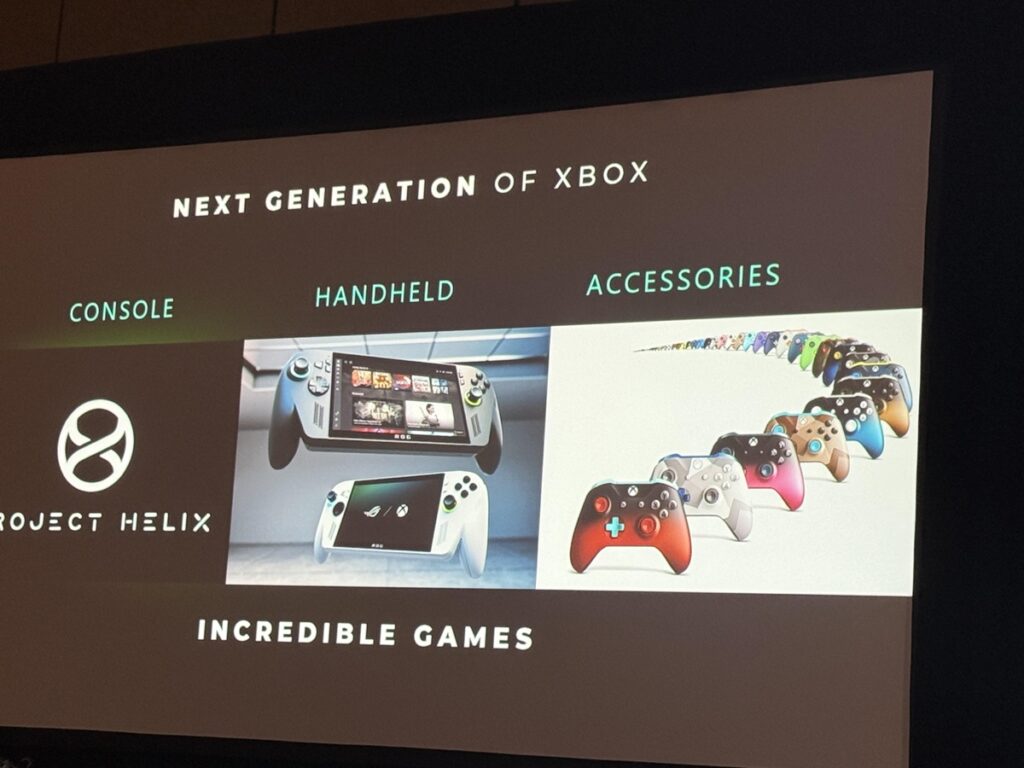
“One of the fundamental things we’re doing this generation — as opposed to designing one piece of silicon or an individual device — we’re now designing a family of silicon that will work across many different form factors, from your console to a handheld,” he said.
Project Helix dev kits to ship in 2027
Microsoft wants to provide one common development platform to make it easy for creators to design and optimize their games for “a whole spectrum” of devices.
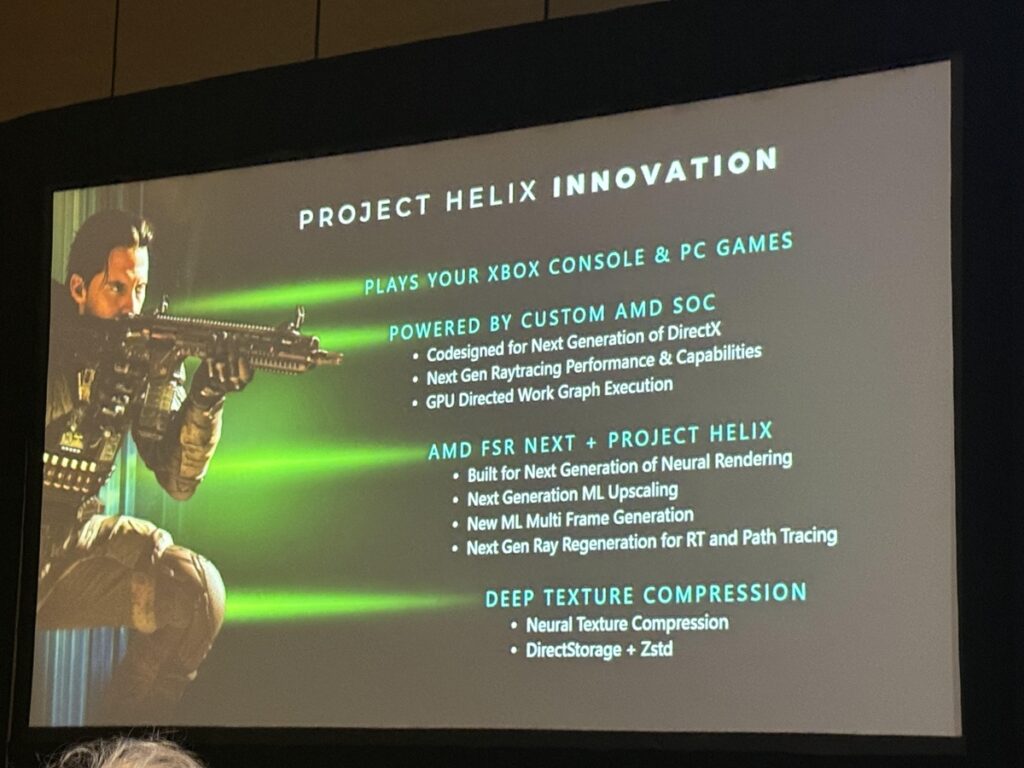
The next generation Xbox, codenamed Project Helix, will be the first console to represent this vision since it’ll play both Xbox and PC games. Ronald said they’re partnering with AMD on the new console to “define the next generation of rendering and simulation.” The first Project Helix alpha dev kits will be sent to developers in 2027.
“We want to break down the artificial barriers that exist between PC and console games because that’s what players are asking for,” he added. These players grew up in a world where media is available on any screen, and said the games industry needs to move towards that model.
While designing Project Helix, Microsoft is also taking into account the stratospheric increase in memory and storage prices that are partly due to the rise of massive AI data centers. According to analysts, this could also lead to huge price increases in consoles if the issues continue.
Ronald didn’t mention pricing during his talk, but he did say that they’re working on a number of features to help developers get more out of the hardware while still keeping the console itself accessible. One is Deep Texture Compression, which includes the latest neural texture compression techniques. This feature also uses Zstd compression for added efficiency.
“So that is a capability that allows you to use the latest version of the storage drive and be much more sensitive in how you’re actually using memory, because you can actually stream it directly off of the SSD itself,” Ronald said.
He said that if the gaming industry is going to continue to push boundaries amid the ongoing component problems, it needs to “invent brand new techniques” to leverage the hardware more efficiently.
“I think this is a responsibility and really a call to action across the entire industry. There’s a ton of work that we can do on the hardware side. There’s a ton of work that we can do on the software side, but it’s also about how you take advantage of this as developers,” Ronald said.
Introducing Xbox Mode for PC
Additionally, Ronald announced that Xbox Mode, which will provide a console-like experience to desktop PCs and laptops, is coming to Windows 11 “in select markets” starting in April.
“This is just really leaning in and making sure that no matter where you choose to play, you get a distinctly Xbox experience,” he said.
Xbox Mode will bring many of the same features from the ROG Xbox Ally handheld interface to PC, and it will put your games library (including those installed from other digital stores) front and center.
To close out his presentation, Ronald said that when they think about the future of Xbox and the next generation of the brand, they think about it in terms of several categories. Above all, he emphasized that the home console is still a vital component of their gaming strategy.
“The console is absolutely core to Xbox. It is the heart of who we are. It will always be around and is critically important to our future,” he said. “So we’re investing very heavily in Project Helix to really usher in the next generation of console gaming. We continue to be really excited by the handheld, and we’re seeing just tremendous growth in the handheld market.”