
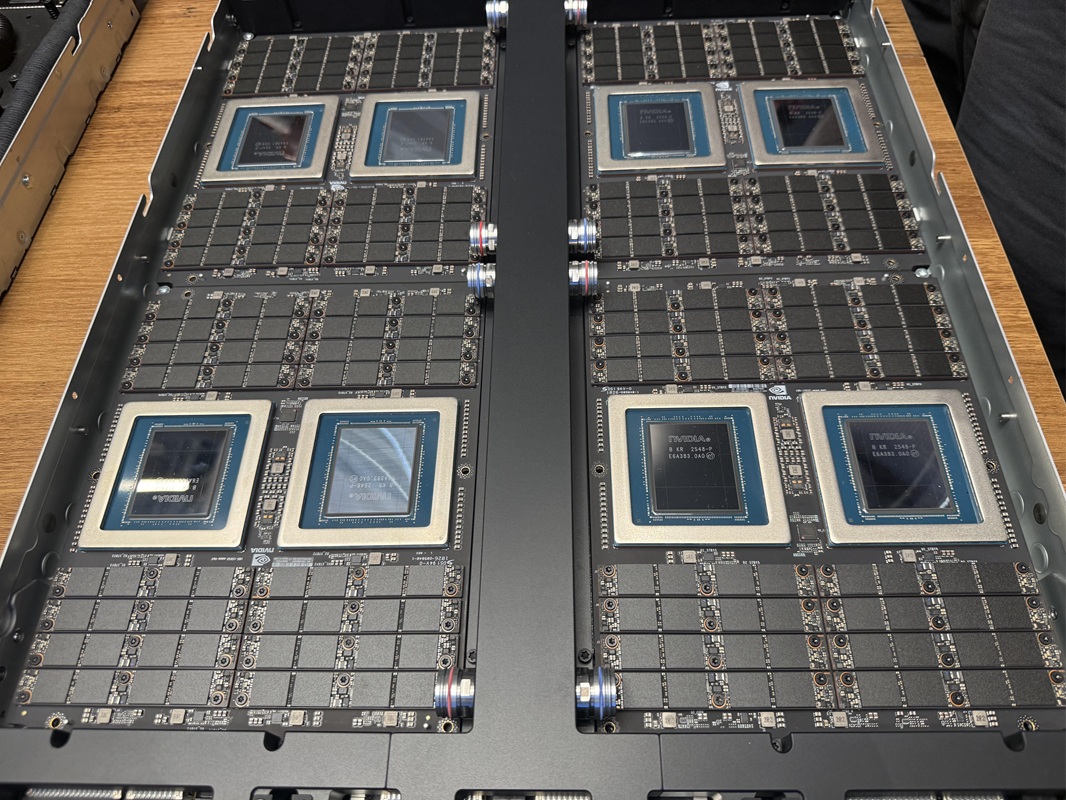
Nvidia reported revenues of $115.8 billion for the third fiscal quarter ended October 25, up 103% from a year ago. And Vera Rubin NVL72, the biggest advanced computing platform ever built, has shipped.
For the quarter, GAAP and non-GAAP gross margins were 74.8% and 74.9%, respectively. GAAP and non-GAAP earnings per diluted share were $2.70 and $2.68, respectively. In early after-hours trading, Nvidia’s stock is up 2% to $159.47 a share.
“Our momentum is real. Nvidia is an exceptional technology leader, powered by the relentless innovation of our people,” said Colette Kress, interim CEO and executive vice president and chief financial officer at Nvidia, in a statement. “Vera Rubin is off to an explosive start, our roadmap is on track and our ambition has never been greater.”
The revenue number exceeded expectations for the quarter, and the projects for the next quarter are also ahead of what was expected at revenues of $130 billion, plus or minus 3%.
This earnings report is going to be closely watched by the entire stock market and the AI economy, alongside Anthropic’s expected initial public offering this week. Nvidia’s own market value has slide from $5.5 trillion a month ago to $3.72 trillion today.
That catastrophic fall in the Nvidia stock price, accompanied by weakness in the overall market, was due in part to the post-election sell-off of AI stocks but also because Nvidia founder Jensen Huang resigned without a successor after the media revealed he had extramarital affairs, one that carried the risk of spying from China and another that evidently violated corporate policies of dating someone who was one of the CEO’s direct reports.
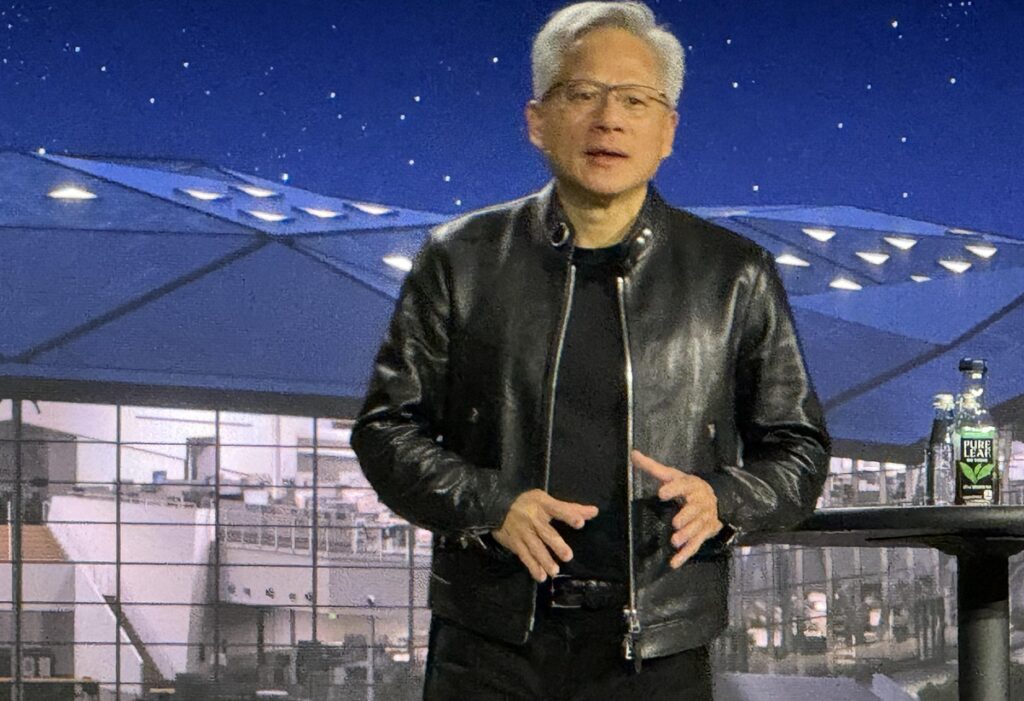
The board of directors appointed longtime CFO Kress as interim CEO, but it continues to search for a permanent replacement, even as Huang has apologized and said he would return to the company if invited to do so. (There’s a Save Jensen campaign out there, as many believe he was key to making Nvidia the most valuable company — for a time — on Earth). Many investors saw Nvidia as a stable company in a sea of uncertainty around the AI economy, which some feel has been overhyped to the point of creating a dangerous bubble.
For the third fiscal quarter ended October 31, 2026, Nvidia was expected to report revenues of $108.71 billion, while the January quarter is expected to hit revenues of $124.89 billion. For earnings per share, analysts expect $2.47 a share for the October quarter and $2.76 for the January quarter.
Earlier today, Nvidia said the board has established the National Security and Export Control Oversight Committee, a new standing committee responsible for board-level oversight of the company’s national security policies, export control compliance and global trade risk management. Nvidia’s existing National Security Team and Global Trade Compliance Team will report directly to the committee and to Interim CEO, Colette Kress, on day-to-day operations.
The committee will be chaired by director Suzanne Nora Johnson and will also include directors Stephen C. Neal and John O. Dabiri as members. It will meet at least quarterly, including with management and in executive session. The committee will oversee the company’s ongoing efforts to enhance its internal National Security Team and Global Trade Compliance Team, and work closely with independent third-party experts in law, national security and global trade compliance.
“Nvidia recognizes that advanced silicon technologies and the emergence of artificial and superintelligence present unprecedented challenges for national security. As the world’s leading advanced computing company, Nvidia has both a responsibility and an opportunity to lead the industry in addressing these challenges. We are committed to working constructively with government and industry partners to help establish and advance a robust framework that uses every tool at our disposal to safeguard national security while supporting continued technological innovation,” said Harvey Jones, Chairman of Nvidia’s Board of Directors.

The decision to create this new committee reflects the Board’s further commitment to enhance its engagement with relevant government stakeholders, and to demonstrate the highest standards of governance and oversight, the company said.
The analyst call will be interesting today, especially if Kress is joined by anyone from the Nvidia board of directors.
Nvidia’s own AI business has become massive as its customers order its AI chips as the heart of massive data centers for AI infrastructure, or AI factories as Huang called them. This business has helped propel Nvidia’s revenues to nearly $100 billion a quarter with growth that is 100% over year earlier levels — a sign of the magnitude of the AI boom. The question for investors is whether Kress and the board can keep their hands on the steering wheel of this speeding Ferrari during a leadership crisis. Nvidia faces competition from the likes of AMD, Broadcom, AI startups and foreign rivals.
The data center business now dwarfs Nvidia’s presence in gaming graphics, which gave rise to the parallel computing capabilities of the AI chips. Nvidia’s other sectors include edge computing, AI PCs, professional visualization and automotive.
Management outlook
Management is expected to face questions about China exposure, customer screening, and whether future restrictions could affect growth. Nvidia is assuming it will have no data center compute revenue in its outlook.
Nvidia’s outlook for the fourth quarter of fiscal 2027, which includes an additional week, is as follows: Revenue is expected to be $130.0 billion, plus or minus 3%.
GAAP and non-GAAP gross margins are expected to be between 71.0% and 72.0%. GAAP and non-GAAP operating expenses are expected to be approximately $11.0 billion and $10.7 billion, respectively.
For the full year fiscal 2027, Nvidia expects GAAP and non-GAAP tax rates to be between 16.0% and 18.0%, excluding any discrete items and material changes to Nvidia’s tax environment.
Quarterly developments
In the third quarter, Nvidia ramped production and began shipping Nvidia Vera Rubin NVL72 — the fastest product ramp in the company’s history — with racks running at partners including CoreWeave, Google Cloud, Microsoft Azure, Oracle Cloud Infrastructure and Nebius, and coming online soon at SpaceXSI.
The company expanded the Vera Rubin cloud ecosystem, announcing general availability of Vera Rubin NVL72 systems and Vera CPUs on Oracle Cloud Infrastructure, general availability of Google Cloud’s Vera Rubin-powered A5X instances and the continued buildout of SpaceXSI’s infrastructure.
It also announced Vera Rubin open architecture advances to help the industry scale faster, and revealed that Cisco, Google, Meta, Microsoft and Visionbay are joining many technology leaders advancing infrastructure for Vera Rubin.
And it said that leading AI natives, cloud providers and neoclouds, including CoreWeave, Meta, Nebius, Nscale, OpenAI and Verda, are building with Nvidia Vera CPUs to support the growing computing needs of businesses and developers, joining AWS, Oracle Cloud Infrastructure and SpaceXSI.
The company expanded Anthropic’s access to Nvidia Grace Blackwell and Vera Rubin capacity through cloud providers, and continued to collaborate on design and engineering to optimize future NVIDIA architectures for Anthropic’s workloads.
On the edge computing side, Nvidia said third-quarter Edge Computing revenue was $8.2 billion, up 14% from the previous quarter and up 42% from a year ago.
During the quarter, the company supported Windows PCs with Nvidia RTX Spark laptops, now shipping from ASUS, Dell, HP, Lenovo, Microsoft Surface and MSI. It also launched Nvidia DLSS 5 in NBA 2K27 and Hogwarts Legacy, bringing AI-powered, photorealistic lighting and materials to GeForce RTX 50 Series GPUs, GeForce NOW and RTX Spark, and coming soon to Where Winds Meet.
It expanded the Nvidia local AI lineup with a new Nvidia DGX Spark 64GB model, bringing near-frontier AI capabilities to desktops at a more accessible price point, and accelerated leading AI models from Nvidia Nemotron, Black Forest Labs, Liquid AI and Qwen for running AI agents locally, with expanded support for Hermes, OpenClaw and Perplexity.
Nvidia introduced new Alpamayo development tools and the Nvidia Halos SAFE framework to help developers build and evaluate autonomous-driving systems. And it expanded partnerships with Mercedes-Benz and Volvo Cars to advance safe automated driving.
It also announced European mobility leaders — including Bolt with Lucid, Mercedes-Benz, Volkswagen Commercial Vehicles and Einride — are showcasing Nvidia Hyperion use cases for automated vehicles and future robotaxi fleets.