
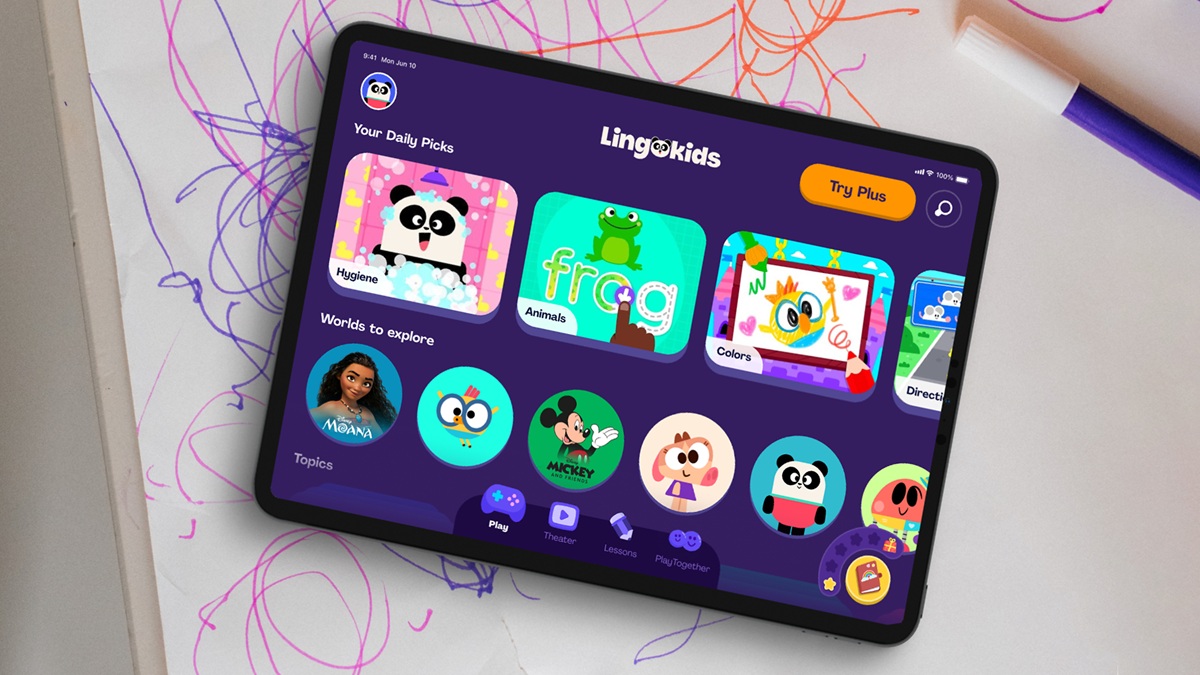
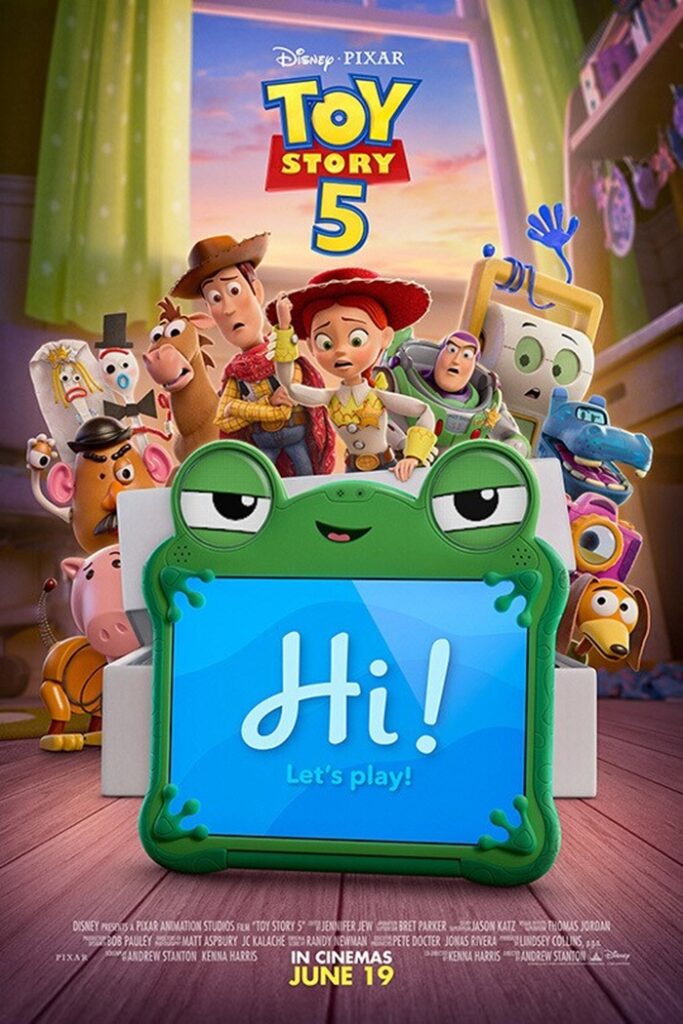
Lingokids has teamed up with Disney to use Toy Story 5’s brand to promote digital games for children.
The funny thing about this partnership is that the story of Toy Story 5, which generated $1.15 billion at the box office this summer, revolves around screen time and how parents need to properly monitor how their kids spend time on digital platforms. The film offers warnings about cyberbullying. But despite those warnings, the movie also paints the positive side of making online friends and the joy of multiplayer games.
And so that makes the partnership a logical one for Lingokids, which believes in edutainment as a way to educate kids while enabling them to have fun while learning.
I spoke with Lingokids CEO Cristobal Viedma about the debate around healthy screen use for children, content safety, research findings, and Lingokids’ growth and future plans.
Screen time survey results

Lingokids said its survey of 2,000 parents, including over 1,000 in the U.S., found that 98% allow screentime and five out of six feel guilty about it. The survey conducted by Pollfish, captured in the platform’s Kids Interactive Entertainment Report, found that parents have some surprisingly positive things to say about screentime:
- 91.5% — Overall, screentime brings joy to my household
- 76.4% — Screentime can be family time
- 66.5% — I bond with my child over screentime
Parents’ top concern was risk of exposure of their children to inappropriate content. Parents value safe, developmental, interactive experiences and opportunities to share familiar IP such as Disney, Pixar, Marvel, Sonic, Mario, and Barbie with their children.
Lingokids is the No. 1 kids’ interactive entertainment platform, loved by kids, designed by educators, and trusted by parents worldwide. Used by over 20 million kids each month, Lingokids turns fun screen time into safe, high-quality play that sneaks in learning.
Lingokids sparks curiosity and creativity, helping kids explore who they are and who they can become. With over 4,000 games, shows, and songs, more than 30 awards, and nearly 200 million downloads worldwide, Lingokids partners with the biggest names including Disney, Blippi, NASA, BBC Earth, and Oxford University Press. Lingokids focuses mostly on mobile and tablet play — with a focus on iOS, Android, Amazon, TV and audio play.
Viedma said Lingokids stays low-key when it comes to online play between children. It avoids social communication for children under eight. Multiplayer is limited to local, same-device play, and camera-based activities remain on the device.
The platform avoids politically sensitive topics and focuses on broadly accepted areas such as literacy, ethical thinking, spatial recognition, wildlife, and space exploration.
Viedma said that regulators should distinguish among television, games, social media, and other forms of screen use rather than treating all screen time alike. Age ratings may be more appropriate than broad bans, while money-based mechanics and in-app purchases require additional caution.
Lingokids did a blog post about screentime and Toy Story 5 from when the movie came out last summer. It also did a blog post from April about first set of Toy Story activities (featuring characters from Toy Story and Toy Story 2).
The Toy Story 5 games
Starting September 28, Lingokids will launch a new set of games based on the Toy Story 5 theme. Like other Lingokids games, the titles will target ages eight and under.
Toy Story activities launched on the platform earlier this year, but this new set of activities will include characters from latest movie, which was a huge blockbuster this summer and really fueled the screentime debate in the US.
Here’s a look at the games coming soon:
- Toy Story 5: Runner — Children make their way through the runner game, using problem-solving skills to help Jessie collect the letters needed to spell different words related to friendship (listen, share, talk, play, care, help)
- Toy Story 5: Wagon Catch — Children can learn to identify and differentiate between different types of animals through a fun game where they must help Woody and Buzz to collect the correct number of Bonnie’s animal drawings. This requires them to identify, differentiate, count, and engage their fine motor skills to move the wagon effectively. They will also learn different features of mammals, reptiles, birds, fish and amphibians.
- Toy Story 5: 3 Lanes — Jessie and Bullseye gallop across Blaze’s farm fields, avoiding obstacles and answering questions about farm animals along the way. Helps children develop their fine motor skills and practice key farm animal vocabulary.
- Toy Story 5: Woody and Bo Peep’s Puzzle Path — Children must use problem solving and creativity skills to help Woody and Bo Peep reach Buzz in Bonnie’s bedroom by placing the different puzzle path pieces correctly to create a path from one side to the other whilst avoiding the obstacles along the way.
- Toy Story 5: Forky’s Costume Party Challenge — In this game, players choose different themed outfits for Forky to wear. Children are introduced to more advanced clothing vocabulary and spelling while expressing their creativity by designing Forky’s outfit. A bonus round challenges players to correctly match an outfit.
Lingokids said it targeted Gen Alpha as it wanted to capture the entertainment and screentime habits of young kids before they progress to a larger focus on social media. But parents don’t wait to introduce interactive screentime. Kids age 3-8 play online games as much as kids 9-16. (Average of about 70 minutes per day for both groups.)
Walking the line on child safety and games

I think an open question remains: how should research, rather than moral panic, guide regulation of games, social platforms, and child safety?
Lingokids now has more than 170 employees, with Spain as the main hub and the U.S. as its primary market. The company raised $120 million in equity and growth capital through General Catalyst last year and is preparing additional language localization and new IP partnerships.
“Toy Story 5 was a fantastic movie,” Viedma said. “We were obviously a bit concerned when we heard about the screen time topic, and we said let’s see how they treat it. But we thought it was spot on in the sense of rather than talking about pro or anti-screen time, they approach the same way that we approach the research that we publish.”
The show focused on the right level of usage and the quality of content, Viedma said.
“And that’s what we think was the thesis of the movie at the end, and what like you can find on the report that we published, right? There’s less talking about screen time in terms of quantity and more in terms of quality. That’s what we’re trying to do at Lingokids, taking the quality approach and making sure that healthy screen time as opposed to that non-ending debate of quantity of screen time,” Viedma said.
“We found quite a lot of things in our report. Parents allow screen time, but they don’t feel good about it, and they’re looking more into what’s the right quantity and quality of the content,” Viedma said. “So the potential exposure to inappropriate content was the No. 1 concern for parents.”
Parents and kids are also fans of a lot of the same content and characters, like Mickey Mouse, Avengers, Sonic, Mario, Barbie, and more.
“If there is a way for the parents to share this fandom with their kids, they find a lot of value there, and if they can find a way to connect or bond with their kids through interactive play, as opposed to passive consumption, they see value as well there,” Viedma said.
“That’s the kind of approach we’re taking again, like focusing on interactivity, developmental content, bringing IPs that the parents grew up with and the kids will like as well,” Viedma said. “We look to find ways to create social movements between them and they can play together, while at the same time providing a tool that is safe for the parents and for the kids. So they don’t feel guilty about it.”
Parents don’t like sensitive political topics in games, particularly for young kids, he said.
“It’s a sensitive topic, given that we’re dealing with small kids. It’s not only in the U.S. where parents are concerned,” Viedma said.
Viedma said the team often gets comments about scary content, like dinosaurs in games or Halloween or magic. And parents often like content around wild animals or NASA and space exploration.
“Parents have a lot of opinions,” Viedma said. “Some topics are less sensitive.”
Toy Story 5’s focus on bullying brought attention to the topic of social media and kids. For eight or under, Lingokids does not allow any social interactivity with online games on its platform.
“There is no communication, no talking between the kids. We feel that that’s something that needs to be at a later age, and the parents should be in control of that,” he said. “For multiplayer, we do local multiplayer, so they play on the same device, and it tends to be two siblings together, a child and his friend, or the parent and the child together on the same screen.”
Racing games are popular, as are competitive sports games like basketball games, hockey, and more. Viedma said he was excited to learn that 16% of kids were discovering new IPs for the first time on the Lingokids platform.
“Screen time is a very loaded term. Like whenever we talk about screen time, people think about pretty much phones and social media and Instagram, right? We don’t think about screen time as TV, and the kids spend a lot of hours every day on TV for many years,” Viedma said.
I asked Viedma where the regulators around the world will draw the line when it comes to social games. Viedma noted that tastes are going to change over time, and so will regulation.
“I think it will be similar to what we do in the movie industry. You have ratings for ages and whatnot. Whether it’s too addictive, too engaging, I think that’s a very much more difficult topic because again, it’s like the movies,” Viedma said. “Is the show good? Should it be less addictive? Game of Thrones is too much, right? So who are we to determine like whether something is too addictive or not? Especially when we cross the line of adults. If you talk about social media for four-year-olds, that’s crossing the line for me.”