
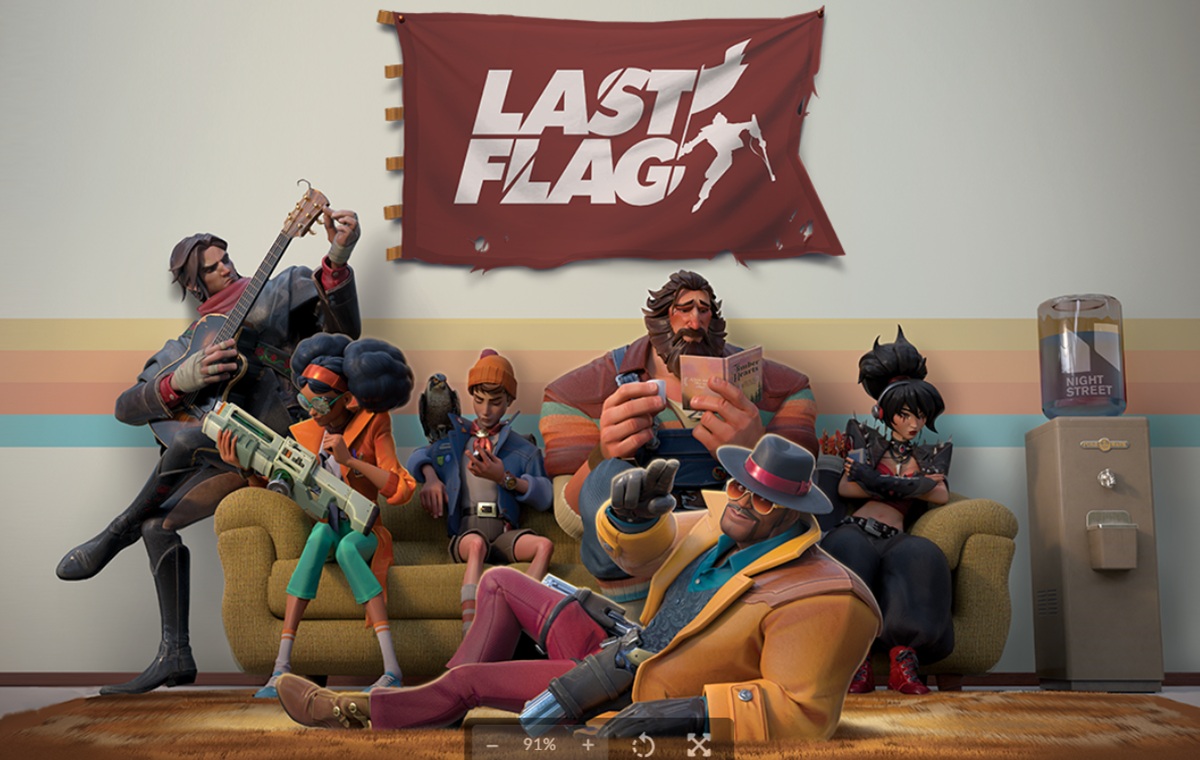
We gathered an eclectic group of people to play the demo of Last Flag, the capture-the-flag (CTF) game coming soon from Night Street Games, which was cofounded by Mac Reynolds, CEO, and his brother Dan Reynolds, chief creative officer and the lead singer of Imagine Dragons.
Dan and Mac agreed to do an interview while we were inside Last Flag, which is the version of Capture the Flag that they always wanted to play but never saw in the market. So they’re making the third-person shooter themselves and getting ready to ship it on April 14 on Steam and the Epic Games Store for a one-time purchase price. And yes, it’s going to have Imagine Dragons music, in the spy thriller style.
We had a great time playing the 5v5 multiplayer game, but the task was even more complex since I tried doing an interview with the Reynolds brothers at the same time. Everybody said the multitasking was pretty tough, but by the end of it, Dan said, “We should do all of our interviews this way from now on.”
Filling out our team of five was Mark Chandler, who produced and edited our video. He’s the founder of the TIGS event on mental health awareness for game developers and he was one of the fathers of the LAN party. Chandler enlisted his friend Zoid, who created the first team-based CTF mode for Quake in 1997. When I got into trouble, Zoid and Chandler helped me out in the game — and they asked a lot of the questions that Mac and Dan fielded. Dan even asked me a few questions. I said I was playing a lot of ARC Raiders and he noted it used the same colors as the cover of Imagine Dragons’ Evolve album.
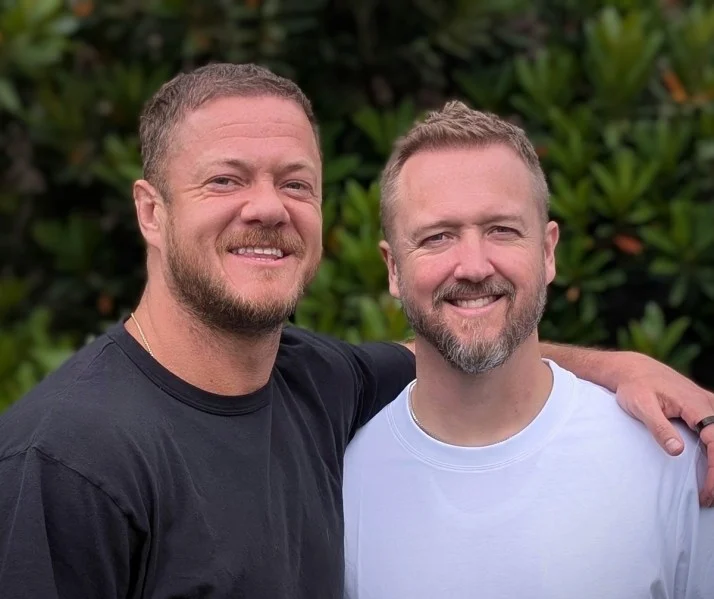
Zoid and Chandler had a lot of knowledge on the CTF subject. Dan, who of course spends most of his time with the band, had less experience with the game than Mac, who has been toiling on the title for years. (This is explains why Dan blew much of our team up with a bazooka in a friendly fire incident).
But Dan knew what to do when it came to planting the flag, finding it and running back to base. I’ve talked with Mac a handful of times and he spoke at our events and on our BIG Show podcast. It was a rare treat to play with Dan, whom we met during a virtual Google Meet before joining the game, as well as Mac. I chatted with Mac multiple times, for a couple of meals in Las Vegas, an interview on the game’s announcement, and he spoke at our GamesBeat Next conference. And our writer Rachel Kaser interviewed him for The Big Show podcast. But Dan was more elusive.
I asked Dan to sing a few bars from a song so we could confirm for our viewers it was him, but he joked (I think) it would cost $1 million. I decided to pass on that, and I was quite confident we were talking to the same Dan from the Google Meet.
It was cool to hear from him how he was working on original songs that will debut with the game. Dan is working with Grammy-nominated producer/writer JT Daly (Benson Boone, K.Flay, Bully), and Night Street Games’ own soundsmith Dave Lowmiller (Call of Duty: Modern Warfare, Battlefield, Dead Space). The music is not an afterthought, Dan said.
“It’s been nice to do something that is different from the Dragons, as the game is set in the 1970s,” Dan said.
Dan said he loved the fake talk (Simlish) of Electronic Arts’ The Sims.
“So a lot of the lyrics are like that,” Dan said. “It’s more like a vibe than actual lyrics. I’ve had such a great time. Like a song for when you win or you lose.”
When we last interviewed someone inside their own game, it was a big hit. I interviewed Owen Mahoney, former CEO of Nexon, and Patrick Soderlund, CEO of Embark Studios, while playing their game ARC Raiders. That game was a little slower-paced and so it was easier to interview someone and play at the same time.
It turned out so well — with scoops dropped like Soderlund’s comment about aggression-based matchmaking — that it went far and wide on social media. So we decided to do it again with the Imagine Dragons folks, the multi-platinum band whose lead singer is Dan, of course. But we chose them not because they’re entertainers. It’s because of the game.
A family affair
As we’ve been covering for the past year, Mac Reynolds formed an indie game studio, Night Street Games, in Las Vegas.
Mac and his brother Dan (two of eight siblings) grew up in a scouting family, as their father was a scout master. And so, in real life, they played a lot of Capture the Flag for the Boy Scouts. They always thought about the right way to play, like hiding the flag in the woods.
As they grew up, Mac started to play capture-the-flag modes on Quake and other games. Even before going into music, Mac and Dan started thinking about making a game together.
Of course, Imagine Dragons took off. Dan went to Brigham Young University in Provo, Utah, and met drummer Andrew Tolman. They recruited more members of the band and launched their debut single It’s Time in 2012. It became a top-20 hit and they saw international fame with their albums Night Visions (2012) and Smoke + Mirrors (2015). Mac, who is five years older, became the band’s manager.
But in addition to music, this game is their labor of love.
Mac learned 3D graphics and Dan learned how to code starting about seven years ago. Over the years, they made some “dinky prototypes,” Dan said. Mac said they had no desire to make a music game.
I asked Dan why they wanted to express their creativity in music and then again with games.
“I’ve always felt like coding is such an art,” Dan said. “It gives me the same pleasure as writing a song. Putting the pieces together. Seeing the logic work really makes me happy. Building something from nothing and having it do something brings me the same amount of joy I get from songwriting. I feel it’s very similar.”
It’s no longer just a musician and his manager trying their hands at gaming. This is a lot more ambitious than that. And while the fame of Imagine Dragons could garner some attention for the game from music fans, Mac said, “Every game lives or dies on if it’s fun.”
Mac said what he loved about CTF games like Quake was that it rewarded other behaviors besides being a great shooter. If you’re sneaky, you can outwit the other team in CTF.
“That kind of freedom to always play the way you want was always interesting to us about the game mode and [we wondered] how we can lean in more,” Mac said.
It’s like hide and seek. Zoid said the original CTF for Quake became so popular because it gave people a goal besides just shooting each other.
Years ago, Dan started designing characters for the game. At first, he said they were all based on members of his family and his friends. Over time, professional writers and designers came aboard and convinced him that the game would be better with an international crew of characters. There are nine characters from around the world. And Dan said the Lumberjack character is one of his designs that survived; it’s based on his best friend.
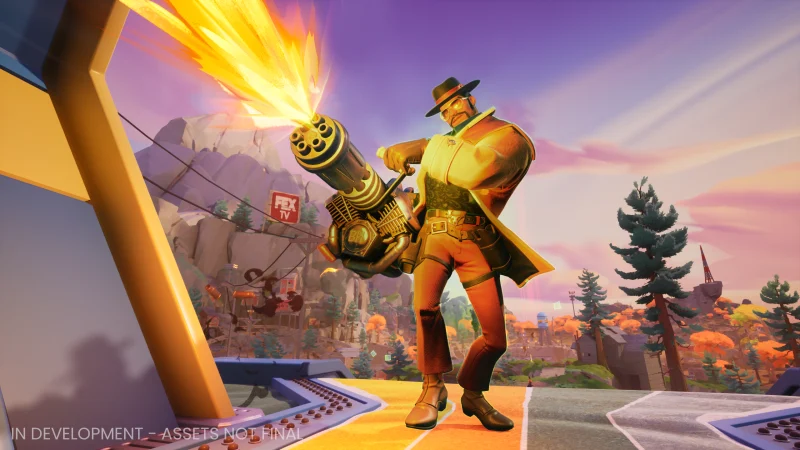
The company pulled together a team that has been working on the title for a couple of years. While Night Street Games is based in Las Vegas, the team is remote and spread out. They loved the vibe of the 1970s, and so they set the game in the era of disco, if you can’t tell from the wardrobe of Julius Reeves, the Bounty Hunter character in Last Flag.
I like the humor of the game. When you’re downed, you crawl around until someone revives you. But the enemy can pounce on you and “thirst you,” or take you out for good. An animation of a shark appears and it gobbles you down into the ground in a finishing move. If your enemy does that to you, it takes 15 seconds to respawn rather than just five seconds.
As for the story, there is one. The game is set in a competition — the most spectacular one the world has ever seen. It’s a game where fame, fortune, and your flag are all up for grabs. The show is hosted by a mysterious media mogul named Victor Fex, who is an evil corporate owner. Dan does the voice for the character.
The game description says, “The world is watching, so don’t forget to do it with style. This isn’t war. This is showbiz.”
How the game works
The demo was available during the Steam Next Fest, and it ended on Monday.
As noted, you start out the 5v5 game picking your character. You have to go through some single-player basic training and then play some rounds of Audition, a multiplayer mode that eases you into the play. Once you get enough points from the training, you are free to join “quick match” play with other teams. When the game comes out, it will have skill-based matchmaking, Mac told us, and each match will be about 15 minutes or so.
For the first minute of the match, one of your team members has to hide the flag. Mac said the team experimented with many different map sizes to ensure that players could come together during clutch moments.
The colorful cartoon-style 3D map has a lot of hiding spots near the base where the flag can be hidden from view. Dan hid the flag the first time around. Once the timer released, we could see the full map as far as line-of-sight allowed. In the middle of the map, there’s a town with a main street cutting horizontally across the map.
Along that street are three radar towers. If you capture the towers by staying in the center of a circle, then you get an advantage in finding the flag. With each capture of a tower, you get to rule out a quarter of the enemy’s map. If you control all three towers, you can see on the mini-map that there will only be one quadrant where the enemy’s flag has to be. And with that, you can then go search for the enemy’s flag. I liked the towers because you could shoot down from buildings at those trying to take them. And they concentrated the players around a single point of combat.
Once you get it, your runner picks it up and takes it back to your own base. You have to survive getting there or the flag can be intercepted and placed back in its original spot. If you managed to make it back to your base, you plant it there and then defend it. You have to defend it for 60 seconds while the enemy tries to kill your defenders and retrieve it. Mac said that part of the game causes a huge “tension spike,” which resets if the flag is sent back to its original position.
On our team, Chandler, or Mouser, grabbed the flag multiple times. But I was so busy trying to stay on top of the interview and capture the towers that I never made a run for the enemy’s flag. You can shoot some cash bots and get cash for your team, and if you take radar towers, you get advantages like jump pads that can send you across the map at high speed.
I loved trying out the different characters. Each of the five characters on your team has to be unique, so you’ll get to learn a lot of the characters. Alejandro Tango, The Soldier, had a good assault rifle with decent range and firepower. The art style was inspired by Valve’s Team Fortress 2. Art director Brian Thompson made players far more identifiable by body shape.
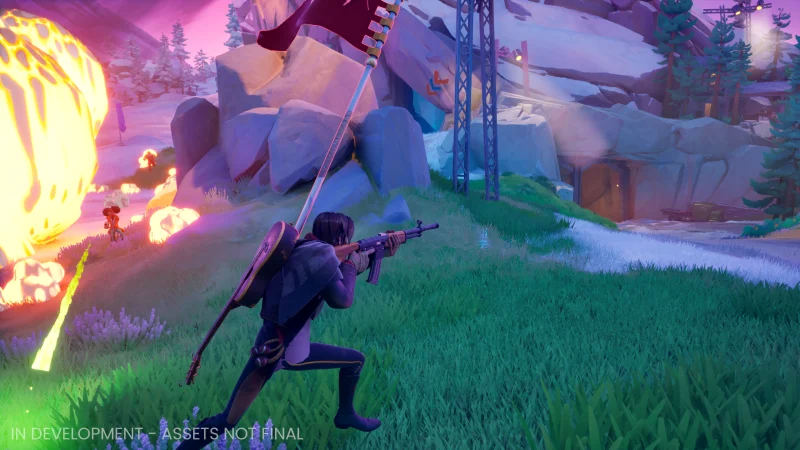
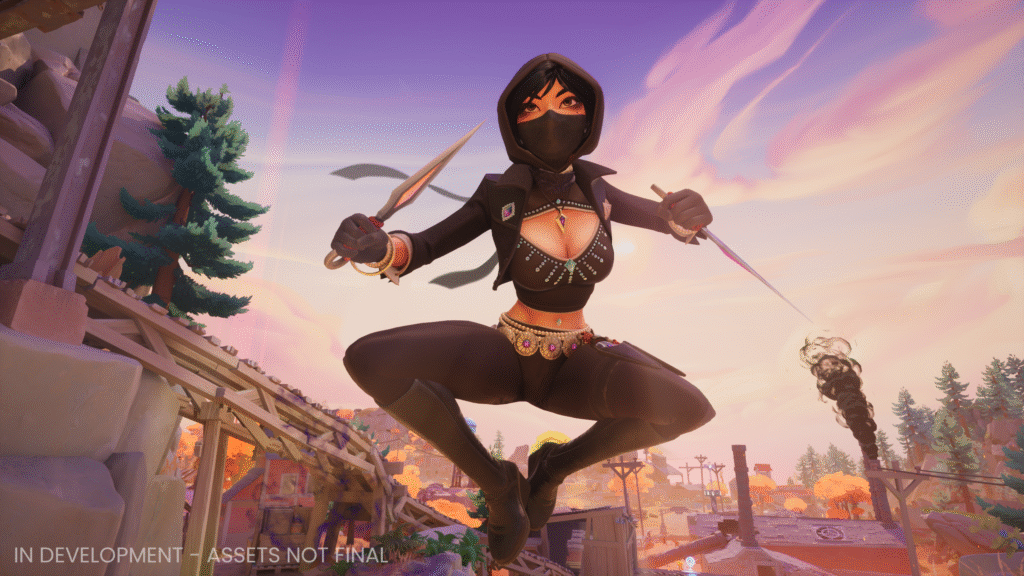
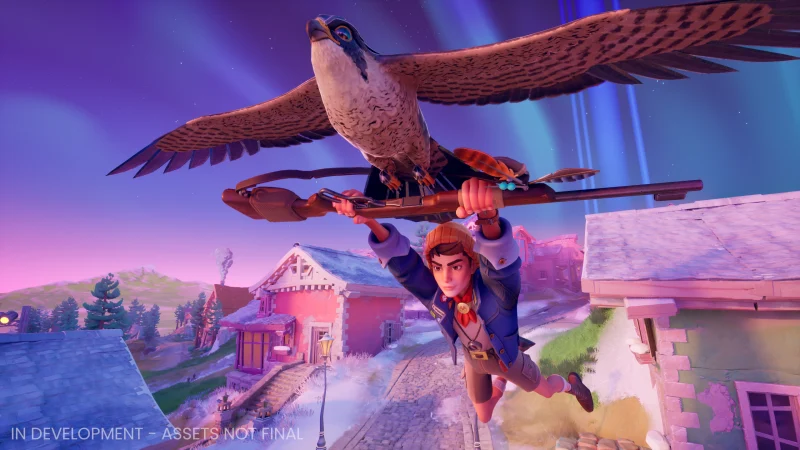
Parker Spencer, The Scout, had a long-range sniping ability, but his shots weren’t powerful. Julius Reeves, the flashy character known as The Bounty Hunter, carried two hand cannon. They were powerful, but had short ranges. Hazuki Masako fired arrows silently as The Archer, but The Master Thief Soo-Jin has fast running speed and can turn invisible through her powers.
Peter Makinen, The Lumberjack, carried axes for melee combat, while Camila Barbosa was The Weapons Engineer. She could fire off a powerful “tornado grenade” that could wipe multiple characters off the map, and her super is teleporting someone across the map, which is quite useful when guarding your flag.
My favorite was Roadie, who carried a handheld grenade launcher with seven shots before reloading. But he was so popular I didn’t get to play him. I mostly played as The Scout but found I was easily taken down when out of cover.
Every action like taking a tower, shooting an enemy or thirsting them, or killing a downed rival and sending them back to base, gives you points and you can use them to use your power-ups, which are on timers. Some of them are super weapons that can turn the tide of battle in a hot spot like the battle at the base or at a tower.
Mastery
I played the game last year and have seen improvements and greater variety come into the game. Our team had one heartbreaking loss and one win in the nick of time in overtime — which was really exciting. Dan gave Mac a brotherly lashing for being so pessimistic that we lost.
As far as the roadmap goes, the game will have more maps and it remains possible that community modding may happen in the future. They’re collecting good telemetry about hero picks and time to kill and such to tweak things in the future.
Dan said they wanted to add ranked play. Players might one day also be able to modify the conditions of the game — at least the ability to do that is in the game, though not turned on. There are Easter Eggs to find in the game, which Mac said is akin to like Mega Mart, one of the cool things at Area15 in Las Vegas.
Mark asked if it would turn into an esport. Mac said they wanted it to be a great game first, and then competitive second. He noted an esports team came into review the game and give them some tips.
With the short amount of time I had to play, I was nowhere near mastery. But watching veterans like Chandler and Zoid play was fun to watch.
The game has a fast pace but it also requires a team effort and real strategy. It’s also got some hilarious features with zany characters and cute environments. The game will launch soon with two maps and a third one soon after launch. Those maps will show whether there’s a lot of mileage for players in this game, which seems like it’s based on a narrow kind of gameplay within the shooter space.
You can see in the video that we had a lot of coordination on our team thanks to Mac and Dan, but we also faced off against some of their best fans in our matches too. I think it will take a lot of matches before anyone claims to have mastery over this game. So it’s easy to learn, difficult to master, in that classic description of awesome games by Nolan Bushnell.
And it’s different from all of the shooters out there. For the one-time purchase price and zero pay-to-win, it’s a pretty good deal and a walk down CTF memory lane.