
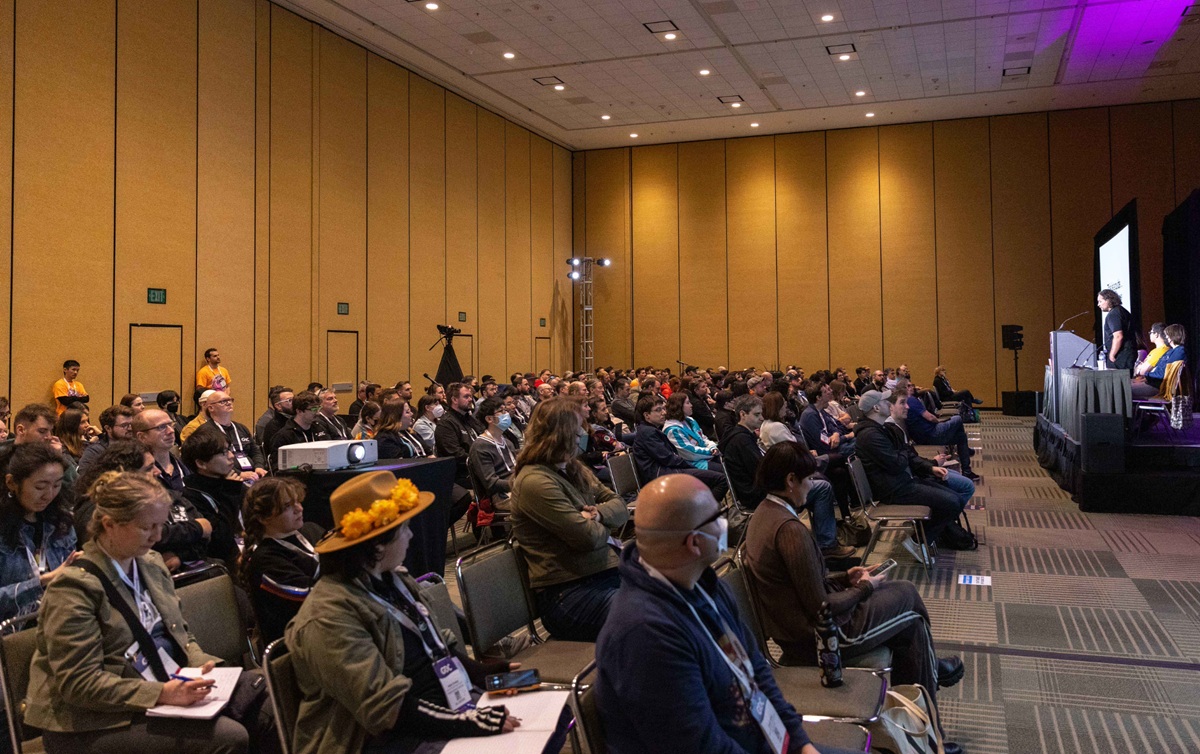
The GDC Festival of Gaming, formerly the Game Developers Conference, is undergoing big changes as it makes its way toward its March 9 to March 13 event dates in San Francisco.
And I caught up with a couple of the folks who are steering it into its new path as the GDC Festival of Gaming, a city-wide event that will embrace the side events that are typically outside the walls of GDC. I spoke with J. Ashley Corrigan, conference director and head of content at GDC and Mark DeLoura, executive director of innovation and growth at GDC.
They told me there are some big developments since we last talked. Instead of doing a traditional show floor full of expo booths, the organizers have decided to change things up in GDC’s 40th year as a professional show for game developers.
Part of the idea is to amplify new perspectives for collaboration across every stage of a game’s lifecycle, not just game development. The team wants to make GDC more accessible as well. I asked them how many people would attend, and they said they could not say yet, but they noted it was tracking.
This year, there’s a Festival Pass ($1,199) and the Game Changer pass ($2,499) with early-bird discounts for both. The Game Changers get more privileges, but the Festival Pass allows entry to a wide variety of events including all the sessions and keynotes.
“When we’re talking about GDC as a festival, it’s about taking over the city during this week. And there’s a lot of different things that are happening around San Francisco and the areas around Moscone, and it’s just this really citywide celebration,” Corrigan said. “It’s always been that way for many years. And so we’re embracing that. We are embracing activations and events that are happening in the surrounding area, and have selected some locations that are still close to GDC in Moscone, but not within Moscone walls, to really help round out that festival experience and the GDC experience overall.”
The neighborhoods of the expo hall
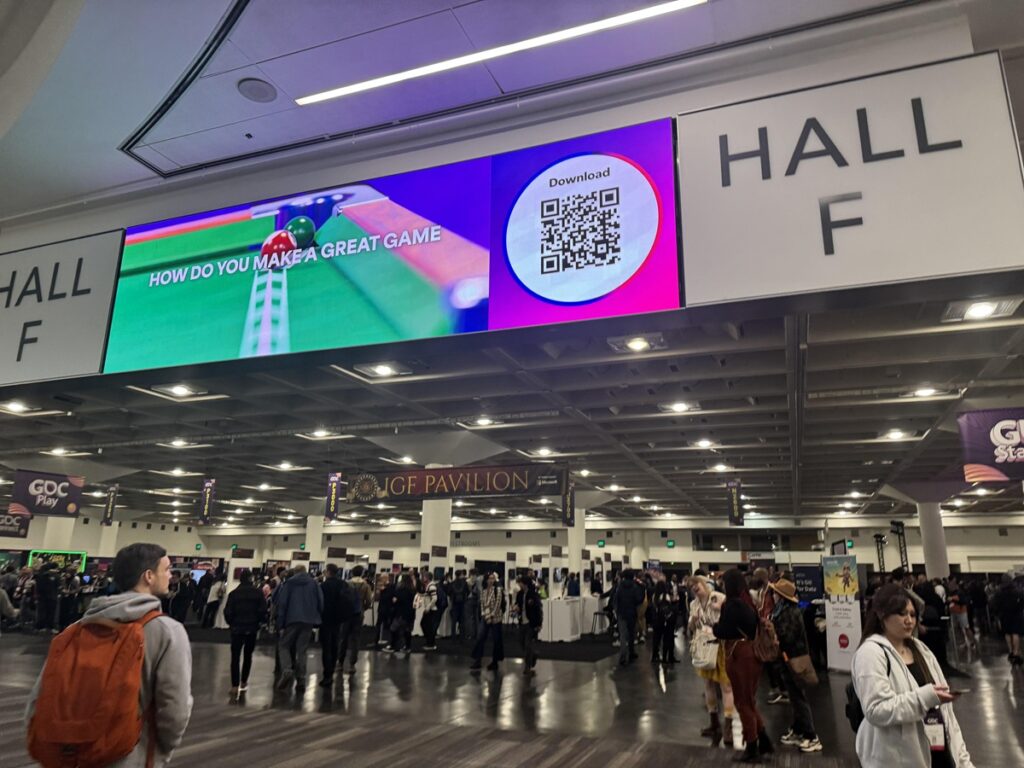
There are still booths in the expo hall, but more companies will try different things to create experiences for attendees.
“The Expo Hall is new and improved and it has themed neighborhoods and stages with content,” said DeLoura. “There are lounges and more interactivity. The curated meeting program is in flight at the moment.”
The idea is to make exploration easier and more meaningful.
“Luminaries is part of a broader executive push this year. We’ve got the content program, which runs Tuesday to Thursday,” said DeLoura.
“We have the forum at the YBCA with casual meeting spaces,” DeLoura said, “We have the W Hotel as formal meeting spaces for execs to meet. And this is all new this year as well. GDC Play is where you’re going to find lots of indie games to play, and you can meet the developers in the Festival Hall. It’s where indie game developers can pitch their titles.”
The Festival stage will have some marquee fireside chats. The Commons is where you can meet with people. There are Hangout spaces and podcasting studios.
There will be a fireside chat with Amir Rao, studio director at Supergiant Games, the maker of Hades and Hades 2. He will do a fireside with Trent Kusters, cofounder of League of Geeks. That will take place on the Festival Stage in the Festival Hall.
Networking events
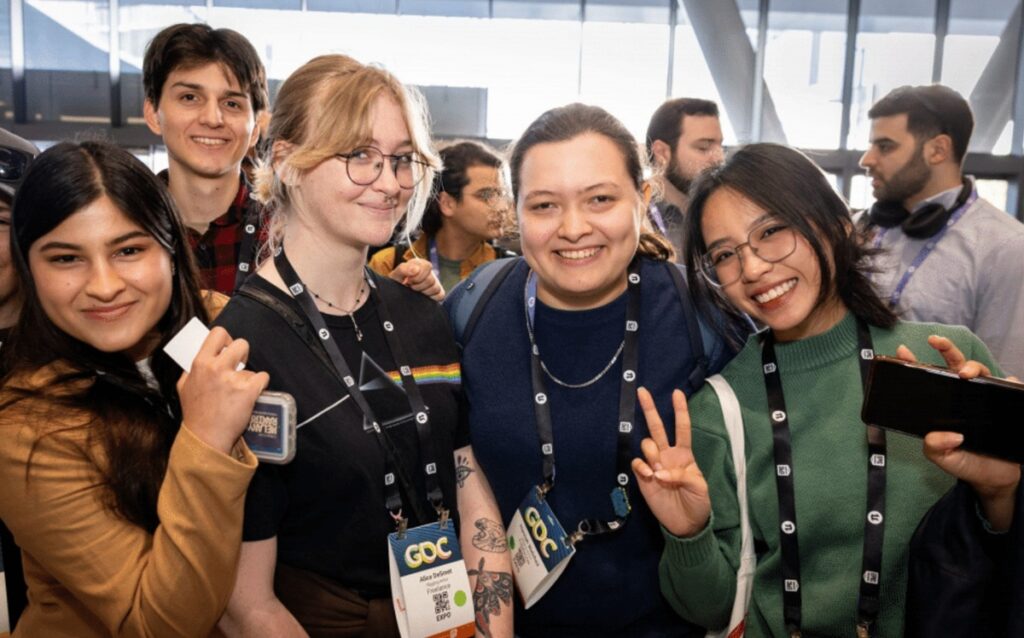
Networking has also been expanded with both informal meetups and structured formats. GDC is suggesting people to meet for attendees with a new part of its web site, Game Plan, that suggests people for one-on-one meetings. It’s accessible with a Game Changer pass. I filled it out and it was fairly easy to choose people that I prioritized meeting.
The talks will take place throughout the week. I will be on a panel at 3:10 p.m. on Monday, March 9. It will be moderated by Perrin Kaplan and focus on how some of the games media, including GamesBeat, are going independent. The panelists include my former colleague Jeff Grubb of Giant Bomb and Nathan Grayson of Aftermath. I’ll also speak at a side event at the Japan Society event around 4 pm.
Luminaries Speaker Series
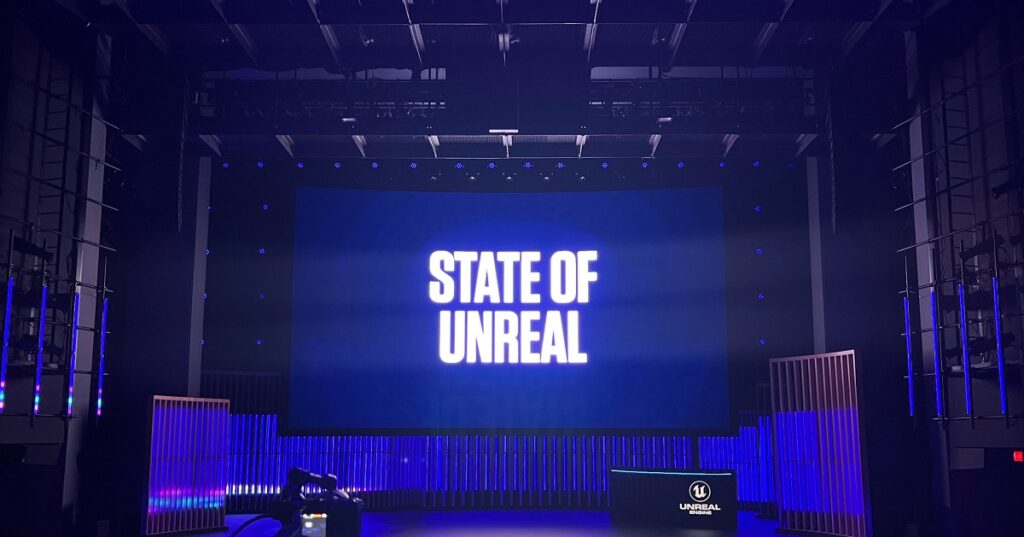
The Blue Shield of California Theater at the Yerba Buena Center for the Arts will be the location for the Luminaries Speaker Series, an executive conference that GDC is adding so that executives can network and listen to thought leadership talks in a theater setting. It’s available to Game Changer pass holders.
The three days of Luminaries talks feature AI and emerging technology on Tuesday, March 10, with speakers including John Spitzer of Nvidia, Bryan Catanzaro of Nvidia, Julien Merceron of Orion Productions and Alexandre Moufarek of Google Deepmind. Corrigan said the focus is on AI because “it’s disrupting everything now.”
On Wednesday, March 11, the Luminaries will focus on investment and global expansion, with talks from speakers from McKinsey & Co. to talk about their research on games as well as Itamar Benedy of Anzu.io and Moritz Baier-Lentz of Lightspeed Venture Partners.
And on Thursday, March 12, the Luminairies will feature transmedia and player engagement topics from speakers like Alain Tascan of Netflix and Marcus Liassides of Mattel.
“It is specifically geared towards more executive-level folks and folks who are responsible for resource allocation and strategic direction, and those who are interested in learning about what’s happening in the industry from the folks who are leading the charge in shaping the industry, and just inviting folks to be part of that conversation,” Corrigan said.
Keynote speaker

Perhaps the biggest speaker of the event will be Hideo Kojima, CEO of Kojima Productions, in a keynote dubbed Restarting from Zero: A Message to Creators Considering Independence. It will take place on Thursday, March 12, at 9 a.m. on the GDC main stage. Corrigan said Kojima Productions is celebrating its 10th anniversary after Kojima left his longtime work at Konami.
One of the changes was reducing the price of the All Access Pass and enabling a larger number of attendees to attend the conference across five days. And it will be a festival for professionals (not for gamers themselves). On Monday, March 9, there will be an Opening Night part in Oracle Park, the ballpark where the San Francisco Giants play.
Awards and more
On Tuesday, award-winning composer Austin Wintory will lead the San Francisco Conservatory of Music in a Developers Concert to celebrate the craft of audio and the emotion of play. GamesBeat will have its own side event, our second annual GDC Crossfire debates event, at 4 p.m. to 7 p.m. on Tuesday, March 10. Our speakers include Susan Cummings of 10six, Mike Lucero of Samsung and Chris Petrovic of Funplus.
The events of the week will be spread out more. On Wednesday, March 11, the 28th Independent Games Festival will take place at 6:30 p.m. Winners will receive more than $20,000 in prizes, including the $10,000 Seumas McNally Grand Prize. Finalists will get a $1,000 stipend. All passholders can attend.
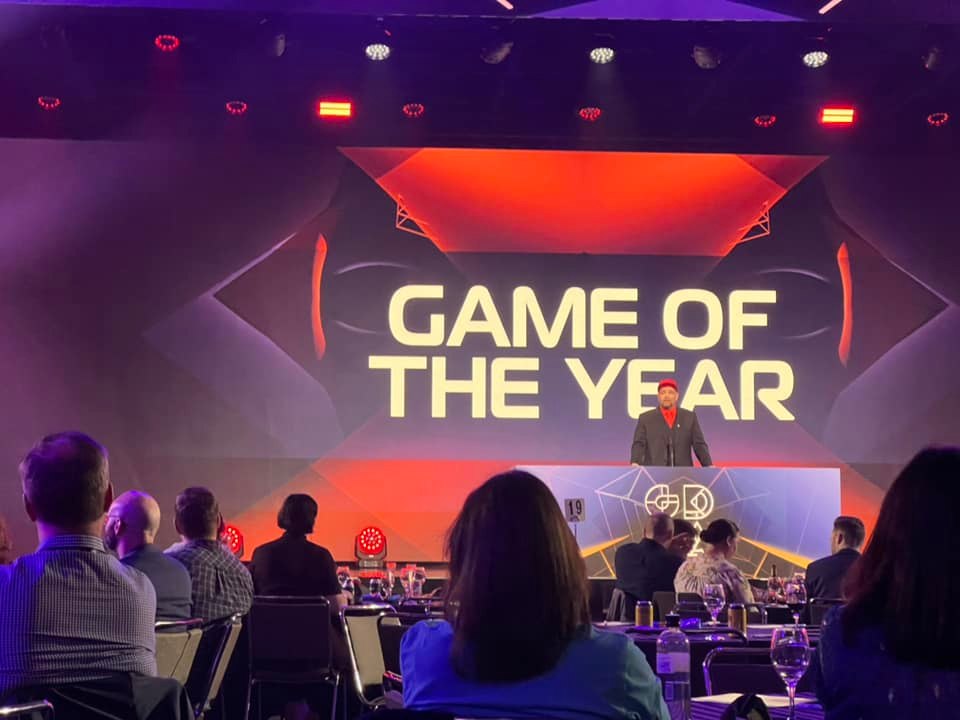
Meanwhile, the 26th Game Developers Choice Awards will take place at 6:30 p.m. on Thursday, March 12, to celebrate winners across a dozen categories. In the past, both awards shows were held on the same evening. All passholders can attend.
Beyond the Moscone Center’s walls, there will be official GDC spaces at the Yerba Buena Gardens, the YBCA and the nearby W Hotel, which will be a space where executives can meet.
Some key sessions
As for the talks at the GDC conference, Corrigan said the crowds will hear from those making the big games themselves, with talks from the makers of Donkey Kong Bananza, Death Stranding 2, Clair Obscur: Expedition 33, and more.
“We wanted to get more creative with the content and start thinking about different formats, because there is the traditional learning style, which is great and we love. But there’s also other ways that people learn by being at an event. There’s different ways that, you know, people want to connect and we wanted to try to think of different ways that people can connect and also learn,” Corrigan said.
One is a cross-functional panel with narrative writers, designers, a voice-over director, audio engineer and actors. Each of them can take you step by step through what it takes to get their work done. The actors Ben Starr and Jennifer Hale will be able to read a script out loud.
“The essence of this is hearing it out loud, and it is a very important part of that process,” Corrigan said. “It’s also fun to watch.”
I asked about the resistance to AI among players and game developers. DeLoura said the role of GDC is to create a place for that conversation and awareness and to really discuss it.
“You can’t have a productive conversation, or even really have an impact on something, if you’re not educated about it and you don’t know what’s happening,” DeLoura said. “So really, what our role is is to create a learning space and a safe space where people can discuss these conversations and help be part of shaping what is happening, rather than sitting on the sidelines and just watching it happen to them.”
I asked about some of the forces that are beyond GDC’s control, like the anti-immigration ICE enforcement efforts that are disrupting cities and perhaps making people afraid of visiting the U.S. There are also high costs of attending an event in San Francisco, concerns about homelessness and crime in the city and more.
“There’s a lot that is outside of our control,” Corrigan said. “There’s only so much we can do. But we are an international conference. We say that proudly, and we want to welcome the world. And we want GDC really be that place where the world comes together.”
The event still has country pavilions for developers from Spain, Switzerland, Brazil, Germany, Portugal and more.
“We are still having representation from international partners and folks from around the world. We also have a number of different scholarships for specific some specific organizations that are for certain regions, specifically the ones that are especially the ones that are in emerging markets,” Corrigan said. “We are actively working with folks who are representatives from different countries, and working with them to partner.”
The GDC is also writing letters for those who need them as part of their international visas for entering the U.S. The team got its schedule out earlier in December so more people could plan their trips better.