
Sonix wants to be the pro gamer’s voice chat platform of choice — and the company is enlisting esports teams and players to accomplish this goal.
Founded in 2019 and based in Switzerland, Sonix is a voice chat platform that uses AI to power low-latency audio technology. Over the past year, Sonix has undergone a significant evolution powered by a $3.73 million crowdfunding campaign that wrapped up in July 2025. Thus far, the company has raised nearly $7 million in total through a mix of crowdfunding and private investment rounds, with Sonix chief executive officer and co-founder Nicolas Abelé telling GamesBeat that the company is on the cusp of kicking off another round of community fundraising this week.
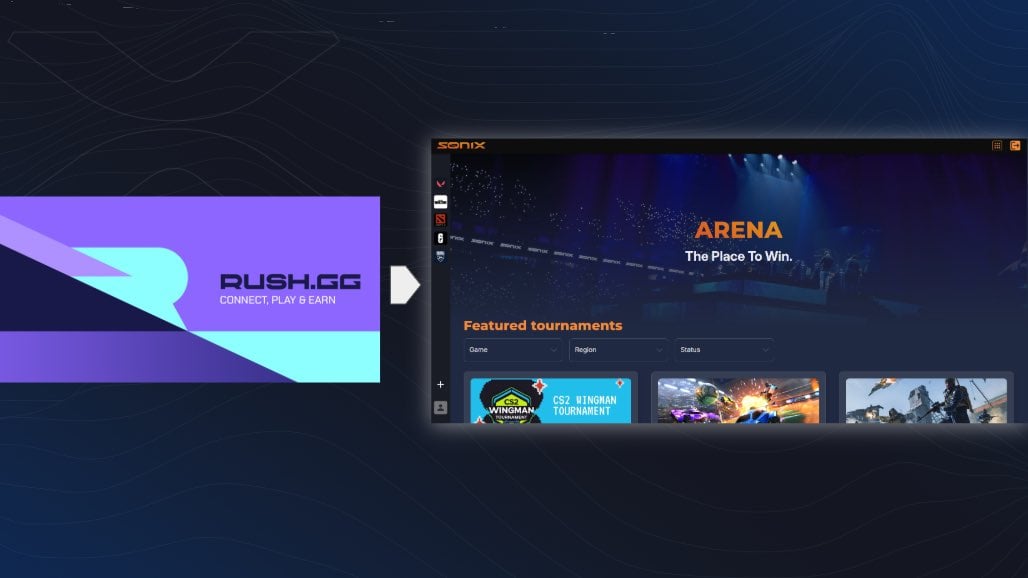
At the moment, Sonix’s platform includes audio and video chat and personalized avatars, and voice chat remains the company’s main product. But the crux of Sonix’s expansion in 2026 is competitive gaming. In January, the company acquired the esports tournament software platform Rush, using the acquisition to power Sonix Arena, a tournament organizing platform launched by Sonix in February.
“It makes a lot of sense, from a strategic point of view, to have a tournament platform with super low latency, because that’s what players want to compete,” Abelé said in an interview with GamesBeat. “And when you compete, you want to have the best tool in your hand, to make sure you win the prize pool.”
Sonix is positioning Sonix Arena as a potential revenue opportunity for esports teams. Teams can have their own profiles on Sonix, replete with Arena tournaments, personalized avatars, and other content. For esports organizations looking for new ways to sign brand deals or activate on pre-existing sponsorship agreements, Sonix’s offering represents a potential bridge to brand partners.
“I believe that there are a lot of smaller teams in the esports industry that could be very interested in Sonix, because the desperately need room to stream — they don’t have access to big brands or sponsors,” said Sonix board member Laurent Bischof said in an interview with GamesBeat. “I think there is a sweet spot for Sonix — probably not the biggest teams in esports, but teams at the beginning and in the middle, who need to have support from the community and access to new revenue.”
Sonix is not the only voice chat or tournament organizing platform in the esports space, but Abelé is confident that his company is set apart from the competition due to its connections with esports teams like Team Vitality, where Bischof also serves on the board, and Team Peps, a top European Overwatch squad whose founder Félix Münch advises and co-owns Sonix.
Münch and his teammates have used Sonix since 2023, with the European Overwatch champion telling GamesBeat that its low-latency voice chat has offered his players a significant advantage in situations where they are permitted to use it. In an interview with GamesBeat, Münch praised Sonix’s receptiveness to feedback from competitive gamers, crediting the company for integrating features like noise cancelling into its platform after requests from Münch and his team.
“Now, with Sonix Arena, it’s even more interesting, because we are playing tournaments and we are organizing tournaments,” Münch said.