
Roblox has grown to more than 151 million daily active players, making it one of the most successful human platforms in the history of the internet. But it has also received a lot of criticism in the past year over its alleged failure to protect kids from predators.
It’s a tightrope. And occasionally, Roblox’s spokespeople, including its CEO, fall off.
Nearly 60 lawsuits filed across the country alleging that it failed to protect children against sexual exploitation. Then matters go worse when Roblox’s cofounder and CEO, David Baszucki, recently appeared on the New York Times’ Hard Fork podcast.
When asked by hosts Kevin Roose of the New York Times and tech journalist Casey Newton about it, Baszucki misspoke.
“What do you think of the problem of predators on Roblox?” Newton asked.
“We think of it not necessarily as a problem, but as an opportunity as well,” Baszucki replied. “How do we allow young people to build, communicate and hang out together? How do we build the future of communication at the same time?”
I wrote a story about the backlash to this interview, and then Roblox approached me to see if we could have a conversation about the issues with Matt Kaufman, chief safety officer at Roblox. Kaufman noted that the company has launched robust safety technology such as AI-assisted facial age estimation.

Baszucki’s remarks, which showed no acknowledgement of the strong emotions around the subject of children being allegedly victimized, were widely reported as insensitive. At the very least, the publications said, he could have acknowledged sorry about anyone being potentially attacked.
After the fallout, a spokesperson for the company issued a lengthy statement: “We are deeply troubled by any incident that endangers any user. Roblox aims to build a platform that sets the bar for safety online, and we prioritize the safety of our community. This is why our policies are purposely stricter than those found on many other platforms.”
The spokeperson added, “We limit chat for younger users, don’t allow user-to-user image sharing, and have filters designed to block the sharing of personal information. We also understand that no system is perfect and that is why we are constantly working to further improve our safety tools and platform restrictions to ensure parents can trust us to help keep their children safe online, launching 145 new initiatives this year alone.”
The statement continued, “We also understand this is an industry-wide issue and we are working to develop industry-wide standards and solutions. For instance, Roblox is implementing an industry-leading policy to help prevent older users from communicating with children by requiring a sophisticated facial age estimation process for all Roblox users who access our communications features.”
And lastly, Roblox said, “We partner with law enforcement and leading child safety and mental health organizations worldwide to combat the sexual exploitation of children and are a founding member of the Tech Coalition’s Lantern project and the nonprofit Robust Open Online Safety Tools (ROOST).”
In our conversation, Kaufman and I went over the arguments together in our conversation, and he reiterated the company’s own challenges with creating technology fast enough to stay ahead of the bad actors, who can also use technology and social engineering to deceive children.
Roblox has said it also collaborates with law enforcement, government agencies, mental health organizations, and parental advocacy groups to create resources for parents and to keep users safe on the platform. Through vigorous global outreach, the firm has developed deep and lasting relationships with law enforcement at the international, federal, state, and local levels.
Age estimation technology
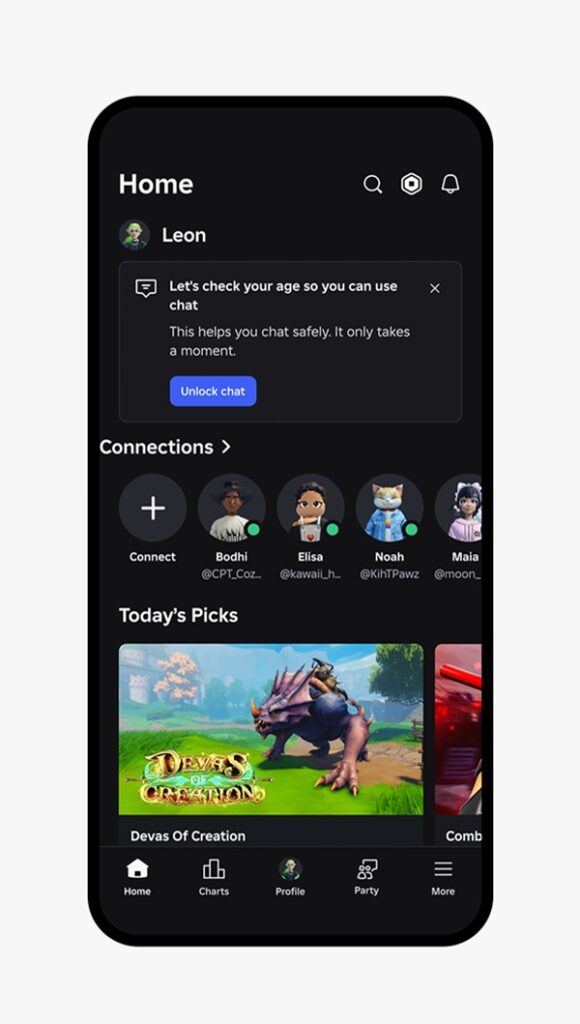
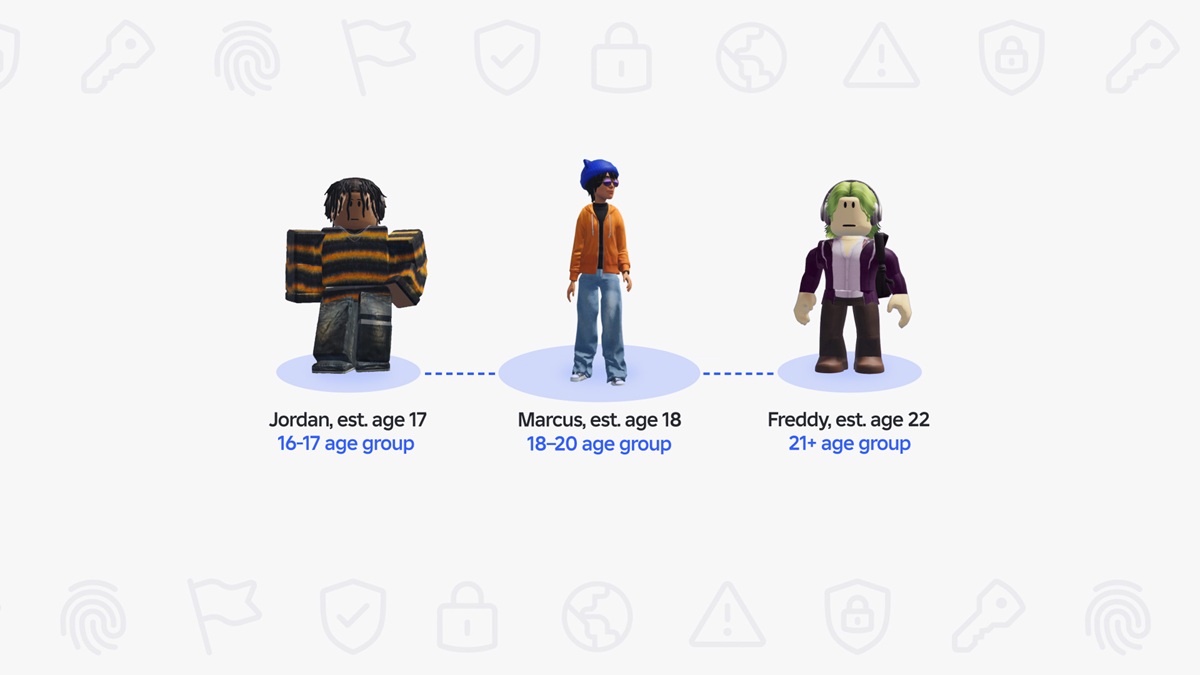
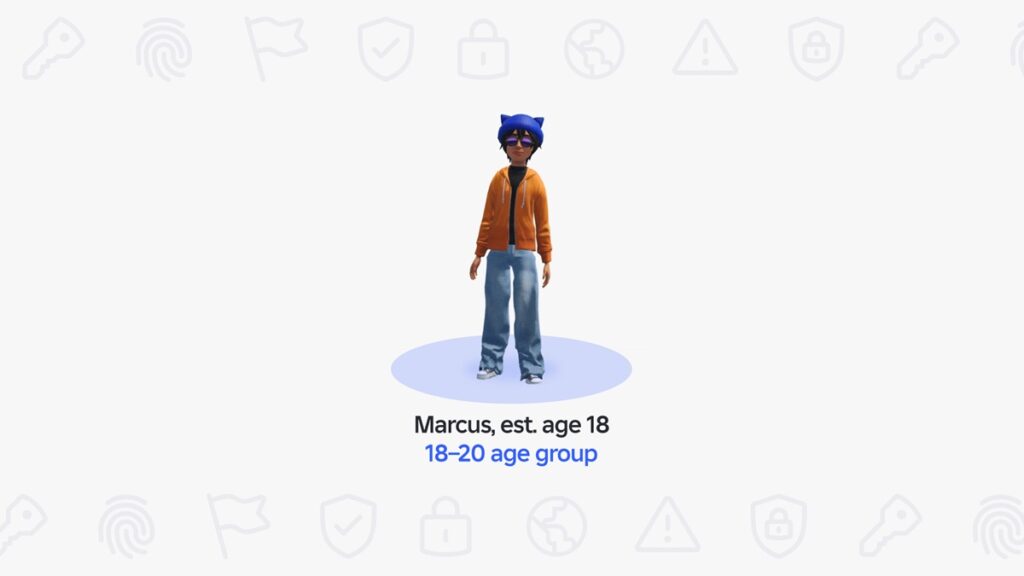
Roblox said it knows inappropriate communications with minors are a concern and that is why it is implementing an industry-leading age check policy. Users who want to communicate on Roblox will need to confirm their age via a sophisticated new system using facial age estimation, ID verification, or verified parent consent, the company said.
Roblox has said one of its key technologies it unveiled this year to protect children is facial age estimation. On November 18, Roblox said it would roll out the technology in early December as a requirement for all users who want to access communication features.
Announced September 3 during the company’s Roblox Developer Conference, the tech allows the company to implement age-based chat, where the facial age checks are designed to screen players and limit communication between minors and adults.
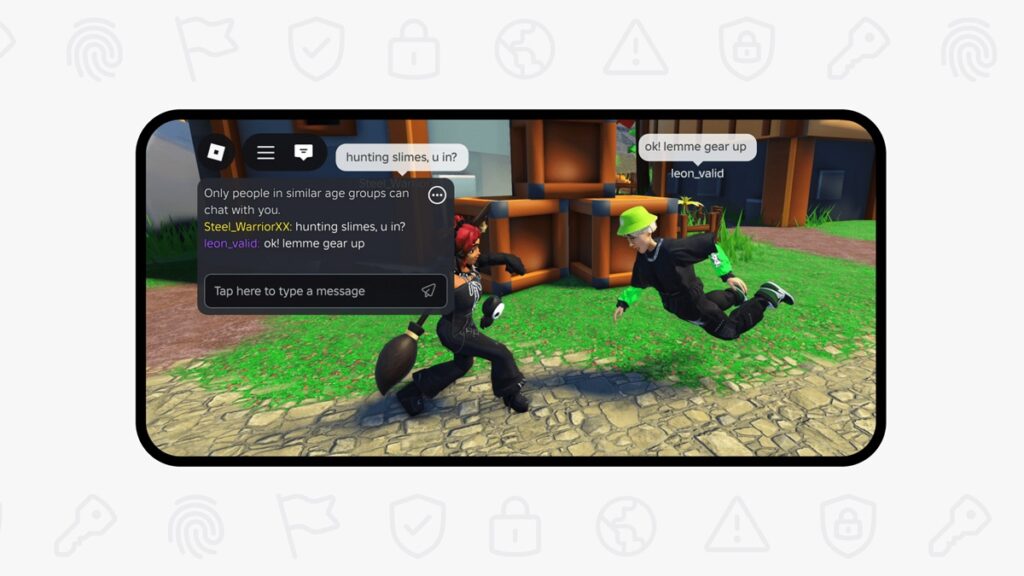
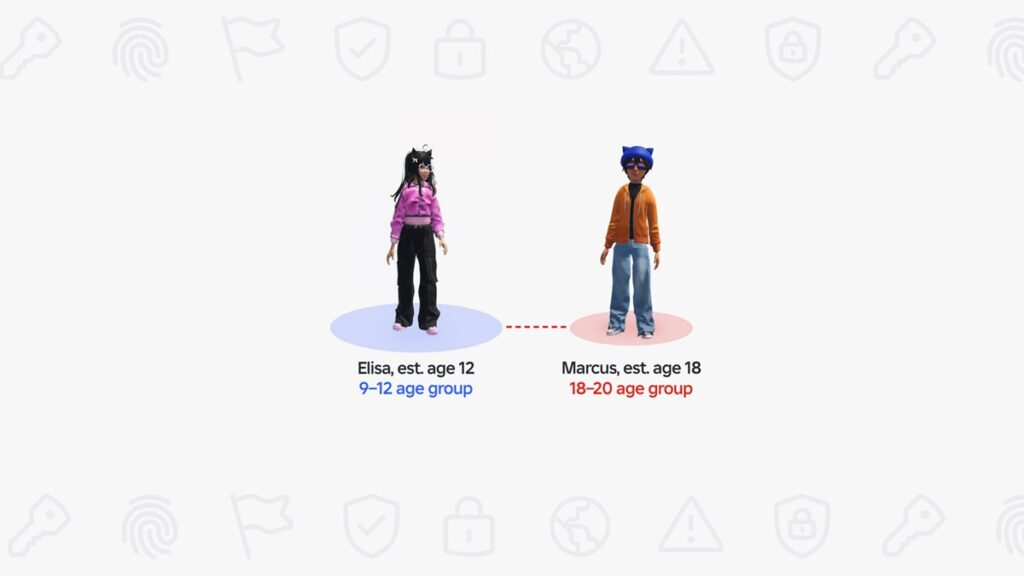
Under the systems, for instance, users 13- 18 can only privately chat with adults they know in real life, and users younger than 13 cannot use private text chat or voice chat at all without parental consent.
With the November announcement, Roblox said all users can now voluntarily go through the Facial Age Estimation process to secure access to communication features. Roblox is doing this as part of its ongoing safety efforts, but it also knows that parents of children who may have been harmed are holding its feet to the fire. They’re suing the company and pushing it to do better.
There are plenty of videos on YouTube where social media influencers have declared that Roblox’s facial age estimation technology have failed. But Kaufman disagreed. He said Roblox is happy with how many people have voluntarily gone through the process. The number is in the tens of millions.
Here’s an edited transcript of our interview.
GamesBeat: I appreciate you approaching me for a conversation. Sometimes it’s a subject that a lot of companies would run away from.
It almost seems like a no-win conversation, talking about safety. I did write a story about the reaction people had to Dave Baszucki’s interview with the New York Times. Maybe the reason that became such a [firestorm] on social media was the mistake of not acknowledging that there could be a lot of emotion and pain involved in this subject for people. When he phrased it as a problem, but also an opportunity, [maybe people] misheard what he was trying to say.
Matt Kaufman: I agree. One way we think about it here–tackling safety issues head-on and trying to move beyond the status quo of what a lot of other companies have done is a real opportunity for us. One thing that I find interesting, and that people don’t always think about with Roblox, is there are no Roblox billboards when you drive up and down the highway. We don’t have a Super Bowl commercial next month. Our growth is all driven by word of mouth. It’s driven by the trust of parents and families when you talk about the growth with our younger users.
When we look at that, safety is something that’s a real growth driver for the company. Leaning into safety is an opportunity to grow the number of users we have. That’s what Dave was trying to get across. But I also understand how sometimes people don’t always take in snippets of audio and fully understand what’s going on. I can sympathize with that.
GamesBeat: The part of the argument that maybe seems like a no-win–you can never guarantee perfect results from a combination of human monitoring and AI tools. But people expect that. They want zero instances of any safety problem when it comes to children.
Kaufman: The analogy I like to use is a car. You get into your car and there’s obviously a bumper and a seat belt and air bags. Now cars can keep you in your lane. Every generation, there’s a new feature that helps keep you safe in your car. Does that mean nobody dies in car accidents? No. But I think people have a much more intuitive understanding of how you can have all these systems in place, but they still won’t be 100% perfect.
Riffing on that analogy some more, the one I liked doing a bit of research–when seat belts were first mandated, there was huge pushback. The pushback was that if you got into a car accident, you wouldn’t be able to get out of your car, because the seat belt would trap you. There was a ton of pushback, a lot of consumer negativity toward seat belts, a feeling that they were dangerous. It’s how people react to change sometimes.
I think that explains some of the feedback we get around doing the age checks for everyone. People say that the age checks aren’t 100% perfect. Sometimes the technology gets it wrong. Yet it’s so demonstrably better than just asking someone how old they are and expecting that everyone will put in the right age, or hit the check box to say they’re over 13 or 18 or whatever it is. The age check system we have is so much better. But it’s like seat belts. Instead of focusing on why it’s so much better and why we’re all better off wearing seat belts in a car, people focus on some of the challenges. Obviously we need to work on those challenges, but I think that analogy is very apropos to what’s happening today.
GamesBeat: With something like AI, it is possible to think about getting much better coverage of the entire community. You can get to the highest possible standards. Near perfection. Is that something you think is within reach? Or is that perhaps trusting a little too much in technology?
Kaufman: There are two ways of looking at it. As a technology optimist, I would say yes, it’s within reach. As somebody who leads safety for a large online platform, I would say it’s naive to think it’s that close. The reason why it’s naive to think it’s that close is because every safety measure you take, you’re working on a live, organic system. There are all these people in that system. You take a safety measure to, say, block a certain type of behavior, or detect a new pattern of harm. The community reacts around that.
A great example, which is very tangible–maybe we say that in chat that you can’t post URLs, that you can’t post “Meet me on Discord” or “Meet me on Snapchat.” We can make that a rule. But then instead of passing URLs, people start talking about “the ghost app,” or “the blue app.” They start spelling things backward or using Morse code. All these different things. We live in a very dynamic environment. When we think about AI getting better and doing more, the community also changes in response to that. It requires a constant investment to maintain even the current levels of safety. We have to constantly invest, and to advance safety to a new level, we have to invest even more.
GamesBeat: In the business of security, or trying to stop cheaters in games, people think about a cat and mouse scenario. You can use AI to stop a lot of people, but they can also use AI to evade detection.
Kaufman: Yeah, it works both ways.
GamesBeat: What’s your perspective on 2025? Roblox grew to enormous numbers, far larger than many other platforms. You introduced all of these new technologies. But you also had a large relative number of lawsuits happening, 60 or more. What do you think that means?
Kaufman: Looking back at last year, and maybe the last 18 months–we’ve always invested a lot in safety. We’re always making things better. That hasn’t changed. The level of attention Roblox gets has changed. You enter a certain threshold of consciousness when you hit the metrics we’ve hit as far as number of users. A lot more people start paying attention. That includes policymakers and attorneys general. It’s human nature to see these as new problems. The company must not have been investing in this. The reality is we’ve been investing and doing a lot all along. That’s always set us apart from every other platform, the safety measures we take. But there’s added scrutiny when you get to the size we’re at.
Having said that, looking back on the last 18 months, that’s something we can also step back and appreciate. We can appreciate the fact that people care and think that the measures we take for safety are important. They want to understand exactly what we’re doing and how our systems work. They want to understand when systems–we already talked about having a system that’s 100% foolproof. That’s a very difficult thing to achieve in the real world. People want to know why. Over the last 18 months it’s forced us to do a much better job of talking to the press and policymakers about what we’re doing.
I’ll readily admit that, looking back a year to a year and a half, we were very quiet about safety. You mentioned it when we first started talking. Most companies don’t talk about safety stuff. That’s the place we started from. It’s definitely not where we are today. We’re much more proactive about explaining what we’re doing.
Part of the reason to be more proactive about explaining what we do is also a realization, over the last 18 months, that when we’re talking about safety of kids and teens in particular, you really can’t have that conversation unless you talk about safety across all of the applications those kids and teens use. It’s not enough for Roblox to do just one thing. It’s not enough for a social network to do something else. There has to be some coordination, some minimum bar we expect all companies to clear when you involve kids and teens. The reality is, they’re just jumping from platform to platform. That’s normal. I have two kids who have grown up online. It’s just what they do. That’s also driven us to be much more vocal about what we do on the safety front. We want to set an example that others can follow.
GamesBeat: Part of what comes with that spotlight you’re under is the highest standard that people hold you to. Because Roblox does welcome kids, while some of the other platforms don’t, or act like they’re not there, people want you to do much better than those other platforms. Holding you to a high standard is a by-product of that attention. I talked to one of the lawyers who was suing Roblox around child safety issues. One thing they said was that a lot of what you say now does sound good, like the 145 advances on the safety front in 2025, and the launch of the facial age estimation. These are good things. But they ask why it took you so long. There’s always another avenue of criticism.

Kaufman: Of course. Why does a car I bought a few years ago not have the thing that steers you back in the lane? It would keep me safer. Why didn’t that happen? The reality is technology takes time. It takes time to develop, to make sure it’s accurate, and to scale. I find it interesting that–when we launched this age estimation thing, we started the global rollout in December. The reaction we got was, “Oh, is this in response to some law that just went into effect in one place or another?” Well, if you were paying attention, we launched the first version of it in the beginning of the summer. We’re going as fast as we can.
When you launch something to 150 million users per day and you’re thinking about accuracy rates, how to manage customer support, how it scales, whether it’s reliable, all of these things–these things take time. I’ll give another example. My kids, one of them is turning 18 next week, and the other is 20. I wish that when they were little kids, I had an iPhone 17. I would have taken amazing movies of them when they were little kids. But obviously it took Apple a long time to figure out how to build that. We’re in a similar situation. This technology is complicated. It takes time to build. It takes time to prove out. We’re going as fast as we can.
GamesBeat: Perhaps there’s also some language that people have misunderstood over time. AI has been talked about for decades in games. Using AI in some way to enhance security or safety has always been around. But it seems like the advances AI has made in just the last couple of years have given all companies an opportunity to make things better, or to remake things in a way that they couldn’t before. If those advances really did just come along recently, to get things out based on them now is moving pretty fast.
Kaufman: Running at our scale means that if you have a system that only works 99% of the time, that one percent when it doesn’t work–when you’re talking about billions of messages going back and forth every day between tens of millions of users, one percent is a big number. It’s just a human nature thing. People see something, they see one example–oh, I saw this amazing thing working once, so by definition it scales. It’s just human nature you want to believe that’s true, but it’s not always true.
GamesBeat: What results have you seen from the age estimation? What can you say about how it’s working out?
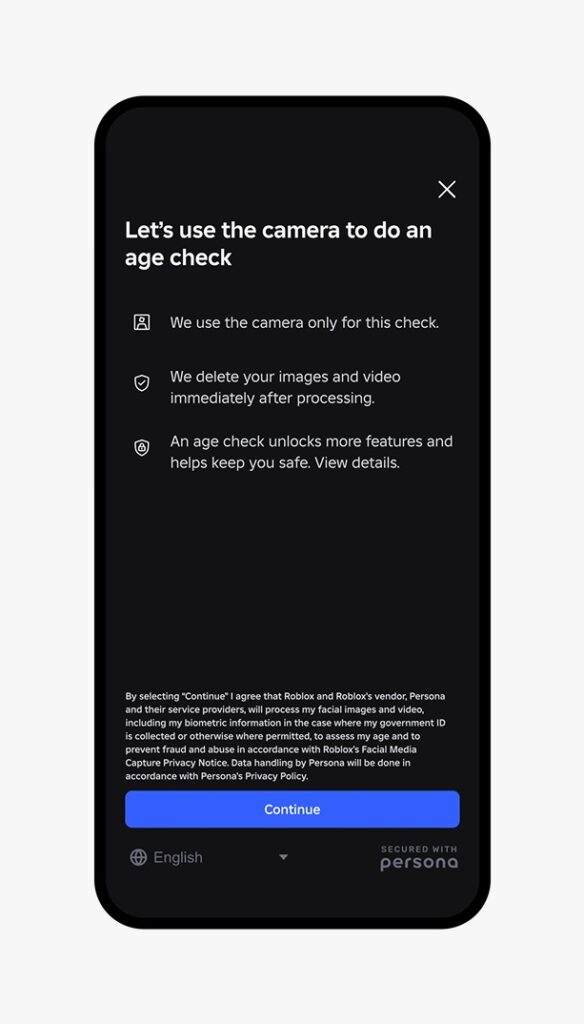
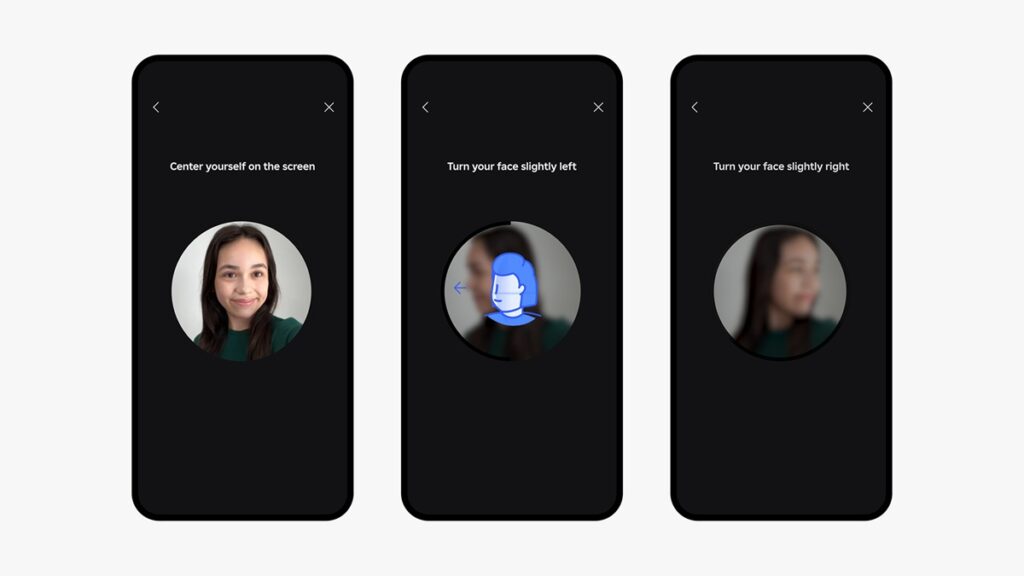
Kaufman: The first observation is that we have been very happy with the number of people who have gone through the process.
When we first talked about it, a lot of people said that no one would ever do it. It’s too hard. People won’t think that it’s worth going through that process of taking a picture just to chat on Roblox. But tens of millions of people have gone through it.
Talking to others in the industry, I think it’s safe to say that Roblox now is by far the largest implementation of a face to age estimation system on the internet.
We’ve seen a reduction in the number of abuse reports we get around behavior in messaging. We understand a lot more about our audience and who’s who from an age perspective, which allows us to make the product a lot better. Most important, we see that our user base really cares about safety and civility. They understand that processes like this – which seem new because there’s no other large platform in the world, be it social or gaming or UGC, that has a system like this in place – it’s worth doing. It’s worth going through that process, because safety and civility are important. That’s my biggest takeaway.
GamesBeat: How much does it still take human interaction in order to figure out something that’s happening when you get complaints? How much of that can be handled automatically in some way compared to what requires a human to intervene?
Kaufman: The way we think about it, there are obviously automated systems in place. The reason why we have automated systems–it goes back to the other things we were talking about. If you ask a person to make a decision, one person making one decision, if they have some knowledge about what they’re doing, they’ll probably do a pretty good job with high accuracy. But let’s take our text chat system, where the text messages are going back and forth more than 6 billion times a day. Making 6 billion decisions, a person just can’t do it. Then you have to have thousands or tens of thousands or hundreds of thousands of people.
When you start getting that many people involved, there’s an upper limit on the accuracy of the decisions they can make. It’s not that high. It turns out that automated systems are much better at that. An automated system, at least it makes the same decision over and over again in the same way. If it gets the decision wrong and someone points it out – they make an appeal – you can take that appeal and send it to an expert. The expert can review it and think about it for a while. Whatever decision they come up with, that becomes training data for your AI model.
When you think about these AI systems, it’s the marriage between the people who do the training, the people who handle the appeals, and the automated systems. Where we imagine the world going – and we’re getting closer and closer to it – is that 100% of the first line decisions are all automated. They happen very fast. They happen very consistently, because the models are being improved every day. They can make the same decision over and over in the same way. First line decisions are made with machines. However, we recognize that not all decisions will be made with 100% accuracy. Nothing is foolproof. Then we have robust systems for people to be able to appeal. All of those appeals go through teams of experts, or different models, things like that, in order to build more training data and make things better.
Long story short, our goal is to get to 100% automation of first line decisions. After that we have teams of experts who handle appeals.
GamesBeat: Do you find that people who make appeals–are they accepting of the technology? Do they like how the technology works? Or is it more like 10 years ago and trying to make a call to someone who has an automated system, where you get lost in a series of loops? Do you get feedback about whether these systems are satisfying for people?
Kaufman: We have a chat bot that can handle a lot of customer support, doing account recoveries for people who lose passwords, refunds, other things like that. There are two ways of looking at it. For the vast majority of people, the automation is amazing. You don’t have to wait for anything. You have a question and you need help, it’s like Gemini. It’s great. You just type it in. If I had to wait for someone to answer an email about the questions I ask every day, that would be awful. For the average person it’s much better.
Some people have problems that need to be addressed where the automated systems either make a mistake or they just can’t handle it. It’s incumbent upon us to identify that situation as quickly as possible so we can route those people to real human experts. We don’t always get that right. We get some escalations. We’re working on making that better. But net net, people’s experience with the automation is better. It’s objectively better than if everything went to a person. The lines would be very long. You’d get inconsistent answers.
GamesBeat: When they escalate, can they get to something like real time escalation? Or does it take a while to get through that AI system first?
Kaufman: It depends on which system we’re talking about. Some systems are pretty fast. The escalation will happen quickly. Then it ends up in a queue where you’re waiting for someone to answer you. We have well-defined service level agreements that we work on to make sure that people get responses. But it’s not instantaneous like the AI can be instantaneous.
GamesBeat: For 2026, is there something you’re looking forward to as far as how this is all advancing? Are there more things on the road map?
Kaufman: You talked about how cheating is a cat and mouse game. You’re constantly investing. That’s how we look at safety. There are areas in the product where we can definitely improve and make things better. We’re thinking about how to make our parent experience better. How do we make engaging on Roblox easier for parents? I’m excited about that.
Like most people I’m excited about what AI can do. No system is perfect. You’re building a game and uploading all these assets. You’re going to build this amazing medieval knight game with all this stuff. But you can still have users come into that game and wreak havoc. Maybe they start dismantling all the stuff you built that you thought was amazing. They take all that stuff they broke down and start creating objectionable content. You have to introduce other systems that constantly watch what’s happening, looking for violative behavior. AI is getting better at doing things like that.
The end of last year, the beginning of this year, we introduced age checks. There are more things we can introduce in the future that monitor more of what’s happening, look at user behavior, and do a better job of identifying when there are behavioral issues. It’s a very complicated thing. But I’m excited about what’s in store for that too.
GamesBeat: Do you hope to make some headway in alliances with other platforms, where you can work together on things?
Kaufman: That’s a complicated topic. The easiest way to answer that is, when you get all the platforms together, if you’re talking about addressing a bad actor who’s done something against the law, something that’s been reported to law enforcement–maybe there’s already a law enforcement case out there. Everybody is very good at collaborating in those cases. No problem.
A lot of what we see, and I assume other platforms do as well–you have instances and situations that are not technically against the law, but they’re against your policies. In that case it becomes difficult from platform to platform, because different platforms have different policies. Can I ask another platform to divulge a bunch of personal information about a user that violated our policies? No. Can I go to that other platform and say, “Hey, we think someone is at risk of harm. We’re talking to this law enforcement agency. Will you help us? Can you give us PII on that user?” Then they’ll say, “Of course.”
What this means is, the bar to reach for some of this collaboration between platforms is very high, when it comes to the level of harm. It’s a challenge. But that’s where there are opportunities for policymakers to say, “Here’s what we demand of all these platforms.” Is it okay to encrypt all communication between minors, and then not be able to monitor it for harm? Maybe that’s something that’s not okay. Is it okay to let people use self-declared age as the gateway to platforms that are intended for adults? It’s well known that there are children on that platform. Is that okay? Maybe not. That’s where collaboration with policymakers comes into play.
GamesBeat: It seems you’re always likely to bump into privacy concerns. The more you push on safety, the greater likelihood you run up against barriers around privacy.
Kaufman: You’re right. That is a balance. But for kids and teens, that balance is different than it is for adults.
GamesBeat: Is there more you want to communicate about what you’re doing and what outcomes people can expect?
Kaufman: We’re out there a lot talking to a lot of people about all the things we’re doing. We’re being much more proactive when it comes to responding to inquiries, whether they’re coming from reporters or policymakers. We’re doing a lot there. What it comes down to is, more than 150 million people use our product every day. As the product gets better and people have better, more engaging, more civil experiences with their friends and family, or maybe people they don’t know, that will speak for itself.