
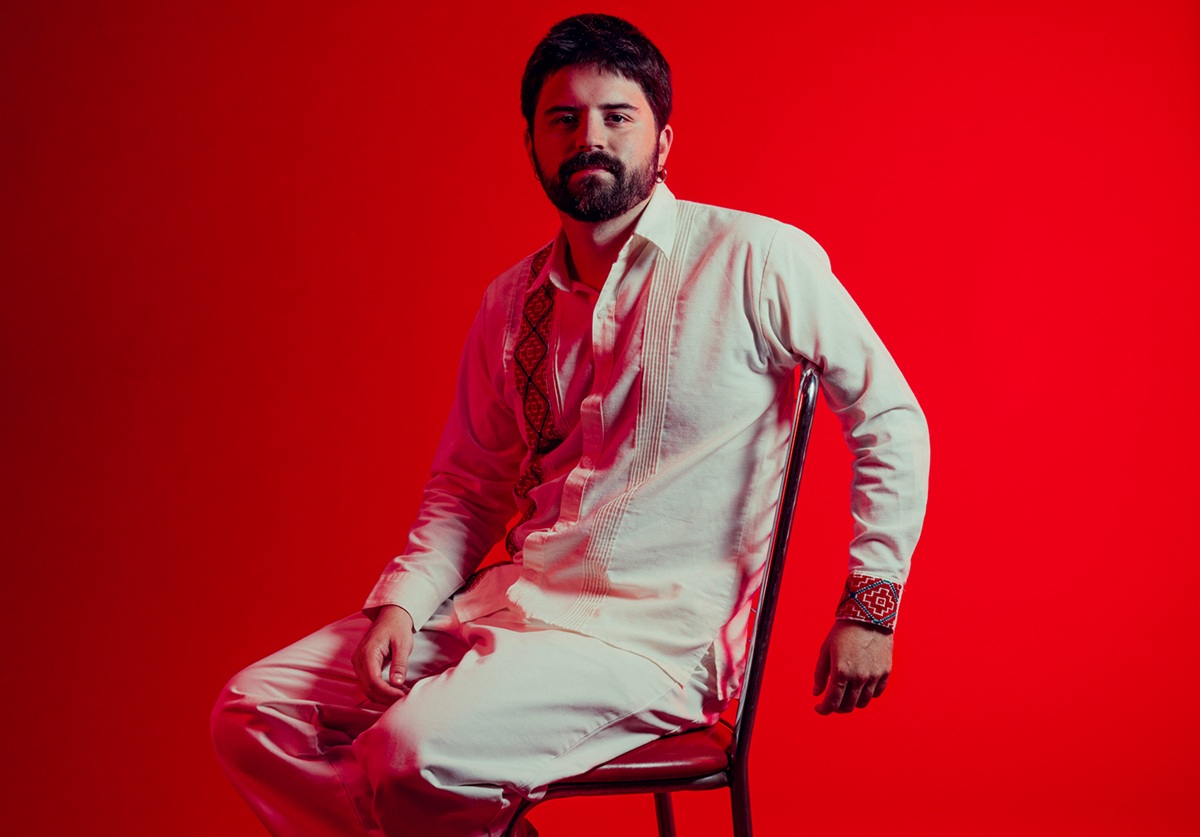
Julián Cordero, one of the BAFTA Breakthrough U.S. honorees, spent seven years recreating his memories of growing up in Quito, Ecuador, and he codified them in the game Despelote.
The result was one of the most acclaimed indie games in the past year or so, even if critical praise hasn’t yet translated into commercial success.
When Cordero started working on Despelote, he wasn’t trying to make a blockbuster game about soccer. Instead, he was trying to answer a personal question about how soccer, or football, still connects him to his life as a child.
After leaving Quito, Ecuador, to study and eventually settle in New York, Cordero realized that soccer had slowly faded from the center of his daily life. Growing up in Ecuador, it had been impossible to escape. Soccer wasn’t just a sport. It was part of the culture, part of the national identity, and an organizing force in childhood.
Distance gave him a new perspective.
“I started wondering what role soccer had actually played in my life,” Cordero said in an interview with GamesBeat. “Why had it been so important for me? Despelote was a way of answering that question.”
That deeply personal exploration ultimately became one of the gaming industry’s most celebrated indie projects, earning critical acclaim, multiple award nominations, and now helping secure recognition for Cordero as part of the BAFTA Breakthrough program.
One of the surprises of Despelote’s success has been its ability to connect with people far beyond Ecuador.
The game is rooted in Cordero’s memories of Quito during Ecuador’s historic run to qualify for the 2002 FIFA World Cup, a transformative moment for the country. Rather than generalize those experiences, Cordero and his collaborators leaned heavily into local details, language, culture, neighborhoods, and everyday life.
At first, he wasn’t sure players elsewhere would connect. Instead, people from across the world told him that the game reminded them of their own childhoods.
“We made it very specific to Quito,” Cordero said. “But there’s a universality in the specifics.”
The project also became an unexpected ambassador for Ecuador. Cordero learned how to make games at New York University’s Game Center and he used those skills to craft a proper appreciation for longing for his home country.
“It’s a game that has a lot of longing for Ecuador,” he said.
That authenticity extended to nearly every aspect of production. Audio was recorded in Ecuador. Environmental recordings were captured locally. Friends, family members, and community participants contributed voices. Cordero’s own parents, who are filmmakers, appear in the game as the protagonist’s parents.
After launch, the team even organized screenings in Ecuador that resembled film premieres.
The result was less like a game launch and more like a community celebration. Cordero handled design and programming. Sebastián Valbuena created the art and music. Ian Berman led sound design. Gabe Cuzzillo served as producer and, as Cordero jokingly described it, therapist. That was essentially the entire team. Valbuena found a way to create evocative art that captured a real-world scene but was very inexpensive to create.
NYU’s Game Center funded the early part of the game’s development. Microsoft’s ID@Xbox initiative and grants from Ecuador’s Ministry of Culture. Later, indie publisher Panic joined the project and helped bring it to market.
Reviews were strong. Awards followed. The game established Cordero’s reputation as a creator. But commercial success has been more elusive. The game has not yet recouped its publisher’s investment.
“I never thought this game was going to be a huge viral hit,” Cordero said. “It’s a very weird game.”
As for the BAFTA recognition, Cordero said, “When there are awards and recognition like this, it helps you realize that the project is out in the world now. It’s not just mine anymore.”
For a game about memory, place, and the passage of time, that may be a fitting conclusion.
Here’s an edited transcript of our conversation.
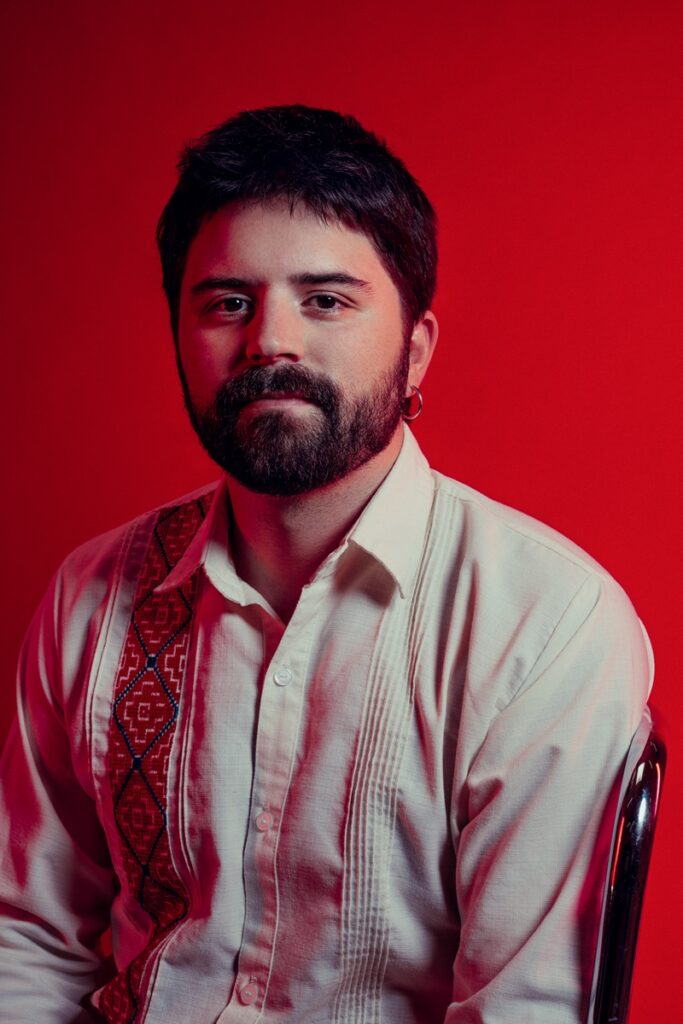
GamesBeat: Congratulations. You’re riding a wave of recognition for Despelote. What was the original inspiration for the game? What made you want to look back on your childhood like this?
Julián Cordero: I grew up in Quito, in Ecuador. When I was a kid I played a lot of soccer. I really liked it. Played a lot of soccer, watched a lot of soccer. Culturally, in Ecuador and in Latin America in general, soccer was a very big cultural force.
I moved to the United States 11 years ago now. I live in New York. I realized, after a few years of living here, that soccer had not been as big a part of my life here, because in the U.S. it’s just not as important. I hadn’t been playing it as much or watching it as much. I had this moment of realizing that and thinking about how maybe that gave me a different kind of perspective on it. I was a little farther away from it now. It made me think about what the role of soccer had been in my life. Why had it been so important for me?
That’s where it started, with that question. Despelote was a way of answering the question.
GamesBeat: Why do you think it resonated with so many fans in different places?
Cordero: At the beginning I was surprised when people from all kinds of places around the world would tell me that they played Despelote. They said it reminded them of their own childhoods. I would be talking to people who came from places I’d never been to, that I didn’t know much about. We had this approach of making it very specific, having all these very specific details about Quito, very specific to Quito. Nailing down those details I think ultimately gives it a more universal–there’s a universality in the specifics, in a way.
A lot of the media I like, the movies or books–there aren’t many games that take place in different cultures. But with movies and books I feel like sometimes I relate the most to the ones that aren’t necessarily exactly the way my childhood was, or the way my life is. But they tell a very specific story that I can project myself into. It was wonderful hearing all these people talking about their childhoods, about their own relationship to soccer. Or even in the U.S., people would talk about playing other sports, but it was a similar idea about sports as a cultural force in their lives.
GamesBeat: It seems like it’s also done a lot for Ecuador. It’s put Quito on the map, at least in the gaming community. Have you heard that a lot from other people?
Cordero: Yeah, a little. As I said, we tried to make it–this game was ultimately about Ecuador in a lot of ways. Living in the U.S. gave me some distance from Ecuador to see it from a different perspective. But it’s a game that has a lot of longing for this place. It’s been really nice to get to show all these people all these things about Ecuadoran culture.
GamesBeat: I imagine you didn’t know many game developers growing up. What drew you into game development?
Cordero: The game development industry in Ecuador is very small. It’s not really an industry. There are a bunch of people that make games, and the community is growing, but it’s still very small.
I was always drawn to the arts in some way. When I was a kid I thought I was going to be a filmmaker. I thought I would follow that path. But I ended up studying game design in New York. When I started taking game design classes, it was still kind of a new thing to teach. It was very exciting to me, because it felt like the professors and everybody around me were improvising how to make this work. It felt like it was a moment where there were so many possibilities.
I took some film classes, but they were all telling me about things like three-act structure. This is the formula you need to follow to write a screenplay and so on. All that felt way less exciting than all the things we were talking about in game design. That felt like a huge open field where there was a lot of room for experimentation. That was very appealing to me. That’s what drew me into games.
GamesBeat: Did you know anybody when you came to NYU, or have any family in the United States?
Cordero: Not really. I didn’t really know anyone. I had visited New York once before as a teenager, but that was it. But the school system helps you a lot for meeting people. New York has so many people who’ve moved there to start a career. In those first few years it was easy to meet a lot of different people.
In Ecuador we’ve gone through many big economic crises. We’re currently going through a grave moment. In general people feel that if you’re able to go and study outside the country, you should take the opportunity. Growing up I always had the idea that if I was able to go and do something I wanted to do, then I really should take advantage of the chance. I want to eventually move back to Ecuador. I’m not in a big rush, but I do want to move back and do game development work there. But right now it’s much more convenient to be here in New York. I’m connected to a much bigger network.
GamesBeat: It looks like you’ve had to be very multi-talented on this project. Is it just a couple of people that worked on the game?
Cordero: I was in charge of development and design, and then Sebastián Valbuena did all the art and the music. Ian Berman did the sound design, and then Gabe Cuzzillo did production and therapy, we called it. It’s a small team. It was hard. It took us seven years to make it. Obviously the tools have developed at this point to where you can make a game with a small team. There are so many successful indie games now. But that was the whole team.
The program at the game center at NYU is very open. It’s not really about specializing. That’s part of what I enjoyed about the program. It’s trying to teach you the craft of games in general. Really trying to get you to make games that you feel passionate about. That’s their mission. A lot of people go and try to look for jobs at bigger companies, but for me, I felt like I was given exactly the tools to be able to make a game in a very small way, with a few people. We all had to wear different hats.
GamesBeat: How did the game start getting attention from the industry?
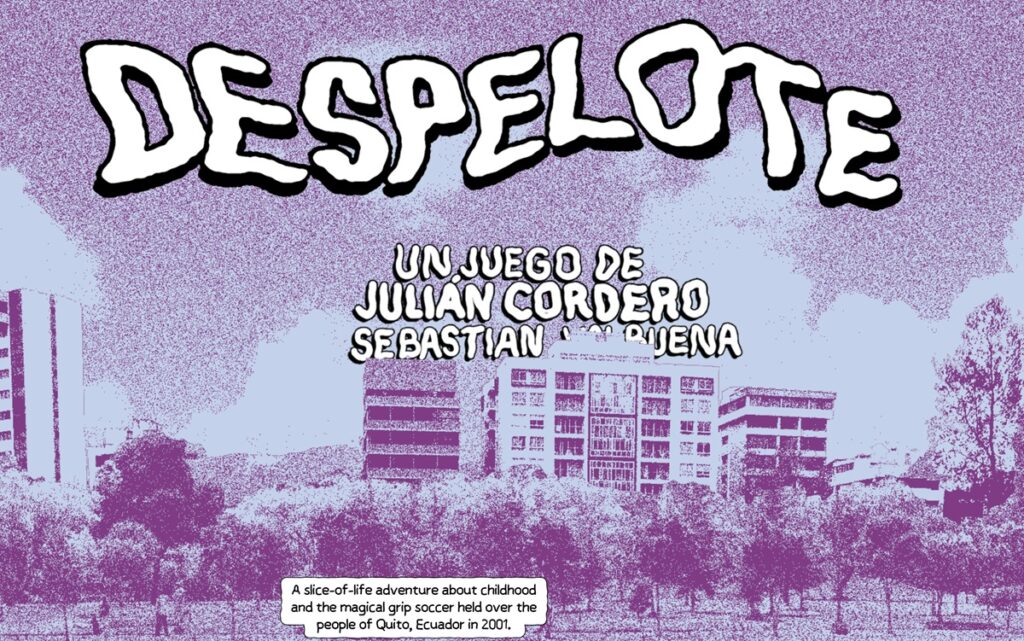
Cordero: Despelote was my capstone project to graduate from NYU. I graduated in 2019. That was how it started. There’s an incubator program they have at NYU that’s open to both students and others. We were part of that, and then that connected us to some people at Microsoft’s id@Xbox. They gave us some early funding to continue working on the game, and we were able to get some more funding from the Ecuadorian government. The Ministry of Culture has a funding program for games as a way to develop the games industry there.
Eventually we signed with a publisher. After we had a demo we found a publisher and they invested in the game. Once we had the publisher, Panic–they’ve released a bunch of very successful indie games. After that they were in charge of the marketing and all the distribution. They did the big push to get it in front of as many people as possible. We’ve been lucky that the reviews–it’s done very well critically. That doesn’t always translate to sales, as I’ve found out, but it’s positioned the game in a different place, and positioned me as a developer.
GamesBeat: I was going to ask about sales. What do you know as far as the level it’s reached and how many people have been able to play it?
Cordero: The numbers are all right, I guess? I never had the goal of–I never thought this game was going to be a huge viral hit. It’s a very weird game, ultimately. I’ve been happy with the amount of people who’ve played it. But it hasn’t recouped the investment from the publisher yet. Still, they’re happy about the critical response, and I’m very happy about that. But the critical success hasn’t translated to sales success, commercial success.
GamesBeat: What are you working on now? Are you turning to a new game, or are you still working on things related to Despelote?
Cordero: I’ve finished my work on the game. I was pretty burnt out by the end of it. Like I said, it was a seven-year development process. I didn’t realize how tired I was until after the game came out. I thought I’d have all these ideas that were developing in my head while I was making the game and I could go and just make them. But it turns out I needed a big break.
The game released more than a year ago now. I’m finally back to prototyping stuff. I’ve been doing a few things here and there. I did a semester of teaching at NYU, last semester. Now I’m starting to prototype some new things. I don’t really have anything yet that I’m super convinced about – like, “This is my next game” – but I’m trying to get there. It was important to recharge for a while. It was very intense to release the game.
GamesBeat: Have you heard any other people talking about how they were inspired by the game themselves?
Cordero: Whenever people talk about it, they tell me about all the things they like about it. I hope it can be inspiring. I gave a talk at GDC last year that I think went well. I talked about the idea of making games that are set in the real world, trying to capture the real world through the medium of video games. That’s something that hasn’t happened so much historically. Now, with all the tools that exist today, I feel like it’s a great medium to do that. A lot of people told me that they were inspired by that talk and that approach. I want to see more of that kind of thing personally, so I hope a lot of people start to go that way.
GamesBeat: How did you develop this art style? It looks very different, but it’s the kind of thing that could be done by just a few people.
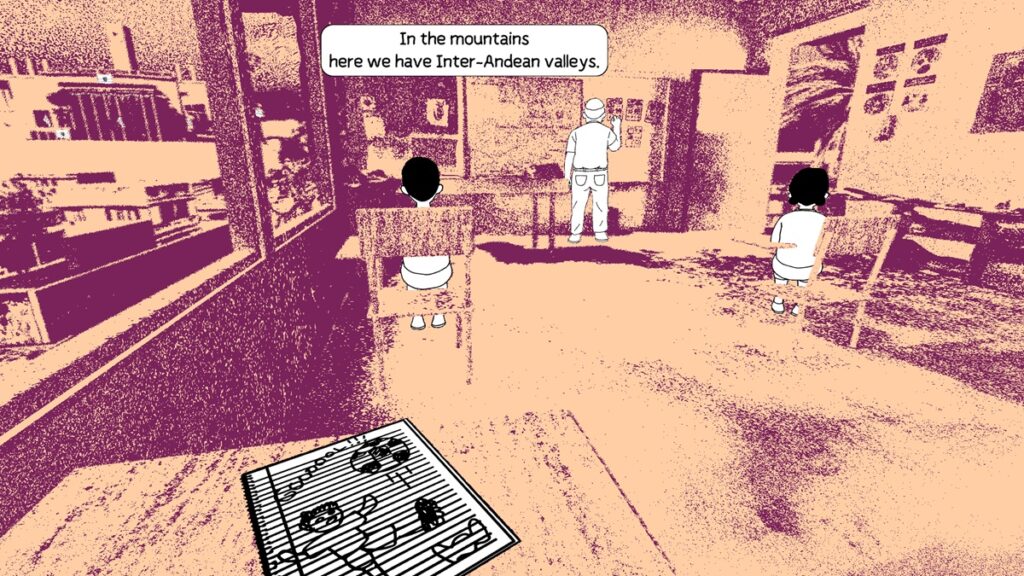
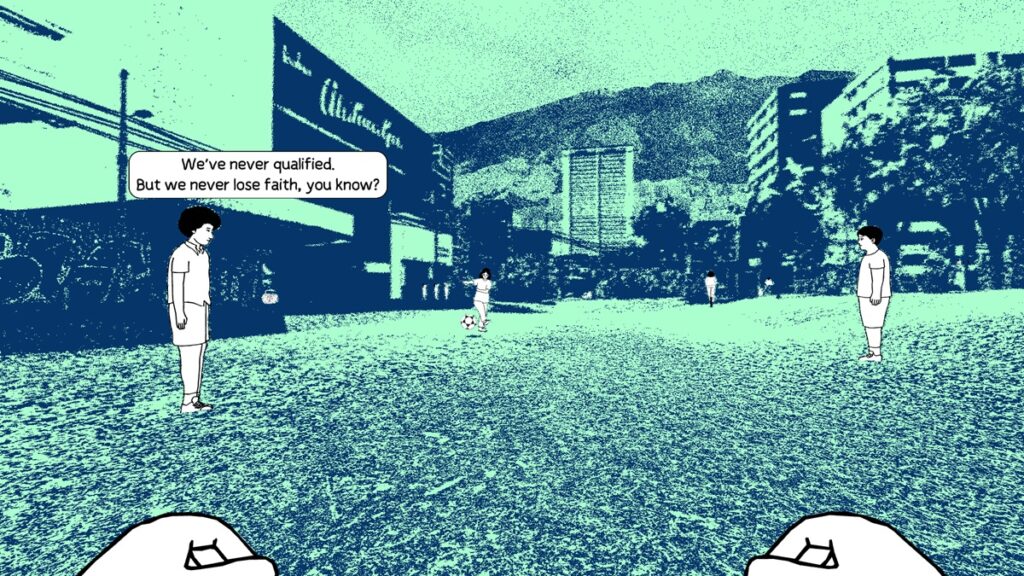
Cordero: I approached Sebastian to work on the game originally because I was a big fan of his work and his music. He also did the music for the game. Obviously I told him it would be a year-long project, not the seven years it ended up being. But he had this style of illustration. He had made some music videos for bands in Ecuador that mixed that same style with these kinds of grainy backgrounds. We started experimenting with the aesthetic, and it was very successful.
I like the style that he came up with for the game, but it also served a mechanical purpose, having all the hand-drawn characters and other hand-drawn elements draw the attention of the player. We could use that as a game design and level design tool to draw the player’s attention and take them different places. We also really liked this approach where, because the backgrounds have this grainy look, we could use these messy textures and make 3D models out of textures that were–I don’t want to say dirty, but messy, I guess? We felt like that had so much personality.
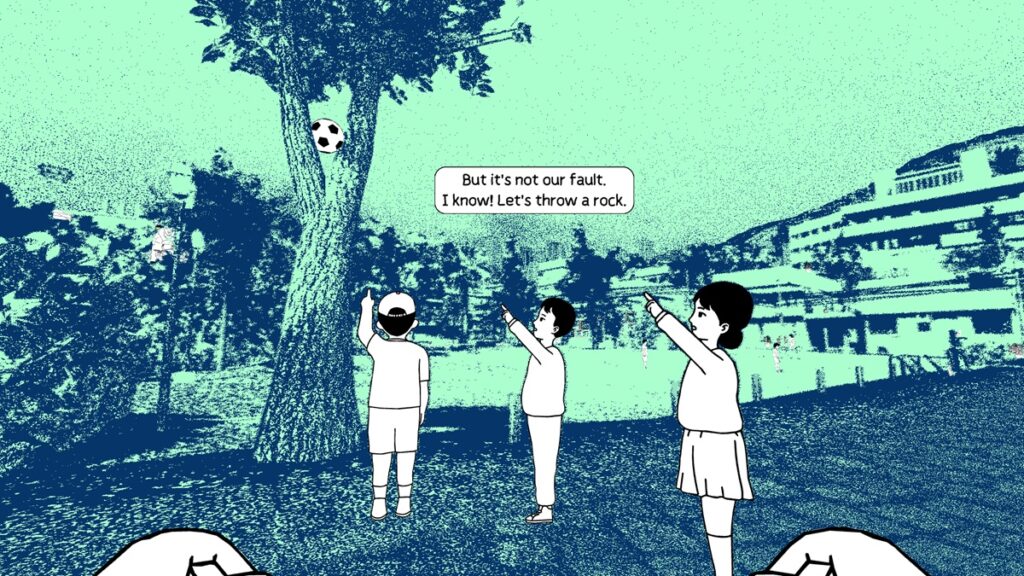
I started doing 3D scans with my phone. We’d bring those into the game. I felt like it became a sort of collage, which fit with what we were trying to in the first place building Quito. We were collaging different parts of the city into our version of Quito. Because of the grainy backgrounds, that noisy aesthetic, that kind of put it all together and made it all cohesive. It had a lot of personality, all of the different environments.
GamesBeat: And at the same time you didn’t have to create really elaborate 3D art.
Cordero: Exactly. Sebastian had only worked in 2D. He learned how to do 3D modeling for the project, basically. He’s not an expert 3D artist. But he was able to make all these models and set them up and clean them up, just enough so that it would look good in the game. That allowed us to make a lot of assets in a fast way between the two of us, which we were able to then put together into the game.
GamesBeat: The gameplay style, where you have a lot of ambient triggers in the environment for storytelling, how did you come up with that approach?
Cordero: The narrative structure, that probably took the longest. That was really hard to figure out. Around the second or third year we had developed the aesthetic. We had created the place. It looked like a game from the outside, so long as you didn’t play it. That’s how we were able to get funding. But turning that into a finished product that we could sell to people, that had a beginning and an end, that was really hard. It was really helpful to work with Gabe, the producer. We would meet with him once a week and just talk about everything. He had some very smart narrative ideas.
We tried a lot of things. At the beginning I was doing interviews with a bunch of people about their relationship to soccer in Ecuador, about that time. We were putting those interviews into the game at the beginning. We realized that wasn’t very fun, but we liked the content, so we looked for other ways to use it. Slowly–it was a process of years of setting up the structure. And then the work that came at the end of development. We had all the puzzle pieces, but figuring out how to fit them together was very challenging.
GamesBeat: Ecuador made it to the World Cup in Qatar.
Cordero: And in 2026 as well, this last one that was in the United States.
GamesBeat: Were you able to see them play?
Cordero: Yeah, they actually played in New York. I went to see them. It was crazy getting tickets to that. But it felt like a huge moment for me personally, as someone who’s been obsessed with Ecuador at the World Cup – not just through the few years of making this game, but throughout my whole life. I got to see Ecuador actually beat Germany, which was a very exciting game. It was a historical game, for us to beat Germany at the World Cup. Then we lost and got knocked out, but–it felt like a full circle moment for me to be there and play a World Cup match. It was very special.
GamesBeat: Did you find yourself among a lot of other Ecuadorians at the game?
Cordero: That’s one thing I like a lot about living in New York. New York has a huge Ecuadorian population. I don’t know what the data is exactly, but I heard people say that if New York was a city in Ecuador, it would be the third or fourth biggest. There’s a lot of Ecuadorian people. I live in a neighborhood that’s full of Ecuadorian restaurants, which is important to me, to not feel the homesickness so much. But that was something beautiful, going to those games. Because there are so many Ecuadorians here, it felt like we were playing at home. There were maybe 50,000 or 60,000 Ecuadorians at the stadium, which might be the most Ecuadorians I’ve ever seen in one place. It was very special.
GamesBeat: Was that a chance to connect with people about the game at all?
Cordero: Yeah, a little bit. That was this year, a few months ago. The game had been out for almost a year already. But honestly I was just there to watch the game and be one more fan. What Despelote portrays is the first time Ecuador qualified, which was for the 2002 World Cup. There was a certain before and after, because all of a sudden, after they did that, people realized there was a lot of money to be made in soccer in Ecuador. There was a lot of investment. Now the Ecuador team is much better, more solid. There’s a very good youth development program. That’s gotten much better.
We qualified for the 2006 World Cup, 2014, 2022, and 2026. We’ve made it I think five times at this point. I always compare it–my parents aren’t big soccer fans. They never grew up with seeing Ecuador in the World Cup. It was just never a thing for them. For me it was one of my earliest memories. Having Ecuador take center stage in front of the world–that’s what the World Cup feels like, a bit. All of a sudden you’re in front of the world’s eyes. For such a small country, that has a big impact. I’ve grown up with that. That’s affected and influenced my generation a lot.
GamesBeat: Did you get any feedback from your family about the game?
Cordero: They’re in the game. They did some of the voices and they’re in a lot of scenes, because they play the parents, of course. They’re quite happy with it. They were a little confused by why I was working on something like this for so long. But they also understand it because my parents are filmmakers. They know how hard it is sometimes to get projects off the ground. They’ve been doing it in Ecuador for years. They don’t understand the world of video games as much, but they were able to see what I was going for.
Once the game released–I didn’t want to show it to them too much when it was unfinished, because they were part of it. I wanted to be able to show it to them in a way that did justice to what they’d done. When I finally showed it to them when the game came out, I had some very special playthroughs with them, seeing them play it for the first time.
GamesBeat: Did you go back to Ecuador a lot during the process of making the game?
Cordero: During the making of it, yeah. I was going back a lot to do all of the recording. All of the audio was recorded in Ecuador with people there, and also all of the ambient sounds. Sebastian was in Ecuador as well, so I’d go back to work with him more closely. Also, once we released the game, we did a showing, a kind of premiere. We showed the game at a film theater in Ecuador. We invited all the people who participated in the making of the game, who’d recorded voices or any other kind of contribution, and we played through the whole game in front of them. It only takes about two hours, so it’s like watching a movie. We did that a couple of times, which was very nice.
GamesBeat: Taking seven years to do a game with so few people, it sounds like–I wouldn’t say it’s common, but it’s something that’s happened many times now with different kinds of hits. Do you think you want to continue working with this kind of small team as you make more games?
Cordero: For sure. I’m a little scared of bigger teams. First of all, I don’t think I’m a great manager in that way. Maybe if someone else had a vision that I really believed in, I’d be happy to participate in a smaller way. But the freedom you have as a developer with a small team, I find that very exciting. The tools have developed to the point where that’s very much a possibility. It’s exciting to be able to touch every part of the game, to know it in that way. I’m not interested in making one of these huge games that need a bigger team. These small narrative experiences, that’s the kind of game I want to make.
GamesBeat: How do you feel about the BAFTA award? What does that mean for you?
Cordero: It’s nice to be recognized this way. It’s a weird feeling. We’ve gotten a lot of this kind of recognition since Despelote released, which I’m very happy about. After spending so long working on the game, if nobody had liked it, that would have been quite demoralizing. That kind of positive feedback is very important.
One thing I’ve also noticed, after working for so long there’s a feeling of having to let go of it. Sometimes these kinds of things help with that. When there are awards shows and so on–I don’t love being at awards shows, to be honest. But there’s a level of, “Okay, now this project is out in the world. It’s not just mine anymore.” Letting go like that has been an important part of the process, whether it’s making a game or making any kind of creative thing like that.