
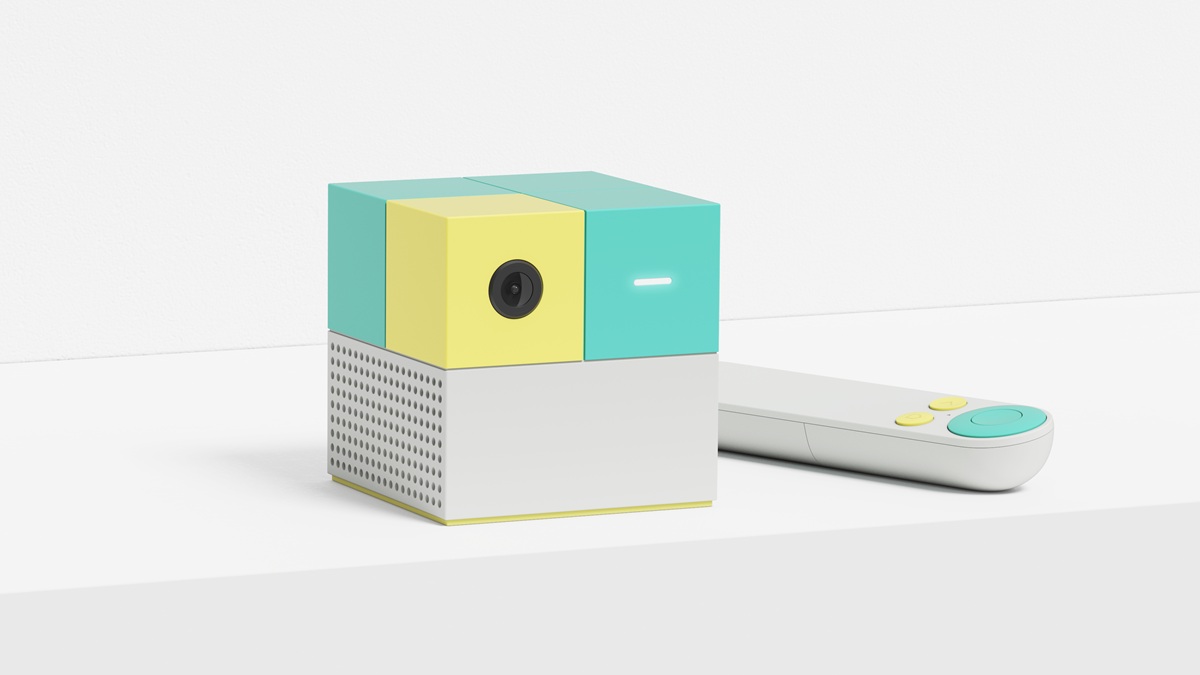
Nex, the company behind the motion-sensing active-play game system Nex Playground, has raised $150 million in equity and debt funding.
With the goal of getting families moving together, the machine is selling well and is expanding on a global basis. The money will be used to fuel the global distribution into both retail and online distribution, said David Lee, CEO of Nex, in an exclusive interview with GamesBeat.
Following continued U.S. consumer growth, Nex is expanding internationally, broadening its retail distribution and growing its content ecosystem with major gaming and entertainment partners.
Nex also announced the appointment of veteran gaming and technology finance executive Jeff Shouger as CFO, with Shouger and gaming and technology industry veteran Bing Gordon both joining the company’s board. I’ve got a Nex Playground and I played some new games during Gamescom and I am impressed with the company’s continued progress with games.

Over more than two decades, Shouger has helped lead the finance organizations of some of gaming and technology’s most prominent companies through major periods of growth and transformation, experience he will bring to Nex as it scales. Gordon has played a defining role in the evolution of the gaming industry, helping build and advise some of the most influential companies across gaming and technology.
“Families have timeless needs: to move, grow, connect, and have fun. The response to Nex Playground has shown us that active play can serve those needs at a meaningful scale,” said Lee. “We are building Nex to be a 100-year company. This investment gives us the resources to bring active play to millions more families around the world, and Jeff and Bing bring extraordinary experience building enduring gaming and technology companies. I’m thrilled to have them with us for this next chapter.”
Building on strong consumer momentum
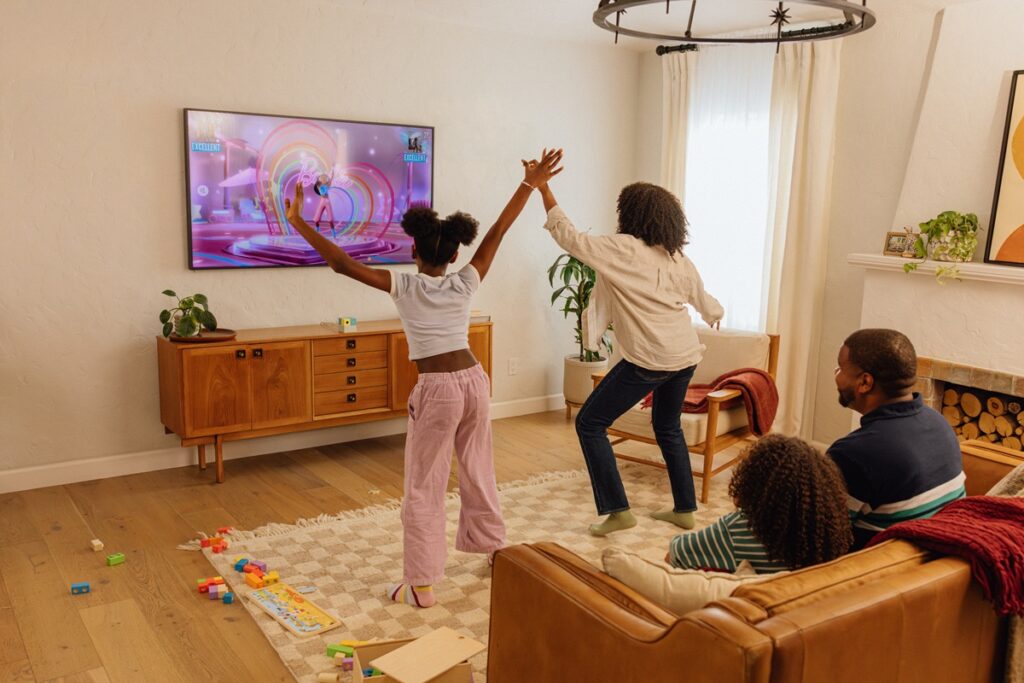
Consumer interest in Nex Playground has translated into more than one million units sold, with the system now distributed across more than 7,000 U.S. retail locations, including Costco, Sam’s Club, Target, Walmart, and Best Buy.
That momentum extends beyond hardware. Nex’s subscriber base has grown sevenfold over the past 18 months and is approaching 1 million subscribers, a milestone the company expects to surpass by year-end. The growing subscriber base is building a thriving community of families, turning a one-time console purchase into an ongoing relationship, with a steady stream of new content that keeps them coming back.
The platform now offers more than 60 games, including globally recognized franchises and characters such as Bluey, Barbie, Kung Fu Panda and Peppa Pig, with experiences spanning music, sports, fitness, party, and learning. The slate will continue to grow this fall and holiday season with NFL Flag, Dude Perfect Trickshot Challenge, Pac-Man with Bandai Namco Entertainment Inc., Sonic Forces: Rival Rush with Sega, and a unique BTS-branded music experience with Hybe.
The growth of the Nex Playground ecosystem is also attracting established game developers looking to bring their experience to the platform. Freefall Racers, originally created for Xbox Kinect, was revamped by its original developer, Smoking Gun Interactive, for Nex Playground. In its first month, it reached over 150,000 families and became the quickest externally developed game to surpass an hour of average playtime. Nex is selective about its developer partnerships, prioritizing experiences that fit its multi-generational audience and meet its standards for accessibility, shared play, engagement and trust and safety.
Nex is also expanding how families can play together. The company plans to introduce Connected Play, allowing families to play together across households and distances. At the same time, Nex is growing its global reach, with Europe and Asia as key areas of focus. Following its expansion into Canada, the United Kingdom and Republic of Ireland, Germany will follow later this year, with Japan and Korea planned for 2027. Additional markets across Europe and Asia will follow as Nex continues to build its international presence, with Connected Play ultimately helping connect families around the world.
Strengthening Nex for continued scale

The financing comes as investment across gaming and interactive entertainment has become
increasingly selective, underscoring Nex’s ability to attract meaningful late-stage capital alongside sustained consumer growth.
This round of financing includes a Series E led by Baillie Gifford and BAI Capital, with participation from NBA Investments, Logitech, and the Raine Group, alongside a new credit facility with JPMorgan.
“The gaming industry is one of constant reinvention, and the few companies that thrive over the long term are those that never lose sight of their core purpose: to delight consumers. Through active play, Nex is showing that the family room can once again become a place of laughter, entertainment and togetherness,” Alexander Nicolier, a private companies investor at Baillie Gifford, in a statement. “The console makes it remarkably easy for families to get up and moving, while a growing library of games available through subscription gives Nex the opportunity to build a lasting relationship with them.”
Gifford added, “As long-term investors, that combination is particularly exciting: we are backing a company that can continue to delight its customers while compounding value over many years. That is rare in gaming. We are delighted to lead this round alongside BAI and look forward to supporting David Lee and his team as they pursue their ambitious global vision.”
“Nex Playground is creating a new category of family entertainment that transforms passive screen time into active play the whole family can enjoy together,” said Annabelle Long, founding and managing partner of BAI Capital, in a statement. “Its success also demonstrates the scalability of a model that combines proprietary AI-powered motion technology and hardware with compelling content and recurring subscriptions.”

The financing is complemented by the addition of Shouger to Nex’s leadership team, with Shouger and Gordon also joining the company’s board. Shouger most recently served as CFO of Niantic, where he led multiple capital raises and helped oversee the sale of the company’s games business to Scopely. Previously, he held senior finance leadership roles at Zynga, helping guide the company through its IPO and significant growth.
Gordon was an early executive at Electronic Arts and later served as its chief creative officer, helping shape the company into one of the world’s leading interactive entertainment businesses. He subsequently joined Kleiner Perkins, where he has spent nearly two decades investing in and advising consumer technology and gaming companies, and previously served
for nearly 15 years on Amazon’s board.
“Nex has reached an exciting point in its evolution, with strong consumer adoption, a growing content ecosystem of guilt-free content that is fun, active and good for families, and significant opportunity still ahead,” said Shouger, in a statement. “I’ve spent much of my career helping gaming and technology companies navigate periods of growth and scale, and I’m excited to work with David and the team to build an enduring global business.”
Nex is focused on a part of the gaming market that has not consistently been built for: families playing together. As Nex grows, the company will continue investing in content, technology and new ways for families to play together, while keeping the Nex Playground experience active, shared and trusted.
The Raine Group served as exclusive financial advisor to Nex in connection with the financing. Wilson Sonsini served as legal counsel to Nex.
“We’ll be leveraging the the new resources to grow investing content and international expansion. And we also have Jeff Shouger, the former CFO of Niantic, joining us as our CFO as well. And Bing Gordon will be joining our board,” said Lee, in an interview with GamesBeat.
Asked why the company chose the lead investor, Lee said, “They have a very long-term horizon and are very long-term investors. They want to invest in a company for a 10-plus year horizon,” Lee said. “That’s very important because we want to patiently create a category.”
Rather than focusing purely on gamers, Nex views its customers as benefiting from motion and getting off the couch. It wants to create active gamers including family members who play and exercise with each other. It has a focus on trust and safety and it is marrying games with key content pillars including music, sports, fitness, parties, and learning.
“It requires to have a fairly long term view for how we keep doing the right thing for our families and keep building great product for them,” Lee said. “Also because of subscription model, it tends to compound over a long period of time, and we are already seeing the benefits of how we have our stable resources to allow us to keep investing in content.”
What the analysts think: Is it the 4th game console?
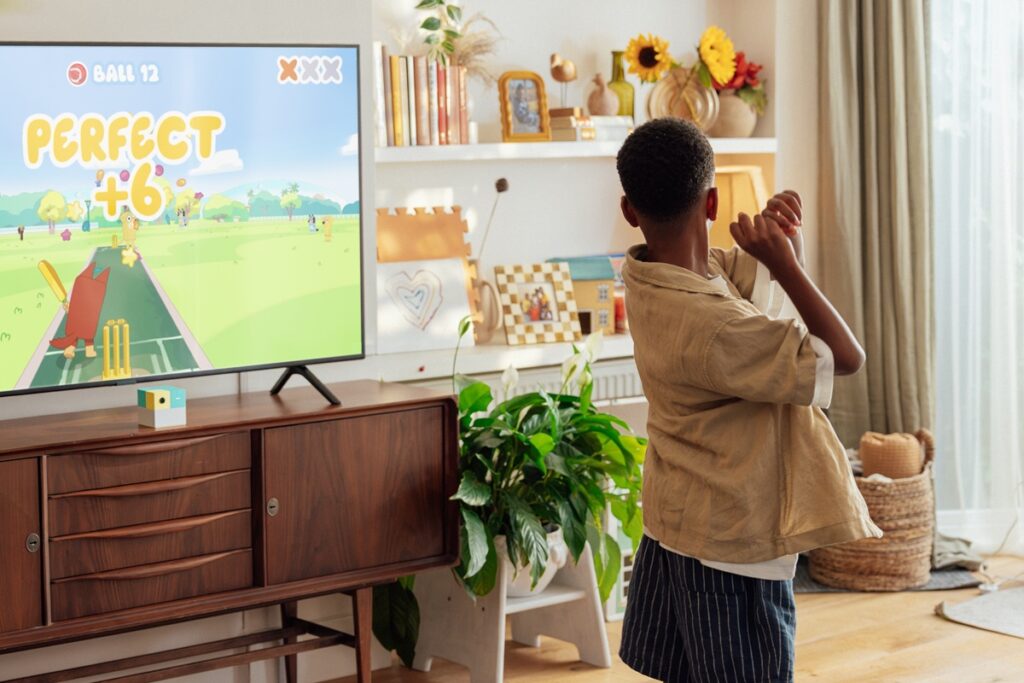
Mat Piscatella, an analyst at Circana, said in a message to GamesBeat that Last December there was “quite a kerfuffle around Nex Playground outselling Xbox for a week or two.” He noted that in 2026, the July sales for the Nex Playground were up 112% compared to the same time in 2025, with average pricing of the device increasing by 24%.
“It had a phenomenal run last holiday. We’ll have to see if it can repeat that performance. It’s well positioned at the price point, and it’s finding more space at retail,” he said. “It’s chugging along. We’re not talking massive units so far this year. It’s really a holiday/gifting thing.”
Yoshio Osaki, president of IDG Intelligence, noted in a message to GamesBeat that he is cautious about calling Nex Playground the “fourth game console.” He said that Nex’s growth shows the company is not a one-holiday fad, and the company is serving a market segment that is underserved. He noted that if Nex were truly a fourth game console, the company would compete for the same dollars as its rivals in households. It’s a good thing that Nex is pulling in households that weren’t buying game consoles at all, especially as traditional game consoles are becoming less affordable with price increases.
“In IDG’s view, what Nex has actually proven is that there’s a real fourth category in living room gaming, which is family/active play, and it’s currently one of the only companies seriously building for it. That’s additive to the market, and isn’t a 1:1 cannibalizer versus Xbox, PlayStation, or Switch,” Osaki said.
But he noted two things make IDG cautious. Osaki noted the Nex team had to increase its price from $249 to $299 this spring due to the memory shortage, the second price increase since the 2023 launch. If you add the $89 for the annual Play Pass subscription, the cost can be higher than the (older) Nintendo Switch. IDG also noted the reliance on NFL and Dude Perfect licenses can also cut into profits due to IP costs. Lastly, he thinks Nex has to watch out for Netflix and Amazon’s party and lightweight games available through subscriptions that consumers already have.
“2026 is a real test for Nex. Its hardware isn’t the value story it used to be now that pricing has caught up to mainstream consoles, so its case going forward has to be made on software and content depth,” said Osaki.
Piers Harding-Rolls, senior research director for games at Ampere Analysis, pointed out to GamesBeat that Nex Playground has found a niche with its kids-focused game offering, sitting in an area that includes kid tablets and smartphones, audio devices, and kid-focused subscription services, particularly for those ages five to nine.
“The Nex Playground console builds on markets established by the traditional console companies through their motion control products and games, and leverages Android console expertise developed in the 2010s. The company has evolved the motion-controlled technology so that it’s controller-less experience can be delivered by a single RGB camera built into a very small device,” Harding-Rolls said. “As a device with graphical capability similar to the seventh generation of TV consoles (PlayStation 3, Xbox 360) it is not competing with the latest games consoles available on the market. The target audience and the tech capability of the device mean it is not directly competing with mainstream consoles from Sony, Microsoft and Nintendo.”
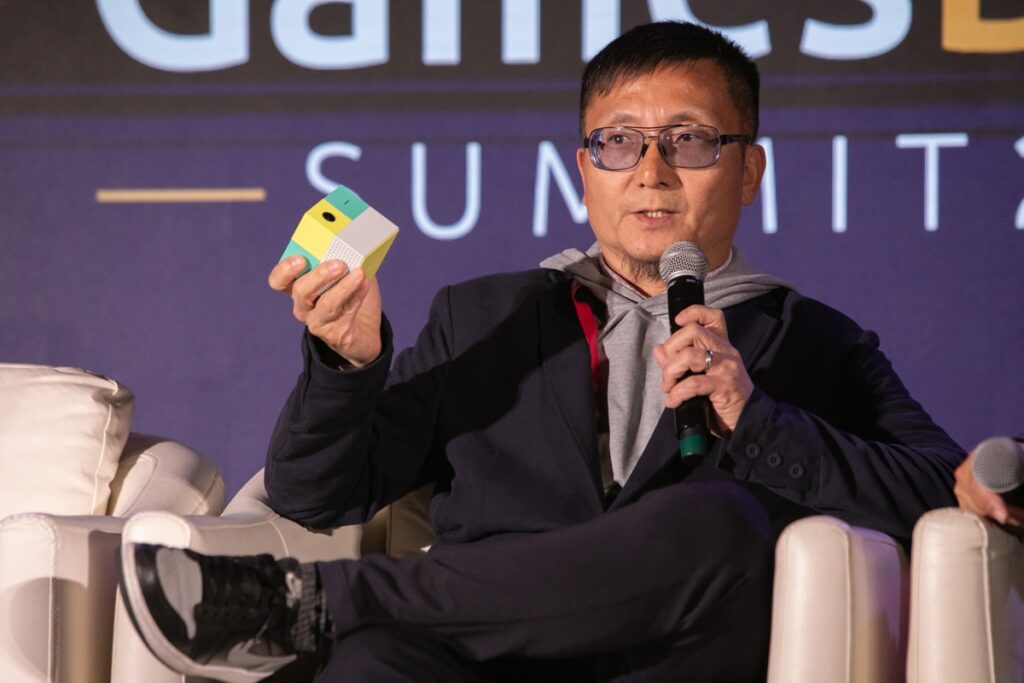
But he also pointed out as prices increase for the mainstream consoles, the Nex Playground could be considered a cheaper alternative in places such as Europe. This might be appealing to parents during the holidays.
“The timing of the Nex Playground also works in its favour – in Europe (and around the world) there is a growing focus on children’s online safety and increasing regulation in this area, as well as concerns around excessive screen time,” Harding-Rolls said. “The device offers an answer to these issues – capped spending, content specifically built for younger gamers, the ability to play offline and engagement driven by physical activity and local social play.
For families with younger kids, the appeal of subscription monetization is the cap on spending it enables so in that context it is an obvious advantage.”
But subscription fatigue is a real issue, and Nex will have to fight for subscription renewals in a competitive subscription market.
And he said, “Retail will be disproportionately important for Nex moving forward. Digital commerce almost acts as more of a conversion channel — converting existing interest, rather than driving that initial interest in the first place. Word of mouth also takes on significant importance here, as it can, to some extent, replace that physical demo experience for many people. Particularly as Nex is selling a social, family experience, and families typically like to connect over new ways to occupy the children. However, it is still important for them to try and replicate the demonstration effect online, and so they may have to lean more heavily on influencers and internet personalities to show this via video content.”
And Nex’s own view of its challenges and path forward
Lee said the company turned profitable last year, and the team wants to make sure that it remains on that trajectory as it builds for the long term.
Tom Kang, president of Nex, said in an interview that roughly half of the funding is split between equity and debt. The amount is large because it takes a lot of capital to engage in international expansion. On top of that, there’s a shortage of memory and that is driving up some costs for production of all of the game consoles, Lee said.
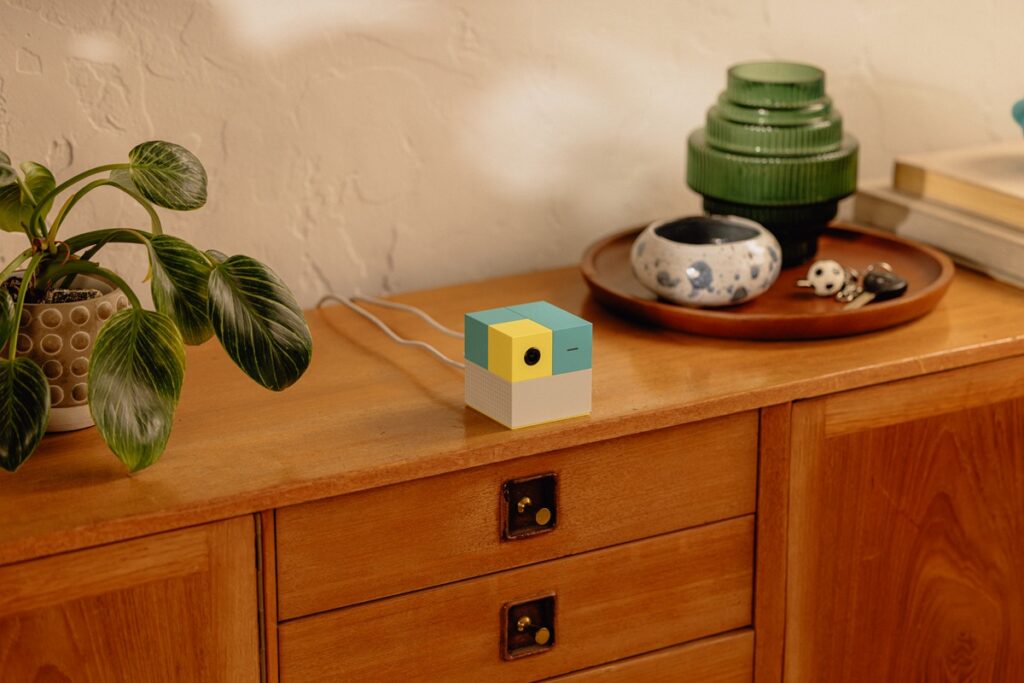
However, it’s worth noting that Nex is very competitive with the other game consoles on the market (the Nintendo Switch 2 being the cheapest new machine at $500), as the Nex has kid-oriented graphics and it focus on motion play, without a need for a game controller. Overall, results in a lower amount of memory per machine and a low starting price at $300.
“It’s not a pure software company. It’s still a very capital efficient business where we have a great cost structure, but we need to invest more into headcount,” Shouger said in an interview. “We started with 20 games in 2024. We’re increasing the amount of experiences. We’re doing live ops. We’re making sure that Nex becomes a household brand and it is going global.”
In this respect, Shouger said the amount of capital being raised is reasonable and it will support growth.

“We’ve grown the user base 7x in the last 18 months. We want to continue to grow the consumer base in a thoughtful way,” Shouger said.
The company expects to be in most major gaming markets by the end of 2028, which means the whole journey will take about five years top get there. It’s not an overnight growth story. Kang noted that Nex is going international by creating local content as well.
“It’s very important that we have local IP and content when we launch in different markets” so that the Nex Playground is attractive in those markets. And in addition to supporting international retail growth, Nex has an “omni-channel strategy” where it will find customers wherever they are, including online, Kang said. One exciting channel in the UK is the TikTok Shop, which is growing at a high velocity in the region, Kang said.
“We just want to meet customers where they shop,” he said.
I noted that other console makers roll their machines out globally much faster. Lee said, “Our playbook looks very different. We are growing in a very measured way. We’re in for a long game. Our growth curve will look different.”
Shouger said the that the launch might be more like Ring’s or Aura’s. He noted there is a cost of capital, and we aren’t in a zero-interest environment anymore. That’s OK, he said, but it changes things.
“We’re growing exponentially, and we see future exponential growth,” Shouger said.
Kang said the company has to stay disciplined, and this launch might look more like 1983 when Nintendo launched Famicom in a disciplined way.
“We just need to do it in more measured way, and obviously once we build our global footprint, the launch could be a lot faster. We’re just not there yet,” Kang said.
And Kang noted it will take time to develop content for markets that are specialized, like the Japanese audience. That affects how the company enters that market, as it wants to have the right content ready. I noted that smartphones are a competitor to Nintendo now, and they may also be the likely competitor for Nex Playground.
But Lee also pointed out that Nex is focused on fitness, and that means playing outdoors is a competitor for Nex.
“We see ourselves in the different space. We want to serve the timeless family need to move, to grow, to connect. That’s fun,” said Lee. “We want to create games that are healthy, active and bring families together.”
Shouger noted there is a movement toward guilt-free entertainment. One thing people like about Nex is that it is guilt-free entertainment for kids, as they can get exercise, much like with Pokemon Go.
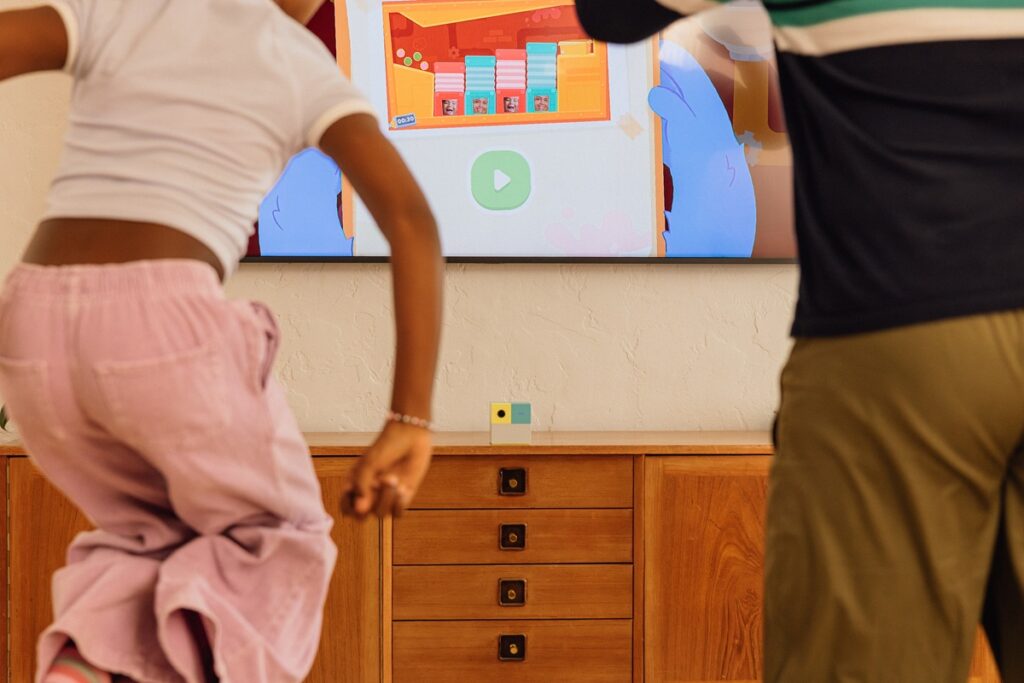
This is also why the sports game makers are interested in making games for the Nex Playground, Kang said.
“We just launched NFL Flag, and the NFL doesn’t license games very often, and that game’s off to a great start,” Kang said. “They really see the Nex Playground as a way for kids to experience their sport in the house at a younger age.”
He added, “We’re an And device. We’re not an Or device. And so the competition is different.”
Shouger noted that he started in gaming in 2010 while working at Zynga. He was a controller through the IPO and chief accounting officer, and then he moved to Niantic to help grow Pokemon Go. That company was sold to Scopely for $3.5 billion in March 2025. He met Kang and Gordon reached out and reconnected Shouger with Kang.
“I got to watch my kids engage with and play Nex. They jumped on this, and we felt good about it,” Shouger said. “We were like, ‘Wow, they’re having a blast. This is so fun.”
While other companies have had difficulty raising money, Shouger said Nex has a unique technology and a differentiated approach and story. That helped it get traction with investors. It helped that Baillie Gifford approached Nex first.
I asked whether it was hard to compete in consoles without billions of dollars. Shouger pointed out it doesn’t take $30 million to make a motion-based game like it does in mobile or console games. Both the production costs and capital costs are efficient, and the hardware sells for a profit. Players pay for the subscription up front. And the workforce is spread out.