

Evan Spiegel, CEO of Snapchat maker Snap, unveiled the latest version of Specs glasses that use both augmented reality (AR) and AI.
The glasses also come with Specs Intelligence. The Specs product is part of an intelligent system that lives across your Mac and your iPhone. Today, you can join the waitlist for early access on the Specs website and try a preview of Specs Intelligence now in the Specs iOS app. Specs are shipping this fall.
In his keynote opening, Spiegel took a jab at the usual AI-related product launches that we hear about these days.
“I will say it’s an interesting time to be launching a new computer because things in tech are pretty weird right now,” Spiegel said. “We’re being told that AI will take our jobs, that virtual worlds will replace the real one. Well, no, thank you. We do not accept that future. Making people irrelevant is not progress, and computers should make us more important, not less. So our bet is on you, on your imagination, on your creativity, on what you can build, and on what we can do together, because technology should add to your life, not cut you out of it.”
Spiegel said that the team at Snap set out more than a decade ago to rebuild the computer from the ground up around what’s most important — people — and that gave birth to Specs and the vision for making computing more human. Naturally, one of his first live demos didn’t work.
Soon enough, he moved to other demos and showed augmented reality demos that people in the crowd cheered about.

“We started with how people actually interact with the world, and it’s a miracle of evolutionary biology, but it’s really quite simple. We look at what’s around us, we think about it, and then we act on it, and we do that over and over and over again,” Spiegel said. “So we built specs to support that same interaction, and that’s why specs are glasses, so they can see what you see.”
He said Specs can understand the world without recording it, just like you. And Specs bring digital experiences into the world with see-through lenses, so you can keep your head up, and your hands free, and you interact naturally using familiar movements with your hands and your voice.
“We call this instinctual computing because you don’t have to learn anything new; you just use your natural instincts to navigate specs experiences, so you can reach out and grab an object, or just ask for what you want, and it really is that simple,” Spiegel said. “Because getting things done shouldn’t mean choosing what app to use, logging in, then copy-pasting information from one app to another.”
He said Snap built the first ever AI-native operating system with intelligence designed around your projects, your preferences, and your interests, and it helps connect the dots across lenses, so you can get things done while focusing on what matters to you.
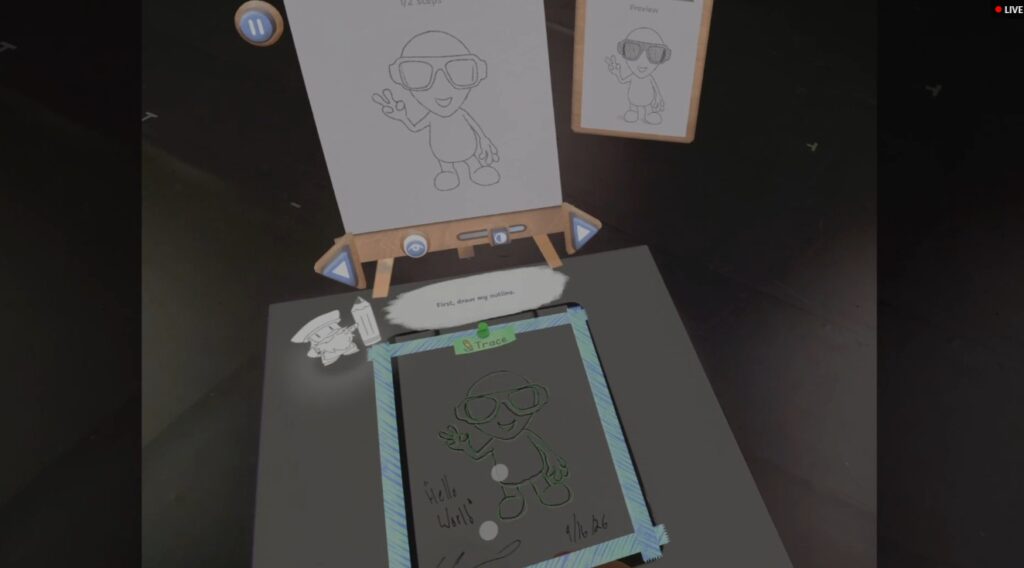
“Humanity is inherently social, so we build shared experiences into the foundation of our operating system, so that people can naturally and easily use computing together,” he said. “We can learn from each other, build on each other’s ideas, and create things that we never would have made alone. Being together is part of what makes us human, so it needs to be a part of computing too.”
He said Specs help you do the things you care about in the real world: learning to shoot a basketball with the ball in your hands, learning to draw with the outline projected in front of you.
“And Specs can help, but you’re the one taking the shot. You’re the one holding the pen. You’re building the skill. You’re making something. And for us, winning means people spending more time together, doing the things they love, empowered to make a positive impact in the world,” Spiegel said. “Because the future isn’t about what computers can do; it’s about what you can do, and we’re just getting started.”
Back in June, Spiegel noted that Snap introduced Specs AR glasses and showed the world what the company had been working on for the past 12 years.
“We got some great feedback, including some pretty funny memes. There’s even some new ear merch. Part of me wanted to wear that today, but then people began to really understand that we’re building something different — not a VR headset that shuts you out of the world.
Rather, it’s a new kind of computer built into a pair of see-through glasses.
“But above all, people just wanted to try specs. So guess what? Today is the day. But before we really get going, we wanted to let you in on a little secret because specs aren’t just AR glasses. Our team told me that would be way too easy,” he said.
Specs are part of an intelligent system that lives across your Mac and your iPhone, and the team calls that Specs Intelligence.

“Specs Intelligence provides proactive recommendations based on your real-world context, and it connects to the apps and tools that you already use,” he said. “It learns your goals and priorities, and it helps you focus on what matters most.”
Specs Intelligence connects across three services: Mac, iPhone, and Specs. On Mac, Specs brings together your everyday apps like email, calendar, and notes to clear out the daily digital noise. On iPhone, that same intelligence moves with you throughout the day, and on the glasses, it becomes part of your surroundings. If you’re traveling for a busy weekend, Specs coordinates your flight details, hotel reservations, and reminders.
Under the hood, Specs builds a private context layer around your life, your portrait, your key corners, and your long-term goals, he said.
“Your portrait is Specs’ understanding of you, your people, your work, your patterns, and the things you care about,” Spiegel said. “Corners help Specs organize different parts of your life, like work, family, travel, health, and relationships. So the right things surface at the right moments.”
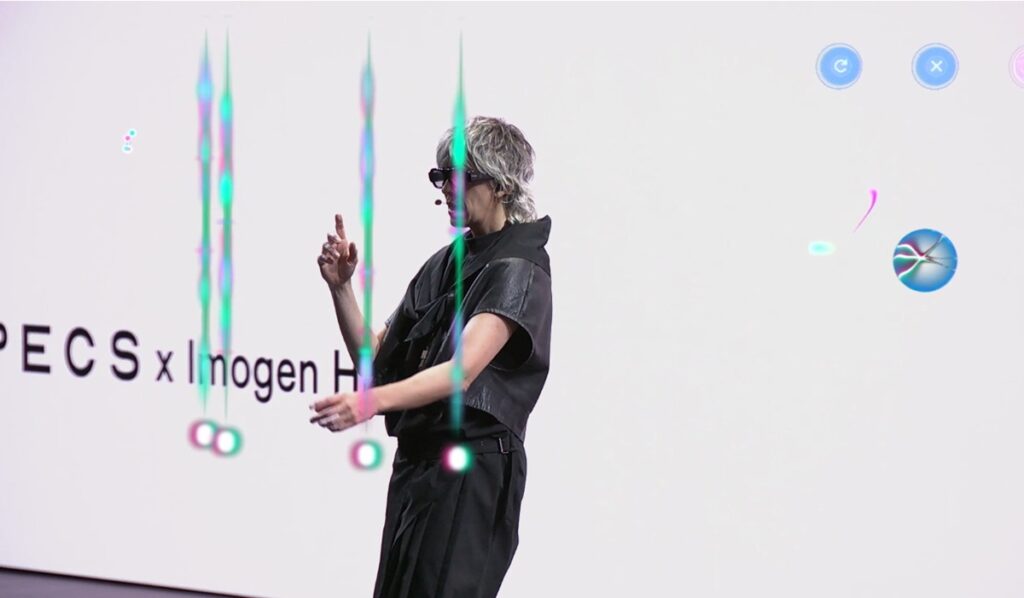
And goals help Specs understand the bigger things you’re working toward, not just the task in front of you.
“Together, that’s what let Specs help you move with more intention, not just keep up,” he said.
And when it handles the busy work, like drafting a message or canceling a subscription you’ve been meaning to cancel, it always asks before taking action. You stay completely in control.
That trust is built on privacy. You decide which apps and devices to connect, so you decide what spec sees and what it does.”
You don’t need the glasses to get started. You can try Specs Intelligence on Mac and iPhone to experience a clearer, more intentional way to move through your day, he said.
“So you can spend less time managing information and more time living,” Spiegel said. “You’re in control, and we protect your privacy by design. We can’t review your connected personal content, and we don’t use it to train or fine-tune AI models.”
Specs AR glasses are available to preorder for $2,195 with a $200 refundable deposit at Specs.com.
In the U.S., Snap is partnering with Verizon to offer custom data plans, flexible financing, digital setup and hands-on experiences at select Verizon stores. The Specs Connected Case bundle will be available for $2,395. Verizon will offer eligible customers financing options, including a 36 month payment plan. Connected Wearable data plans are available from $10/month for Verizon customers and from $20/month for non-Verizon customers.