
Ramen announced today the launch of Aura 1.0, its AI development agent for game developers building on Unity and Unreal Engine.
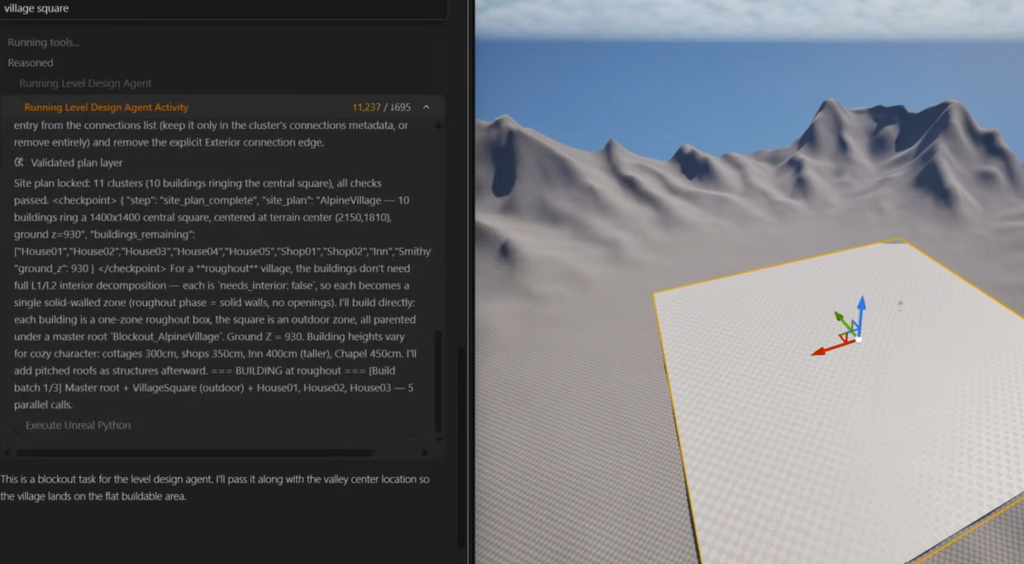
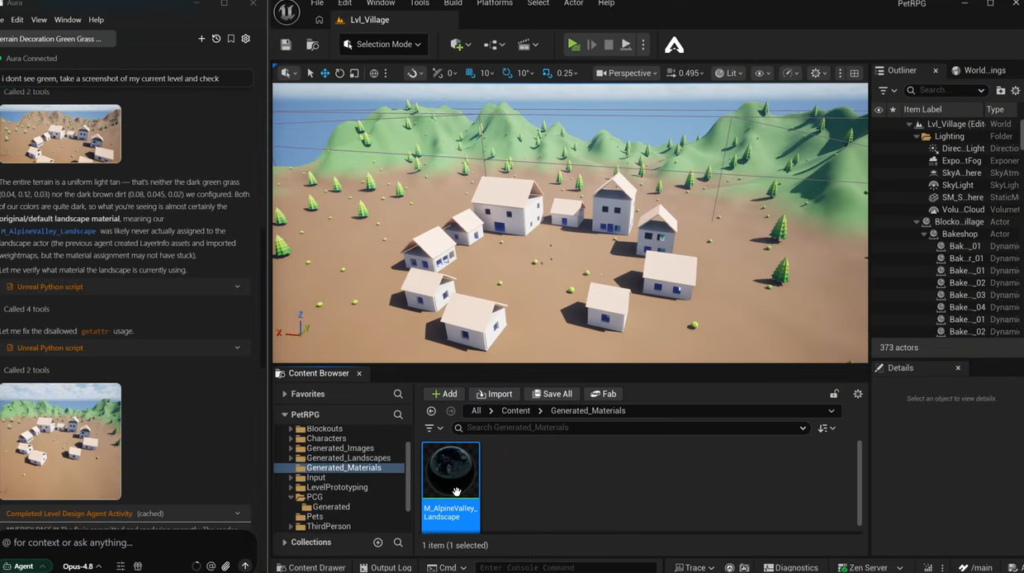
The release of the AI game development tools brings a redesigned interface, frontier-level performance with its Verification Agent, quicker Blueprint generation, persistent project memory, multi-project support, and unlimited usage in Auto mode.
Pricing is lower than beta testing offered, and there is new Mac support and a launch on the Fab store.
“For the last seven months in beta, Ramen worked hard to connect with design partners like Ironmace, Sinn Studio and our community to deliver frontier-level agentic tools. We’re incredibly proud to be launching Aura 1.0 today, the most powerful, affordable, and accessible agent for professional game developers,” said Andy Tsen, CEO at Ramen, in a statement.
I interviewed Tsen about why he chose to launch Aura into its 1.0 status, after about 15 updates to Aura during the past year. It was interesting to compare notes from our talk in June to what he sees now with the progress of agentic AI.
“We’ve just been working really hard to iterate on Aura over the last year with these 15 versions that we’ve launched, and we’ve worked closely with both Anthropic and our design partners at Ironmace and Sinn Studios and a couple of other unnamed ones,” Tsen said. “We feel like Aura is the best solution out there by far. That’s the main thing. There are also all these platforms that we’re launching on tomorrow: The Fab Store, Mac. We’re coming out with both Unreal Mac and Unity Mac versions.”
He added, “We’re launching on three new platforms because we think we’re ready and it’s been proven in production workflows, and people are continuing to use it. They’re shipping real features like Ironmace did with Dark and Darker’s new tutorial system.”
Game companies integrating Aura
Game studios including Ironmace and Sinn Studio are using Aura to incorporate new features to players with unprecedented efficiency.
Ironmace, the studio behind Dark and Darker with over 20 million players, generated and verified Blueprints automatically, allowing non-technical designers to build parts of its new tutorial feature directly in half the time, freeing up engineering and design time.
For further reading on how Sinn Studio are using Aura to boost efficiencies, you can access the whitepaper here.
Aura 1.0 is built on Claude by Anthropic. The Aura team worked with Anthropic’s Applied AI engineers throughout development, with a focus on in-engine verification agent that can playtest games, pushing the frontier of agentic game development.
“Game development pushes the limits of what AI can do, from complex codebases to automated testing. Aura’s team is building at the frontier, and we’re excited to see what they ship with Opus 5 and Fable 5.1,” said Shadiya Refkat, Applied AI at Anthropic, in a statement.
Availability on new platforms and increased affordability
Ramen is expanding the audience of Aura 1.0 by launching on Mac for both Unity and Unreal Engine, and on the Fab store, putting it in front of a much broader base of developers.
Unreal developers working with custom engine builds who purchase Aura 1.0 through the Epic Fab store will get support as well, including access to the C++ source.
The $10 discount on Aura’s Indie Tier (which carries a $10 price), was introduced during beta and it is now permanent. Auto mode usage remains unlimited, including access to premium models, with rate limits generous enough that most developers will not run into them during day-to-day work.
The company has three pricing tiers. The indie tier is $10 a month. The pro tier is $40 a month, and the ultimate tier is $200 a month. The Fab Store pricing is $150 upfront to get lifetime MCP usage as well as a one-year subscription to Aura.
New and redesigned features

The Aura Verification Agent, which is the only game development agent that can playtest itself without a developer at the controls – is now eight times faster.
A test case that used to take two to three minutes to verify now takes less than one minute, and Aura can run three test cases at once instead of one at a time. In internal evals, auto mode Blueprint generation speed increased for complex and simple tasks.
Aura also now keeps track of important facts and changes across conversations and projects. That memory carries forward automatically, so developers get more accurate results without needing to re-explain context every session.
Custom Skills and Dynamic Workflows round out the 1.0 feature set, giving developers a way to point Aura at long-running tasks and use it to build entirely new features, not just fix existing ones. Highlight features include:
- Project Memory [new]: Retains key facts and changes across conversations, applied automatically to future work
- Custom Agents and Dynamic Workflows [new]: Aura can delegate hard tasks to a team of subagents to build complex gameplay systems, or the developer can create their own agents
- Verification Agent: 8x faster than launch, under a minute per test case, 3 test cases verified in parallel (previously 2–3 minutes, one at a time)
- Blueprint generation: 2x faster, 3 minutes per Blueprint in Auto mode (down from 6 minutes in beta)
Aura 1.0 is now available for Windows and Mac, with ongoing support for Unity and Unreal Engine. Sign up at www.tryaura.dev. For the latest updates, follow Ramen on YouTube.
Originally a VR game studio behind the hit game Zenith: Nexus, the company took key learnings alongside reflecting on what would be beneficial and evolved itself to serve the needs of developers.
Founded in 2019 and led by CEO Andy Tsen, the Ramen team is composed of talent that spans DIY (hackers, modders, dropouts), triple-A game studios (Activision, Blizzard, Riot, Ubisoft), and tech (Apple, Google). Ramen has raised over $40 million from lead investors YCombinator, Maker’s Fund, Anthos Capital, Dune Ventures, along with other distinct supporters.
The state of pushback against AI

Tsen said the company is unique as having the only game development agent that is shipping with a QA agent that can test and verify itself.
“It can it can test features you’re building. It can test features it’s built itself, and so that really allows us to close the agentic loop when it comes to building games. I think the reason that people love using Aura is a mixture of that,” he said.
He noted there is unlimited usage in auto mode for the fixed subscription fees for a month.
“A lot of our competitors focus on the number of MCP tools they can fit into the bucket, like thousands of MCP tools, which may or may not work. And our approach has always been, ‘We can build a team of agents that can use tools better than any other solution or service can.”
Since June, Tsen said he believes that the negativity around AI in gaming has become more muted and less toxic.
“People are still having the fight, still having the debate, but it’s a little bit less binary,” he said. “People hear each other out a bit more than they did. And we know what our usage numbers are. We know that everybody in the games, including the Western markets, right, and triple-A, are using AI. Nobody is talking about it.”
And no one is talking about it because they don’t want to get canceled, he implied.
“It’s gotten to the point where it’s become so prevalent that I think it’s just starting to leak out that it’s happening. It’s still uneven. Art, sound, writing — those are the ones that really see big pushback on anything visual. But coding or gameplay systems or features or live ops, performance marketing — nobody seems to really mind when game developers talk about that.
Fear and AI advances are pushing things forward

I noted the interview I did with Glen Fiedler, a longtime open source programmer who sounded a warning about how AI models can now be used to hack code, and game developers should quickly move to protecting their code, using vibe coding.
Fiedler, who was once fiercely anti-AI, said that AI can detect vulnerabilities now far better than humans can, and we’ve crossed a point where AI tools have to be used to counter the threat. That’s getting AI into more workplaces.
Tsen agreed that concern is a reason why AI tools are pushing forward.
He noted how AI models create the threat and then present the fix.
“How many businesses can can say that? We create nuclear weapons and we focus on non-proliferation at the same time,” Tsen joked.
But this is a reminder that people have to constantly relearn what AI agents are capable of doing. As a result, Ramen has evolved its approach with modifying Aura over time.
“I would say like Aura 1.0 is the dream that we wanted it to be a year ago, and it’s it’s finally here. And I think, even crazier than that, if we look at Anthropic’s Fable 5.1 and we look at OpenAI’s Astra, if you look within the next year, you will see game dev as a profession will be solved for software engineers,” he said. “I think in the next year you’re going to get to the point where you can instead of seeing these prototyping demos that we’re seeing today, you’re going to be able to build actual games with single prompts.”
Tsen said PC and console game companies are using AI the most now. Ironmace was able to halve its production time with the use of Aura, and some aspects of work were four times or five times faster, Tsen said.
And Tsen believes usage varies by the type of developer you are. If you’re a programmer, you won’t have as many art skills, but you will test your programming ideas using AI-created art. If you’re an artist, you can also test your art using AI programming.
“In the past couple months, we have been expanding the platform, improving the accuracy and capabilities, and just getting it into a state where it feels more polished and more ready for launch,” Tsen said. “I think that the powerful thing about AI is it meets you where you are. So if you’re a programmer, then your art is not art. If you’re an artist, then your art is not programming. “
He added, “And so as an artist, you probably want a lot more fine-grained control over your art direction, your artistic vision, and so you’re going to use the coding side of AI to build out the gameplay features, right? If you are a solo developer that is a programmer and you’re more of a systems designer, then you’re probably going to lean a little bit more on the art generation tools.”
Tsen said he isn’t trying to replace humans in game dev roles. Rather, he believes that AI can be an assistant for humans. And somewhere, at the end of the process, there should be a creative person, either an artist or a programmer, in charge of making final decisions.
Steam’s genAI disclosure rule
I noted that Tim Sweeney, CEO of Epic Games, complained that Valve is doing a disservice to the industry by requiring that game companies disclose if generative AI is used in making games that are sold on Steam. There is no requirement for vibe coding to be disclosed.
“Gabe (Newell) wouldn’t have it on there (if he thought it was OK). Steam has been successful for as long as it has been because I think Gabe has a very good pulse on what like PC gamers want, and he’s able to translate that into the platform. So people still want (the disclosure) right now. If you look at if you look at Asia, though, they don’t care. Yeah, yeah. They’re just like, give me a good experience.”
I think noted that the same is true for the the Roblox kids and the Fortnite players. They don’t care about what kind of art has been generated and what they play.
“Yeah, it’s interesting to see the skew between the demographics. Single player story gamers seem to be much more aggressively negative about about AI, but it really depends,” he said.
I noted the presence of AI slop must cause the players to be negative.
“I would agree with that statement,” Tsen said.
Can game developers beat AI slop?
I asked Tsen about what it’s like to have to compete with AI slop and raise the quality level that can be done with AI-enabled tools for making games.
“That’s good framing. I don’t think we’re going to beat the slop. I think the slop is here to stay. But the true creatives, the ones with real talent and ideas, will find a way to elevate their craft and and do incredible things with the tools that they have,” Tsen said.
He pointed to mesh generation, which now the latest coding agents can handle themselves now.
“They can make good quality assets. I think it’s going to just continue to evolve from here. But I don’t think the slop is going away. I think there’s going to need to be a change in how discovery works fundamentally. So that we’re not inundated with as much slop,” Tsen said.