

NetEase Games and Joker Studio announced that Sea of Remnants, a free-to-play ocean-fantasy RPG featuring open-world exploration and dynamic turn-based combat, will begin its closed beta test in December 2026.
The news was revealed alongside a brand-new trailer that premiered during Gamescom Opening Night Live. Sea of Remnants is currently in development for Windows PC via Steam and the Epic Games Store, as well as PlayStation 5, Xbox Series X|S, iOS and Android.
In Sea of Remnants, players assume the role of a puppetfolk sailor adrift without memories, exploring the bustling city of Orbtopia and a vast archipelago of mysterious islands. Across this ocean-fantasy world, every island, encounter, and forgotten story becomes part of a greater voyage to recover what was lost.
The new trailer explores one of the central questions at the heart of Sea of Remnants: Why does a Voyager with no memory continue to return to the same ocean? It introduces the game’s Set Sail–Explore–Collect–Return loop while showcasing diverse island environments, minigames and lighter diversions, ever-changing turn-based combat on land, and naval encounters at sea.
Each voyage unfolds as a highly replayable roguelike journey through an open world, where no two expeditions play out the same way. Enemies, bosses, potential crewmates, equipment, skills, and enhancements change with each voyage, challenging players to adapt their crew and combat strategy to the dangers ahead.
But in Sea of Remnants, every voyage is about more than what players bring home from the ocean—it is also about who is waiting for them there.
Pre-registration is available now at seaofremnants.com.
Sea of Remnants is an ocean-fantasy RPG featuring ever-changing turn-based combat, where every voyage is a new adventure.
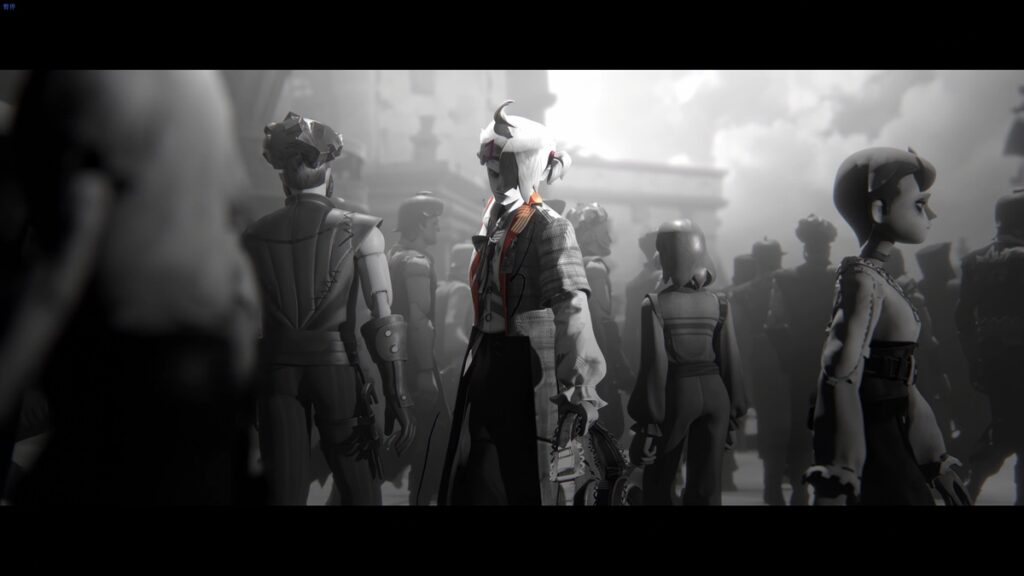
Players awaken as a puppetfolk sailor with no memory of their past and set sail across a vast ocean filled with mysterious islands, dangerous encounters, and forgotten stories. Along the way, they will uncover the people, memories, and truths swallowed by the sea—and discover who is waiting for them back home.
Each voyage unfolds as a highly replayable journey across a vast ocean, following a compelling Set Sail–Explore–Collect–Return loop. Changing enemies, bosses, potential crewmates, equipment, skills, and enhancements ensure that every voyage plays differently. Players must build their crew and shape their combat strategy along the way, adapting to the opportunities and dangers they encounter at sea.
After each voyage, players return to Orbtopia, the city between voyages. Resources recovered from the ocean can be used to permanently strengthen characters and prepare the crew for more distant and dangerous waters. This combination of unpredictable expeditions and meaningful long-term progression ensures that every voyage contributes to the journey—even when it does not go according to plan.
More than a game about what you bring home from the ocean, Sea of Remnants is a game about who you go back for.
Founded in 2018, Joker Studio is best known for Identity V, a critically acclaimed multiplayer title celebrated for its distinctive visual style and gameplay innovation. Since launch, the game has surpassed 400 million players globally and reached #1 on free game charts in China, Japan, Thailand, South Korea, and other regions. Joker Studio continues to explore bold art direction and fresh design with their latest title, Sea of Remnants.

NetEase Games, the online games division of NetEase, is a leading global developer and publisher of video game IP across a variety of genres and platforms. NetEase Games’ development and publishing slate includes titles such as Marvel Rivals, Where Winds Meet, Knives Out, and Naraka: Bladepoint, and partnerships with major entertainment brands such as Warner Bros and Mojang AB (a Microsoft subsidiary).
In a press briefing, NetEase Games said the ONL trailer begins with a central question behind Sea of Remnants: Why does the Voyager with no memory keep returning the same ocean. There, you’ll see the memory recovery loop, a look across several season one environments, some of the lighter activities found throughout the world, and the ruins, which are handcrafted dungeon structures designed to be conquered and revisited. And finally, the trailer gives a look at our strategic turn-based combat.
Sea of Remnants is developed by Joker Studio and NetEase to PC, PlayStation, Xbox, and mobile. With release currently planned for 2027, the game combines open-world exploration, strategic turn-based combat, and a long-form progression system built around repeated voyages across the sea. You play as a puppet-folk sailor who awakens with no memory of who they are. From there, you journey across a vast ocean filled with mysterious islands, dangerous encounters, and people whose story have also been swallowed by the sea.
But the reason to keep setting sail isn’t simply to collect rewards. Each voyage is a chance to recover someone, bring their memories home, and slowly uncover more of your own story. Dean Remnants is as much about who you return for as what you bring back.
Completing the weekly voyage guarantees a purple spot crew member or signature weapon. Each week also gives you a 50% chance at a black spot character or signature weapon. If you go two weeks without receiving one, the third week guarantees it.
The important point is that progression comes from playing the game itself. It doesn’t require premium currency, and the weekly voyage gives players another meaningful path to build their roster over time. That brings us to the core structure of the game.
You prepare your crew, set sail, explore the world, discover new stories and encounters, and then eventually return to Orbtopia. What you discover along the way affects how you build your crew and approach combat. When you return, the journey doesn’t simply reset.
Your discoveries and progressions help shape what you can do on the next voyage, allowing you to venture farther and take on new challenges. We think of this as an ever-changing turn-based adventure. First, you choose your course and prepare your crew. Then you head out into the world where routes, encounters, and challenges can change between voyages.
Along the way, you collect new equipment, skills, buffs, and other discoveries that can change your strategy. Eventually, you return home with what you’ve gained and prepared to set sail again. So every voyage can play differently while still contributing to one continuous long form journey.
Now I want to go a little deeper into the gameplay that you’ll see in the video at the end, there are three systems in particular that shape each adventure. The first is combat. Sea of Remnants uses strategic turn-based combat, but we don’t want players using exactly the same strategy every time they set sail.
The enemies you encounter, potential crewmates, weapons, skills, buffs, and even dice effects can change while your options are available to you, systems like enhancement dice and shanties give you additional ways to modify your build and adapt your strategy during a voyage. Gear is another part of that decision making.
What you equip isn’t just about finding something with a bigger number. Different gear can work out can work with different characters, skills, and effects, so your choices help define how the party plays, and the conditions of each voyage change. The build you used previously may not necessarily be the one you want this time.
And then there’s what the team calls the rogue luck path. This introduces another layer of unpredictability into how your build develops during a voyage. Idea across all these systems is the same. We want players to keep making interesting decisions and adapting to what they discover instead of simply repeating a fixed combat formula.
The second major system is the world itself. Rather than separating the rogue-like structure from the open world, we treat the ocean as the stage for each voyage. Routes can change, events can change, the encounters you discover can change, but the world is still a place you learn and become familiar with over time.
That balance lets each voyage feel unpredictable without making the world itself feel disconnected or disposable. And the third system is the long form progression. Returning to a utopia is an important part of experience because not everything disappears when a voyage ends. You have permanent growth, ship upgrades, relationships, and other forms of progression that carry forward. So returning home isn’t the end of the run. It’s just another step in the larger journey. Ortopia itself also grows alongside that progression.
Places like the shack and broke dockyard become part of that rhythm between voyages. You return, prepare, develop what you’ve brought home, and eventually head back out to sea, better prepared to push the journey further.
Disclosure: Gamescom paid my way to Germany for the event. The content of this story is solely the responsibility of GamesBeat.