

The 4X strategy genre, which was built on the classic principles of “eXplore, eXpand, eXploit, and eXterminate,” is quietly staging one of the biggest comebacks in mobile gaming.
According to new research from AppMagic in partnership with Duamentes, mobile in-app purchase (IAP) revenue for 4X titles hit roughly $6.8 billion in 2024 and reached $3.9 billion in the first half of 2025 alone, marking a year-over-year growth rate of about 28%.
While those numbers show remarkable momentum, they also reveal a highly concentrated market: the top five games in the genre now account for around half of all revenue, underscoring how a few blockbuster titles dominate the genre as a whole. For developers and publishers, that level of saturation raises a critical question: What does it actually take to succeed in such a competitive and mature space?
The data suggests that success in 4X games is no longer defined purely by design ambition or scale, but by how studios choose to monetize. AppMagic’s analysis identifies two distinct strategic paths that developers are taking to achieve growth.
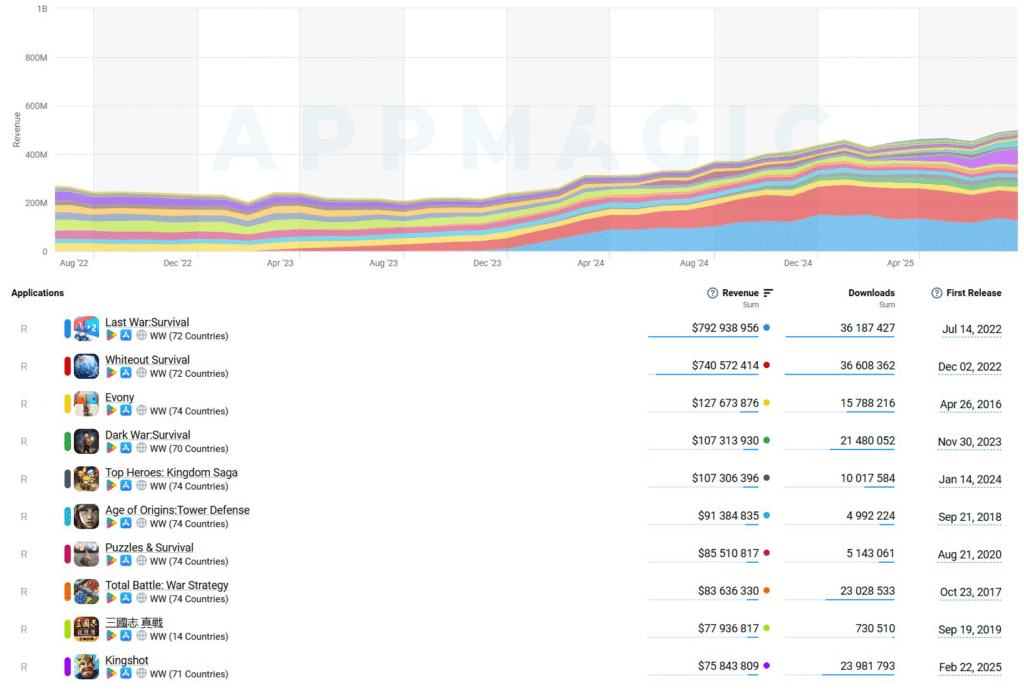
One focuses on converting players early with high-intensity monetization loops designed to capitalize on excitement during the first few days of play. The other takes a longer view, delaying monetization until players are emotionally and socially invested, prioritizing trust and long-term value over quick wins. Both approaches can work, but they cater to very different audiences and production models, and the line between sustainable success and burnout is thinner than ever.
In the first approach, many top-performing 4X games lean into aggressive early monetization windows, combining launch events, special packs, and time-limited offers to drive spending during the initial onboarding phase. These games are designed to strike when engagement is at its peak, with layered reward systems, overlapping event calendars, and progression boosts that push players toward purchasing upgrades as part of the gameplay loop.
According to AppMagic, this model has become a hallmark of the genre’s highest earners, many of which rely on near-constant event cycles to sustain momentum. Studios pursuing this route often view the early-game period as their make-or-break moment, front-loading monetization opportunities before churn sets in.
The tradeoff, however, is clear: while these tactics can produce massive short-term revenue spikes, they risk alienating mid-tier players who feel pressured to spend or who burn out after a few intense weeks of engagement.
By contrast, a growing number of 4X developers are taking a slower, more deliberate path. These games focus less on monetization during the first hours of play and more on immersion, social dynamics, and player retention. In these titles, the goal is to nurture commitment over time, creating systems that reward investment through cooperative features, alliance building, and emergent storytelling. Monetization comes later, once players are hooked on the experience and motivated to sustain their progress.
AppMagic describes this as the “long game” of 4X monetization, where lifetime value is built steadily rather than extracted immediately. For many mid-sized studios, this approach can be more sustainable, particularly if they lack the marketing resources or live-ops infrastructure to compete with the genre’s heavyweights. It’s a model that depends less on instant conversion and more on emotional connection. As a result, it’s quietly proving that patience can pay off.
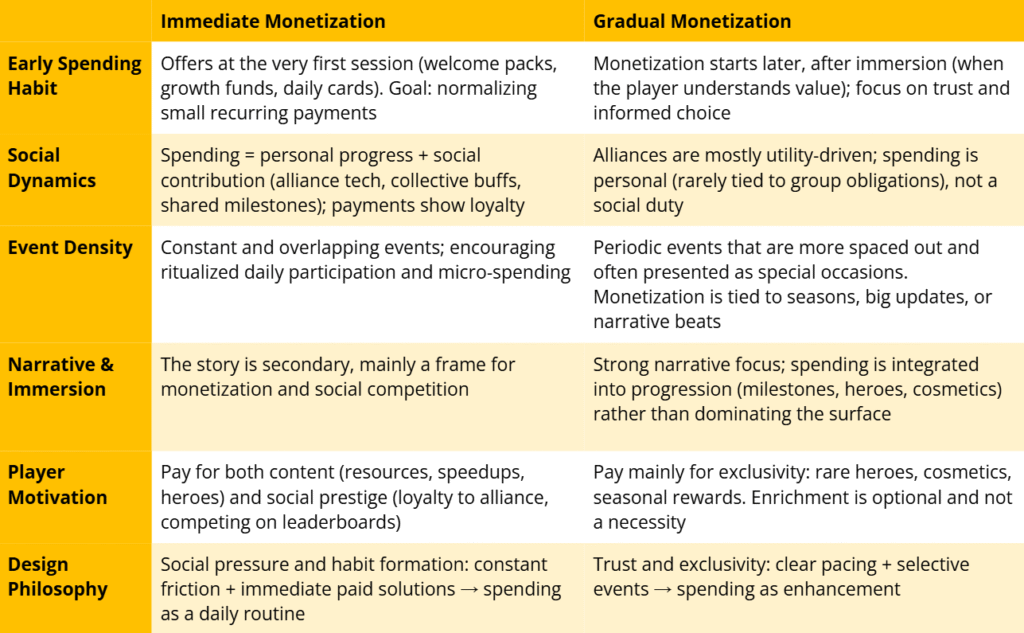
The distinction between these two models goes beyond monetization strategy as it reflects a broader shift in how players engage with live-service games. The early monetization model mirrors the habits of players drawn to short-term bursts of excitement and constant novelty, while the long-tail approach appeals to those who see their games as ongoing social spaces.
Both models coexist because both player types exist in large numbers, and both can be highly profitable when executed correctly. However, the challenge for studios is to know which audience they’re building for and to align their business model accordingly. A mismatch by, for example, designing a deep, slow-paced strategy experience but pairing it with an aggressive monetization system, can quickly erode trust and retention.
Ultimately, AppMagic’s findings show a genre in transition. Once defined by sprawling maps and empire-building, today’s mobile 4X titles are defined just as much by their business models and the psychology of their players. Whether studios choose to monetize early or play the long game, the path to success increasingly depends on understanding not just how people play, but why they stay.