
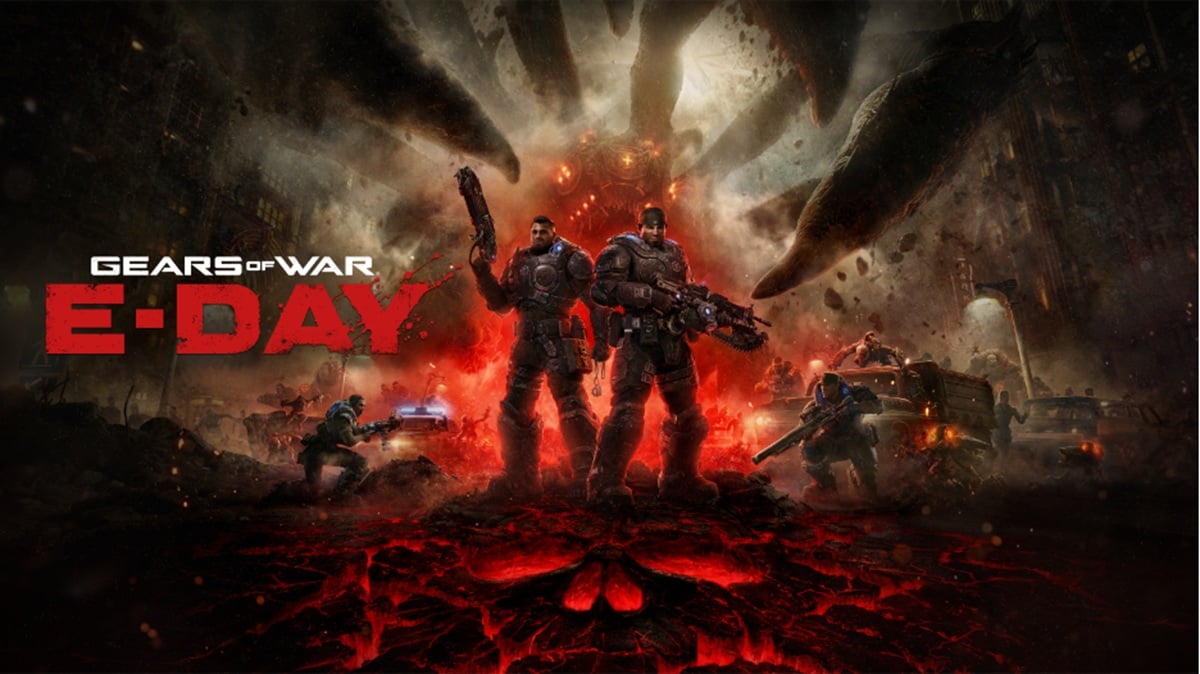
Xbox’s upcoming Gears of War: E-Day has made a big impression with hardcore fans because it takes us all back to Emergence Day, when the Locust horde ambushed humanity. The game will have a fresh campaign and a familiar multiplayer experience.
It’s a tragic day for human history on the planet of Sera, as Locust attackers emerged from underground and attacked the entire world. But the game will also be coming with a multiplayer mode, and I got to play it in a sneak preview. For fans, it will be a familiar experience. It has none of the overwhelming sadness of humanity’s losing fight that you feel with a sense of dread in games like Halo and Gears. Multiplayer is just fun combat, and fans will be treated to a viewing of that combat starting today here. Noteworthy: No battle passes, no pay to win.
It’s a big deal for Microsoft, which has had a mix of great news and sad news — the saddest being layoffs that will affect 3,200 members of the Xbox team. Microsoft is struggling to recapture a strong relationship with its most dedicated fans, and it’s also trying to grow beyond its traditional audience.
Multiplayer Gears of War, if pulled off right, will go a long way toward earning back the respect of longtime fans. Xbox is showing off 25 major games at Gamescom in August, and Gears of War: E-Day, coming on October 6, is a big one.
The game franchise is one of Microsoft’s most valuable properties, with tens of millions of copies sold to date for the first five mainline games. And E-Day will make it six with its debut this fall in what looks to be an awesome single-player campaign. The added treat is multiplayer.
I’ve been a fan of Gears of War since the first one came out in 2006, and I’ve known some dedicated Gears fans, but mostly for single player. But this experience reminded me of familiar online combat from years ago. I played it a bit during a press preview, and players will soon get to enjoy the multiplayer beta. I’ve never been very good at Gears multiplayer, but it has its delights and I have occasionally glimpsed greatness in other players as they use their chainsaw bayonets on me.
The Gears of War: E‑Day multiplayer beta begins on August 6, 2026 and the first test runs through August 10, 2026. After that, a second open beta weekend will happen but the date isn’t set yet.
In the playtest, we had the option of playing it on a PC or the console, and I chose the Xbox Series X/S. I just got a small taste of the multiplayer game but it felt like an old friend.
Horde Siege
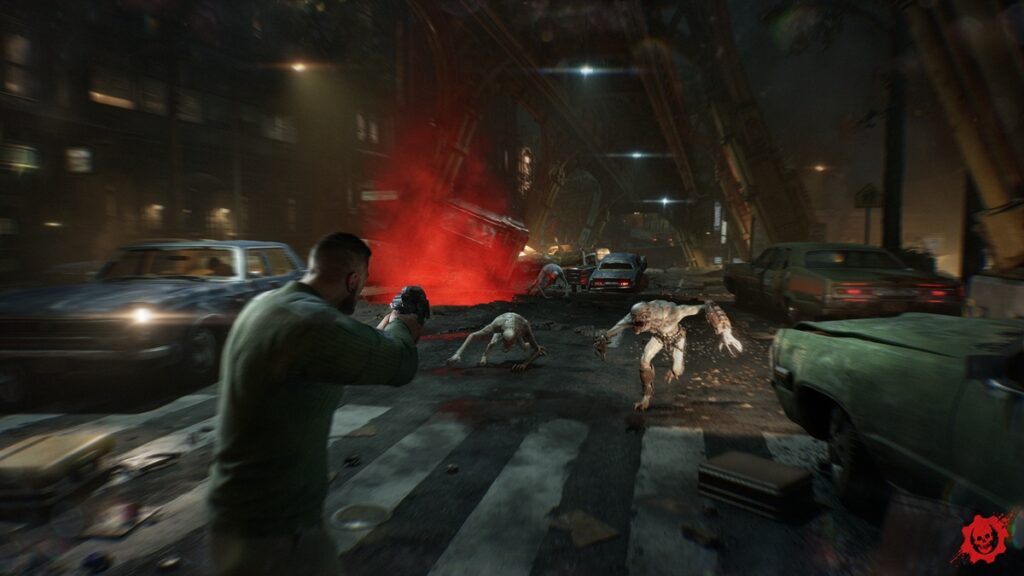
Horde Siege is the newest and biggest multiplayer addition that introduces a 12-player player-versus-environment (PvE) mode where three squads defend Kalona, each pursuing their own objectives while crisscrossing large, immersive city maps as they battle relentless Locust forces.
Horde Siege expands the franchise’s iconic co-op survival experience with larger-scale encounters, squad-based coordination, and escalating threats that challenge teams to adapt, defend, and survive together.
Each squad deploys with their own mission, joining a battle in progress, crisscrossing with other squads and tackling emergent challenges before facing an intense final fight and extraction.
The combination of three COG squads, larger Horde maps and a mix of mission types create a more dynamic PvE experience where threats, objectives, and opportunities are constantly shifting. The core objective of Horde Siege is still fundamentally Gears: survive the Locust, support your squad, and use every bit of firepower you can to come out on top.
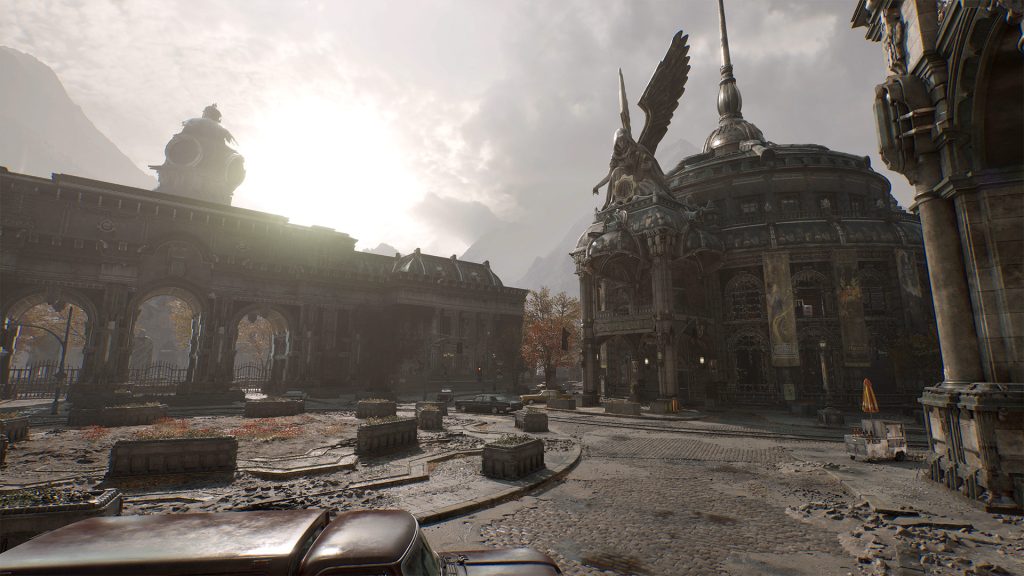
In Horde Siege, the maps provide depth and variety mission after mission. Built within the sprawling districts of Kalona, each map features multiple city blocks, with more detail, more space, and more combat opportunities than any Horde map we’ve ever made.
These larger maps allow for more movement and freedom in how you and your squad decide to tackle your mission. Squads move across the battlefield, respond to changing objectives, collect Energy, and make tactical decisions as a team about where to invest, and how to approach each fight. That means every match, even when played on the same map, can play differently depending on mission, difficulty, modifiers, and how other squads are shaping the battle around you.
That last point is important: Horde Siege is not just about surviving a single encounter. It is about fighting through a rolling, persistent battleground where the aftermath of one squad’s last stand can become another squad’s opportunity. You may come across equipment or fortifications left behind by other squads who have extracted, then use those remains to help turn the tide in your own fight.
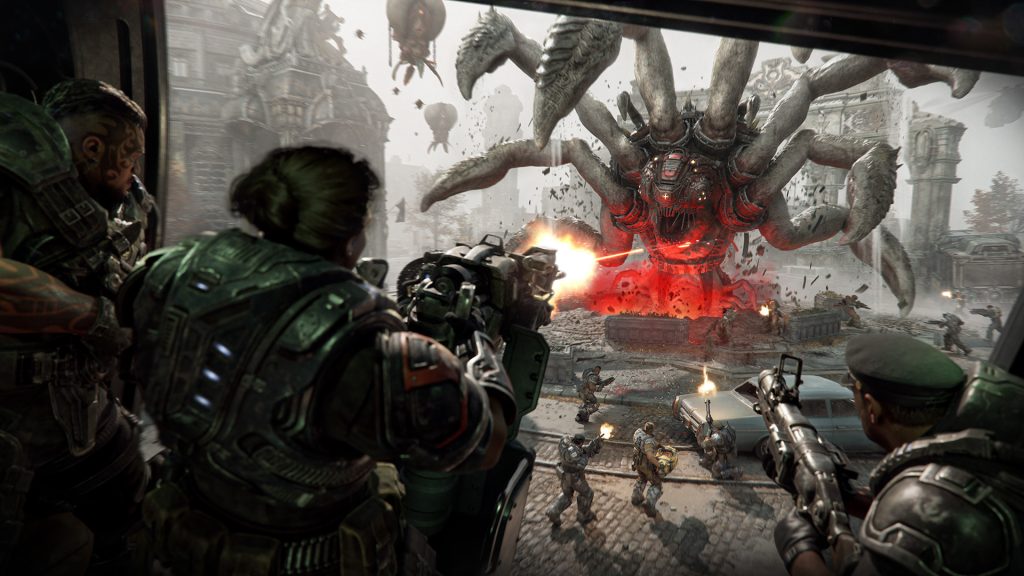
The Gears of War: E-Day Multiplayer Beta will feature the “Golden Quarter” Horde Siege map, set in the aftermath of the battle for Kalona’s historic district, featuring iconic landmarks and architecture inspired by classic Gears of War locations. At launch, there will be three Horde Siege maps in total, showcasing other districts from across the city, with more coming in post-launch.
In this mode, you start out easy with a couple of teammates and an area to defend against the Locust horde in a defensible area underneath a road bridge.
You have one big gun that you can man to attack Locust soldiers from a distance, but inexplicably you cannot turn around and face the other direction in case the attack comes from behind your back. At first, the attackers are easy and they come at you in a kind of turkey shoot. But inevitably, some of them will come up close and make you earn your keep. They can close in fast and tear at you with gnashing teeth or shoot you with their weapons. You have to react fast and fire off a Gnasher shotgun blast at close range or a Lancer Assault rifle. When you reload the latter, the gun still has a mini-game where you actively reload and try to hit your bumper at the right time to make the reload go smooth and fast. If you fail, the reload is slow.
The games move fast and you can use your heavy weapons, but it’s pretty rare that you get enough time to whip out a grenade and blow up a bunch of them at once. They’re often just too fast for that. The maps are sprinkled with obstacles that you can use as cover and you can press one button to shift from cover to cover, but if you do that near an enemy, they’re take your head off. The environment looked good and there were good places to camp, but once the action starts, it feels like it’s just you against one enemy over and over again, until the horde gangs up on you and overwhelms you from all directions.
Four classes
Before every mission, you’ll need to pick your preferred class. Horde Siege features distinct classes, each defined by its own unique starting loadout, combat bonus, unlock progression, and Tactical Gear- a powerful piece of combat equipment with a timed cooldown. Classes can be combined with any skin you want, so you’re able to combine your favorite character and playstyle. During the beta and at launch, we’ll have four classes with more coming in our seasonal updates:
- Assault: Focused on midrange weapons and flexibility in many situations, the Assault Class can deploy a Sonic Disruptor to stun waves of incoming enemies, particularly useful when defending an objective. This class also receives a damage boost when in cover.
- Breacher: Built to push hard into the frontline, the Breacher’s loadout focuses on close-range damage, paired with an Adrenaline Injector to refill health and reduce damage, allowing them to rush into high-risk areas for a clutch play. The Breacher Class also gets improved resistance to status effects and melee damage.
- Marksman: Able to take advantage of Horde Siege’s longer sightlines, this class is built around precision damage, using a Pulse Drone to tag Locust units for you and your squad. The Marksman Class also gets improved damage on critical hits.
- Medic: A mid-range revive specialist, the Medic Class is versatile and can hold its own in a fight, while deploying a Stim Vaporizer to heal and revive any Gear within range, even downed soldiers from other squads. This class also benefits from a faster health regen.
Once you’ve selected your class, it’s time to choose your mission type. Horde Siege missions are organized into three main playlists that offer matches of differing lengths and objectives:
- Blitz: Short, intense missions that feature 1-2 objectives, perfect for when you only have time for a quick run, usually around 15 – 20 minutes in length
- Siege: Standard-length missions that can contain multiple objectives with more opportunity to traverse across the map. Missions range from 20 – 40 minutes
- Horde: For when you want a tougher grind, these missions will ask your squad to hunker down in one spot, setting up defenses against 10 grueling waves with limited support. These missions can last up to 50 – 60 minutes
Siege difficulty
When you select a mission playlist, you’ll also need to choose your difficulty level. Horde Siege difficulty levels work a bit differently than in the Campaign since they scale with your class level; the higher your class level, the higher level of difficulty you’ll be able to take on. As you tackle more difficult missions, you’ll earn increased rewards. Horde Siege will always suggest a difficulty based on your class level, but the final choice is up to you and your squad:
- Infantry: Meant for experienced players who are ready for a challenge. Recommended for Class levels 10 – 20.
- Commander: Reserved for the most elite combatants with many successful completed missions. Recommended for Class levels 20 – 30.
- Allfather: Missions with a slim chance of survival, regardless of your combat record. Recommended for max level classes only.
As you complete objectives and defeat enemies in Horde Siege, you and your squad will collect a shared pool of Energy.
Energy can be used at Supply Caches, scattered across the map, to buy equipment, upgrade Squad Perks, or purchase a new weapon on the fly. While energy collection is shared across the squad, spending is individualized. While earning is easy, deciding what each player invests in is where squad strategy gets interesting.
When you open a Supply Cache, you’ll see your own personal options based on your class and progression. Equipment and Grenades now occupy the same inventory slot. You can pocket defensive equipment like a sentry or decoy to carry with you or choose to go offensive with a variety of grenade types like Frags and Incendiaries. What appears for purchase grows over time as your class progresses and reflects any mods or upgrades you’ve invested in.
In addition to the Supply Cache, Energy can also be used at specific defensive positions to purchase and upgrade turret installations. Plus, since turrets can now be detached, it’s a great way to get your hands on a Heavy Weapon that might be a critical tool.
Energy provides your squad with the means to determine the direction of the fight: do you build up a defensible position, shift your loadout for the next objective, or scavenge what another squad left behind and use it to survive the next wave? The more Energy you earn the more options you have, and all the Energy you earn contributes to your mission score, so tackling a few secondary objectives and events is often worth the effort as long as it doesn’t get you KIA
Modifiers & In-Match Events
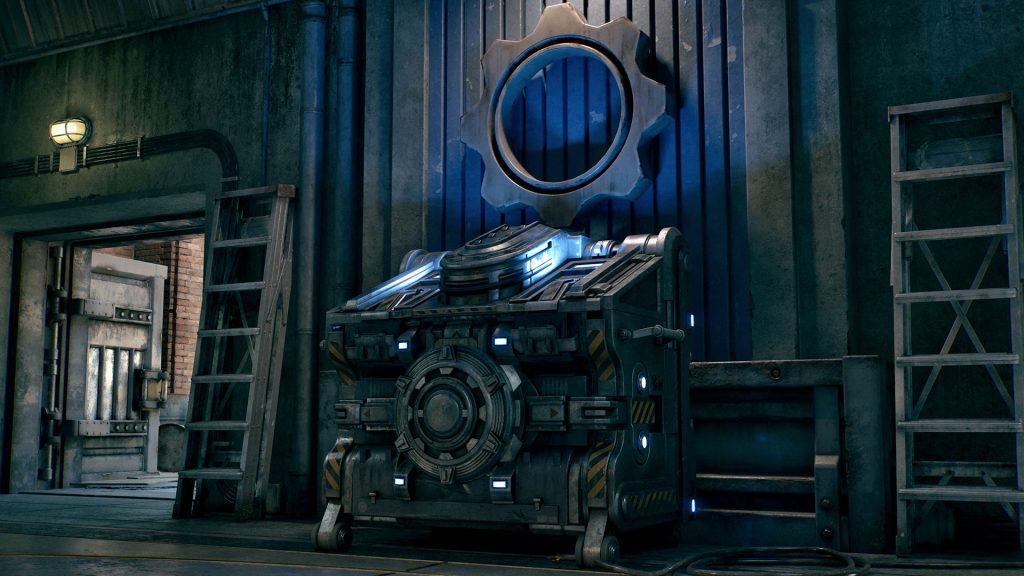
Every match can be augmented by a mix of gameplay conditions like Mission Modifiers, Poisons, Invasion Events, and more. These variables combine to create unexpected challenges, keeping your squad on its toes and ensuring that no mission ever plays exactly the same.
- Mission Modifiers: Depending on the mission difficulty you’ve selected, your mission may feature modifiers that put an additional twist on combat. Mission Modifiers augment your combat experience with things like only Perfect Active Reloads, regenerating health only when you’re in cover, or even enemies exploding on their death!
- Poisons: Poisons are back! Whenever you complete a boss wave in your main objectives, the Locust get stronger as their health and damage increase. Poisons are squad-specific, so only the enemies you face are affected. This means deciding to tackle an extra Secondary Objective to build investment in energy and Squad Perks becomes an important strategic discussion.
- Invasion Events: When an Invasion Event starts, all squads on the map are notified about impending arrival of large Locust units. These are iconic Gears bosses; like a Corpser erupting out of the ground, or a Brumak crushing its way onto the battlefield. While an Invasion Event is active, all squads are affected by a temporary modifier. These have major impacts on the entire match, blocking extractions or disabling Supply Caches. These enemies also come with their own supporting units, presenting a tough challenge best taken-on when all three squads are working together to bring them down and secure the area. Of course, any squad that joins the fight gets a portion of the rewards.
COG Resupply
COG Resupplies are free rewards that occasionally pop up on the map. They come in three different varieties: Supply Drops, Perk Caches, and Weapon Part Stockpiles.
- Supply Drops contain free equipment and modded weapons that any player can grab.
- Perk Caches have three squad perks with the best perk going to the squad that interacts with it first.
- Weapon Part Stockpiles will reward various amounts of weapon parts, but only if you can coordinate with other squads.
All COG Resupplies have the negative side effect of attracting Locust forces, so approach with caution and watch your squad’s back.
- Extraction: One thing that doesn’t change with each mission is your squad’s final objective: get out alive. After you’ve completed your mission’s main objectives, you’ll be asked to clear a landing zone and survive until your Raven arrives. While it’s always best to get everyone out together, technically only one member of your squad needs to make it out alive to complete the mission. So, stay on your feet, and watch the clock. If you fail to clear the area and board the chopper in time, you’ll lose your ride!
In Horde Siege, death isn’t always the end. If you’re killed in action, you’ll drop your COG tags. Your tags can then be collected by your squadmates and delivered to any Supply Cache to revive you. Players from other squads can even pick up your COG tags to instantly revive you in a clutch.
However, if your entire squad is killed, you’ll lose a squad life. If your squad consumes all its Squad Lives, then you’ll fail the mission (with partial XP) and be returned to the Horde Siege lobby to try again.
When you hit a particularly hard objective, it’s always a good idea to regroup and talk strategy. There may be a solution in changing tactics or even building some squad power through Secondary Objectives or COG Resupplies.
Versus mode
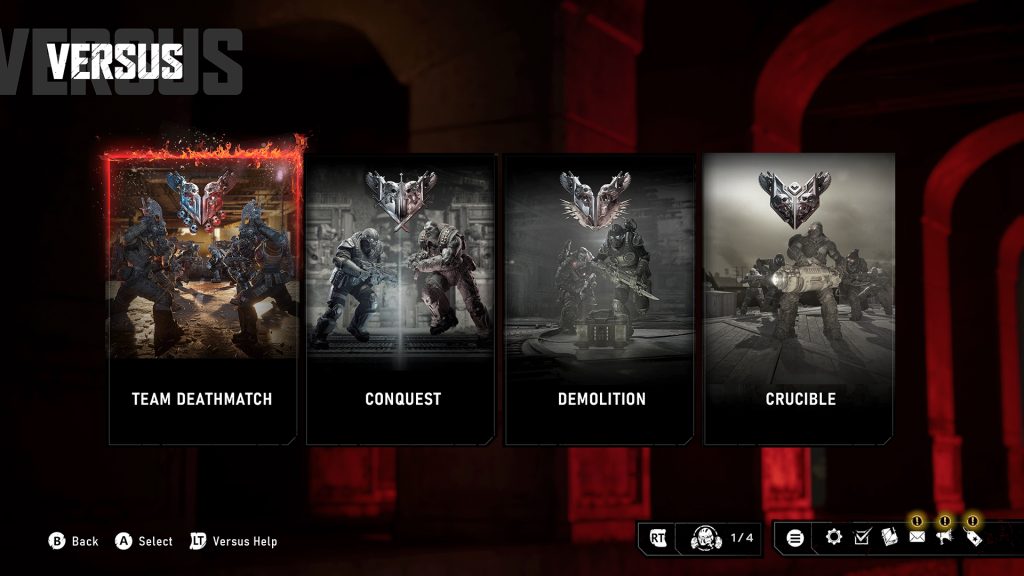
Gears of War: E-Day also brings back the classic 4v4 Gears PvP to all-new maps set in locations in and around the war-torn city of Kalona. Versus combines classic Gears symmetrical PvP map design with new traversal opportunities.
Versus returns in Gears of War: E-Day, refined and rebuilt from the ground-up. Our goal with Versus was to preserve the tension, skill, and teamplay that define Gears PvP while delivering a new experience through E-Day’s new movement mechanics and updated combat sandbox.
All Versus modes are 4 v 4, designed around fair starts and balanced gameplay. All players begin each match with the same loadout weapons and equipment, keeping the focus on skill, teamwork and decision-making. There are no weapon mods in Versus, so every weapon and player starts on the same playing field.
Teams vie for a competitive edge by grabbing on-map Power Weapons. Each mode requires a different combination of individual player skill and team strategy around Power Weapons and map locations to lock in a win.
Versus Launch Modes
At launch, Versus will feature four core modes accompanied by rotating, featured experiences. Some modes will be familiar experiences for Gears fans, with some great new tweaks and updates, while other modes are all-new, but still distinctly and unmistakably Gears:
Team Deathmatch
In E-Day, Team Deathmatch returns with some improvements, including a dynamic respawn system to move spawn locations in response to where the fight is playing out. As in previous iterations, TDM centers around eliminating enemy lives as opposed to hitting a winning score, setting the stage for classic clutch Gears PvP moments, like watching one last player hold the line against the enemy team.
Conquest
This mode offers an exciting twist on the classic King of the Hill experience. The main objective of the mode still hinges on occupying and defending specified zones around the map. However, rather than rotating on a set interval like in King of the Hill, zones in Conquest stay active until one team successfully accrues enough time spent in the zone to score. With close coordination and effective teamwork, your squad can turn the tide and snatch victory from the jaws of defeat at the last possible second.
Demolition
In Demolition, teams battle for control of a neutral bomb that must be delivered and planted at one of two enemy bombsites. Once armed, the planting team must defend the bomb until it detonates while fighting without respawns. Three successful detonations wins the match, so the combat and tactics around where to plant and how to defend get intense!
Crucible
Debuting as a new Versus mode, Crucible centers around the Power Core, a heavy piece of COG equipment that can be picked up and carried. If your team holds the Power Core inside the zone, you’ll accrue progress toward scoring, but as the round progresses the zone will move and shrink. Inside the zone, you’ll need to fend off attackers from the opposing team trying to claim the Power Core for themselves. Thankfully, the Power Core also stores an electrical charge that can blast the enemy’s flesh right off their bones- giving you and your team one last line of defense to hold the zone and win.
Limited Time Modes: After launch, we’ll also feature regular additions of limited time modes. Sometimes, they will be supporting an in-game seasonal event, like our Trick or Treat mode during our Halloween Event. Other times, we’ll feature limited time modes to keep things fresh throughout a season, including the return of some favorite modes from Gears’ past, updated for E-Day.
Versus maps
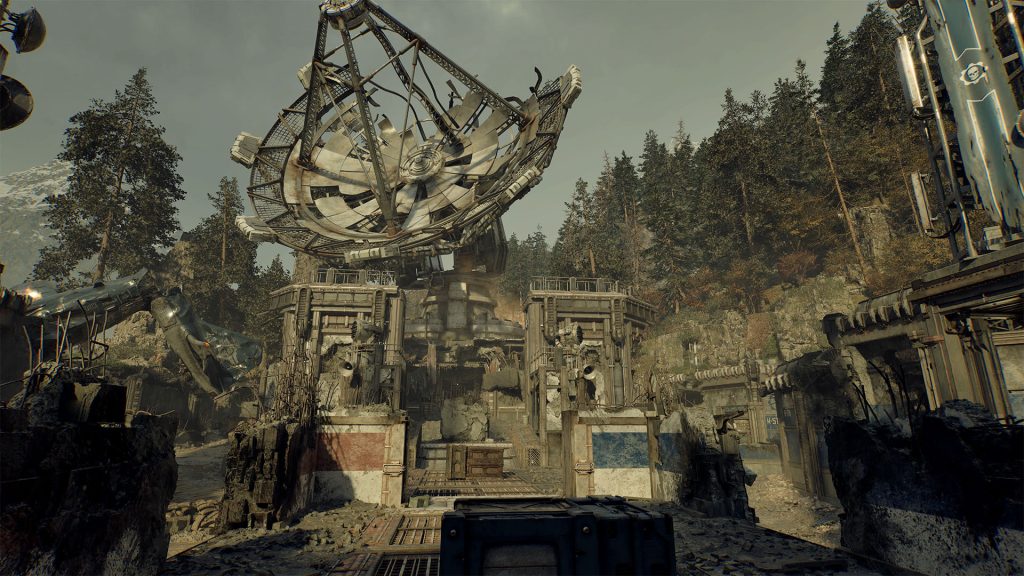
Gears multiplayer is launching with six brand-new Versus maps, set in and around the war-torn city of Kalona. They are rooted in classic Gears map design, with symmetrical structure and a focus on cover positions, fronts and lanes. Of course, our maps are also built around E-Day’s new gameplay sandbox, and each layout includes a variety of risk-reward opportunities that use our new movement mechanics.
Outpost – An abandoned military camp overlooking Downtown Kalona, featuring bunkers, rolling terrain and an elevated bridge that connects a well‑trodden training facility. Multiple traversal routes, shifting elevation and long sightlines create opportunities for both aggressive pushes and tactical positioning.
Battleship – A colossal wartime vessel in the middle of post‑war deconstruction. Fight across the ship’s exposed decks, contested bridge crossings and smoldering docks, where control of key pathways can dictate the pace of battle.
Park – Nestled along the coast of Downtown Kalona, battle in the bloody ruins of a zoo gone feral. Open sightlines converge on the iconic central fountain while winding pathways and surrounding exhibits offer alternative routes through the battlefield.
Precinct – Prepare to clash in the close confines of the Kalona Police Department the day after it was decimated. Tight interiors, breached walls and improvised cover create constant opportunities for flanks and close-quarters engagements.
Market – Battle through a once‑thriving seaside market now shattered by invasion. Long streets, elevated balconies and densely packed interiors create layered engagements across every corner of the marketplace.
Skyward – Fight on interconnected rooftops linked by perilous jumps and narrow pathways. Verticality, exposed crossings and commanding overlook positions reward players willing to risk the high ground.
I enjoyed playing in a city marketplace where there were lots of long sight lines as well as rows of vegetable tables for cover. I had bots to fill out my team at one point and they did reasonably good against human opponents. That was a pleasant surprise. I often had to switch from the long-range but less damaging assault rifle to get targets on the other side of the building, but I also had to be ready to whip out the shotgun at close range.
With Gears multiplayer, it’s not lightning fast. It takes you time to change weapons or commit to a jump or grab cover or even raise your gunsights. During this time you are moving, you have to anticipate where your enemy is going to move. That’s easy if they are on a linear route. But if they are so close and they turn a corner, you may find your shotgun blast goes to where they were, not where they are. It’s almost like your movement has to be fast enough to head off the enemy, and you must judge when you are in gun range accurately.
In this way, Gears multiplayer is unique compared to Halo or Call of Duty. You have to get used to that slower pace and deal with enemies one at a time. When you’re really close, you can pull out the chainsaw bayonet. And it’s very satisfying when you are not on the receiving end.
Disclosure: Microsoft provided me with access to the multiplayer demo for Gears of War: E-Day on the Xbox Series X.