
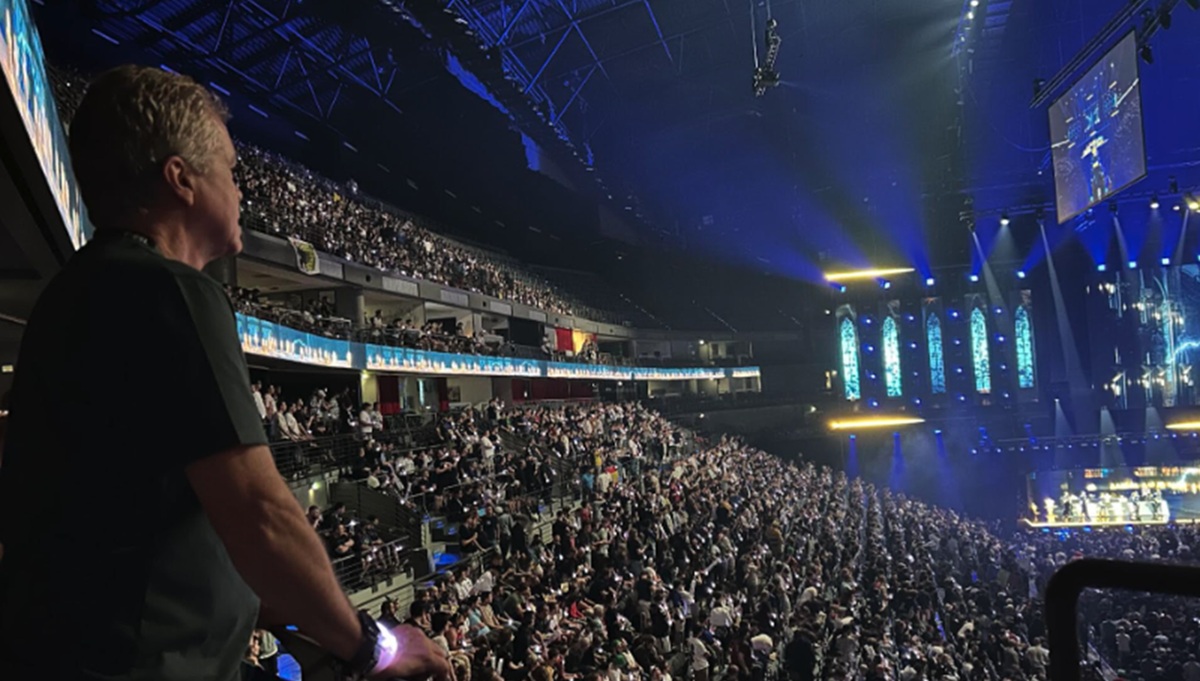
Savvy Games Group has been the tip of the spear for Saudia Arabia’s rapid expansion into gaming.
It was started by parent firm Saudi Arabia’s Public Investment Fund in January 2021 under the leadership of gaming veteran Brian Ward, acquiring esports firms ESL and Face-It in 2022 and taking a stake in VSPO.
Then Savvy acquired big gaming companies including Scopely ($4.9 billion in April 2023) and Scopely in turn bought Niantic ($3.5 billion in March 2025). Savvy invested a large sum in Moonton this year.
Also, the Public Investment Fund is also part of a consortium acquiring Electronic Arts for $55 billion and Warner Bros. Discovery for $110 billion. I met with Ward at GDC Festival of Gaming to ask whether Savvy would slow down and digest some of these deals. Ward made it clear he didn’t speak for the PIF or for Scopely itself, but he said Savvy isn’t going to slow down because it has a dual charter of acquiring game companies and creating game-related jobs in Saudi Arabia.
He said that Savvy is making progress on its goals toward establishing the kingdom as a centerpiece of esports. It’s doing so with the Esports World Cup and Esports Nations Cup events, and Savvy’s goal is to help create 39,000 game jobs in Saudi Arabia by 2030. That work includes bringing people to the kingdom but also training Saudi people to make games through programs at local universities. These efforts are adding up to some of the biggest investments in gaming anywhere in the world.
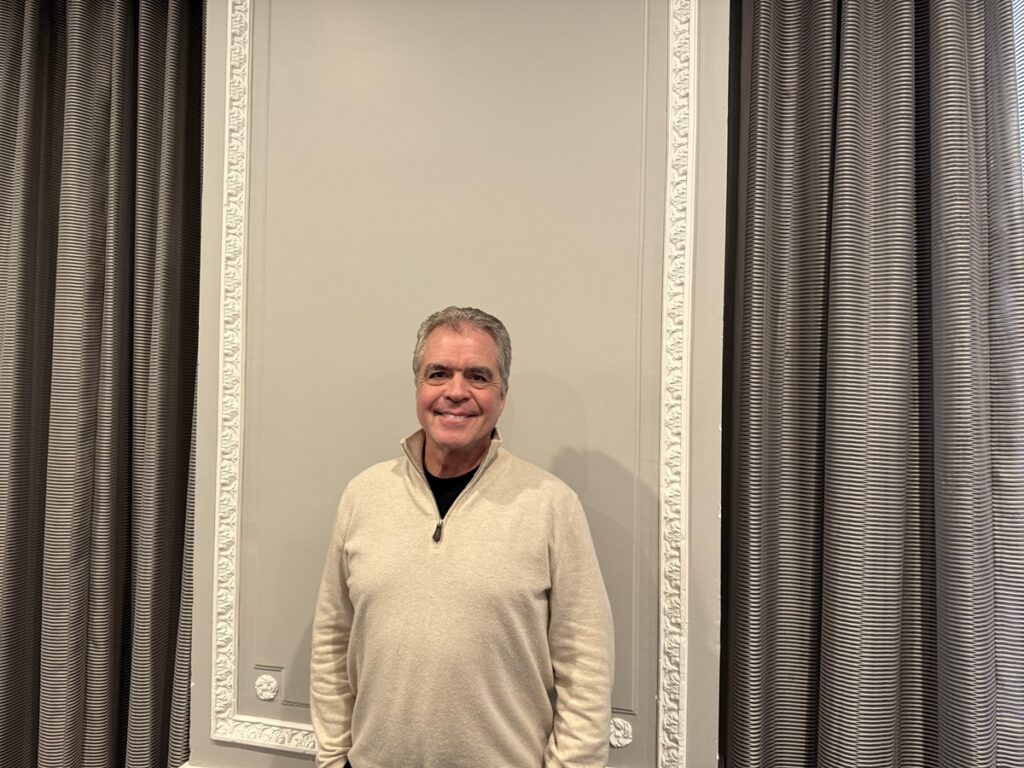
Here’s an edited transcript of our interview.
Gaming’s growth opportunities
GamesBeat: Matthew Ball identified at least five different areas where there’s growth. Roblox is definitely one of those. Does that mean that you could actively investigate going into those games?
Ward: I would say that might be a ways off yet. It’s still very nascent, the efforts around analyzing these sectors and understanding where the opportunities would be and whether those opportunities would be right for us.
GamesBeat: Direct to consumer is another one he identified. It already seems like a real opportunity for the likes of Scopely. Does it deliver the kind of growth that everyone wants?
Ward: It definitely delivers better monetization, better financial results, for sure. Scopely’s done an excellent job of appropriately managing the balance between in-app purchases and direct to consumer. It’s obviously important to us that we remain good partners with Apple and Google, but on the other hand, direct to consumer has some advantages, both for the consumer and for us. It definitely makes a difference to the bottom line, no question.
GamesBeat: In esports, what’s the outlook you can see?
Ward: For us, we spent most of 2025 revamping large parts of the business, from the sales pipeline for brand partnerships and partnerships to how the products are operated, managed, and how the cost accounting works. There’s a lot more direct line visibility to accountable owners in the esports business across the various product lines. We anticipate being EBITDA positive this year and cash flow positive next year as a result of these efforts. We’re also super happy with the progress that Hero Esports has made in their markets, China and Southeast Asia, and some of the initiatives they’re promoting. Some of which are different from the opportunities that exist in the west, because that market is a bit different in esports.
GamesBeat: The Global Gaming League people seem to have an interesting view. Celebrity esports stars, maybe even creators–a combination of those things is what they’re focusing on, between YouTube and TV shows. A different kind of entertainment. Does the celebrity part of this, or the creator part of this, become more interesting for you guys?
Ward: In esports? That’s one of the interesting things, and possibly one of the applicable learnings, from the far east markets. The creator economy, the influencer economy, if I can call it that, and the tie-ins to other forms of entertainment, whether it’s TV or music. It’s pretty interesting to see what happens in those markets when those levers are pulled. Maybe some of that is applicable in western markets and maybe some of it isn’t. But it’s a good learning for us.
The attention war
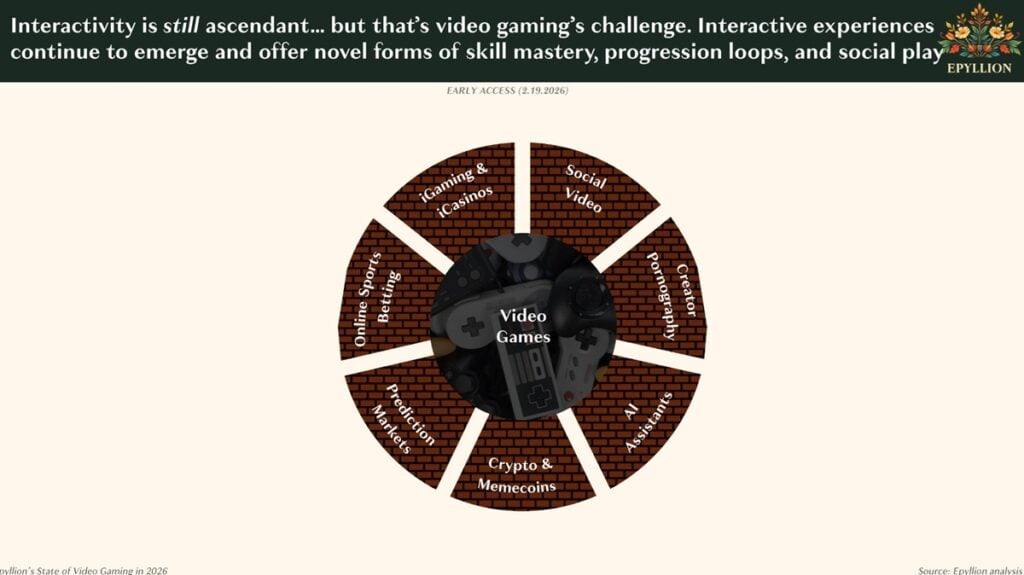
GamesBeat: I think about the challenges that Ball pointed out around things that take up our time. The attention war, he called it. We discussed before that there’s this sort of addiction side of the world, and the fun side, which includes games. Esports plays a role in making games seem more culturally powerful than they currently are. It seems like the tip of the spear when it comes to making the world more aware of games. That, to me, seems like the opportunity to grab more time away from everything else. Taking the cultural awareness of games to a higher level, to a point where gaming culture is mass culture. If gaming culture is mass culture, then it feels like gaming has won. There’s a chain of things happening there where esports can play a bigger role. What do you think that can be?
Ward: I think a lot of what you said is true. It is the tip of the spear that helps drive engagement. The big tournaments have helped amplify that, like the Esports World Cup. The Esports Nations Cup will add an interesting new flavor to it from a patriotic point of view, being able to cheer for your own country. That enhances the experience. The increased coverage–the World Cup posted a 30-50% increase in their key metrics from the year before in terms of hours viewed and other things. That helps bring it more mainstream.
It’s still a niche product. It still appeals to esports enthusiasts and hardcore gamers. There’s still an opportunity to somehow – we don’t have the answer yet – bring it to a more mass market audience and make it a more broadly appealing product. I sometimes use the example of Formula One. It’s not a great example, but that was once a niche motorsport and now it’s much more mass-market thanks to what Liberty Media did with the TV series. The answer in esports I don’t think it’s that simple. I don’t think it’s just a case of making Drive to Survive for esports, although there would be some good stories in that. It’s also different because F1 is F1, but esports is all these different titles. If you’re a Counter-Strike fan you’re not necessarily a League of Legends fan.
I think these big tournaments also help give people exposure that might not be their primary, secondary, or tertiary game of interest. It’s like watching the Olympics. I watch the Olympics because I like A, B, and C, but all of a sudden I find myself watching three hours of fencing, which I never thought I would watch.
GamesBeat: Like watching prime time curling this year.
Ward: Oh my God, there was so much curling on. I thought that was the only sport in the Olympics.
GamesBeat: I don’t know if that’s some of the hope behind putting chess into the esports world.
Ward: I think it is. I think that’s a really smart move. The chess audience is a completely different audience.
GamesBeat: Is there more to push for on that front? Broadening esports.\
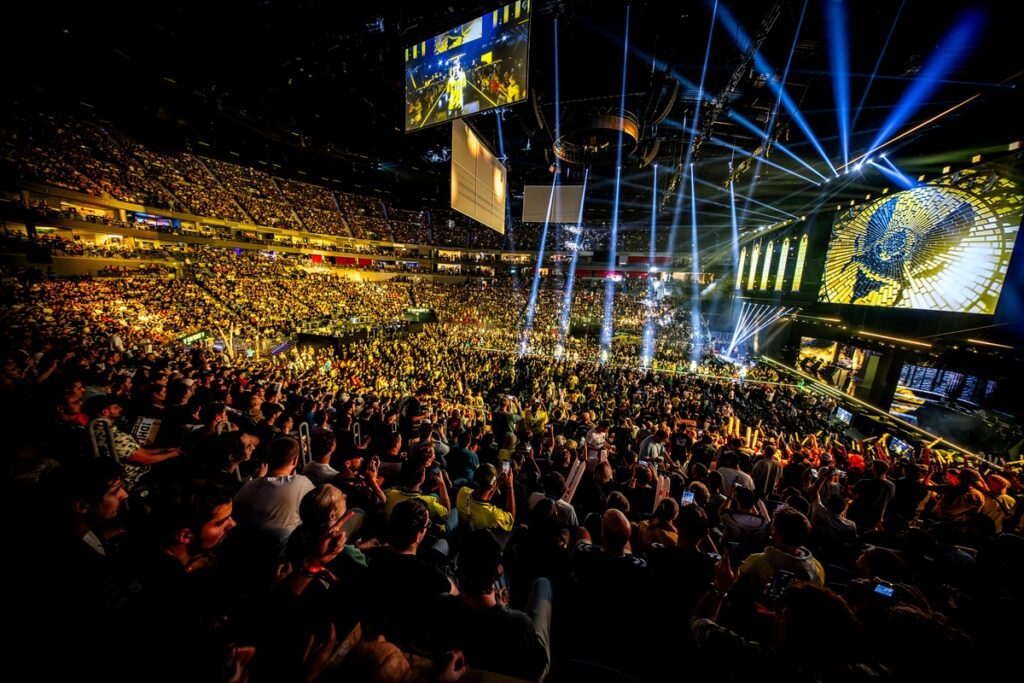
Ward: Maybe there’s a broadening of the titles in esports, but there’s also an opportunity to make it more accessible to viewers. The World Cup, if I’m not mistaken, had two or three broadcast channels that were more mass market-oriented, where the casters spent more time explaining what was going on in the game to a more nascent audience that was not yet expert in the titles. That’s needed. If I watch cricket, just a regular cricket broadcast, I don’t understand. But if I was watching a broadcast that explained the sport to me in a way meant for neophytes, I’d have a better appreciation for not just what’s happening in the game, but the skill and so forth that’s being employed.
I think a lot of people who don’t watch esports think, “Well, it’s not even a sport.” They don’t appreciate the degree to which these young people are real athletes. They go through the same sorts of physical pressures. Very similar to F1 drivers, actually.
GamesBeat: Do you think esports needs to be on traditional TV?
Ward: Who watches traditional TV now? I’m not being facetious when I say that. I honestly don’t know who watches TV today and whether that’s a prime audience for expanded esports exposure. I just don’t know. I’m not sure if that’s the right audience.
GamesBeat: On the other end, does esports need to meet Roblox? The interesting thing on the brand level with things like Roblox and Nintendo and smartphones and toys, you have to fight on the brand level to be top of mind for every generation that’s born. Nintendo took away a lot of cachet from toys, but in turn Nintendo has lost kids to smartphones now. The first place they encounter games now is smartphones, not Nintendo. Some interesting battles happen on that level, trying to get them while they’re young and have them grow up with a brand, and then have the brands present in a place where they can catch them. They’re not going to catch them on TV anymore. Brands have to go into these spaces where kids are. That means Roblox and Fortnite. It makes a case that esports should be there too. Does that seem crazy?
The impact of the Iran war on gaming in the Middle East

Short term, I guess the war has to be a worry. If it lasts longer, then who knows what could happen as far as events are concerned?
Ward: It’s bound to have some short-term effect. There already is some effect. Hopefully it does not affect the long-term perception of the region being one of increasing stability, especially places like the UAE and Dubai. Stability in places you’d want to visit as a tourist or come and do business or have a job. Hopefully that is not affected in the long term. Fortunately, Saudi Arabia and Riyadh have been pretty quiet. Somewhat removed from the greater turmoil on the coast of the Gulf. Hopefully that remains the case. I don’t think anyone involved in the conflict knows.
Savvy and Saudi Arabia’s wider acquisition strategy
GamesBeat: Do you have thoughts about having a sister company in Electronic Arts yet? Do there seem to be opportunities for Savvy?
Ward: I’m always happy to have new siblings. This is obviously a PIF deal. We sit in the PIF international portfolio alongside them. In the longer term, I hope there’s lots of opportunities for us to do things together, but it’s way, way too early to think about any of that. It’s a great company. It’s the place I joined the industry, so I’ll always have a soft spot.
GamesBeat: The strategy–I think this is Ball again, who pointed out that the sports strategy becomes very interesting. Now you have esports, you have professional sports that the Saudis have also invested in, and then you have EA Sports. EA’s thinking was about going beyond EA Sports in games through the EA Sports app. Maybe people would watch sports more through the app. They were also thinking about how people are engaging with sports for the first time not through watching them on TV, but playing them in games. That awareness of sports comes through something like EA Sports. Some kind of unified sports strategy seems like it’s visible through these various deals that are happening.
Ward: Yeah, that’s not hard to imagine. I’m sure the PIF has thought about that. I don’t know the strategy, the PIF’s strategy in terms of EA as an asset. I really can’t say much more than that about it. But just from what you’ve pointed out, there would certainly be some future opportunities to tie things together. I think the EA Sports business is an amazing asset for the PIF. It’s basically an annuity. It’s not high growth, but it’s high margin. Much better than a title that comes out every decade and costs a billion dollars. It’s a great business for the PIF.
GamesBeat: As far as the acquisition strategy going forward, do you take a break and grow what you have?
Ward: No way. No rest for the weary. The goals and the mandate have not changed. The strategy has not changed. They’re pretty ambitious. We’ll continue, both us as a parent and the business units, to be on the hunt for great teams and great studios and great games that would be meaningful additions to our portfolio.
GamesBeat: Do you need bigger acquisitions to move the needle for things like growth percentages?
Ward: That’s true, but it’s a combination, really. Scopely has the ability, the capability, and the team to go out and find deals, from small acqui-hires all the way through to deals that might be a billion dollars or more, with their own cash and their own capabilities. It’s true that at the parent level, it might take bigger deals to move the needle, but it’s also true that you have to constantly devote time to this. None of the opportunities, none of the companies that could represent opportunities, have a “For Sale” sign in their front yard today. You have to go build relationships and see what you can do together. Maybe an opportunity arises out of their relationships, understanding their strategy better. It takes years to lay the groundwork and set the table, if you like, for some of these bigger deals that come to fruition.
Growing gaming jobs in Saudi Arabia
GamesBeat: How much attention should still be focused on creating jobs in Saudi Arabia.
Ward: That’s a big part of the national strategy and its 86 objectives. Job creation, company creation, contribution to GDP. It’s an area where we’re making some good progress, through something we call the Savvy Academy. It’s the four tiers of different programs aimed at skills development and education. That includes partnerships with five key big universities in Saudi Arabia now, each of which is relying on us to help develop curricula against different aspects of game development, game production, and esports management.
We just announced a program with the Ministry of Education based on a very small pilot we ran inside the company a while ago. The Ministry of Education embraced it and wanted to roll it out to a number of schools in the Kingdom, which they did. It’s called Play to Learn. It teaches kids elementary things about game design, development, technology. We had 700,000 kids signed up for this, 30,000 teachers, and 150,514 game concepts were submitted. This was just a pilot program. The Ministry wants to roll it out now to 6 million kids across the country. Eventually, of course, this training and schooling and educational opportunity–hopefully it leads to a talent base that will attract companies to hire those people.
GamesBeat: It’s a long-term view.
Ward: It’s a very long-tailed process. That’s not something you build overnight. Although we’re happy with the general progress of it. One of those five universities is now starting their degree program this fall. The first kids will enter that program in the fall and graduate in 2030. It’s a start.
GamesBeat: I remember when I visited Manga Productions a few years ago. They were also pulling people out of school into internships and turning those almost right into jobs. That’s how their art department became more than half women. Are you optimistic about 2026?
Ward: One hundred percent. Very optimistic about 2026. Recently got everything approved from the board in terms of our budget and our five-year plan, the strategy and the KPIs. Scopely has been doing great. I’m excited about their latest addition. We have some interesting prospects that maybe will come to fruition soon-ish. So yes, I am optimistic about 2026, and I think I’m optimistic for the industry generally. Hopefully we’ve come through the trough, through a tough period where there were a lot of layoffs, and things will start to look up not just for us, but for everyone else.
The view of the wider PC/console/mobile market

GamesBeat: Is there more on your mind than the last time we talked?
Brian Ward: Well, it was only two days ago. I haven’t even had time to think.
GamesBeat: What are your impressions of the show? It feels like we’re going into a new cycle of consoles. Xbox announced something. I went to their session yesterday and they said they’ll have dev kits out next year for their new Project Helix, which sounds very PC-like. It’s going to have an Xbox mode that runs a version of Windows that’s very game-centric, basically. That’s kind of the original Xbox OS anyway, but more so now. There are signs of a new cycle starting in 2028, then. For you, I don’t know how interesting this might be.
Ward: It’s interesting. I don’t think it changes any aspect of our strategy, at least not until further information becomes available.
GamesBeat: There are always different strategies for platform changes. Ubisoft would always show up with a brand new game on day one. Others would wait for the installed base to build up. There are different ways of bridging and splitting SKUs between games for the old consoles and the new ones. Is there already some strategy in place for you when it comes to console timing? A lot of what you do focuses on esports and mobile. What thoughts do you have about consoles?
Ward: You’re right that the console transition–I’ve been through four or five now. It used to be a pretty hairy time for publishers. For 18 months your financials were terrible, because you were developing cross-platform with no installed base on the new one and nobody buying for the old one, because they were saving up for the new console. The landscape of our industry is littered with the carcasses of publishers that didn’t manage the transition right.
That’s all changed in the last 15 years. We think of ourselves as a mobile-first, free-to-play, live services company. We’re on an evolution toward live services for PC and console. Strictly speaking, console transition years are less impactful than if we were a pure PC and console company like in the old days.
GamesBeat: Do you think PC versions of mobile games are becoming–I think I saw more of that during the IDFA transition. Companies decided that if mobile was going to get really hard because you could no longer do targeted user acquisition, maybe they could spread some risk out by coming up with a Steam version of a mobile game. That made it seem like the transition from PC to mobile became more fashionable, and perhaps easier to do. Do you think PC versions of your big games are possible?
Ward: When it comes to Scopely’s slate, that’s a question best addressed to Walter and those guys. From a parent point of view we’re looking for category-leading, genre-leading games regardless of platform, although we definitely have a preference for live services games, because that fits into our core strength and capabilities. Not that all of those would necessarily fit under Scopely, but that’s certainly where the core strength of the company lies.
GamesBeat: Thinking about a few years out, is there some version of the game industry that you’d like to see, or a version of game technology? Somehow, I think AI is going to make things interesting, and more interesting year by year. The blurring of some of these platforms is going to be interesting. Steam Machines will probably make their appearance sooner than new hardware from Xbox and Sony. The Xbox people are coming out and saying, “We’ve made some mistakes. This is why we’re in second place behind Sony. We want to fix that.” But what needs fixing? If it’s going to take a few years to get these consoles out, what technology becomes interesting to you?
Ward: I wish I was that prescient.
GamesBeat: Does cloud gaming seem interesting to you yet?
Ward: I’ve been asked this question a few times. Not particularly around cloud gaming, but around the adjacencies of work for hire, cloud gaming, UGC, ad tech. We’ve taken a look at all of those things as part of our ongoing analysis that pertains to keeping our strategy fresh and current. We recently refreshed all of that for the board in the last couple of weeks.
Some of those segments are very interesting, even though they’re still very small compared to game development and publishing in terms of revenue generation. Some of them, as you know, are highly profitable or fast-growing or both. But they’re not a core focus. They’re still adjacencies. We’ve told the board we’re interested in following developments in these areas. We think these are important adjacencies to be aware of for the future. We’re going to continue studying these things and we’ll come back in a quarter or two with more thoughts about this.