

It was emotional to see Microsoft’s Xbox CEO Phil Spencer, a likable, strong leader and gaming legend announce his retirement last Friday. The end of an era. And it was therefore emotional to hear that a non-gaming native became the heir to his throne. The start of a new one. We are rarely ready for those transitions.
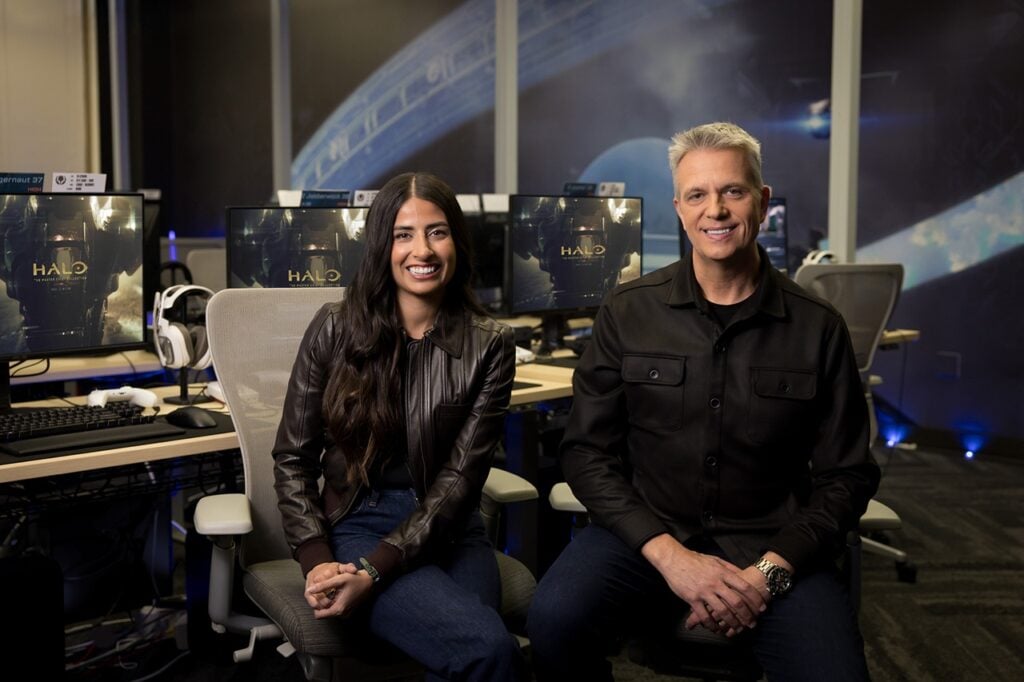
Spencer was replaced by Asha Sharma, a young Microsoft executive who spent time working on AI leadership. Sarah Bond left the No. 2 Xbox post, and experienced game leader Matt Booty was placed in charge of Microsoft’s game studio content. The reactions on the internet were loud and divided. GamesBeat published reactions from Xbox founders Seamus Blackley, Ed Fries and former Microsoft Xbox executive Peter Moore. Those reactions were all very different.
I’ve been in the games industry since 1991 and was employee number nine on the PlayStation launch team in Europe. I’ve lived through 9/11, the dot.com collapse, the financial crisis, platform wars, mobile disruption and the rise of live services.
I’ve seen industry leaders hired for reasons that appeared logical and exceptional at the time, often perceived as the safest bet, yet unable to take the organization into its next era.
I’ve seen leaders be hired with ambitious transformation plans, only for their organizations to sabotage them because the company hadn’t upgraded its thinking fast enough to close the strategic and execution gap.
In every situation, emotions were make-or-break.
Since the pandemic, I evolved from CEO headhunting across mobile, console, and XaaS into leadership strategy in what EY calls the NAVI era, a period defined by volatility, uncertainty, complexity, and accelerating technological convergence.
At MIT, I studied the New Space Economy, AI for strategy, and business sustainability to understand what leaders must navigate in this new era. My book AfterShock to 2030 argues that CEOs must reinvent themselves and their organizations to survive this convergence and that radical listening becomes the fast-track model – an upgrade of the listening tour – to perform daily surgery on an organization’s evolution.
So, if I were CEO headhunting for Xbox’s CEO role in 2026, Asha Sharma would have been the logical profile.
Phil Spencer was a peacetime, category-building leader. He expanded market share, acquired some of the greatest studios in the world, strengthening creative depth and capacity for the Xbox player. That was the mandate of the previous era, and it’s now embedded in how Xbox operates for the players. Foundation built.
Today’s mandate is different. The 2026 – 2030 CEO must not only understand but navigate the interconnected nature of:
· Cyber risk
· Geopolitical fragmentation
· Resource competition
· Societal fracture – possibly the greatest shift in human behavior since the pandemic
· The transition between human and AI-enabled work
These forces are converging at speed. I describe this convergence as the Fifth Industrial Revolution.
From that perspective, Microsoft appointing a leader from its AI organization to run Xbox is not surprising. Xbox already has creative and domain leadership breadth and depth. What it now requires is systemic alignment with the parent company’s operating evolution – and the ability to lead in ways the division has not yet chartered.
As we know, Microsoft is a software and communications platform whose center of gravity sits in cloud infrastructure and artificial intelligence for this new era. The Xbox division is a strategic node inside that ecosystem, connected to developer platforms, distributed architecture, cybersecurity, data systems and AI-enabled tooling.
What surprised me is how many industry leaders and players have not yet updated their mental model of what Xbox is structurally becoming. We’ve seen cultural resistance, threats to abandon the platform, and irritation that a non-hardcore gamer can be the next CEO of Xbox. These are understandable reactions, but they are rooted in nostalgia for a previous operating system of the industry.
Former Xbox leader Ed Fries recently noted that Xbox has previously benefited from leaders whose strengths complemented rather than emerged directly from studio ranks.
We have seen since the pandemic that the operating system of all game companies has evolved, and for this era, the leadership profile of each company needs to evolve with it. Spencer built the foundation for this next stage, and his departure aligns with a broader pattern of leadership transitions across industries, navigating AI and systemic risk.
Research on executive succession suggests that leaders with broader cross-domain experience are often chosen during transition eras because they are less constrained by legacy assumptions and more comfortable integrating multiple systems at once. Transformation periods reward systems thinkers.
According to Spencer Stuart’s 2025 S&P 1500 CEO Transitions report, McKinsey’s State of Organizations 2026, and Egon Zehnder’s Leadership Outlook 2026, boards are increasingly selecting leaders capable of evolving the system itself.
Sharma’s appointment embodies the reinvention organizations need in this new era. The console wars were about hardware and content dominance. The next phase is about platform resilience, AI integration, infrastructure alignment and governance across the fragmented world, while the creative game makers do what they do best.
That requires a different kind of leader. And that shift, however uncomfortable, is logical.
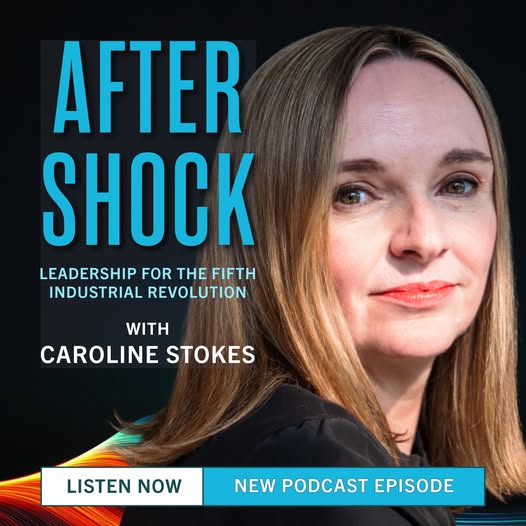
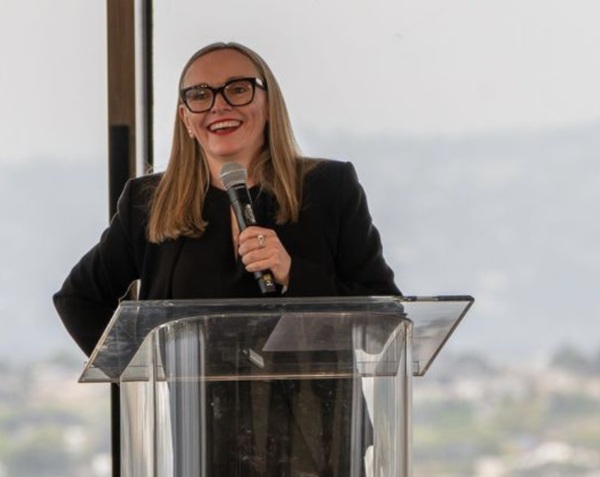
Caroline Stokes is a leadership strategist, author of AfterShock to 2030 and host of AfterShock: Leadership in the Fifth Industrial Revolution podcast. www.carolinestokes.com