
Microsoft made a much-discussed move last week to appoint a 36-year-old non-game executive, Asha Sharma, to be the new head of Xbox. It sounded crazy, but it’s not so different from what has happened before in gaming history.
She replaced Phil Spencer, a 38-year Microsoft veteran who retired after 12 years as CEO of Xbox and decades in service of gaming. Spencer’s direct report, Sarah Bond, also left the president and COO role after serving for eight years.
Rather than place Bond in Spencer’s role, Microsoft CEO Satya Nadella chose to put an outsider who had excelled at management and was familiar with the company’s CoreAI business in charge of a $24 billion gaming business with tens of thousands of developers.
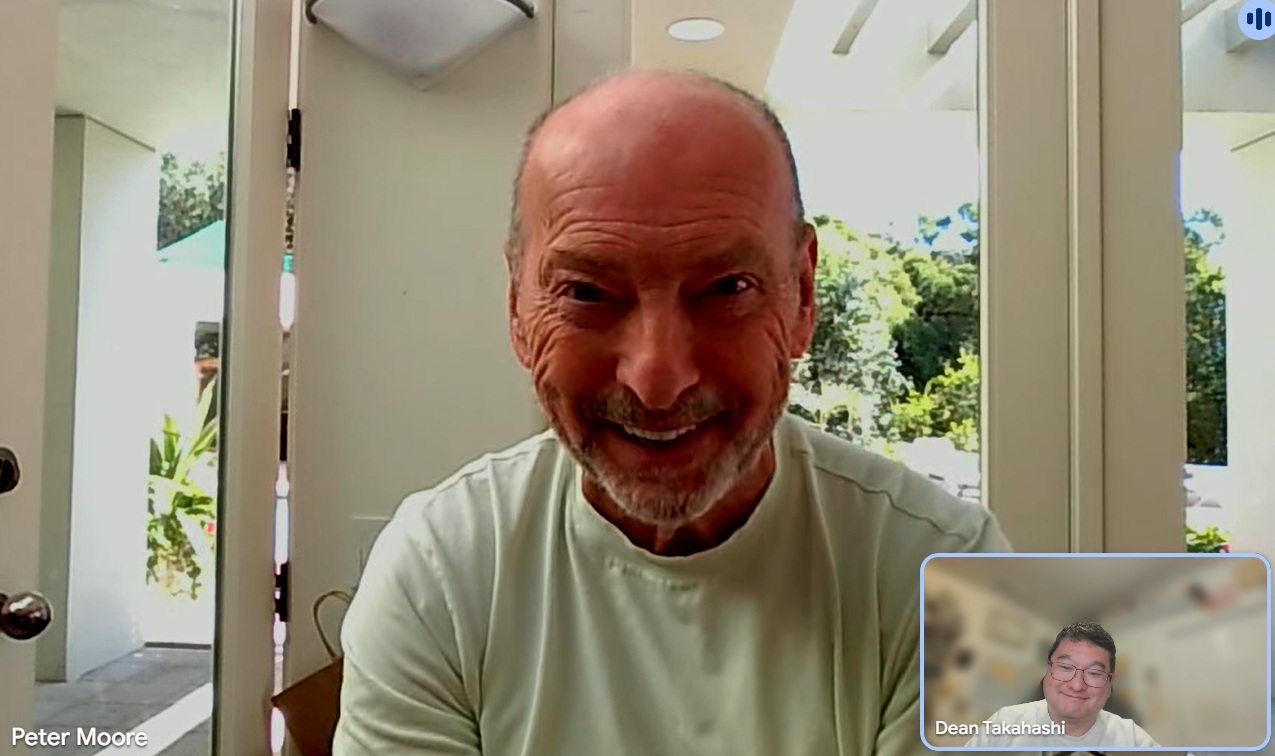
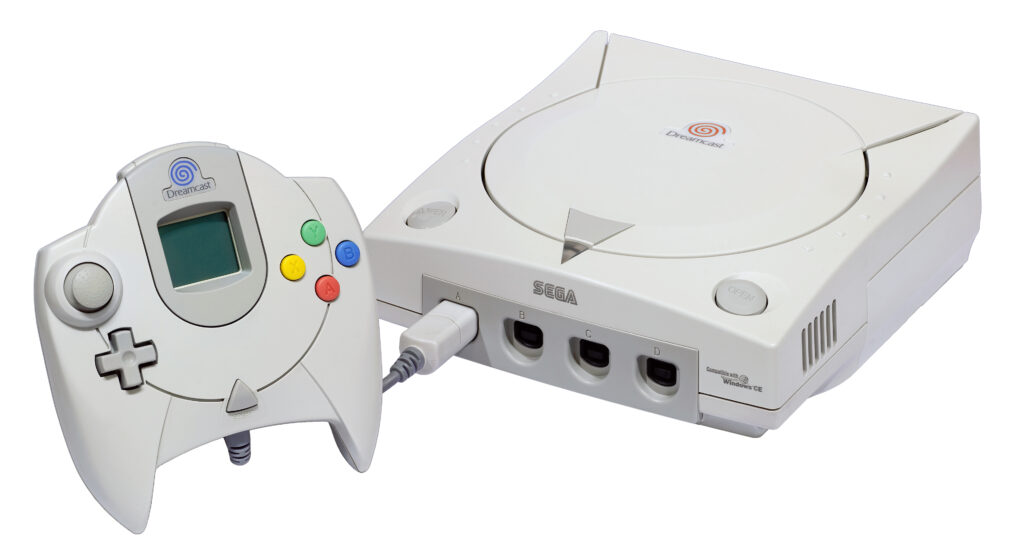
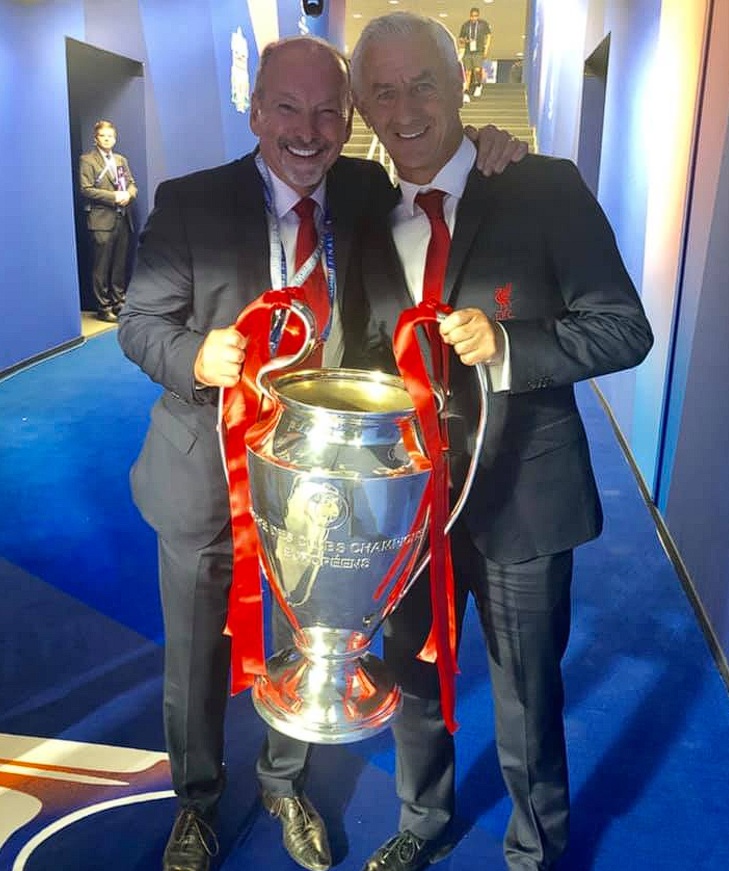
While that seems insane, this kind of thing has happened before, as recounted by my exclusive interview with Peter Moore this week. Moore told me that he had been selling shoes for 20 years when former Sega of America boss Bernie Stolar hired him to sell games and game consoles like the Sega Dreamcast. Through “battlefield promotions” recounted in his memoir, Game Changer: Playing to Win at Xbox, EA Sports and Liverpool FC, published in 2025 (available here), Moore found him in charge of Sega’s charge into the Americas with Dreamcast.
He sold more than eight million consoles before giving up to competition from Sony and Nintendo, but Moore went on to hold high executive positions at Microsoft Xbox, Electronic Arts and the soccer organization Liverpool FC. I interviewed Moore about his experiences every step of the way.
In fact, he was also on the receiving end of a surprise management transition while at EA. He was the No. 2 executive under CEO John Riccitiello at EA. But when Riccitiello was fired in 2013, EA’s board passed over Moore and placed one of his lieutenants, Andrew Wilson, into the CEO job. While Moore said it was painful, he acknowledged it was the “right decision” based on Wilson’s success, including agreeing to sell EA for $55 billion.
This is the fourth conversation I’ve had with gaming veterans about the unusual CEO appointment at Xbox. Besides Moore, I also talked to Seamus Blackley, Ed Fries and analyst Michael Pachter. I haven’t yet spoken to Sharma or her No. 2, Matt Booty about this yet. But they gave this interview earlier this week.
Here’s an edited transcript of our interview.
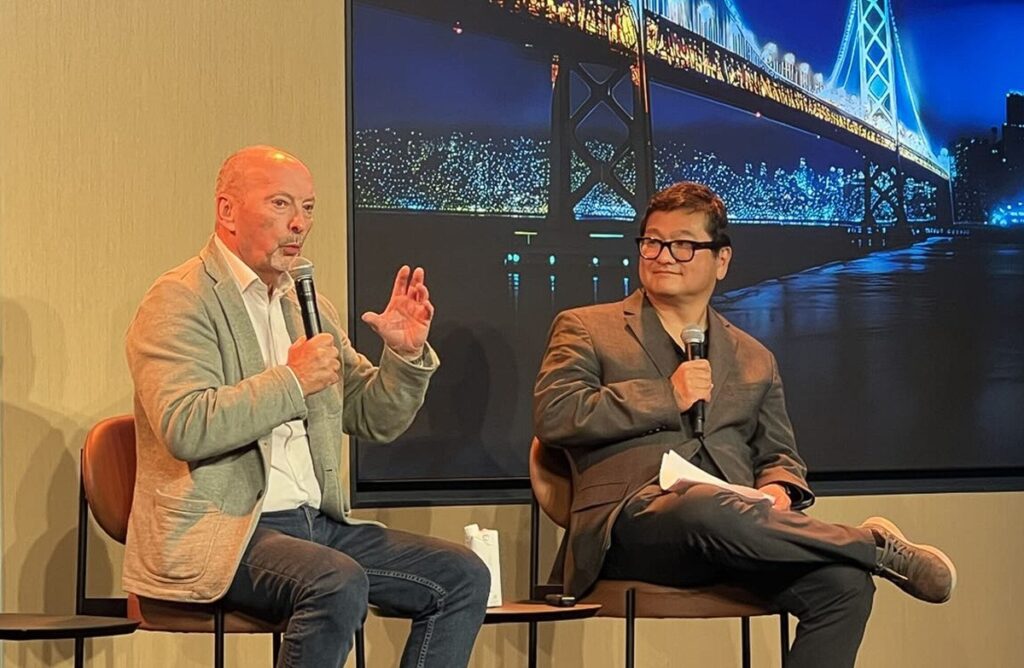
GamesBeat: I thought it would be good to talk to you because you’ve been in a situation where there were two different kinds of leaders, both in your time at Sega but also in your time at EA. You were on different sides of that. One of the first questions, do you have advice for someone like Asha Sharma in that position, where she’s coming in as a gaming outsider?
Peter Moore: I guess the best way–that was me at Sega. I’d come from Reebok, if you remember. I was a shoe guy. In those days, if you were selling sneakers, you could theoretically sell video games, because it was all teenage boys. It’s come a long way since those days. Bernie Stolar decided that I was the guy for the job.
I talk about this a lot in my book. Imposter syndrome is real. You get in there and–if Asha isn’t lying awake at 3 a.m. wondering A, what the hell did I get myself into, and B, what do I need to do to win over gamers, to not be fake or inauthentic, and to build a real cohesive strategy around not just Xbox, but Microsoft gaming as a whole–I’m sure she’s going through a lot of that. I’m watching her on social media, as I’m sure you are, trying to navigate the murky waters of gamers online and their opinions.
My advice would be to listen. Maybe a little less on social media right now, putting your gamertag out and explaining yourself and apologizing at times. There’s nothing to apologize for. But listen, learn, understand what your team–it’s a massive group of people there now, much bigger than when I was there. Understand what gamers want and the journey that Xbox has been on since those very early days. I’ve been gone 19 years from Microsoft. Think of it in those terms.
I wish her all the best. It’s tough. I’ve watched the media criticism that she got.
GamesBeat: The internet is much harsher now.
Moore: I joined Xbox when social media wasn’t really a thing. I was fortunate then. Then I kind of embraced it. She just needs to listen, learn. People like Matt Booty at her side, he’s going to be great. He’s been in the industry for well over a quarter of a century. There’s nothing he hasn’t seen. And all of the studio heads as well. It’s an interesting bunch.
Phil Spencer did a great job of corralling those studio heads. Even when I was there–we sent him off to England, I think, for a couple of years to make sense of Peter Molyneux at Lionhead, and Chris and Tim at Rare. Phil did a great job there. He really learned what it takes to manage creative heads and entrepreneurs that have built their own studios.
I wish her all the best. She’s in a position right now where–keep your head down. Fly low. Avoid the radar. Learn, listen. Spend a lot of time internally. Travel the world. Meet with the studio heads. Do the classic listening tour, which a lot of executives do. I think she’ll be fine. She’s gotta explain AI and her background. That’s a minefield. I would, for me, avoid talking about that if you possibly can. But I wish her all the best.
GamesBeat: Does that seem hard if that’s maybe the reason she’s in the job? She can bring Xbox into the AI era in a much bigger way if she wills it.
Moore: That’s her challenge.
AI is despised by gamers right now, who see it as a false way of creating games, a lazy way, a conveyor belt way. She’s gotta expect that. But we as an industry, in game development, have been using forms of artificial intelligence forever. It’s just something that–ultimately Microsoft needs to figure out exactly your question. Is she there because she’s AI? Or is she there, which is my hope, because she’s proven herself within the Borg at Microsoft and been a very capable executive leader, and this is a great challenge for her, and they wanted to do something different? They being Satya, I assume, and the key executives there.
The bigger question is, what happened to Sarah Bond? Why didn’t Matt get the role? All of those. Who knows?
GamesBeat: That makes me think of your experience at EA. The board had to choose a successor to John Riccitiello. You were in the number two position, and then there was a much younger Andrew Wilson. In that case they went with Andrew Wilson, presumably because they wanted a leader that was divorced from a strategy that maybe didn’t work, but also could be there for decades to execute something new in the long term.
Moore: It may have been an age thing. Andrew is a lot younger than me. You’re exactly right. I’m in my 70s now, so God help me if I was still at EA.
It’s a good analogy. Andrew had come through the ranks. He was part of my team at EA Sports. Look, the board made the right decision. It’s hard to argue. At that time we were emerging into our digital self. The Riccitiello strategy was finally paying off. But it was a tough road, as you remember well. You and I used to talk a lot in those days. I was disappointed. But I would never have gotten to Liverpool if I’d been the CEO of EA. There’s a silver lining in every cloud.
Fresh blood, fresh ideas. I think it would be good for Microsoft if she can keep its soul while expanding its brain. What do I mean by that? From the perspective of making the technology–look, our industry is where technology meets entertainment. There’s no industry that’s bigger than what we do at bringing that together. Since my days at Sega when it was dial-up modems, online games running at 56K. But you have to keep the soul while improving the technology backend.

Maybe that’s why she’s there. But as she talks about recovering the irreverence that was Xbox, which we, as you know, reveled in–I mean, I loved the sense of competition, the console wars. I’ve been very front about saying I loved pitching Xbox versus PlayStation versus Nintendo. I felt it was good for the industry. I felt that competition drives innovation. We kept each other on our toes every single day. We made better games and better experiences as a result.
GamesBeat: I remember the “It’s thinking” campaign at Sega. It wasn’t so different from the notion of AI today.
Moore: I don’t know to this day whether it was ever real, but the theory was the console could remember what you’d played last, could remember how good or poor you were, and would react accordingly next time you put a disc in the drive, a GD-ROM in that drive. It’s thinking.
GamesBeat: Perhaps a little more marketing in those days than actual technology.
Moore: There was a lot of smoke and mirrors. The technology, at best, was dial-up. We were trying to figure out how to get games running at 30 frames per second on a dial-up modem. You could then go to the Emotion Engine of PlayStation 2. The fights we used to have, if you remember the Killzone video, when I was watching Xbox 360 and saying, “That’s not real.” The fights we used to have in the industry about what was in-engine and what was pure CGI. We’ve lived through all of that.
But back to today. This is probably an inflection point, where we’re at. Gamers don’t like change. You and I know that very well. Transitions create doubt. But innovation creates growth. This has the potential, maybe, to do both.
GamesBeat: The game industry is also as unpredictable as ever. I don’t know if old experience can turn out to be deceiving in some ways when looking at today’s market.
Moore: The pandemic (while very bad for humanity, saw gaming grow). But the moment we all had to go back to our lives, it fell off a cliff. We made hay while the sun shines, when everyone was at home playing games and spending money. If you recall, Fortnite was at its peak. Games were being discovered by people who hadn’t played before and wouldn’t have dreamt of playing, but they had so much time on their hands. It was one of the few industries, Peloton and a few other things, that benefited from the shutdown.
But the industry, in my experience, has gone through so many waves. The ups, the downs. Online was reviled when we first started. All the new business models. Microtransactions, downloadable content, buying a map, updates and patches, all of these things. When I joined the industry you just couldn’t do any of these things. Online has empowered everything there. Maybe this is the next step.
GamesBeat: I’ve wondered if Microsoft could do more with Minecraft in the way Roblox has done, and Fortnite as well. They’re aggressively moving into the world of user-generated content and that’s paying off in growth for Roblox particularly. It seems like Microsoft has the assets that could create an advantage.
Moore: When they acquired Mojang and Minecraft, it was purposely built, almost, for–how do we use AI to continuously evolve this? UGC has always been an important part of keeping people engaged. Roblox is obviously a great example. You put creativity in the hands of the gamer, rather than telling the gamer what they’re going to do.
Microsoft has maybe not taken full advantage of Minecraft. Maybe a bit of that is on the heels of Activision Blizzard and Bethesda. All of a sudden there were shinier objects that came along, with much bigger price tags attached. These are the moments, when Microsoft jumps in like that–where does Xbox fit all of a sudden? Where does the old business model fit? You’re no longer a first party, I don’t think, once you start making the acquisitions that they did, because you can’t spend that kind of money and keep everything as an exclusive on your console. The math doesn’t math.
GamesBeat: Pulling Bethesda away from Sony and making it exclusive to Microsoft would be such a huge loss.
Moore: It wouldn’t have been approved. When you sit down in the board room and Phil and Sarah are making the case for it, you can’t say, “We’re going to shrink the business. We’re going to spend these billions of dollars and instantly make the business smaller.” Those are the moments when everything changed. You’re no longer a first party. You’re this pseudo-third party that still makes hardware. That’s where things became very different, from my perspective, in relation to what it was.
Before, it was very clear. It was us versus PlayStation versus Nintendo. We’re going to make great games like Gears of War and Halo. Kameo. Forza. Building these exclusives on our platform that are going to be better exclusives than the other guy. Software drives hardware. It’s all murky now, because you just can’t do that.
GamesBeat: That did alienate the hardcore Xbox gamers, but it seemed like one of the considerations was antitrust. They had just bought Activision Blizzard and promised that they were not going to shrink everything down.
Moore: Particularly in the U.K., and the FTC here.
They needed to make sure that this was going to be good for the gamer. That meant you were not going to all of a sudden pull these huge franchises like Call of Duty away from tens of millions of people who own a PlayStation. Those were the promises they made to both the U.S. and U.K. governments. It was probably a bit to smooth over whatever concerns. When I was at Microsoft we were operating under consent decree as a monopoly from the Department of Justice, who wanted to break us up. You have to be very careful with those things.
But I think you’re exactly right. I think that campaign did alienate the hardcore, and you have to keep that hardcore on your side. During my time I tried everything to keep them on our side. It was not easy. Every day you’d have to explain yourself. That was fine. But if you lose them, not only do you lose them, but they turn on you. It can get pretty brutal. You’re constantly in defensive mode rather than driving offense and growth.
GamesBeat: There was another theory that Matthew Ball put forward last week with his new slide deck for 2026. He said that gaming was losing some of the attention war against a lot of other–I think of gaming as a fun industry. He was arguing that it’s losing the war against addiction industries: sports betting, OnlyFans, TikTok, YouTube, prediction markets, gambling in general.
Moore: It’s an interesting point.
We’ve always talked about this in gaming. There’s only 24 hours in the day. You can only game for so long. We tried to hard to make gaming as multiplatform as we possibly could, where you could go from your console to your PC to your phone. Certainly in my time at EA we led the way with FIFA on that, trying to give you an experience. Not necessarily play, but we were fighting for your attention.
I think about myself now. I’m a guy in my 70s. All the things I’m bombarded with all day long–not necessarily OnlyFans, but sports and everything else. The amount of content that comes at me, the amount of information. You add politics into that in this country right now–I thought Matthew made a very interesting point.
I have a lot of people, in my world of football in particular–I’m a part owner of a Polish football club, which is fascinating. It’s owned by an unbelievable young man in his late 30s, Jarosław Królewski, who is the founder of Synerise, an AI company. I have learned so much about what it’s capable of doing. It’s a corporate AI. It goes in and pretty much runs and dictates your strategy. It can operate as an AI agent. It’s sophisticated. I’ve watched it write code. It’s fascinating stuff.

For a lot of stuff I’m doing I’m using ChatGPT. I recently used Gamma to do presentations. I’m not your core consumer. I don’t have a full-time job. I have lots of jobs. But you’re right. We’re consumed and we’re hammered for attention by content, information, drama. Streaming services now, everything on demand. That didn’t exist when I first joined the industry.
GamesBeat: I still find ways to be positive about gaming in a couple of things Matthew brought up. One was the growth of Roblox. This notion that you catch an audience as early as you can. You get kids on your platform and they’ll never leave it. For Disney, when Bob Iger was investing in Fortnite, he was told that Disney wasn’t present in either Roblox or Fortnite, and that meant the brand could be gone in a generation, because kids weren’t going anywhere else. They were just staying in these worlds. That’s a positive for gaming in that–you’re not usually involved in the sin industries as a kid. Gaming has a chance to intercept people before they get into other habits.
Moore: The lifetime value of a gamer, if you can get them–in the old days you had Club Penguin.
There were so many harmless but fun ways of getting kids involved in immersive, interactive entertainment. Then you would try to move them up the pyramid of what they played. The lifetime value of a gamer is in the tens if not hundreds of thousands of dollars. I learned this in my other life in football. Getting them young, getting a shirt on them–dads do this, get a shirt on them when they’re babies and make them fans. By the time they’re ready to say goodbye to this world, they’ve put 70 or 80 years of fandom and money in.
Lifetime value, it’s the same story in gaming. As long as the cost of acquisition is cheaper than the lifetime value, you just keep spending. You keep getting them. I think you’re exactly right about Roblox as this kind of gateway to gaming. Parents, I think they keep an eye on it, because there are some things in there that obviously need administering. But it’s educational. It’s character-building. It’s social. It teaches you things that you wouldn’t necessarily get in other types of games. I’m a huge fan of that, introducing them young and early.

GamesBeat: The other trend I was optimistic about was the way gaming can insinuate itself into other platforms, like YouTube and TikTok and the streaming platforms, films and TV shows.
Moore: You look at The Last of Us. In the earlier days, gaming just didn’t translate well to the big screen. Resident Evil and Tomb Raider did okay, maybe. I was in House of the Dead, the Uwe Boll movie. But now, streaming allows you to tell deeper stories over a longer period of time, which is perfect for gaming IPs. You look at what they’ve done well, brilliantly, with Fallout and The Last of Us. You don’t have to cram it into a 90-minute movie. These are 30-, 40-, 50-hour games. You just can’t put them in that little 90-minute slot in the cinema. But when you have streaming–Fallout and The Last of Us were the gold examples for me. Even Sonic the Hedgehog, for goodness’ sake. Now it’s a multi-billion-dollar piece of IP, because you’ve got that ability to tell these stories. That is a bright spot for our industry.
GamesBeat: If we circle back to Asha Sharma, she has these potential growth vectors in things like Roblox and emerging markets and IP in other media. What do you think some of her strategy turns out to be?
Moore: I think her mantra has to be–it’s good for gaming if AI serves the player, not the spreadsheet. She has to be able to explain that. The studios are all going to use artificial intelligence in one form or another. I don’t think the gamer really understands what it all means and how things come together in that way. But I think she has that great opportunity to bridge both worlds and serve growth and deeper immersive experiences. Games that are fundamentally less expensive. Maybe we get games that are better, faster, cheaper, because the cost of game development for triple-A games has become immense. Over the decades I’ve been involved it’s become this massive manual labor thing, hundreds if not thousands of people working on a game.
That’s the key. She has that. If I’m her, I have this unique perspective. I just have to turn it into a positive in the eyes of the gamer.
GamesBeat: Is there anything else you’d like to mention today?
Moore: Let’s not forget what Phil Spencer was able to achieve there.
Thirty-eight years is amazing anywhere, never mind somewhere as challenging every single day as Microsoft. He’s done a brilliant job. A lot of people would say he resurrected it after a challenging Xbox One launch, bringing it back. Phil is a wonderful human being. I had a lot of fun working with Phil in those days.
It hurts me to see criticism from people who don’t know. He started working at Microsoft before most of these people were born. I tip my hat to him for everything he’s done, not only to get Microsoft to embrace–to spend tens of billions of dollars. It blew my mind when I started to see the conversations, particularly the Activision acquisition, because that wasn’t the Microsoft I was at back in the 2000s. It just showed a commitment.
I saw Seamus’s comments. I hope he’s a little misguided.
GamesBeat: He’s a little grumpy.
Moore: This is a division that did $24 billion last year. It’s 8% of gross revenues. It’s not something that they could replace quickly. I get that the operating margins aren’t what productivity and cloud are for Microsoft, but it’s an important part of their business. It puts Microsoft in the living room. It puts Microsoft in the world of entertainment. It puts Microsoft closer to the consumer. It emboldens Microsoft as not just a productivity company. That was always what we wanted to do, and what Xbox in particular was meant to be.
I hope she can bring that back and get a bit of the fight going again that we used to have. Have a lot more fun in the industry like we used to. My days with Kaz Hirai and Jack Tretton and Reggie. Gosh, you can go back to Howard Lincoln. We had so much fun. To your point when you opened up the conversation, this is the fun industry.
GamesBeat: I think it’s a little early to give up on Xbox.
Moore: I’ll watch it very closely. I wish her all the very best.
Listen, learn, keep your head down from time to time. Don’t try to be inauthentic. Challenge your PR team and what they think you should do if you don’t feel it’s right. Keep that controller in your hand every night for the next six weeks. Keep the gamertag going full bore. The more you play, the more you learn. She’ll be just fine. It’s going to be a very interesting period.