
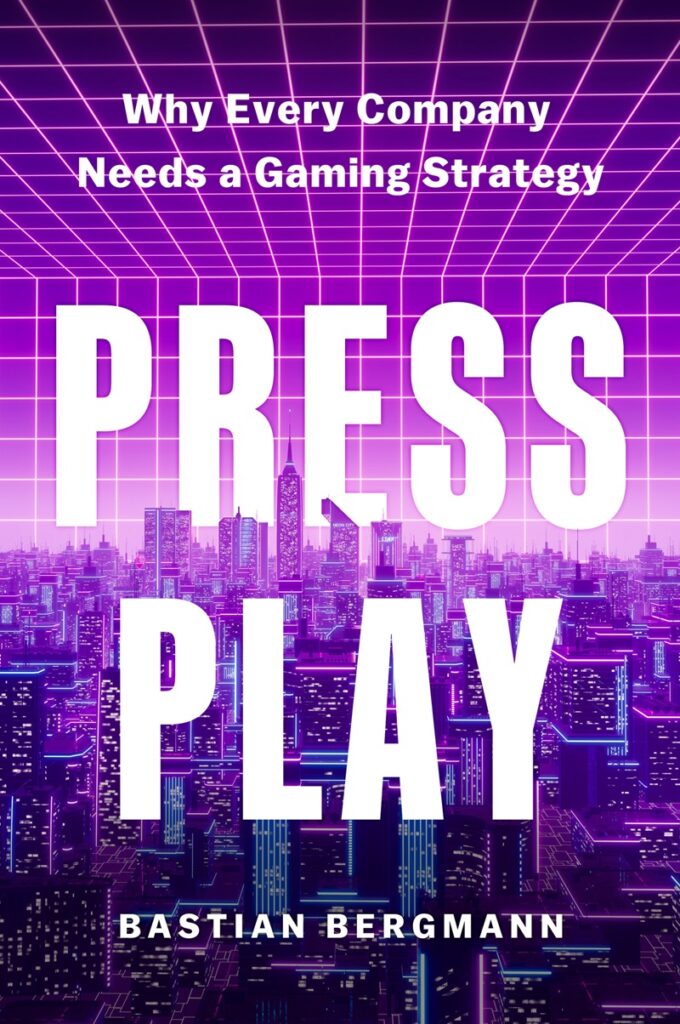
Bastian Bergmann is the author of Press Play: Why Every Company Needs A Gaming Strategy, a business-oriented book that just debuted this month.
I did a doubletake on that idea, considering gaming has just gone through three tough years and it isn’t the darling industry that it once was during the pandemic.
In fact, with layoffs aplenty and revenues growing more slowly than in the past, I asked Bergmann, the cofounder and COO of Solsten, why he was so optimistic about games. I do believe gaming is taking over the culture of the world. But I played devil’s advocate.
Despite recent gaming challenges, Bergmann said, “If you look at just consumer engagement across the board, gaming is the most powerful touch point when it comes to modern consumers, engaging consumers. It’s not just true for young audiences. It cuts across all demographic cohorts.”
Bergmann sees forward-thinking companies such as Peloton, Burberry, the New
York Times, BMW, and Chipotle—that are using games to win over customers.
Three billion people worldwide are gamers, spending more time playing video games than they do on all other forms of entertainment combined –These consumers demand more than products—they crave immersive, personalized experiences. As a result, traditional marketing and engagement strategies have lost their edge. The solution? Gaming strategies that go far beyond sponsorship or product placement.
In his new book, Bergmann analyzes the various strategies of non-game companies when it comes to getting involved in gaming. These are opportunities that gaming companies can capitalize on, if they are able to see beyond their recent struggles.
Drawing on exclusive interviews and access to forward-thinking companies—ranging from Adidas and Puma to NASCAR and Unilever—Bergmann provides an insider’s view of gaming’s transformative power. He also delivers a practical road map for business leaders, offering strategies that range from low-risk partnerships to ambitious, full-scale gaming
ventures.
Bergmann’s company, Solsten, is a technology startup that empowers companies to create personalized content using AI and psychological data. He is also the founder of
media strategy firm Technically Entertaining. Previously the founder and CEO of WATTx and a strategy consultant at Boston Consulting Group, Bergmann has spent his entire career at the intersection of digital strategy, entertainment, media, and AI.
Here’s an edited transcript of our interview.

GamesBeat: The notion sounded crazy enough to inquire further.
Bastian Bergmann: I’ll take that as a compliment!
GamesBeat: That every company ought to embrace gaming in some way. How would you sum that up?
Bergmann: You know the statistics, the numbers around gaming better than most people that I get to talk to these days. If you look at just consumer engagement across the board, gaming is the most powerful touch point when it comes to modern consumers, engaging consumers. It’s not just true for young audiences. It cuts across all demographic cohorts. If you’re a company, if you’re a brand outside of gaming and you have a relationship with consumers, or you have a relationship with human beings in general, which most companies do, there’s something to be learned and something to be gained and unlocked from tapping into video games.
Games are next to none at engaging us as humans. The underlying premise is play. There’s nothing more fundamentally human than to play. That’s what makes video games so powerful. We’re going to fast forward, in 10 or 15 years or whatever time frame you want to pick, and look back on this moment. There will be experiences that are fundamentally video games, but we won’t call them video games. It’ll just be this medium that’s pervasive, proliferating into–I would say into every other industry, every other company, because it really is that relevant for every vertical, from your fast-paced consumer goods companies to the obvious candidates that everyone jumps to, the Balenciagas and the Burberrys and the Louis Vuittons, all the way to my first employer, the Boston Consulting Group, where I started my career.
One of the first projects I worked on was literally to build a video game to help people learn about different business strategies. I think that’s going to cut across a lot of different industries, including less obvious ones.
GamesBeat: To back up a little, can you talk about Solsten and your day to day work? How did that lead to some of this thinking?
Bergmann: With Solsten we have the privilege of–we get to work with both gaming and non-gaming companies. We work with some of the biggest brands now – DraftKings, Peloton, Dentsu, Sony. We’re talking to Disney and Paramount right now. A lot of e-commerce companies and fintech players. We get to cut across all the different industries. We as a company sit at this interesting intersection between gaming and non-gaming. We have a front row seat to all the things that are happening there.
Obviously for us as an AI company that specializes in understanding consumers, understanding human beings, and empowering companies to resonate with them through personalized experiences and personalized messaging based on non-trivial data, non-obvious data, the real human data, the psychological data, we see what the baseline–what fundamental premises most companies still to this day get wrong. What the starting point is with a lot of these brands when they look into video games, and honestly a lot of the time how clueless they are.
The impetus for me to write this book–it was about four years ago. I was on a call with the global marketing leadership team for Denon, a big consumer goods company. They wanted to talk to me about their digital strategy, and specifically gaming, because that was one of the three core pillars they had for their overall digital effort. I was there to listen and to learn. It was supposed to be a 30-minute conversation. I said, “It’s great that you guys are looking into gaming. What do you want to do?” They said, “We’re going to sponsor an esports team.” I said, “Great. What else do you want to do?”
They muted themselves on the call and started talking amongst themselves. They unmute and one of them says, “What do you mean, what else are you doing?” Okay, wait a minute. We need to back up here. It turned into a 90-minute conversation where I started telling them about what video gaming is in the first place. I walked away from that conversation thinking–Denon is a great company. Well-run. Super successful. These people are seasoned professionals. They’re not stupid. They’re good at their jobs. Gaming is just uncharted territory. It’s foreign to a lot of these brands. On top of that, a lot of the traditional playbook you have from either social media or sponsorship or traditional marketing channels just doesn’t apply in the gaming world. Those methods will fail you. You need a radically different approach.
Where all this intersects with Solsten–I talk about this in the book. There’s a whole chapter on changing consumer preferences and consumer behavior. How you have to lay the foundation as a brand when you show up in these gaming environments. The most critical thing that you have to do in order to even give yourself a shot at being successful is you have to show up in these environments authentically.
How do you create authenticity? One, as a brand you have to do a lot of soul-searching, which means you have to be honest with yourself. Who are you? What do you stand for? What are your brand values? Don’t try to be something that you’re not. Second – and to this day, too many companies get this wrong – you have to understand the needs, the motivations, the drivers of the audience that you’re trying to engage. Don’t operate on the high-level understanding of, “People play games to escape,” or “People play games to have fun.” That’s only partially true. Different audiences have different needs and motivations. They play different games for all sorts of different reasons. You have to figure that out and find the sweet spot where the needs of the audience align with the values of your brand and what you stand for. If you can do that, that’s how authenticity happens.
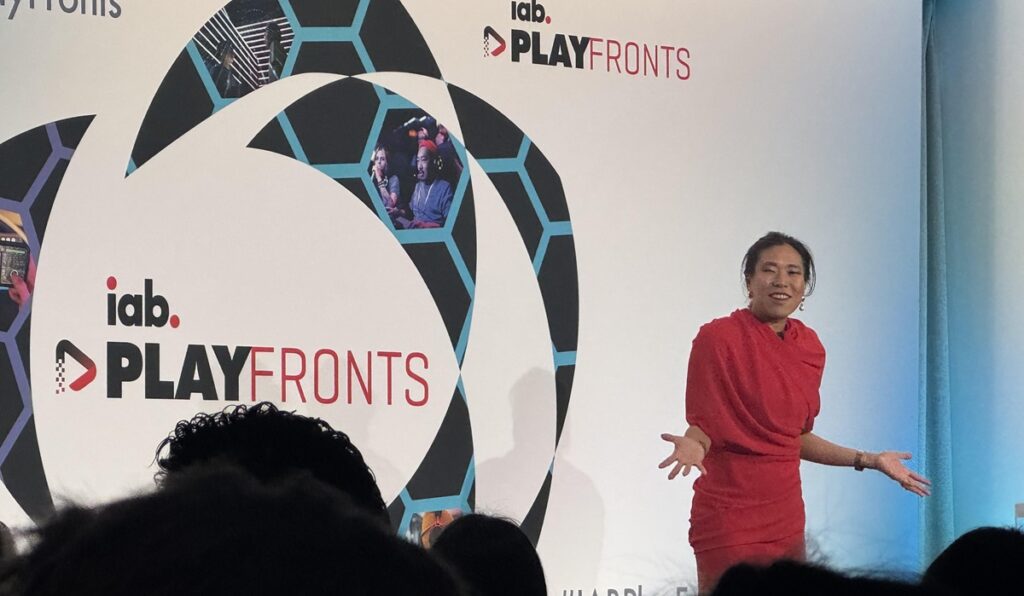
GamesBeat: I went to the IAB PlayFronts event in New York in May, with all the brands there. They were talking about gaming. I noticed that only 5% of the world’s ad budgets was going to games. That was down from 6% or so. It sounds absurdly low relative to gaming being the biggest entertainment industry. I don’t know if the explanation is just this simple idea that gaming is hard for them to understand, or that they struggle to come up with something authentic, and therefore they’re afraid to get blown out by gamers for making a mistake.
Bergmann: You nailed it. Let me double down on that one for a moment, because I think there are three critical reasons as to why that is. You mentioned one of them. When you look at those statistics, you’re right. It’s five percent of global ad spend, ballpark $39 billion. That means $733 billion I think is the exact amount of global ad spend that goes everywhere else. To your point, that’s a complete disconnect from–one, this is the biggest entertainment industry, and two, just the fact that the young audiences spend more time in games like Fortnite than in all social media channels combined. You had $15 billion spent on virtual goods in gaming environments alone last year. The numbers around engagement and monetization and attention capture related to advertising spend–there’s a massive disconnect. That, to me, is the big opportunity that brands have. You can still be a first mover and get a head start on your competition.
Why is that? You nailed one of the reasons. Gaming is hard. It’s foreign to them. It’s hard for them to figure out. It might seem daunting. Getting authenticity right, if you don’t go through those motions–it’s very important, and it’s hard. The second reason is that a lot of people, a lot of companies, might have been burned in the past. Take Unilever for example. They went into gaming in 2012. They had an integration with Dove Shampoo, banner ads and product placement, in The Sims. It was just that.
I asked the guys–they were still at Unilever when I did research for the book. I talked to the people who were there back then. I said, “Guys, it’s 12 years later now. What did you do in the last decade?” Nothing. “You guys were early. What happened?” They didn’t have the talent. They didn’t have the skills. It would have been way too long of a ramp up to make it a day to day thing. To top that off, the initial initiative didn’t justify that investment given that they weren’t able to fully extrapolate what the ROI would be.
That’s my third comment, and I think this is a massive opportunity when you talk about growth on the gaming side, growth for developers and publishers. If you can provide measurement and attribution tools to those brands so that they can clearly track–not just, “We raised brand awareness through this game. We got more visibility.” Okay. If I’m a brand and I’m talking to Stillfront or Embracer or Activision, show me how you help my top line and my bottom line. We did this month-long thing in Call of Duty. That was my investment. This is how it impacted my actual financial numbers.
That’s a huge area where publishers have a massive opportunity. If you can help brands along that journey – white-glove service, we do this for you, full tracking, measurement, attribution, make that easy – you can watch that advertising spend shit in a heartbeat. Instantly. To me, that’s one of the biggest growth unlocks that gaming as an industry, and the players inside – if you look at it from the other side of the fence – actually have in this.
GamesBeat: There are some countervailing winds for gaming that make it possibly not the greatest timing right now. The last three years have seen a lot of industry layoffs. Growth has leveled off. It’s not as spectacular as it was when people could say that it really is a no-brainer to join gaming. With stalled growth, that’s a little tougher. There’s been some skepticism about gamification. We’ve seen previous generations that have done okay, but that haven’t worked too great. There are some successes like Duolingo out there. Maybe people detect too much of a sales pitch in gamification. There was also the challenge around IDFA for mobile. Apple prioritizing privacy over targeted advertising. What was easier to do before isn’t so easy in mobile games now. What are some reasons to think about overcoming these kinds of objections?

Bergmann: Yes, industry growth overall might be a bit slower. However, it doesn’t change the fact that that’s the touch point where consumers are. If you’re a brand and you want to get in front of modern consumers and be relevant with them, you have to be in this touch point. There’s no other–the numbers don’t lie. The average social media post gets around 1.3 seconds of engagement from consumers. The average branded Roblox experience gets about 11 minutes of engagement. If I’m a brand it’s clear where I should put my money. That’s where the consumers are. That’s where engagement exists. That’s where monetization happens. That’s where culture lives.
The other component there, which you started talking about–”gamification” is one of the most abused words, along with “personalization,” that people just misunderstand and abuse. Yu-kai Chou wrote this landmark book, the seminal piece on gamification, 15 years ago. He was way ahead of his time. The challenge was, people just took it at surface level and thought they understood it. That’s where you get things like Robinhood–you purchase your first stock and they throw confetti on the screen. They’ll tell you they gamified their experience. That’s the opposite. That’s exactly what you just called out, and rightly so. That’s when you get superficial results.
In real gamification you take the underlying principles of what games actually are. Duolingo is a great example. They’ve taken it a step further now with acquiring NextBeat and Beatstar, that whole game. It can teach you music, give you music classes through playing a mobile game. I talk about Peloton in the book. When you talk about gamification–I lay out four distinct strategic pathways for using gaming for companies in the book. The fourth pathway is what I call “make games a part of your product.” That’s the closest to what you might have called gamification in the past. But I’m drawing a distinction in the book for the reasons I just mentioned.
Peloton is one of my favorite examples when it comes to this. They actually built a video game a few years ago called Lanebreak. It’s workout content. When you’re on your Peloton bike, rather than having an instructor yell at you to go faster, you’re actually playing a bike racing game. It looks like Tron. Just visually it’s really cool. It feels like you’re riding through the Tron world. But the game simulates how fast you’re pedaling your Peloton bike. You can go on win streaks and collect things. There are leaderboards. It has all the foundational elements you’d expect from a mobile game.
Just over 50% of all workouts on a Peloton bike are conducted in that video game. People that use that video game as their predominant workout method come back for more workouts on a weekly basis, and those workouts are on average longer compared to people that predominantly rely on instructor-led content. That, to me, is what “gamification” should really be. You go through either a stand-alone game, or–how do I think about core loops and the foundational things that make a video game a game? How can I bring that into my service offering, my product world, and either use it to enhance what I have, complement what I have, or make a game specifically a product?
When I started my career at the Boston Consulting Group 15 years ago, that was one of the first things I got to work on. We built a mobile game called Your Strategy Needs a Strategy. I don’t know if you ever took economics 101 back in the day, but when they teach you the basics of economics, they always use the lemonade stand as an example. You put your lemonade stand here and another one sets up over here. That’s competition. It’s super basic. We used that and turned it into a video game with changing environments, changing parameters. You had to adjust your strategy. We used it to teach consultants internally, and then we used it to teach and run workshops and do projects with clients. Literally, executives in companies, teaching them about strategic styles through a video game.
That wouldn’t have happened, and it wouldn’t have been effective, if we’d done what most companies did 15 years ago and just used “gamification” in the sense of copying one or two mechanics from games. Leaderboards or confetti. Throw that into whatever service we have and think we’re done with gamification. That’s lazy. That’s not doing it right. That’s just lazy.
GamesBeat: What are some of the best examples that you’ve come across for the book? How are those companies moving into gaming when they’re not endemic and having good results? You’ve mentioned some already, but are there others you consider to be great examples?

Bergmann: If we talk about the greatest ones, I’d probably mention Chipotle and the New York Times, for different reasons. Chipotle was very smart around finding the sweet spot with the audience that they wanted to get into. They were very focused on getting in front of younger audiences specifically. They landed on Roblox. They took a very simple path and connected it back to the authenticity point. That’s why this is one of my favorite examples. They used Halloween, which is one of the most favorite holidays not just in the U.S., but for Chipotle fans in general. People come dressed up in costumes to their local Chipotle. It’s a whole vibe. It’s this super important thing for Chipotle.
They said, “Well, this is what our customer base and fanbase already loves. How do we bring this into a digital realm?” They launched this around Halloween. The holiday burrito is called the Boo-rito. They launched a maze game on Roblox, a really simple integration. A burrito maze. You could collect items and skins, unlock special characters like Guac-enstein, things like that. They really leaned into their identity and the holiday. As a part of that, there was a virtual Chipotle that you could go into. They were handing out $1 million in free burritos that people could claim, either online or in-store. It was one of the top 10 digital sales days they ever had in the history of the company. It was also one of the best enrollment days for their rewards membership program.
I asked the CMO, Chris Brandt, when I interviewed him for the book–I said, “Did the $1 million giveaway pay off?” That’s not chump change. That’s a good amount of money to give away. He said it paid off instantly. They know what the lifetime value of a rewards member is, once someone signs up. They know that on the back end. They can project that. This paid for itself many times over. I really like that example.
The other one is the New York Times. You’re probably very familiar with the New York Times games app. Jonathan Knight does an incredible job of leading the charge there. What I love about that example–one, they’re true to who they are as a brand, as the New York Times. Leaning into word games and puzzle games. Not trying to be something that they’re not. But also empowering a dedicated team and hiring industry veterans who know what to do. That’s why Jonathan is fantastic at this.
They now have, I think, 10 games live. What I love about that example–publishing in general is hard. A lot of the traditional outlets are fighting for life. They’re more on the decline. The New York Times is one of the few outlets that can buck that trend. They’ve been able to accelerate overall digital revenue and subscription-based business. What they know is that the people who come in through the games content, not only do they maintain their subscription, but they also engage with other content like news and all the stuff the Times has, way more than other users. They become better customers and higher-paying customers because they end up subscribing to the bigger subscription rather than just staying on the games side, compared to people who come in through a different pathway.
GamesBeat: They announced that they have more traffic coming from games than through their journalism now.
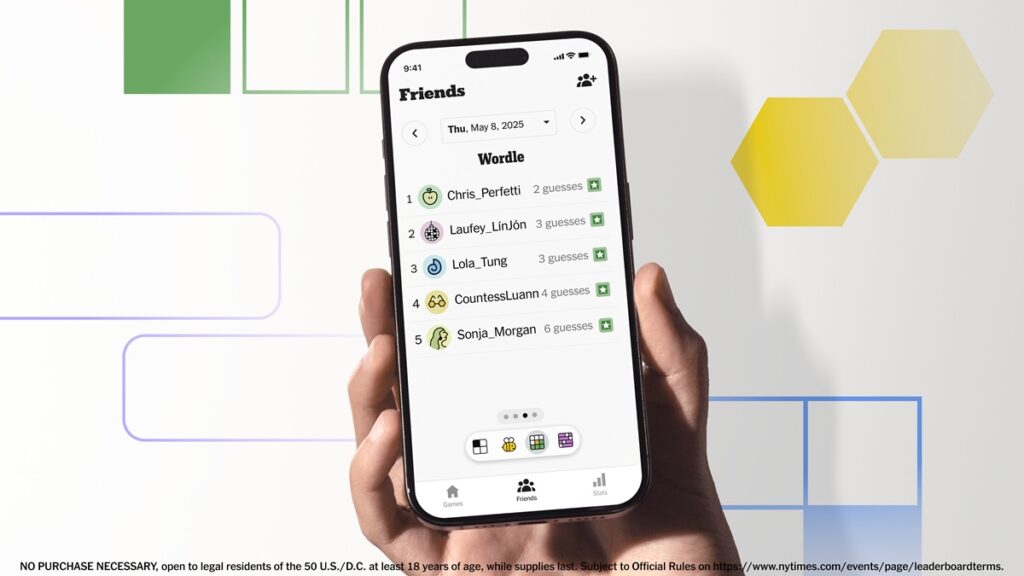
Bergmann: That’s it. That’s the analogy. In the ‘40s, people would come for the news and stay for the crossword puzzle. Internally they’ve flipped that around. Now they say people come for the games and stay for the news. That’s been the catalyst for thriving in an industry that’s otherwise in decline.
GamesBeat: When you think about some of these successful strategies, what becomes the next move? What are things companies ought to do more of or double down on?
Bergmann: It depends a bit on the situation the company is in. There’s no vanilla advice I could give. “Once you’ve done this, you have to do this.” It depends on the goals of the company, the business objectives the company wants to accomplish. That’s the biggest piece of advice. If you want to champion an initiative like this internally at your company, don’t go to your executives and say, “We need a gaming strategy.” That means you’re starting at the end. Start with, “What do we want to accomplish next year? What are our business objectives? How does that translate to our audience and customers? Where do we find them? Gaming should be a part of that because it allows us to get to our objectives.” That’s the big thinking and approach that people should ground themselves in.
The second one, absolutely do the foundational work of insights and leaning into the audience and really understanding people. After that, wherever you start, start small. Be prepared to learn and iterate, and then scale up. Don’t go with, “We’re going to hire 50 people and build this massive universe from scratch when we’ve never done a gaming project.” Start small, learn, iterate, and then double down from there. Where those roads should ideally lead–if you either build your own game, whether it’s a stand-alone game or an immersive environment or something like Lanebreak in a Peloton context, the more you gravitate toward that end of the spectrum, the big benefit for you as a company, if it’s your environment you’re sitting on first-party data. You can observe day-to-day interaction with your consumers.
You can learn a lot more that way compared to launching something in Fortnite. There, you’re beholden to whatever Epic decides to share with you. It’s still great. They should absolutely do it. But there are pros and cons. The more you lean into the environment and build it and own the environment yourself–you touched on IDFA and some of the other constraints that are out there. Being able to generate first-party data directly from consumers naturally engaging with immersive environments is pretty powerful.
GamesBeat: Coming back to the title, do you really mean every company ought to have a game strategy? By comparison, I don’t think anybody would argue these days that every company ought to have an AI strategy. Game strategy seems like it might have been more on everyone’s mind five years ago. Something like AI might have passed it in importance.
Bergmann: AI is obviously important. But AI alone doesn’t allow you to engage consumers. AI is a tool. It’s a technology. There are different manifestations of it. Whereas gaming is the actual interface to your customer. To me they’re related. They play together. This is where you and I, being on the inside of the game industry, might have some biases. This might have been obvious to you and I five years ago. It wasn’t obvious to the Denon people I talked to. It was completely foreign to them.
What you see now is more and more companies slowly starting to wake up. It’s not just about engaging consumers, because it’s whenever you’re interacting with human beings. I gave a keynote at Gamescom a couple of weeks ago on the book. Immediately after the talk, there were two partners from one of the biggest law firms globally coming up to me. They said, “We’ve been thinking about this. We underestimated this. Even we need to look into this, because we can use gaming for internal training purposes around compliance procedures and litigation. Right now we’re filling in hundreds of questions. By the time you’re at the third question you’ve forgotten the answers to the previous two. If we can make this more engaging and stimulating, people will retain information better and make our training more effective.”
There’s a company out of Argentina called TGA. They do nothing else but make video games for internal training of employees at corporations like McDonald’s. Things like hygiene, sanitation, compliance, you name it. It’s hugely effective, way more effective than giving people 50 pages to read and a 20-question test to fill in. That’s why, going back to the title of the book, I do really believe that every company has something to gain from thinking about video games. How do we make this a part of our strategy? Whether it’s internal or external, about customers, consumers, and audiences at large that they’re trying to engage and attract. I stand by that subtitle.
GamesBeat: How do you think game companies are either benefiting from this or capitalizing on it? Game company strategies themselves. How do they lean into this?
Bergmann: There’s a reason why Roblox opened up this IP program they have, with pre-qualified brands and partners. If you’re a creator you can just say, “I’m going to grab the Stranger Things IP. I’ll use L’Oreal’s latest shampoo line.” They did that because they know that it benefits the game creators in those environments massively. Back to your point, if I have a big brand, marketing all of a sudden becomes cheaper. I have more natural pull because I have something famous and well-known to lean on and lean into.
A big mindset shift still has to happen from the game developer and publisher side. Stop looking at individual games just as an isolated form of–we ship this thing and we’re done with it. It’s more than that. It’s immersive content. Treat it as a platform. If you start to think about it as a platform, as this living, breathing thing–”I’ve built a gateway to allow people to engage with consumers.” Once you start thinking about games that way, as a developer and a publisher, it opens up completely new pathways of strategic options. The way you look at what you have completely changes.

If I was Stillfront, I would run audience intelligence across all of my studios and all of my live games. I would run intelligence around what brand affinities I already have in this environment. I would unify all the player IDs across all the games with the different studios I own. I’d build measurement and attribution across that, and then I would actively go to all the different brands and say, “Do you realize I have access to 15 million consumers that regularly buy shampoo?” Just to stick to that example. They’re across all different territories. They’re highly engaged. We can customize the touch point. We can highly curate it. We make it a complete no-brainer for brands to come into that space.
It’s a bit of a mindset shift that has to happen. It’s not degrading to the creative act. Yes, you have incredible–I don’t know what games you play these days, but one of my favorite games I still play is Ghost of Tsushima. I can’t wait for Ghost of Yotei to come out. Do I want a shampoo brand to show up in that game? Probably not. There are still artistic endeavors. But if you do that in ways where it fits the game, where it’s not just a banner ad slapped on–don’t treat it as an advertising channel. That’s the biggest piece of advice. You’re missing out on a lot of the opportunity if you just look at games as another advertising channel.
From the developer and publisher side, embracing this notion of partnering with brands and opening up games, viewing them as a platform, is not degrading to the creative endeavor. It’s not degrading to the creative act you’ve manifested. There are only so many people in the world who are great at building games. That’s a skill. There are additional ways to leverage those skills. That’s going to unlock growth for the industry at large.