

When we last spoke with Jesse Meschuk, the 17-year veteran of Activision Blizzard had been named the COO of Savvy Games Group, the Saudi Arabia-based company that has quickly built the newest financial empire in games.
Speaking at our GamesBeat Summit event in May, Meschuk said, “From 2011 to 2021 the business grew like 10% a year, which is incredible. It went from $75 billion to more than $180 billion. If you think about advertising and streaming and everything else I think it was more than $230 billion. That was a period of unprecedented growth.”
Then he gave us some sober words about the weakness in games. He said, “For the last few years we’ve seen that level off. That’s driven by–some of those growth winds have slowed. What drove that growth in the first place was mobile gaming taking off, billions of people playing on their phones. Geographic diversification, particularly in China. The rise of live services and some real innovative game modes. A lot of those things have started to mature.”
In spite of that tough environment, Savvy Games Group has managed to grow fast with acquisitions of companies like ESL, FaceIt, VSPO, Vindex and Scopely (for $4.9 billion). The latter has gone on to acquire Pokemon Go maker Niantic for $3.5 billion. Saudi Arabia’s Public Investment Fund, which is backing Savvy, has pledged to invest $37 billion in games.
Of course, not everyone is a fan of Saudi Arabia’s influence in games and esports. But people like Meschuk are realists in recognizing that much of the funding for games and esports is going to come from the region. And we will see how games change these regions over time.
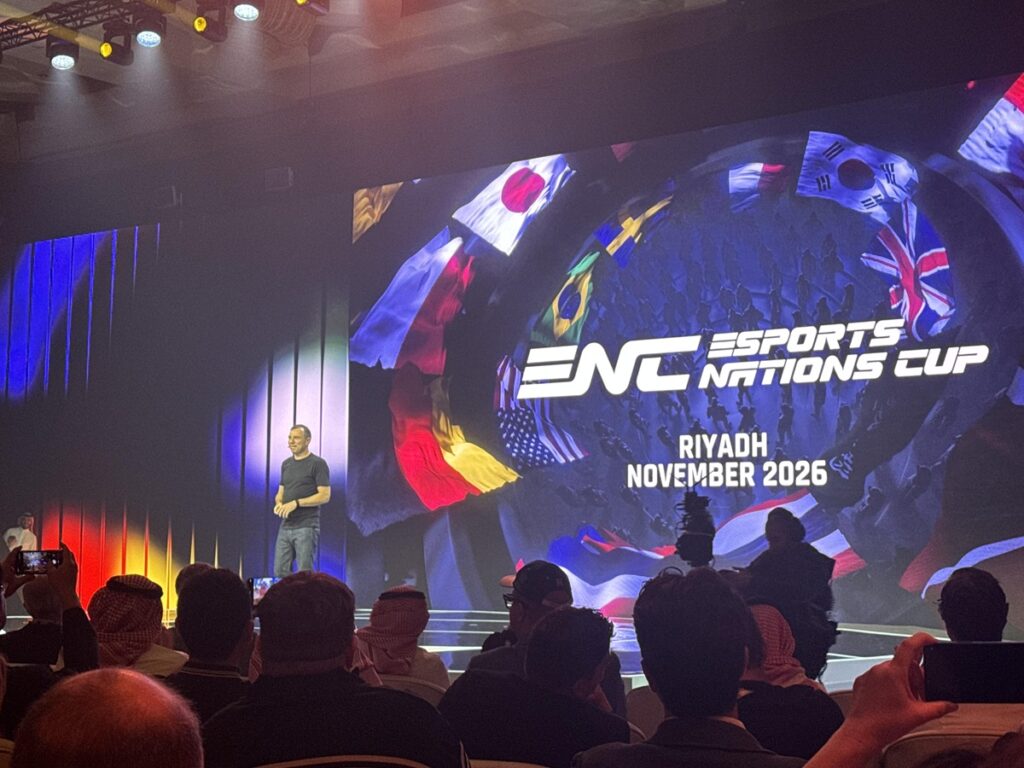
Meschuk told us that, from Savvy’s point of view, there were a lot of reasons to be optimistic and feel like there is still a lot of growth potential in the overall games market. When you talk about game development and publishing, it’s all about finding large, highly engaged communities. The reason Savvy is most interested in that is because those are the types of communities that tend to exhibit the longest growth curves. They tend to be the most durable and persistent over time. That will continue to be a focus.
With a few more months of observation under our belts, I asked Meschuk in our interview at Gamescom at the end of August whether he thought the industry was coming around from three tough years to a point of more optimism.
Since we talked, Savvy’s Riyadh-based game studio Steer Studios announced plans to develop a new mobile game featuring Tom and Jerry, officially licensed by Warner Bros. Interactive Entertainment. That’s a home-grown company and the kind that Saudi Arabia needs to create the jobs that will diversify the country’s economy. I talked with Meschuk about this process and how it takes time to create jobs and how it can be accelerated.
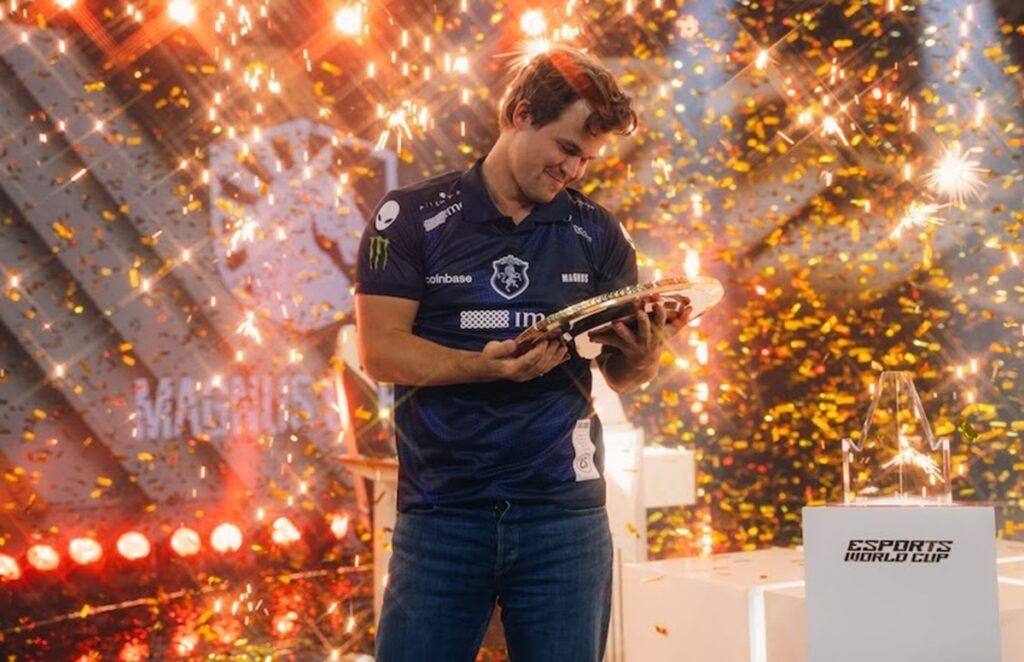
In its annual report, Savvy believes it holds the leading position in the global esports market, with a 40% share. The recent Esports World Cup in Riyadh, operated by Savvy’s ESL-FaceIt Group, featured 1,500 athletes from 100 countries and it generated more than 750 million global views. The games sector in the Kingdom of Saudi Arabia reached $1.19 billion in 2024, and it is projected to grow to $1.64 billion by 2028.
Here’s an edited transcript of our interview.
GamesBeat: What are some of your favorite topics that have come up at Gamescom?
Jesse Meschuk: It’s been a great opening for the show. We’ve seen a lot of interesting things. I was personally intrigued by the Black Myth: Wukong sequel, because I played the first one and thought it was great. Hero Games is a great studio. Hero Esports, which has the same founder, we’re 30% owner of that company. We were proud to come see that. A lot of other interesting content, pretty big releases coming out. I’m excited to play a bunch of those.
GamesBeat: It’s going to be a fun year for Battlefield versus Call of Duty. That doesn’t happen every year.
Meschuk: Battlefield 6, a talented team on that game. Black Ops 7 also looks pretty interesting. The trailer was great.
GamesBeat: It still feels like there’s lots of room for other successes still. We have lots of indie-oriented or double-A games that are doing well when we didn’t expect them.
Meschuk: Helldivers 2, Expedition 33, games like that. It’s great for the industry to see that.
GamesBeat: Are there certain conditions that are making that possible? I don’t know if it was funding that was happening years ago, and it’s now coming home.
Meschuk: Maybe. We’re seeing the ability to make–there’s increasingly more sophisticated and well-developed tools to make games. That’s helping. That enables smaller teams to make great games. That contributes. Platforms like Steam and the ability to use tools like Unity to publish on mobile has made it easier to put games out there and self-publish, where before you might have needed a significant third-party publisher to do it for you. Those trends helped. You still have to make a great game. This has also meant that there’s a lot of other games in the market. Discoverability is hard.
GamesBeat: I see new kinds of funding models happening. A private equity firm just announced a user acquisition fund a couple of weeks ago, Plan A Games. They’re funded by one of the big private equity companies. They thought they could contribute to the space because their competition is banks. You think of banks investing their money into games–okay, can you fill out this application?

Meschuk: Yeah, going for a bank loan. You’re talking about project financing. It’s an interesting development. It points to the fact that there is a gap. Smaller game studios–the traditional VC model wasn’t working super well for them. It’s a great development. It can help a lot of the indie studios find the right kind of capital and financing to bring their games to life. I think it’s great.
GamesBeat: The strategy I thought was interesting–you catch the games as they’re going up. I remember there was a VC firm associated with another analytics company. The analytics people would capture different mobile games that were starting to take off. Because they had this data, they were able to notice which games they should go to, rather than just waiting for them to come looking for funding. The idea that there’s a certain stage where you’re scaling up and going viral, but you don’t have the cash to invest in what you need to keep that going. It feels like everyone needs a strategy for that. Do you think about that kind of thing?
Meschuk: Yeah, we do. Both about partnering with firms that are thinking about doing this kind of project financing, where we can partner up with them and they have an expertise in that, but also–Scopely looks at quite a few companies. They’re looking at ways in which they can help smaller studios publish, and then if it turns out that those games do well, maybe they become part of the Scopely ecosystem. They’ve been doing that for a number of years. It’s definitely something we think about.
GamesBeat: I wasn’t sure how much to believe it, but Google Cloud had a report claiming that 90% of game developers say they’re now using AI in their workflows. The only other reference point was the GDC survey back in March, where they reported that the number of folks who were resisting AI was going up. It went from 20% to 30%, but 70% were still favorable to AI.
Meschuk: AI will play a big role moving forward. It’s definitely something we’re thinking about and incorporating everywhere in the business. If you look at the variety of AI tools, it does provide a lot of potential advantages, particularly in things like–not just engineering and coding and that sort of thing, but also things like concept art and iteration for different things you might use in user acquisition. Across many areas it will play a significant role in the future.
GamesBeat: You did a memorandum of understanding with another company committing to create more jobs in Saudi Arabia, another studio. That’s starting to get very interesting. I feel like Saudi Arabia and the region has exactly the kind of players that the world needs. Others have pointed out that 70% of the population is young, under 35. It’s a wealthy population. Not everyone needs to work. They have a lot of leisure time. They spend a lot of that leisure time playing games. A lot of them are good enough to become skilled esports players. Esports makes sense for the region.
I remember talking to a mobile game company about their $4 billion mobile game back in the day. The lead clan was run by a Saudi guy, and the second-place clan was run by a guy from Dubai. They were competing against each other. They’d buy everything there was to buy in the game for their clan members. It goes back to that notion of how 98% of players in a game like that never buy anything, but the 2% that buy something make the game profitable. These kinds of players aren’t plentiful, but they’re present in the region in abnormally high numbers. To me, this makes it the perfect place to find players.
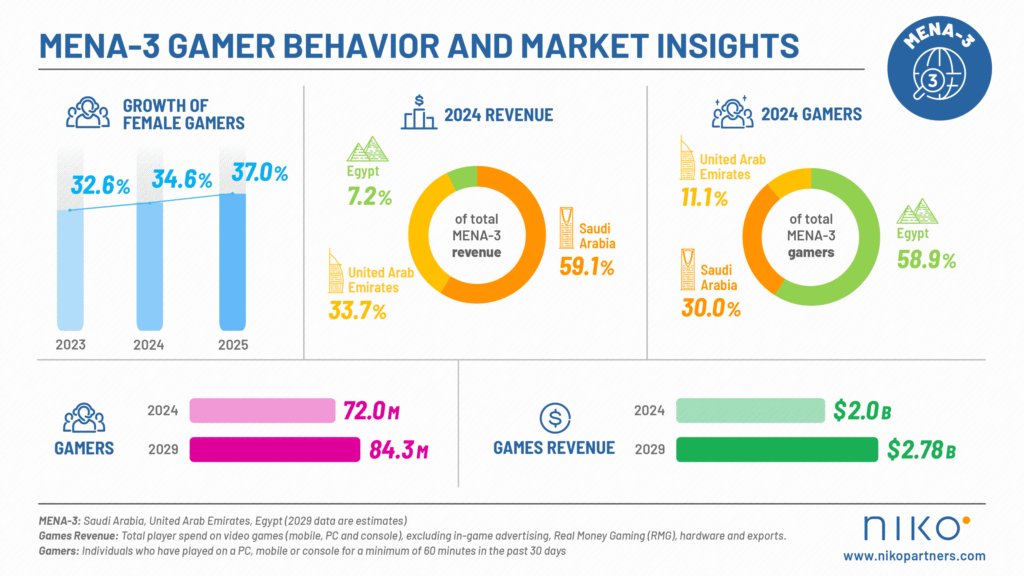
Meschuk: It’s an interesting point. I definitely think–more than 60% of the population plays games. It’s a very passionate country when it comes to games and esports. That’s attractive for a lot of companies. MENA is also the fastest-growing region. We were just talking to Newzoo yesterday. They talked about how year-over-year it’s about a 9% growth rate, which is number one in the world. What people are seeing in Saudi Arabia, and it’s why different companies are coming to the Kingdom–we just signed with Territory Studio. We just signed another deal today with Unity. The reason you see interest in the Kingdom like that, people recognize that it’s the next era of growth. It’s also a place where people are very excited to do whatever they can to help build the ecosystem and the industry.
We’re doing a lot at Savvy to support that, from partnering with companies that want to come to the Kingdom and helping them out, to educational efforts, partnering with local universities, taking a lot of game education that’s already out there and bringing it into the Kingdom. Our own direct investments. Steer Studios launched their own game this year, their first game. They went from nothing to launching their first game in three years, with half the team made up of local talent. Hopefully a second game is coming soon. It shows that there’s a lot of interest. In order to do this well you need a lot of players all jumping in. But there’s enthusiasm, which is awesome.
GamesBeat: The way to accelerate what happens naturally–
Meschuk: This process usually takes decades. We’re working to do whatever we can to accelerate that, to make it happen much faster. It’s great when there’s a lot of support behind us to invest and make that happen.
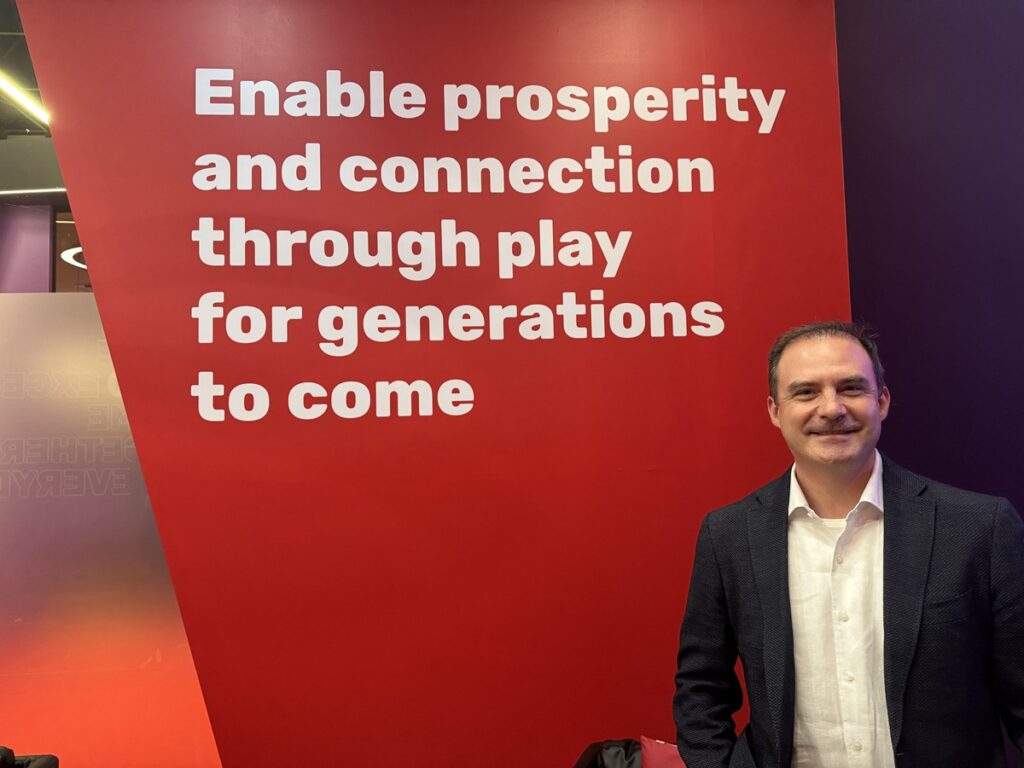
More broadly, we think of Savvy as trying to be an overall supporter of the industry. We just did some work on Savvy’s purpose. It’s on the wall right behind you there. It’s to enable prosperity and connection through play for generations to come. Those words were chosen carefully and thoughtfully. Connection is a natural thing with game companies, how they try to bring people together. But the prosperity part for us–we want to help build an industry, and not just in Saudi Arabia. Where can we help the game industry prosper? How do we help esports be a sustainable business in the long term? These are all things we think about a lot. The role we think Savvy plays–we can be a convener for lots of different game companies and partners to bring everybody together, to try to chart a positive future. That’s what we want to do.
GamesBeat: You have an annual report coming out.
Meschuk: We’re just about to release it. That’s 2024. We’ve shown that 2024 was a great year for Savvy. We continued to grow the business pretty significantly, thanks in large part to the Scopely team and what they delivered with Monopoly Go. We also found that viewership for our esports events continues to grow. Since the acquisition there we’ve more than doubled the viewership of esports events. The delivery of the Esports World Cup went great. The second version is happening right now. It finishes this weekend, actually. I’ll be flying back for the finals, the last few days. That’s been great. That’s one piece to highlight.
GamesBeat: You’ve talked a bit about the Esports Nations Cup. Does that coexist alongside the World Cup?
Meschuk: We’ll be talking a lot more about that with the Esports World Cup Foundation. They’re driving that effort. For Savvy, we like to be a strong partner with that team. Our EFG team partners closely with them on how to deliver those events and make them great. You should talk to them more about those plans. It’s very big. It’s super exciting.
GamesBeat: If there are challenges ahead, are there any that you’re being particularly careful about? Things that could slow you down.

Meschuk: You always have to be aware of the potential challenges the business might face. We’re no different from any other game company in that we face a lot of the same challenges. Thankfully we’ve performed well over the last few years. We want to continue to support our teams as they try to make games that people want to play for the long run. Our focus is about how to support the different game makers, continuing to invest in their products so they retain users in the long term.
Our strategy has a lot to do with building and retaining big communities for the long run. But that’s always a challenge. Particularly now that there are more games out there than ever before. We were just looking at a report about how many games came out on Steam in the last year. I think it was nearly 20,000 games, something like that. Consumers have more choice than ever. You have to make a game that’s great in order to keep their attention. As people’s discretionary income ebbs and flows, they’re increasingly looking for value in the games they play. How do we make sure everyone is getting the right kind of value out of those experiences? We’re thoughtful about that.
For esports, how do you continue to deliver a compelling fan experience? We saw some interesting things with our Dreamhack Gaming Festivals. We partnered to do that in conjunction with esports events. That enhanced the experience. People that came in for the weekend could go play some of their favorite games, get some interesting gaming news, and watch some of their favorite esports. Those sorts of things let us provide more value to fans and players. We think about that a lot.
As Savvy we also just want to keep an eye on the market. Where is it going? Where are the trends? We think about where we invest next. How do we make sure we invest in where the future is for games? That’s a hard problem to solve. We have a lot of smart people thinking hard about that.
GamesBeat: The Nintendo Switch 2 taking off so well kind of circles us back to–the core of gaming is still very strong. To see 6 million units sold, the fastest-selling console in history–
Meschuk: The Switch 2 is great. I pre-ordered one as soon as I could. It’s amazing. It shows that there’s still a lot of great things happening, a lot of engaging platforms to play on, but also–those continued evolutions in gaming experience and technology provide new ways for game makers to make something interesting, which in turn keeps players engaged and interested. I’m excited to see what they make. I’ll be playing it.
GamesBeat: Back to growing more game jobs in Saudi Arabia, the interesting thing happening for everyone–regional competition is strong. We just wrote some stuff about Dubai, how strong that is. How do you learn to be stronger in that context alongside others who are trying very hard in the region?

Meschuk: I see it as a very positive development. The more investment and development in the MENA region, the better. That continues to show that there’s strong opportunity in games in the region. As more countries and companies come to that, it only creates a broader talent base and deeper capabilities that make it less risky for other companies to come. They know that there’s already a base there. From a Savvy point of view we see that very positively.
Obviously we want everyone to come to Saudi Arabia. We’re going to work, for our part, to do what we can to support companies that want to do that. We’ll advise the Kingdom on things they can do to continue to make it more attractive. We’ll leverage our skills and capabilities to help endemic and local game makers and indie developers. We take that responsibility seriously. We’ll do everything we can to help grow that in Saudi Arabia. But I think this isn’t a zero-sum game. The more people that come to the region overall, it just provides more green field for everyone.
GamesBeat: My guess is that the investors in all of these cases must be happy. I don’t talk to them, so I don’t know for certain, but I’m guessing that the people in charge of these strategies are happy.
Meschuk: We talk to a lot of the capital partners that provide money to studios coming into the country. We hear from them that they recognize a lot of the trends I’ve talked about. They also understand that not every game company that starts up will necessarily be successful, but over time their capabilities will grow and great games will come out of that.
We’re partnering with a variety of those capital partners and programs. NEOM has an accelerator program. We’ve played a role in helping with that. Merak Capital has one where they’ve funded a variety of programs. I’ve had the opportunity to see some of those games. Even though they’re very small teams, indie teams, with younger developers, they’re extremely talented. What they’ve been able to put together in a very short time speaks to a pretty bright future. It makes me excited about where it could go. I think the next few years will see a lot of exciting things coming out of the country.
GamesBeat: Do you think some of these mega-projects are making enough progress to encourage people to come to Saudi Arabia?
Meschuk: I recently went to Qiddiya to see the progress they’re making. It’s coming together quite quickly. They’re making great progress there. As a future entertainment city, that’s a compelling prospect. It’s not too far from Riyadh either. Some of the plans they have there are pretty exciting. Over time, yes, that will create additional places where it will be attractive for other game companies to put down roots. Obviously it takes time to build a city, but that shows, from a Kingdom point of view–there’s real commitment to building the industry and trying to put a gamer-first mentality into some of this. Creating districts and communities that don’t exist anywhere else.
Disclosure: Gamescom paid my way to Germany.