
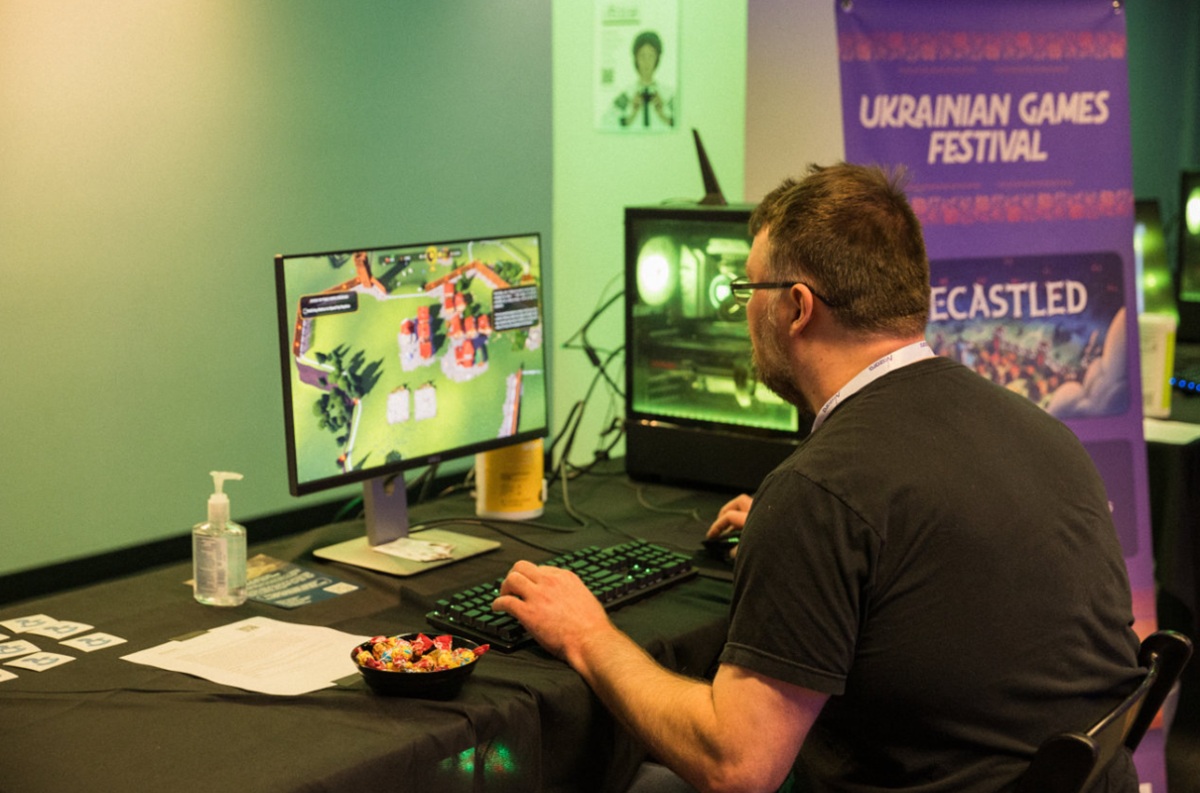
Ukrainian Games showed off 10 games made in Ukraine as an act of defiance and resilience, born from making games during wartime.
Ukraine has suffered through four years of war with Russia, but it people are still making games. And the Ukrainian Games initiative hosted its own festival for home-grown games during the GDC Festival of Gaming.
Ihor Pospishnyi, CEO of Palaye and cofounder of the Ukrainian Games initiative, said before the show in a messsage To GamesBeat that the event wasn’t about sympathy. Rather, it was showing the world what Ukrainian creators build when they’re given a platform even while there are air raid sirens going off outside. The determination and creativity is rooted in centuries-old culture, he said. At the Steam Festival, there were more than 500 games listed that were made in Ukraine, he said.
The Ukrainian Games Festival pop-up space in downtown San Francisco drew more than 800 people over two days to view the 10 games and interact with the showcase. The event had official support from the Consulate General of Ukraine in San Francisco.
Opening the event, Dmytro Kushneruk, Consul General of Ukraine in San Francisco, said, “GDC is one of the key technology events in San Francisco. Ukraine has long been recognized for its talented developers, but this year marks the first time we have successfully presented the Ukrainian video game industry as a comprehensive sector of the creative economy. It is another significant step in establishing Ukraine’s reputation as a modern, high-tech nation.”
The charity auction raised $9,600 for 10 tactical medical backpacks.
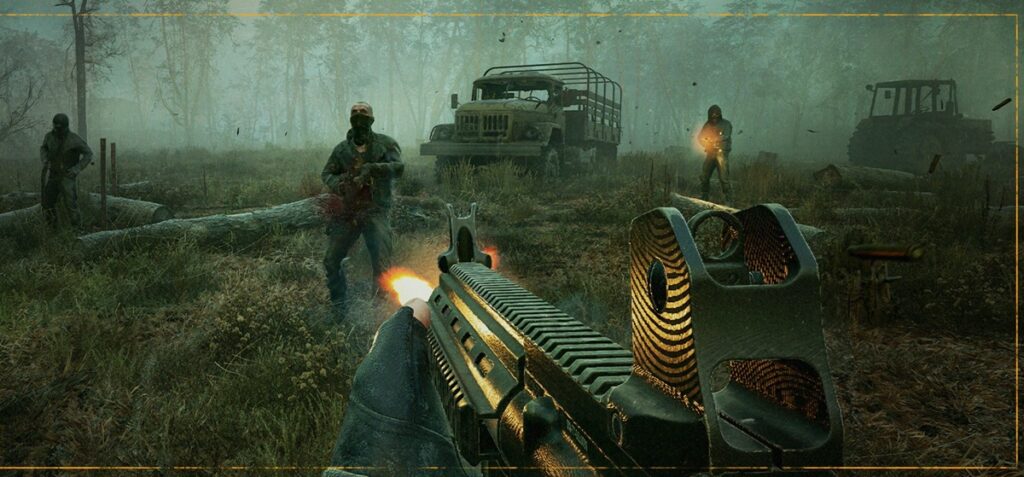
On March 10, the group held a panel, “Navigating games distribution through uncertain times.” The event featured Maria Grygorovych (executive producer/head of creative at GSC Game World, maker of S.T.A.L.K.E.R. 2), Olena Lobova (head of strategic partnerships at Burny Games), Irena Pereira (CEO at Unleashed Games and Infinite Realms) and Chloé Giusti (ID@Xbox Publisher and Developer relations).
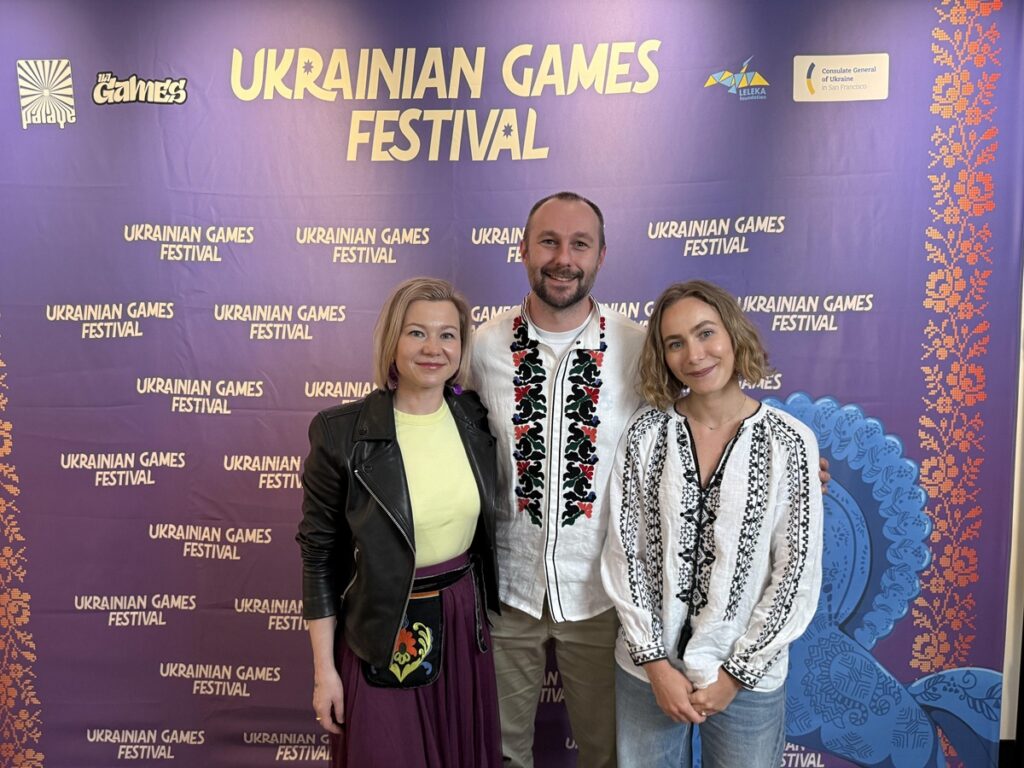
The game showcased hands-on demos of anticipated and critically acclaimed Ukrainian titles including STONKS-9800, Hollow Home, Becastled, Tukoni, Warfactory, Titan Chaser, and more. It featured Ukrainian food, a photo zone and a charity auction.
All proceeds of the charity auction were handed over to Leleka Foundation, a U.S.-based nonprofit delivering life-saving medical supplies to frontline medics in Ukraine.
Organizers include Palaye, Ukrainian Games, Leleka Foundation, and the Consulate General of Ukraine in San Francisco. The Leleka Foundation has generated millions of dollars in donations over time, especially in the wake of the 2022 Russian invasion of Ukraine, said Olga Sheverieva, board member at Seattle Indies and one of the hosts at the event in San Francisco.
At the event, Svitlana Kostylova, cofounder and board member of Leleka Foundation, told me, “I joke that my day job is a game producer at Netflix games, and for my night job I’m a co founder of Leleka Foundation. Since 2014 we’ve been raising money for [medicine backpacks for soldiers] on the front lines. It’s been long time for us.”
I asked how Ukraine has managed to operate its game companies for so long during war and make games despite the hardships.
“I would say I have a bit of historical answer,” said Ihor Pospishnyi, CEO of Palaye, in our interview. “You know that almost every 40 to 80 years, all our heritage was purged. A lot of artists were killed by different governments. Every generation, we’re trying to build from ashes, from zero to one, basically. And game devs are not the exclusion from this rule. Do you have any family heritage given from your mother to you [across generations]? Unfortunately, Ukraine doesn’t have this.”
He said that Ukraine has to grow this kind of perseverence and creativity in a single generation.
“We have a lot of creative people. Ukrainian culture is so rich, and I think not everyone knows about it, unfortunately, but I think creativity, like arts, is really something that we cherish a lot, and it’s also something that supports people through really hard times,” Kostylova said. “We are Ukrainians always loved poetry, visual arts for many, many years. And that’s a coping mechanism that helps people to continue living because we want to have a good life, and we want to stay optimistic. That’s why we stay resilient, and that’s why we are not giving up.”
Pospishnyi said that most people do not know that games and songs were a rich tradition in Ukraine long before there films and books.
“It wasn’t digital, but it was a cultural experience. It’s an exchange of something between people. That’s why we’re trying to make this not just a showcase with laptops, but more like a kind of cultural experience,” said Pospishnyi.
That explained the presence of borscht and other foods at the event.
“Ukrainian culture, not only games, are seeing a renaissance right now. We are not only making incredible games. Because of hardship, we are pouring our hearts into creativity. And music in Ukraine is absolutely phenomenal. Films that are being made are fantastic. All the visual arts that are being produced in Ukraine are back,” Sheverieva said.
I noted that one of the first Ukraine game companies are met in the U.S. back in 2014 was a team from Gameprom, which made pinball games. They managed to make a realistic pinball game with great physics even though they had neve played pinball. Rather, they watched videos on YouTube and used that as the inspiration for the mobile game.
Now, there are much bigger teams. The team at GSC Game World, maker of S.T.A.L.K.E.R. 2, had hundreds of people. The team was ripped in two when the war started, as some of the workers, women in particular, were able to escape across the border and set up development offices in nearby countries. The ordeal was captured in a Microsoft documentary about the making of the game under war conditions.
The team lost a couple of people as casualties of the war, but they managed to hold together and ship the game after a number of delays.
“People have a lot of inspiration and the will to deliver just because these special circumstances make them feel more responsibility on themselves,” said Sheverieva.
By continuing to make games that sell well, Ukrainian developers can help the economy, which is necessary to maintain the war effort.
“Everyone in Ukraine right now, they don’t have heat, they don’t have electricity, but work doesn’t stop. People create games. People go to the office. Kids go to school,” Kostylova said. “We continue growing with our everyday life and continue surviving and being resilient.”
And Sheverieva said games are taking on a special meaning in Ukraine because they’re an outlet for people who are stressed.
“For example, my little cousin, who lives in Kyiv, he’s allowed to play many mobile games and my aunt gives him money to actually do in-app purchases on those games,” said Sheverieva. “Whenever there is an air raid attack, he gets distracted from what is going on in outside world. He is actually playing the games with his friends, while all of them are in different bunkers all over the city, just waiting for the air raid to be over.”
Another aunt and her daughter left the country while an uncle stayed, as men are required to remain in Ukraine. They played games like The Last of Us together via online play, Sheverieva said.
“That’s how they stay connected with their friends, with their families,” Sheverieva said.
Pospishnyi said some of the developers debate whether to make games about the war, but they have to think about issues like giving the Russians a say or think about whether they are creating propaganda, even as they are under missile fire. Games can look at the world through the lens of politics, art and business, he said.
The event’s goal was to raise money for 10 medical backpacks, which Pospishnyi said is akin to a mini hospital that can save 10 lives.
Kostylova of the Leleka Foundation emphasized the humanitarian impact. She said, “The need for medical supplies at the front lines remains critical. This event is a clear example of government, private companies, and NGOs working together toward a common goal: saving lives.”
Participating Games
- Tukoni: Forest Keepers (Dream Operator)
- Stonks‑9800 (Ternox Games)
- Hollow Home (Twigames)
- Back to Hearth (Podoba Interactive)
- Becastled (Mana Potion Games)
- DDoD (The Future Entertainment Company)
- Floralis (SolidCore Games)
- Warfactory (Terykon Games)
- Jitter (Berko Games)
- Titan Chaser (Stas Shostak)