
“This has just accelerated that curve,” Yang said. “Esports has started to show up on traditional cable TV. Now you see Formula 1 and NASCAR moving into esports, and the NBA as well. It is expanding the audience.”
Physical events have collapsed for esports, but they weren’t as high-margin as other kinds of sporting events. No traditional sporting events are happening now, either. Television shows are now putting racing games and sports video games on the air.
“Maybe those live events aren’t as important [to esports] as what people thought before,” Yang said. “In many ways, it’s not a huge blow to the industry. This gives us a chance to pause and rethink how a live event might work for esports in the future. That’s the exciting part to me.”
Stuck in the mud
Cheung said that one good thing about the pandemic for esports is that it’s forcing the industry to diversify their revenue. The ones that come out ahead will be the ones that find ways to monetize beyond the revenues that have been impacted. Just like the Warriors stood out in the NBA, it’s a good play for companies to chase after the right talent.
“It’s a forcing mechanism for the esports industry,” he said.
Yang believes consolidation will come as the stronger players acquire the weaker players. But entrepreneurs may try to fight that trend. Sanderson said that in past recessions, it took about six months for startup valuations to fall after the stock market fell.
“I believe the private company valuations will come down,” Sanderson said. “We are being a little bit cautious on valuations,” and on ad-based businesses, he said.
Sanderson said he hasn’t yet funded any companies where he hasn’t met the founders in person. That is one way that the coronavirus is slowing down game startups. He feels that’s making it hard to get to know someone who you will do business with for six to eight months. “Zoom calls work really well, but there is no replacing personal interaction and getting to know somebody,” Sanderson said.
Cheung said the team is getting more rigorous about vetting people through their partners, friends, seed investors, or other industry sources. Yang said it remains important to see teams live to get a sense for their cultures. His team hasn’t invested in startups it hasn’t met yet, and so he says that entrepreneurs should expect the process to take a little longer.
Sanderson still thinks that “hot deals” will raise money no matter what.
“When there’s an amazing company, we drop what we are doing, and we focus on that,” Sanderson said. “Those deals will happen.”
Sanderson said that startups have to preserve their cash. He said companies need to cut back spending, focusing on projects and figuring out how many people are needed for those projects.
“The only saving grace is that there are a lot of funds out there” for games, he said. “That money won’t sit on the sidelines, but it will be slower to deploy.”
As to what kind of startups they are focused on? Cheung said he is platform agnostic, backing those from PC to mobile to console. What matters more is the opportunity for the particular studio and opportunities for growth, like persistent multiplayer online games and simulations, Cheung said.
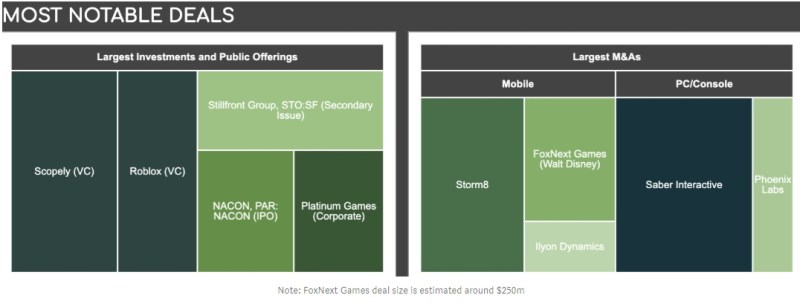
Sanderson looks at gaming infrastructure and publishers, both in the U.S. and aboard. Phoenix Labs, maker of Dauntless, was one of his investments, and it was recently sold to Garena. He has invested in gambling on esports, mobile games, and story-based casual games.