
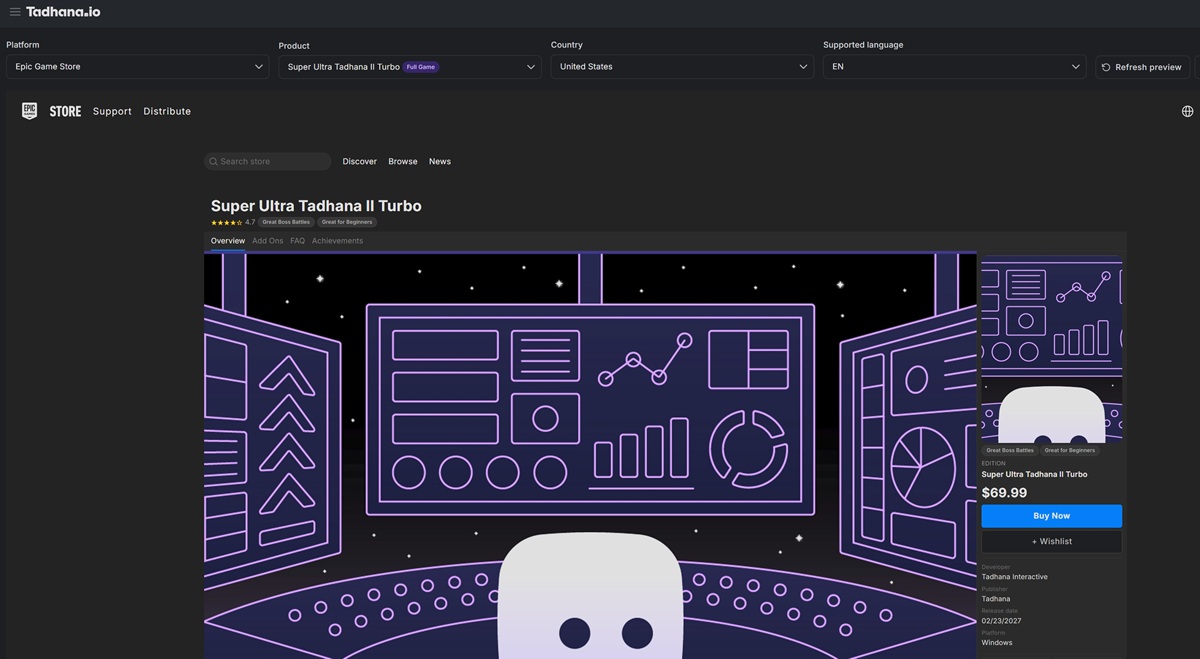
Tadhana has launched its release-management and submissions toolkit helps studios and independent developers streamline, navigate, and manage the final steps of getting a game published — to one or multiple PC or console platforms — through a single, unified system.
Tadhana (pronounced tuhd-ha-nah) was built to solve the problems familiar to all developers: Shipping a game means prepping art assets, entering metadata, listing international prices and languages, and sifting through endless documentation to launch a single game to a single platform.
And for multiplatform releases, developers have to do all that work again but with different specifications, technical requirements, and certification processes. What should be a creative milestone often turns into a logistical burden, said Mart Gervacio, founder of Tadhana, in an interview with GamesBeat.
“I’ve spent thousands of hours in release management, so I know the pain all too well,” said
Gervacio, whose previous stops include PlayStation, Electronic Arts, and Nintendo. ”After helping countless studios, I knew there had to be a better way, so we built Tadhana to serve those needs.”
One of the common problems addressed by Tadhana is simply getting the pricing right in all markets and platforms where a game will appear.
Tadhana greatly simplifies and streamlines all these processes. One toolkit to output what PC
and console storefronts need. One toolkit to manage everything. One source of truth. Tadhana has been in beta testing for about six months with about 20 publishers.
Origins

Gervacio has been in games for about 20 years, first at Nintendo in quality assurance. He then moved to EA as a “release manager” for a couple of years, launching games such as Battlefield 4. Then he moved on to PlayStation for about 10 years. At first, he was a studio release manager and then later took over the whole team for both first and third parties.
Dan “Shoe” Hsu, one of the leaders at Tadhana, introduced me to the company and to Gervacio. I know him of course because he was editor-in-chief at GamesBeat from 2012 to 2014, back when we were part of VentureBeat. Hsu signed on to help with communications and marketing, as he worked with Gervacio during a stint at Sony PlayStation.
Hsu moved on to work at Blizzard and for the past couple of years, Gervacio was working on Tadhana. He received advice from Adam Boyes, who was also a former PlayStation exec. Boyes connected Hsu and Gervacio on the new project.
“After PlayStation, I did some consulting and working with indies and some publishers, and I realized being at PlayStation for around 10 years that I didn’t know much about the Microsoft way anymore, the Nintendo way, or the Steam. How do we submit games to those platforms?” Gervacio told me. “So I started asking around within the industry with all the release managers I knew, and the answer surprised me.”

He added, “People are still using Excel sheets and Google Docs, or have built their own scripts and tools to actually cover a lot of this operations work. So the idea of just making a tool that actually can do all of it all at once is something I’ve been working on for the past couple of years.”
Gervacio said there are a lot of tools and processes that cover part of the submission process, but you have to use multiple tools all at once.
“People are using Excel sheets to track all their pricing to submit to the platforms,” Gervacio said. “Art assets are being stored in Google Drives, for example, or Box. It’s all in a couple different places. There are some project management tools. Some people are trying to use Jira or even tools like Salesforce to accomplish this, but [those tools] are not built for each of the different platforms.”
Tadhana is built by industry veterans, and the advisory board includes partner Adam Boyes (founder, Vivrato) and advisors Jen MacLean (CEO, Dragon Snacks Games), Joe Kreiner (former VP, Epic Games), and Yoshio Osaki (CEO, IDG Intelligence).
“After years working in release management across platforms, getting hands-on with
Tadhana was a real treat,” said Cruz Segovia Ardiz, senior publishing manager of Future Friends Games, in a statement. “It’s intuitive and comprehensive, clearly built by people who
understand the realities of submissions and release work. If release management has
ever been a headache for you, this is the tool that finally makes it easier.”
The team includes Gervacio as founder, Theresa Custodio as cofounder and head of operations, Hsu as head of communications and content strategy, Mark Jawad as technical consultant and Boyes as partner.
Key capabilities
Key capabilities available at launch include:
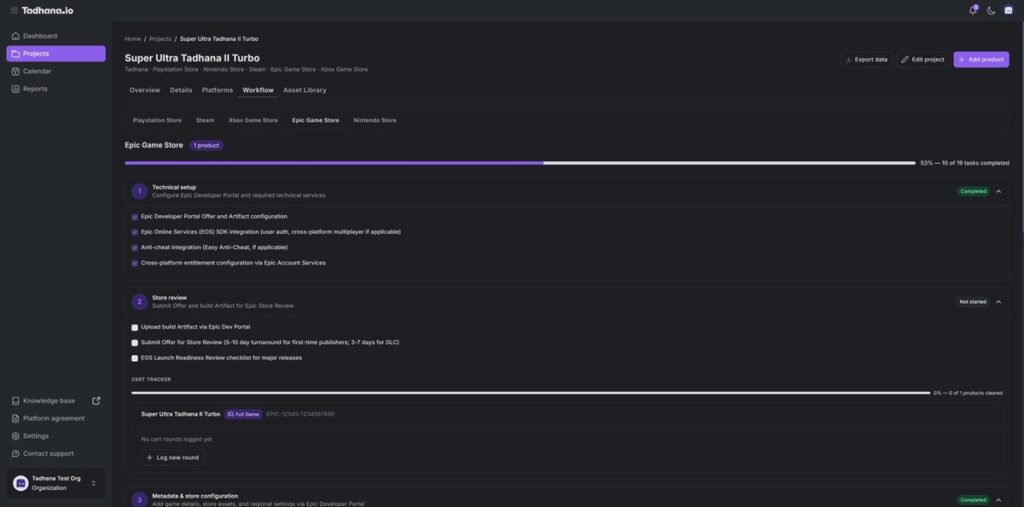
● Unified release hub: Manage all platforms from one dashboard with platform-specific
workflows for PC and console.
● Centralized release calendar: Visualize submission deadlines, certification windows, and
launch milestones across every platform in one timeline.
● Guided submission forms: Use step-by-step workflows tailored to each platform’s unique
requirements.
● Multi-project management: Share copy, assets, data, and more across multiple platforms
and products, so everything is under one roof.
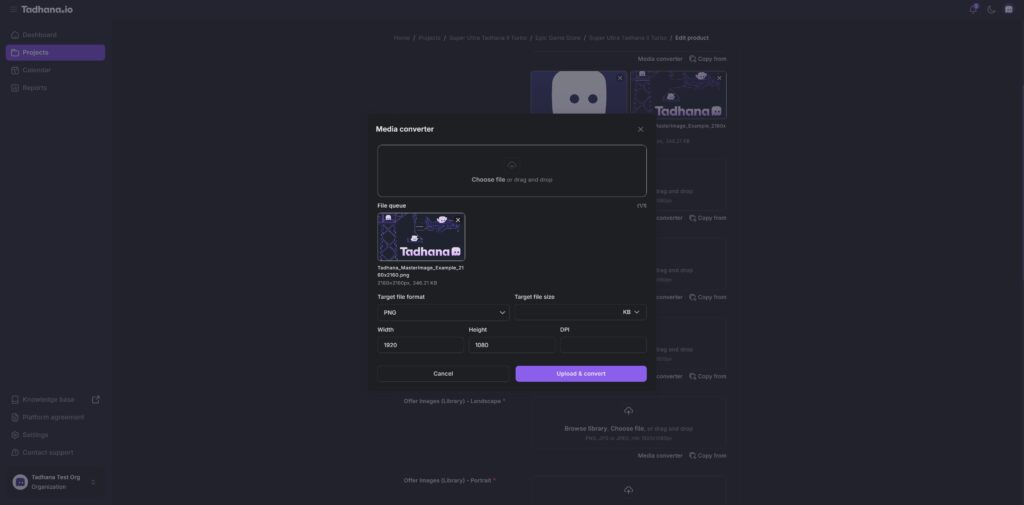
● Project asset library: Auto-checks all uploads against every platform’s specifications,
flagging mismatches before submissions.
● Store preview: See exactly how each listing will look on all the different storefronts
before they get published.
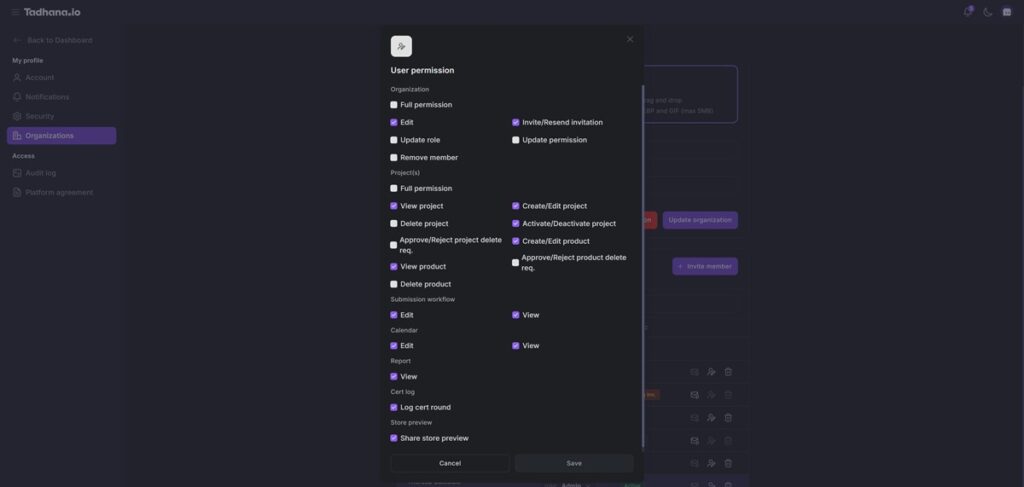
● Real-time collaboration: Keep teams in alignment with shared progress updates, version
tracking, and a single source of truth.
Tadhana, by the way, is the Tagalog word for destiny, but the literal translation is “an invisible force that makes things happen,” Gervacio said.
Tadhana is available today, with pricing that fits individual studios’ needs and limitations. Go to
https://tadhana.io/ to learn more or to book a free demo.
“The scheduling piece for review times is one of the biggest problems throughout this
industry. Having Tadhana work backward from your release date automatically? That is
insanely helpful,” said Paul Campagna, head of games at Trailmark Games, in a statement.
Solving problems for developers and publishers
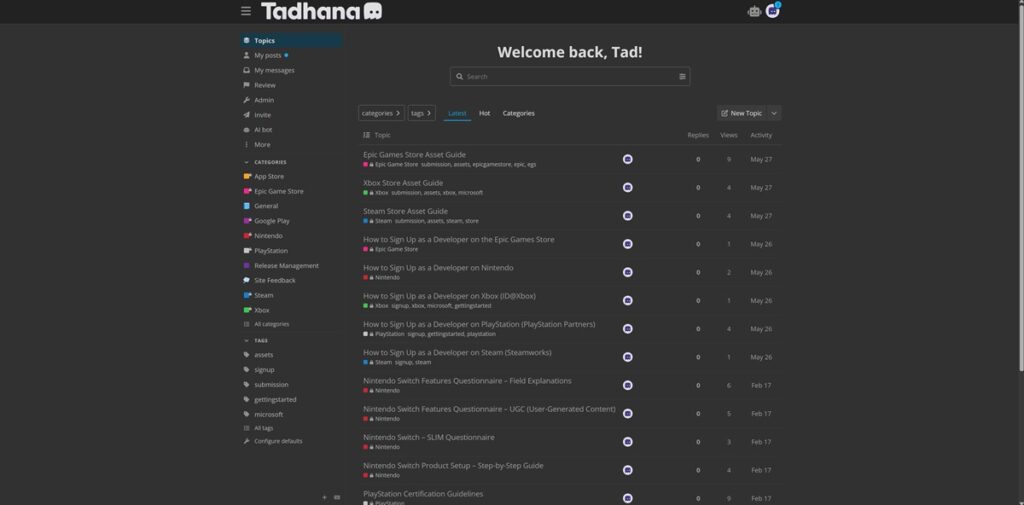
Some publishers do the tasks that Tadhana is undertaking. But Gervacio considers this to be a subset of publishing.
“We don’t take on all publishing, like marketing operations or ads or social or any of that,” Gervacio said. “But we do want to get to that point where we can actually take on some of the assets that are required for all of that. But this is purely the requirements for each of the different PC and console platforms to actually release through their storefronts. So each storefront has its its own requirements, its own certification for all of the different builds, as well as everything that needs to go in the storefront.”
Tadhana has a one-stop shop to actually get the submissions done on time for each platform, Gervacio said.
For the launch, Tadhana will cover the most popular PC and console platforms.
“But we are building in a way that actually isn’t that difficult to add,” Gervacio said. “It’s not a stretch for us to go into mobile in the future as well as GOG or things like Roblox and and Fortnite as well.
There are new challenges coming like direct-to-consumer digital storefronts that could also represent new complexities for game developers, Gervacio believes this headache only gets worse for game devs who want to handl it themselves.
“We were talking about this the other day. There are maybe 200 or 300 release [experts] in the world that know all the systems, and we all rotate between companies,” he said.
Newer companies may assign a producer to do this work, or someone who is familiar with operations and can wear multiple hats to figure out the requirements for each release on different platforms.
“It’s not just that these are big, complicated processes that they’re just very prone to human error as well,” Gervacio said. “One decimal place off on one price somewhere can just throw the whole thing off.”
Ending the horror stories

You may have heard about the occasional horror story where a developer accidentally makes a game free or publishes it at the wrong price and has to honor that. There are even horror stories about mistakes resulting in delayed game launches.
“One of the things that’s really attractive about Tadhana is that it helps basically eliminate those risks because it keeps you on track,” Gervacio said. “It will tell you if something is off or wrong. It gives you progress meters for every step of the way, and it lets you replicate a lot of the work, so that instead of you doing it multiple times, it does it multiple times for you.”
Right now, the companyh isn’t talking about monetization plans. Right now, the goal is to target as many developers and small publishers as possible.
“While we work on our feature set, it’s all going to be flexible in terms of payments,” Gervacio said. “We have free tiers for those who we’re calling a hobbyist, and then we are actually helping out as many indies as we can. A lot of this has been self-funded at the moment because one of the goals is to try and help people get their content out there.”
The company has not raised money yet, but it has help from a couple of smaller angels. The team has four people now from the industry. And advisers include Boyes, Jen MacLean from Dragon Snacks Games; Joe Kreiner, formerly of Epic Games; and Yoshio Osaki, from IDC Intelligence.
Making things easier
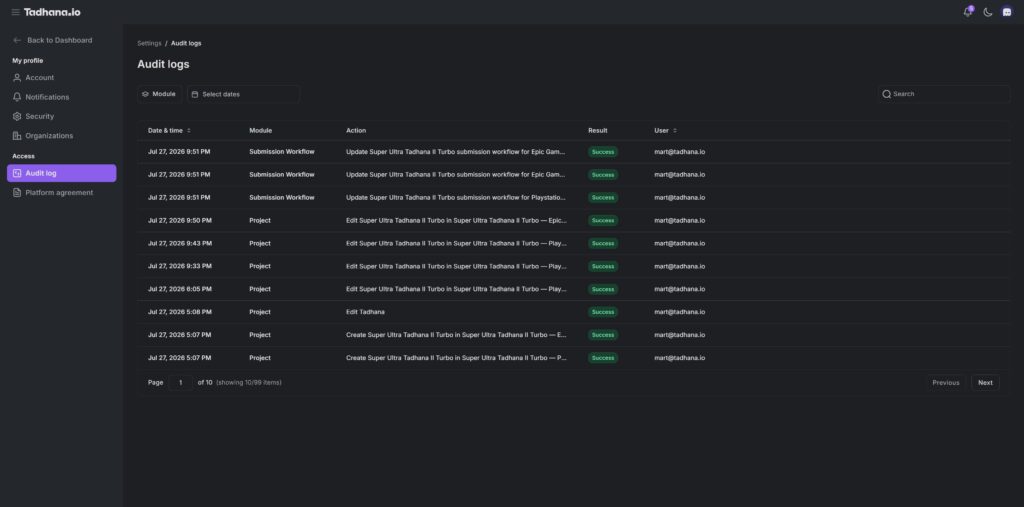
The goal is simplification, but the game industry is a complex beast. I noted that the physical disc change is coming for Sony and I wondered if that would affect what kind of work Tadhana does for that platform. But Gervacio noted that there aren’t many changes as submissions for digital and physical are different.
One of Tadhana’s goals is to find standardized ways to submit as much as possible, as it is a very time consuming, manual process. I asked if AI is useful. Right now, the company is not using AI. Rather, it’s creating scripts that appear to be just as good as AI. Those scripts are created by people who have a lot of experience. A script is partially automated, but it’s not using AI to get tasks done.
The company plants to create a dashboard to simplify submissions for all the different SKUs. So far, the platforms do not have APIs at the moment to actually connect to. While Unity gets a game to run on different platforms using the same game engine, Tadhana is really making it so so that a game can be launched on different platforms with correct pricing and more.
Getting off the ground
Hsu said that part of the early strategy for now is not coming out with splashy launch with paid media. Rather, the team is trying to help the industry and it is targeting a lot of indie developers who are more likely to have a hard time doing it. It also helps out mid-size publishers who have a lot of products to worry about.
Thanks to the advisory board, the team is getting a lot of referrals. But the company is gradually taking on new clients slowly, as it wants to make sure those games get out on the market smoothly first.
“Anyone who has experienced this kind of launch once knows what this pain point is all about, and it’s what we’re trying to solve,” Gervacio said. “It hasn’t been a hard sell to some of these developers as they are inundated with spreadsheets.”
“The idea is to make it as easy and seamless as possible. The dream is the magic button that actually just sends it off to the different platforms,” Gervacio said.