
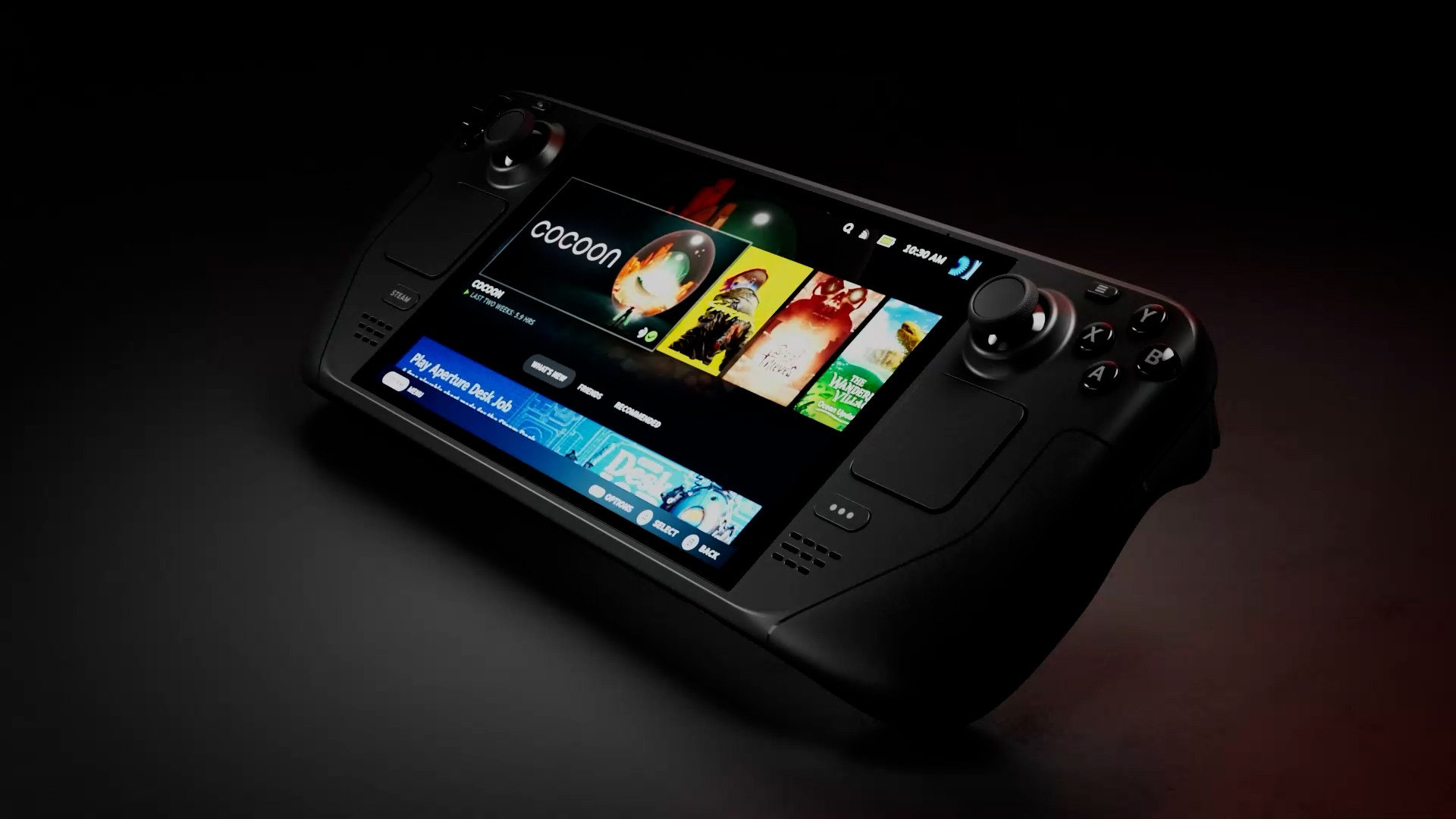
Valve’s Steam Deck is no longer just a curiosity in the PC ecosystem. According to new data from the Game Developer Conference’s (GDC) annual State of the Game Industry Report, the handheld device has quietly become one of the most important platforms developers are actively targeting—and one of the few bright spots in an industry navigating layoffs, tightening budgets, and shifting platform priorities.
The annual report, based on a survey of more than 2,300 game industry professionals, highlights a notable shift in how developers view platforms for both current projects and future development.
For the first time, Steam Deck was added as a distinct category in the survey, and it immediately ranked as the fourth most-developed-for platform, with 28% of developers saying they are currently making or optimizing games for the device.
That level of adoption places Steam Deck behind only PC, PlayStation 5, and Xbox Series X|S, and ahead of many traditional platforms that have been staples of multiplatform development for years. Yes, it even outranks the Nintendo Switch, Switch 2, Android, and iOS, among many others.
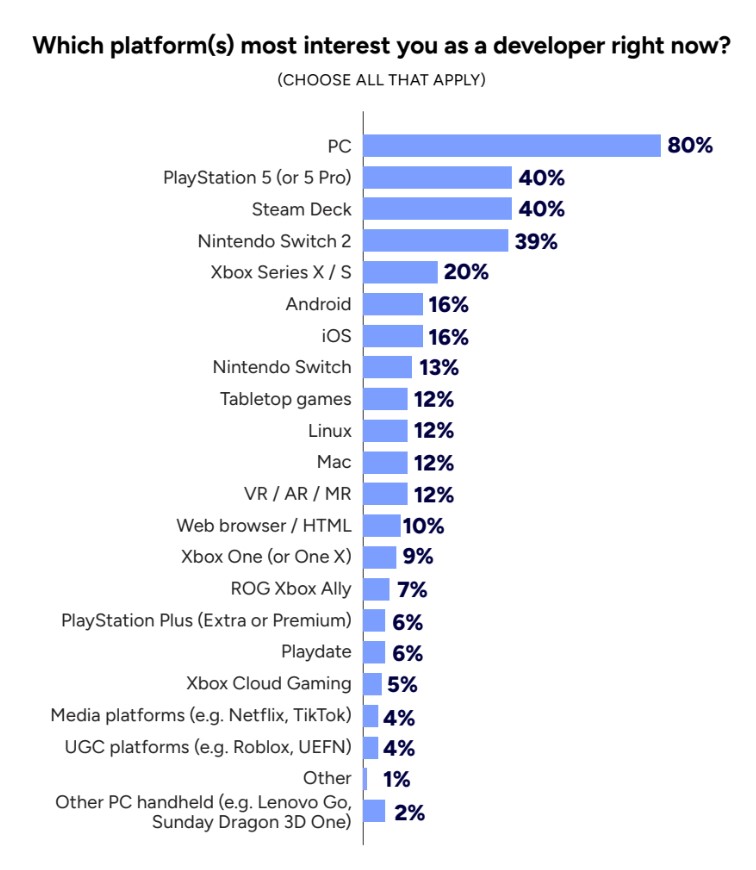
Perhaps even more striking, 40% of developers said they are interested in making games for Steam Deck, putting it effectively on par with the Switch 2, which landed at 39% interest in the same survey.
Other PC handhelds, meanwhile, aren’t gaining traction as specifically targeted platforms as quickly. Interest in devices like the ROG Ally and comparable hardware hovered in the single digits, reinforcing Steam Deck’s position as the default PC handheld developers are paying attention to.
Market consolidation can build risk tolerance
In an industry that increasingly values efficiency and reach, that kind of consolidation matters. It’s also a promising sign that developer support will be there for the upcoming Steam Machine consoles, theoretically.
The report also reinforces PC’s continued dominance overall. 73% of surveyed executives placed PC in their top three next-generation platforms of interest, far outpacing console and emerging hardware categories. Steam Deck, by extension, benefits directly from that prioritization, functioning less like a separate platform and more like an extension of the PC ecosystem.
Steam Deck’s rise comes at a time when developers are reassessing risk. The same report paints a sobering picture of the broader industry: 28% of respondents reported being laid off in the past two years, rising to 33% among U.S.-based professionals. Half said their current or most recent employer conducted layoffs in the last 12 months.
Against that backdrop, Steam Deck’s appeal becomes clearer. Developers cited audience reach (78%), business model success (44%), and discoverability (43%) as the most important factors when choosing platforms. Steam Deck benefits on all three fronts by tapping directly into Steam’s massive PC audience, established storefront infrastructure, and familiar monetization models.
Crucially, optimizing for Steam Deck does not require a separate publishing strategy. Games that run well on Deck also tend to benefit from broader PC performance improvements, making it a relatively low-risk way to expand reach, which is particularly appealing for indie and AA teams navigating tighter budgets and declining platform deal opportunities.
The Steam Deck’s momentum also aligns with another key finding from the report: 74% of respondents said they are currently working on premium games, rather than free-to-play titles. That focus skews even more heavily toward PC development, where premium pricing remains more stable than on mobile or subscription-heavy platforms.
Subscription services, once viewed as a major opportunity, are increasingly seen with skepticism. Several respondents noted that platform deals and buyouts have “dried up,” making traditional sales once again central to financial sustainability. Steam Deck, operating entirely within the established Steam marketplace, fits neatly into that recalibration.
The ultimate takeaway here is that the Steam Deck is no longer being treated as an experiment. Developers are actively optimizing for it, planning future releases with it in mind, and ranking it alongside mainstream platforms in terms of strategic interest. Steam Deck has become a practical, increasingly unavoidable consideration.
As the industry continues to navigate uncertainty, the Steam Deck’s steady rise suggests that platforms offering familiarity, flexibility, and direct access to audiences may be best positioned to weather the turbulence ahead.