
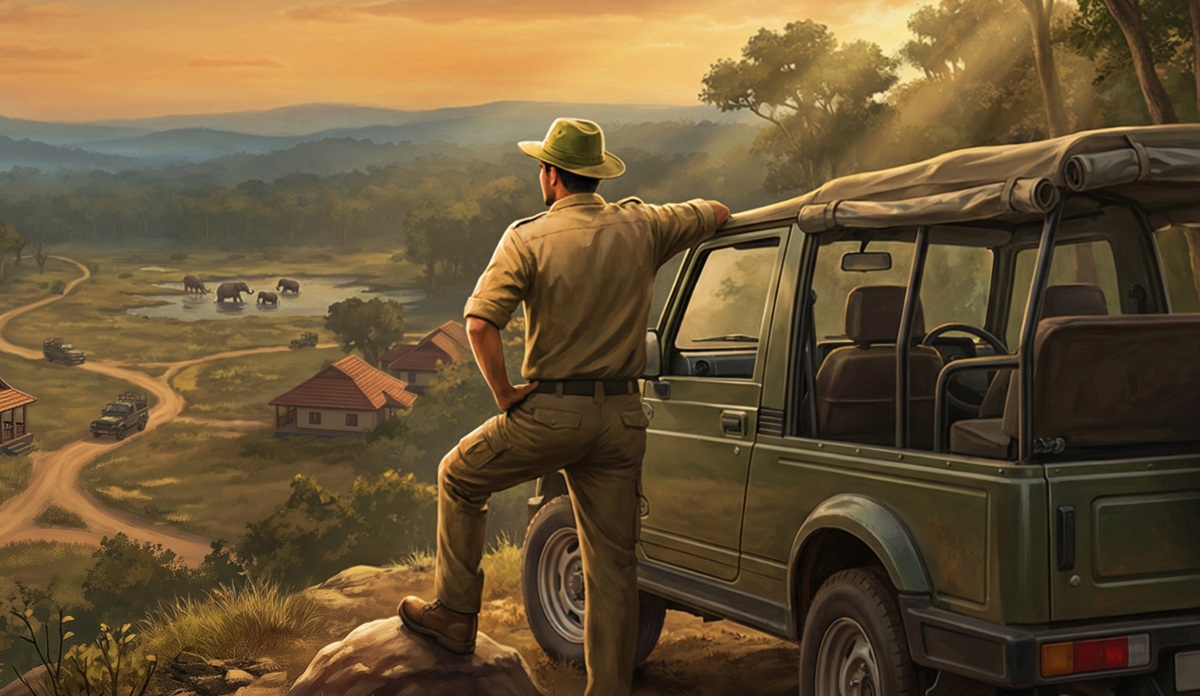
Independent solo developer Flying Robot Studios has announced The Great Indian Safari, a wildlife photography and management simulation.
The game is coming to PC via Steam later this year.
Players design rewilded habitats for free-roaming Bengal tigers, Asian elephants, leopards, and one-horned rhinos while engineering safari routes that serve very different visitor types—from thrill-seeking photographers to serious conservationists. A healthy ecosystem doesn’t just look good; it creates rare wildlife moments worth capturing.
You can wishlist the game from the Steam store page right now.
“India has some of the world’s most charismatic megafauna and most dedicated conservationists—yet gaming rarely shows this,” said Satyajit Chakraborty, creative
director, in a statement. “We’re bringing players into a world they’ve never seen in games before.”
Flying Robot Studios is an independent game development studio based in Kolkata,
India. Founded by veteran indie developer Satyajit Chakraborty, it focuses on creating
culturally authentic gaming experiences that bring developing-world perspectives to
global audiences. Previous games include Tea Garden Simulator—a management
game demystifying the artisanal tea production process.
The studio’s philosophy emphasizes games that encode different value
systems—exploring scarcity, community relationships, and systemic rather than
individualist approaches to problem-solving. The Great Indian Safari continues this
tradition by treating conservation not as a checkbox but as a core strategic pillar.
In a message to GamesBeat, Chakraborty said, “The game is essentially a love letter to the Indian safari experience – Tadoba Andhari, Ranthambore, Corbett, Kaziranga, Bandipur. These aren’t just asset references; they’re the DNA of the game design.”
Chakraborty added, “I’ve been on safaris myself. My favorite will be Tadoba, but honestly, the richest research has been consuming everything from wildlife documentaries to safari guides’ YouTube channels to academic papers on tiger behavior. When you’re a solo developer, “field trips” often mean rabbit holes of research at 2 a.m.”
And he said there was one specific mechanic born from this: territorial behavior.
“In real Indian safaris, experienced guides know individual tigers – their territories, their habits, their personalities. Machli in Ranthambore was a celebrity. So in Safari, animals aren’t interchangeable. Players will learn that the dominant male tiger prefers the waterhole at dusk, and that knowledge becomes valuable. It rewards the kind of patient observation real wildlife photography demands,” Chakraborty said.
Gameplay
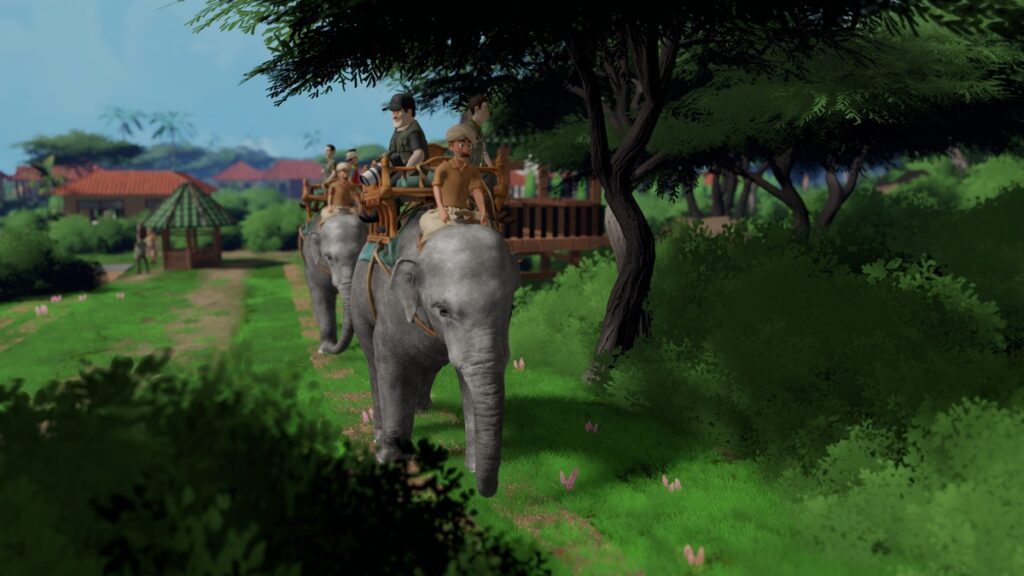
Unlike traditional zoo or park builders, The Great Indian Safari places wildlife photography at the center of progression. Photos are scored on species rarity, animal behavior, lighting, composition, and risk. Exceptional shots go viral in-game, triggering 72-hour visitor surges, reputation spikes, and new management challenges.
Capturing a perfect golden-hour tiger hunt isn’t luck—it’s the result of long-term ecosystem planning.
“A great photo in this game isn’t just a screenshot—it’s proof that your ecosystem is
functioning,” said Chakraborty, Creative Director. “When players share a rare
wildlife moment, they’re really showing off months of conservation decisions.”
The Great Indian Safari Gameplay Features
● Dual Reputation System — Conservation and tourism must grow together.
Neglect either, and the park stalls.
● Photography-Driven Progression — Score wildlife photos on species, action,
lighting, composition, and danger. Viral moments create systemic consequences
across your park.
● Living Ecosystem Simulation — Wildlife behavior emerges from habitat health,
food chains, and human pressure, creating unscripted photographic
opportunities.
● Legendary Named Animals — Follow recurring stories: Scar, a one-eyed
leopard; Matriarch, the elder elephant leader; Ghost, a white tiger that appears
only under specific conditions.
● Authentic Indian Landscapes — Mangroves, sal forests, and Terai grasslands,
developed in India with cultural and ecological authenticity.
● Respects Your Time — Smart automation and pool-based staffing reduce
micromanagement, letting you focus on strategy and photography.
Developed in Unity, The Great Indian Safari would be accessible on a wide range of
PCs thanks to relatively low system requirements which are as follows:
The Great Indian Safari PC System Requirements
Minimum:
● OS: Windows 10 (64-bit)
● Processor: Intel Core i5-4460 / AMD FX-6300
● Memory: 8 GB RAM
● Graphics: NVIDIA GTX 760 / AMD Radeon R7 260X
● DirectX: Version 11
● Storage: 10 GB available space
Recommended:
● OS: Windows 10/11 (64-bit)
● Processor: Intel Core i7-8700 / AMD Ryzen 5 3600
● Memory: 16 GB RAM
● Graphics: NVIDIA GTX 1660 / AMD RX 580
● DirectX: Version 12
● Storage: 15 GB available space (SSD recommended)
Previously, Chakraborty made Tea Garden Simulator.
The solo effort
Just how solo was it? Chakraborty said, “Flying Robot Studios is currently me – a solo developer supported by talented vendor studios for game assets and animations. Modern tools and workflows let a single person attempt projects that would traditionally require a small team.”
He also said the game has been in active development for 12 months, though the concept has been brewing longer.
“Funding is straightforward: I’m self-funded through my publishing company SYV Games and revenue from my previous release, Tea Garden Simulator – which means complete creative control but also complete financial risk,” he said.
And he added, “This is increasingly viable for Indian developers. Our cost of living allows for longer runways, and tools have democratized production in ways that weren’t possible five years ago. I’m not competing with Frontier’s 200-person team on Planet Zoo – I’m making something intentionally scoped for what one very determined person can achieve.”
Where AI was and wasn’t used
Chakraborty said that he did use AI tools to make the game, but not to replace creative work. He used it for technical problem-solving within Unity workflows (Claude); coding assistance (Claude) – debugging, problem-solving, technical documentation; game design brainstorming – iterating on mechanics and systems.
And he said he did not use AI for game art assets (all art is human-created and commissioned); final game content; and gameplay implementation (architecture and code are mine).
“As a solo developer, AI coding assistants were invaluable for debugging and solving technical problems faster than searching documentation or forums. But all game design, art direction, and implementation are human-driven,” Chakraborty said.
The development on the game started in mid-2024, so it took about 1.5 years of active development work. The photography progression system alone took more than six months to get right – balancing scoring mechanics, player agency, and emergent moments from the ecosystem simulation.