

PlayDucky is taking control of its destiny.
In 2021, PlayDucky raised $1 million to fund the development of hypercasual mobile games. Five years later, the studio’s co-founders Alisher Yakubov and Ivan Fedyanin became majority co-owners of the company by buying out their initial investor. The buyout agreement closed in June, according to the PlayDucky co-founders in an interview with GamesBeat.
PlayDucky’s ability to buy out its initial investor reflected the studio’s growth and profitability over the past five years, per Fedyanin, who declined to share more details regarding the specific returns or financial terms of the deal. PlayDucky’s initial investor declined to comment or be identified in this story.
“They started with several multiples — they definitely made a profit,” Yakubov said in an interview with GamesBeat.
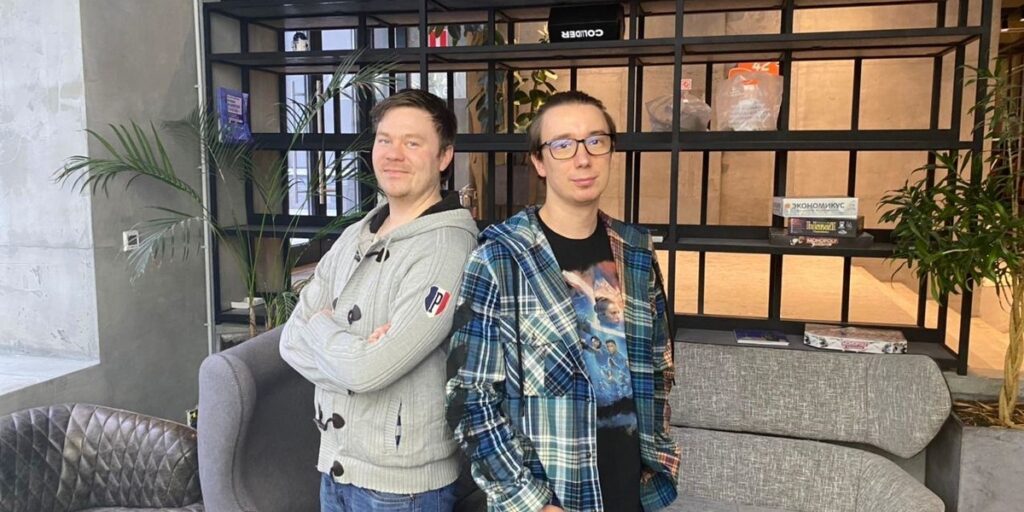
As a result of the buyout deal, Fedyanin and Yakubov now own the majority of shares in PlayDucky, although they noted that smaller stakes are still held by friends, family, and some employees of the company. At the moment, they don’t plan to search for more fundraising in the near future, although they said they were open to the possibility.
“We’re looking to grow faster, so we will of course talk to the guys who know how we can build a faster-growing company. We have advisors on that, and we’re definitely looking at it,” Fedyanin said. “For now, we’re profitable, and the profit is growing.”
Much of PlayDucky’s recent growth has been driven by the company’s mobile game Melon Sandbox, which puts a two-dimensional spin on the user-generated content trend by allowing users to build, share, and monetize custom characters and virtual environments.
“We didn’t have the idea of making a 2D UGC platform at first; at first, we got the game, and then we figured out that it might be a pretty perfect UGC platform,” Yakubov said. “So, it basically became a UGC platform organically.”
Other PlayDucky titles include Riding Extreme 3D, Gangs Wars: Pixel Shooter RP, and BloodBox, reflecting the studio’s specialty in rapidly prototyped hypercasual games. It has a geographically dispersed team, with the PlayDucky publishing operation employing 23 staffers across marketing, user acquisition, and video production, and Melon Sandbox itself having a 110-person development team. The company was founded in Russia, and its founders are currently based in Cyprus.
Melon Sandbox currently boasts about 4 million daily active users and recently wrapped up an integration deal with the survival horror game Poppy Playtime. Fedyanin and Yakubov said they planned to continue building out the platform’s UGC tools and features in the coming year — including keeping a close watch on how creators on the platform are using and reacting to AI-generated content, which has been a growing trend in the UGC space in 2026.
“We don’t really discriminate, in terms of AI moderation, but we see that items that have been created without any idea in mind — without any creative spark — do not perform as well as the games or worlds that have been created with the use of AI, but that have the actual creative vision,” Yakubov said. “It basically becomes just a tool to create things more easily, rather than a tool that thinks instead of you.”