
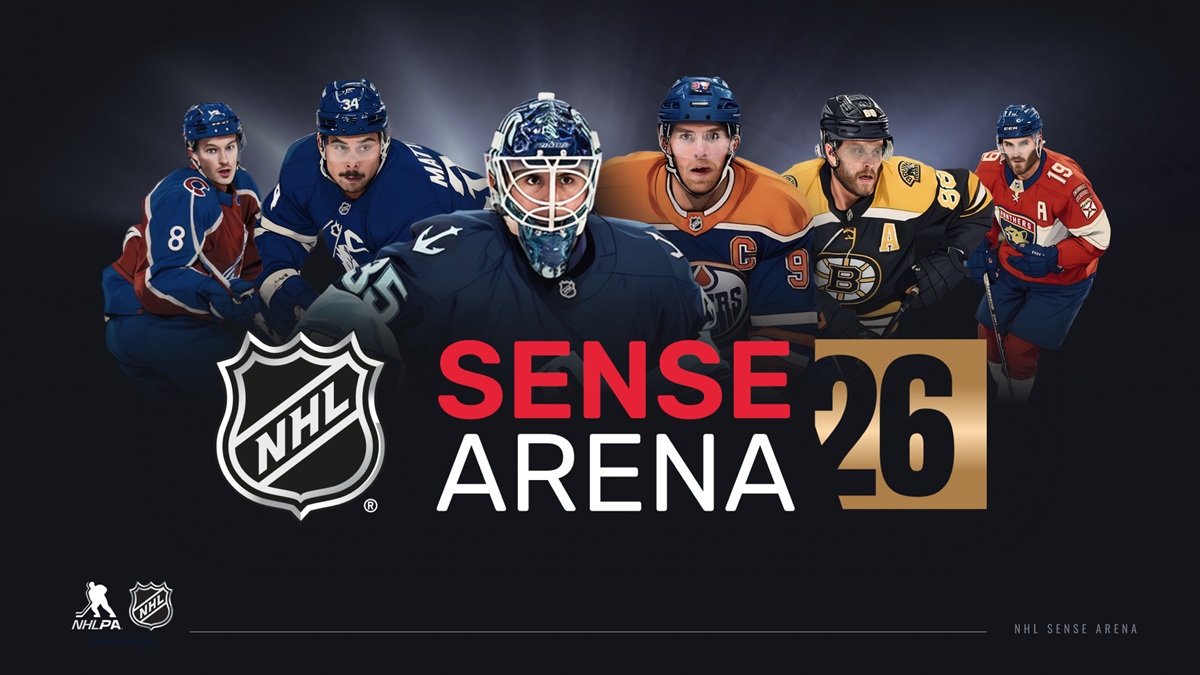
Sense Arena, a virtual reality sports training company, has partnered with the National Hockey League Players’ Association (NHLPA) to transport NHL players and teams into virtual and mixed reality with NHL Sense Arena ’26.
This groundbreaking partnership will allow fans to train and face shots from the likes of NHL All-Stars including the Edmonton Oilers’ Connor McDavid, Toronto Maple Leafs’ Auston Matthews, and Florida Panthers’ Matthew Tkachuk, and try to score on top-flight NHL goalies like the Winnipeg Jets’ Connor Hellebuyck, Tampa Bay Lightning’s Andrei Vasilevskiy, and Seattle Kraken’s Joey Daccord.
Building on the momentum of its successful partnership with the NHL, NHL Sense Arena is the first and only licensed NHL and NHLPA virtual and mixed reality hockey platform, that will deliver the most immersive and authentic VR hockey experience ever created, said Sense Arena CEO Bob Tetiva in an interview with GamesBeat.
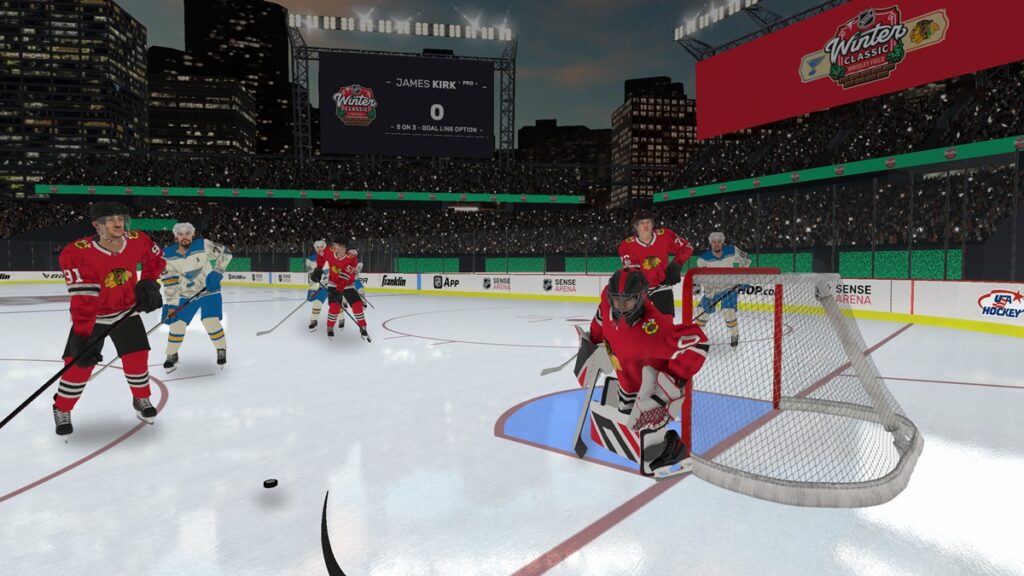
Bringing in the celebrity athletes into training games is important, particularly for young folks.
“As a development coach myself for young hockey players, it’s all about creating entertainment,” Tetiva said. “It’s like the Flintstone vitamin. If it tastes good and it’s also good for you, they’re going to keep taking it. I want my kids to spend time in VR. If it’s VR, they are at least moving their whole body. It’s not sitting in front of a computer with soda and chips.”
Powered by the likenesses of the league’s biggest stars, NHL Sense Arena ‘26 will drop fans straight into the action to skate alongside their favorite NHL stars, score off their passes, and face their hardest shots.
NHL Sense Arena ‘26 is available to download today and is compatible with the Meta Quest 2, Meta Quest 3, and Meta Quest 3S, while pairing with standard hockey equipment.
“The part of the partnership that we really we love is that we’re providing to fans who love hockey the opportunity to be on the ice with superstars and to play with their favorite player and play on their favorite teams within a VR all-encompassing platform,” said Tetiva. “Being the one who’s actually dictating the action, as opposed to playing it on a console, is a really cool aspect of this. “
It’s that feeling you are there on the ice — a sentiment common among virtual reality fans.
“We show what it is like to see an NHL locker and to be on the ice with the stars,” he said. “You just can’t go out and do that anytime, anywhere.”
“This partnership with Sense Arena is an exciting opportunity to bring fans closer to the incredible talent of NHL players,” said NHLPA Chief Commercial Officer, Steve Scebelo. “By stepping into the virtual world, fans everywhere can experience the speed and skill of NHL players up close. This is truly a dynamic new platform that will showcase the talents of the players and bring fans closer to the action in a way they have never experienced before.”
“We are thrilled to partner with the NHLPA to further bolster our cutting-edge VR platform, creating a first-of-its-kind experience for NHL fans and hockey players of all abilities,” said Sense Arena CEO Bob Tetiva. “The future of hockey training and fan engagement is evolving, and we’re excited to push the boundaries of innovation with the help of the NHLPA.”
Sense Arena has raised $8 million to date and Tetiva said the firm is profitable with 21 employees. The company has been profitable for a couple of years in a row.
“We are definitely one of the top 20 VR developers in the world,” he said.
In addition to individual training modules, NHL Sense Arena ‘26 includes a new 3-on-3 gameplay mode which allows users to take the ice as a member of their favorite team and compete in a full 82 game NHL season. The module also includes a management mode, which allows users to set lineups, build rosters, and acquire new players.
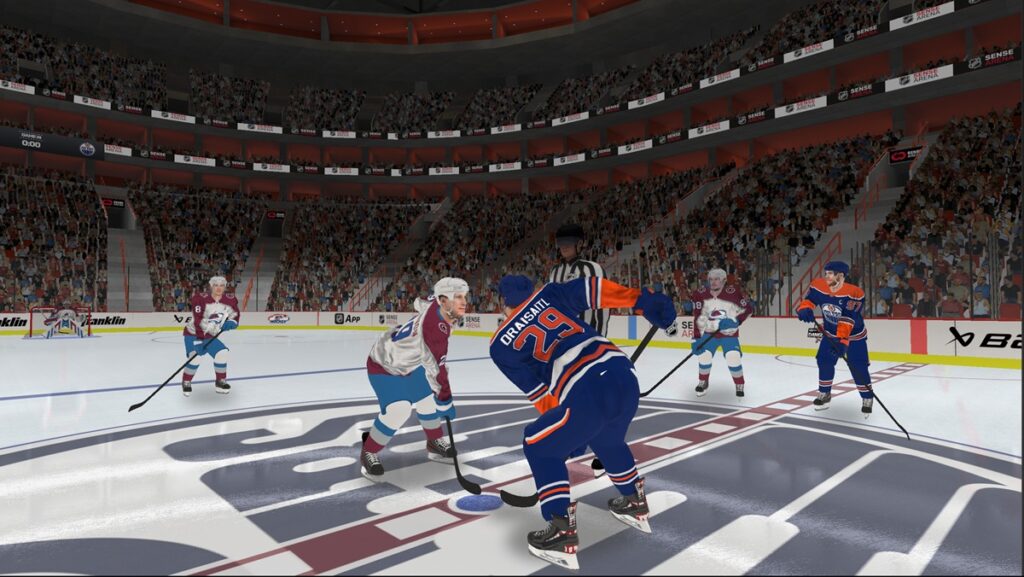
“I feel fortunate to have had the privilege of playing in the NHL for nearly 10 years, and historically only the most elite hockey players have had the opportunity to step on the ice in the NHL and compete against the best players in the world,” said ex-NHL defenseman and current Sense Arena Hockey Development Director Andrew Alberts, in a statement. “This collaboration allows us to share the NHL playing experience with a wider audience, offering a taste of what it’s like to play alongside the sport’s biggest stars in an entirely new way.”
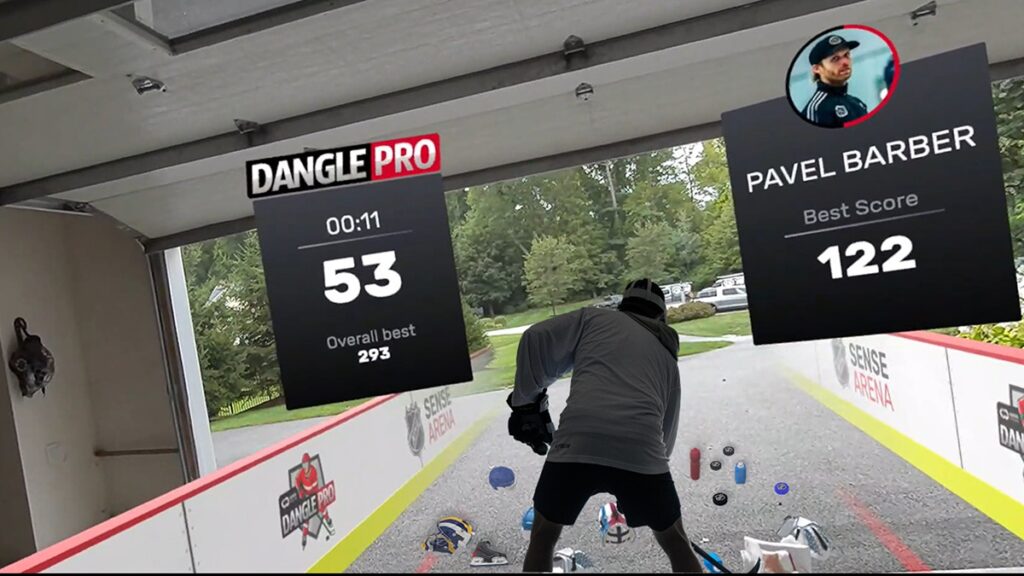
Earlier this fall, Sense Arena unveiled DanglePro, the first-ever mixed reality stickhandling module within NHL Sense Arena. Using a player’s own hockey stick and an off-ice puck, DanglePro creates a 100 percent authentic training experience that blends hockey IQ with puck control development. DanglePro expands the platform beyond cognitive hockey training to hands-on skill development and is available exclusively on the Meta Quest 3 and Quest 3S.
Origins
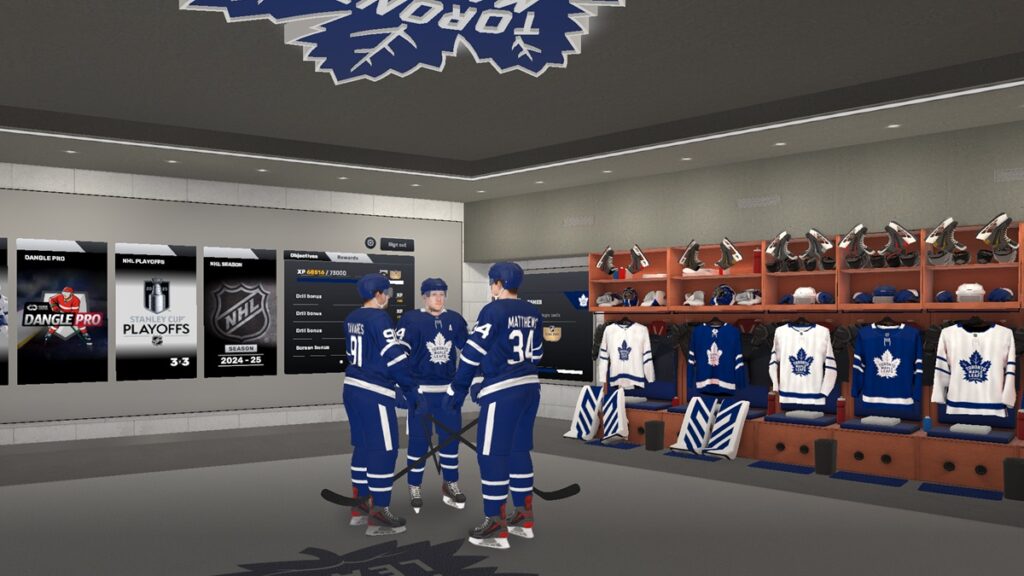
Sense Arena originally launched its ice hockey VR technology in 2018, providing a cutting-edge off-ice training platform for skaters and goalies of all ages to train in confined spaces and non-traditional environments such as basements, garages, hotel rooms, and more.
Sense Arena is currently used by five NHL teams, as well as many individual players and goalies, including Seattle Kraken goaltender Joey Daccord, and the Professional Women’s Hockey League’s first-ever No. 1 overall pick, Taylor Heise.
Additionally, Sense Arena is the Official Virtual Reality Training Tool of USA Hockey and is used by 17 Men’s and Women’s NCAA Division I hockey programs. To date, more than 450,000 individual users across 40 countries have benefited from Sense Arena’s training by participating in close to 9 million drills.
Sense Arena is headquartered in Prague, Czech Republic, and has North American offices in Boston and Whitby, Ontario.
The company’s ice hockey technology is used by more than 30 professional hockey teams – including five NHL teams — 17 NCAA Division I hockey programs, and youth hockey organizations across the globe, with close to 9 million drills conducted.
The future of Sense Arena and VR
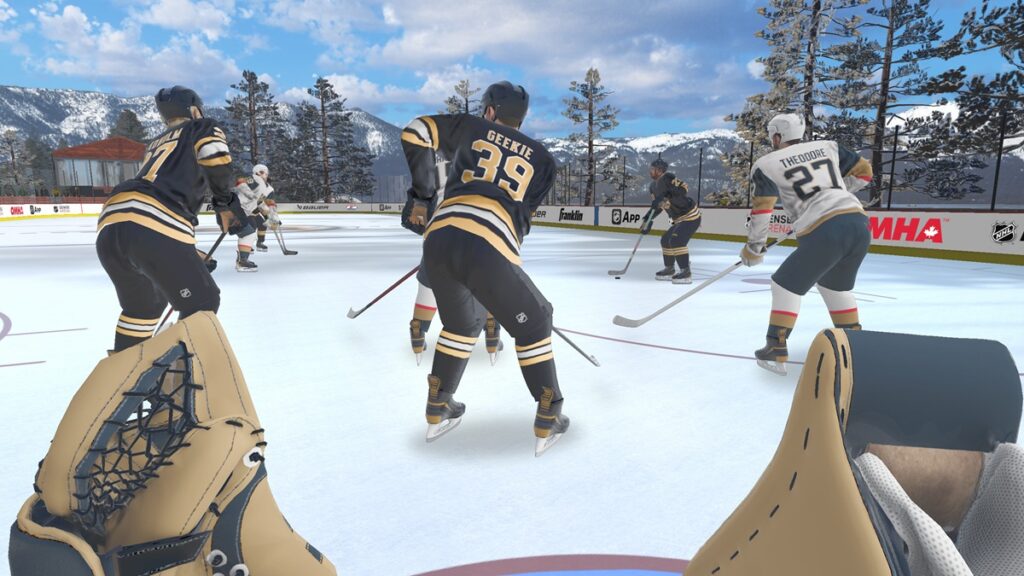
Tetiva was encouraged to see Samsung re-enter the VR headset market with its Galaxy XR unveiling. But he is sober about the growth prospects for VR.
“I honestly don’t believe in any big wave of adoption of VR in the future, but for specific use cases, such as ours, it’s just perfect,” Tetiva said. “It’s all about creating a community of users that stick with you.”
Another company that started out with VR training for athletes is Status Pro, which also pivoted into games and made Pro Era Football VR games. Tetiva said the companies are friendly because they understand how training and gaming are related.
Tetiva said his company has invested in innovations related to mixed reality technology, where you can see the world around you while wearing a headset. And he hopes VR tech will continue to evolve with new tech that adds to the realism of the experience. Adding the mixed reality tech has mean that usage has gone way up, he said. He also believes the tech will get miniaturized and eventually fit into augmented reality glasses.
“It’s great to be in the forefront as we continue to move into new tech,” he said.