
As “Riftbound” takes off, Riot Games is looking to take advantage with new set releases and an expanded competitive circuit.
Since “Riftbound’s” English-language launch in October 2025, Riot Games’ new collectible card game has exploded in popularity. On the online trading card market TCGplayer, average daily searches for “Riftbound” surged by over 300 percent in early November compared to the two weeks leading up to the game’s launch, according to numbers shared by a TCGplayer representative, with “Riftbound” related listings on TCGplayer increasing from roughly 118,000 on the day of the game’s launch to nearly 600,000 one month later.
“Based on search activity and listing volume, this clearly represents a strong launch and a promising sign for the game’s future,” said TCGplayer CEO Rob Bigler in a written interview with GamesBeat. “The connection to ‘League of Legends’ is a meaningful driver, as it brings a large, highly engaged audience into the trading card game ecosystem from outside the traditional hobby.”
Today, February 4, Riot Games revealed its plans to lean into “Riftbound’s” growing popularity via the company’s first-ever “Riftbound” State of the Game update. Moving forward, Riot plans to share State of the Game updates twice per year, using the biannual announcements to share thoughts — and answer fans’ burning questions — about the trajectory of “Riftbound.”
Today’s announcements included a full schedule of Regional Qualifier events for the year, with Riot planning to host 11 qualifying tournaments throughout the year across different global regions, with the goal of winnowing down the playing field for as-yet-unannounced regional championships. Riftbound will also have a presence at other major Riot-Games-hosted events in 2026, including the “League of Legends” Mid-Season Invitational and conventions like PAX East and LVL Up Expo. The enhanced presence of “Riftbound” across in-person events represents a considerable expansion of the “Riftbound” circuit following the game’s first-ever Regional Qualifier in Houston last December.
“Card games have been around for a long time — 30-plus years now — and the local game store is the heartbeat of that,” said “Riftbound” game director Dave Guskin in an interview with GamesBeat. “And if you want to go to your game store and play, as much as people might want to play in a bunch of different ways and formats, playing 1v1 in a PvP way is just the standard for card games at the local game store — so we wanted to make sure to support that.”
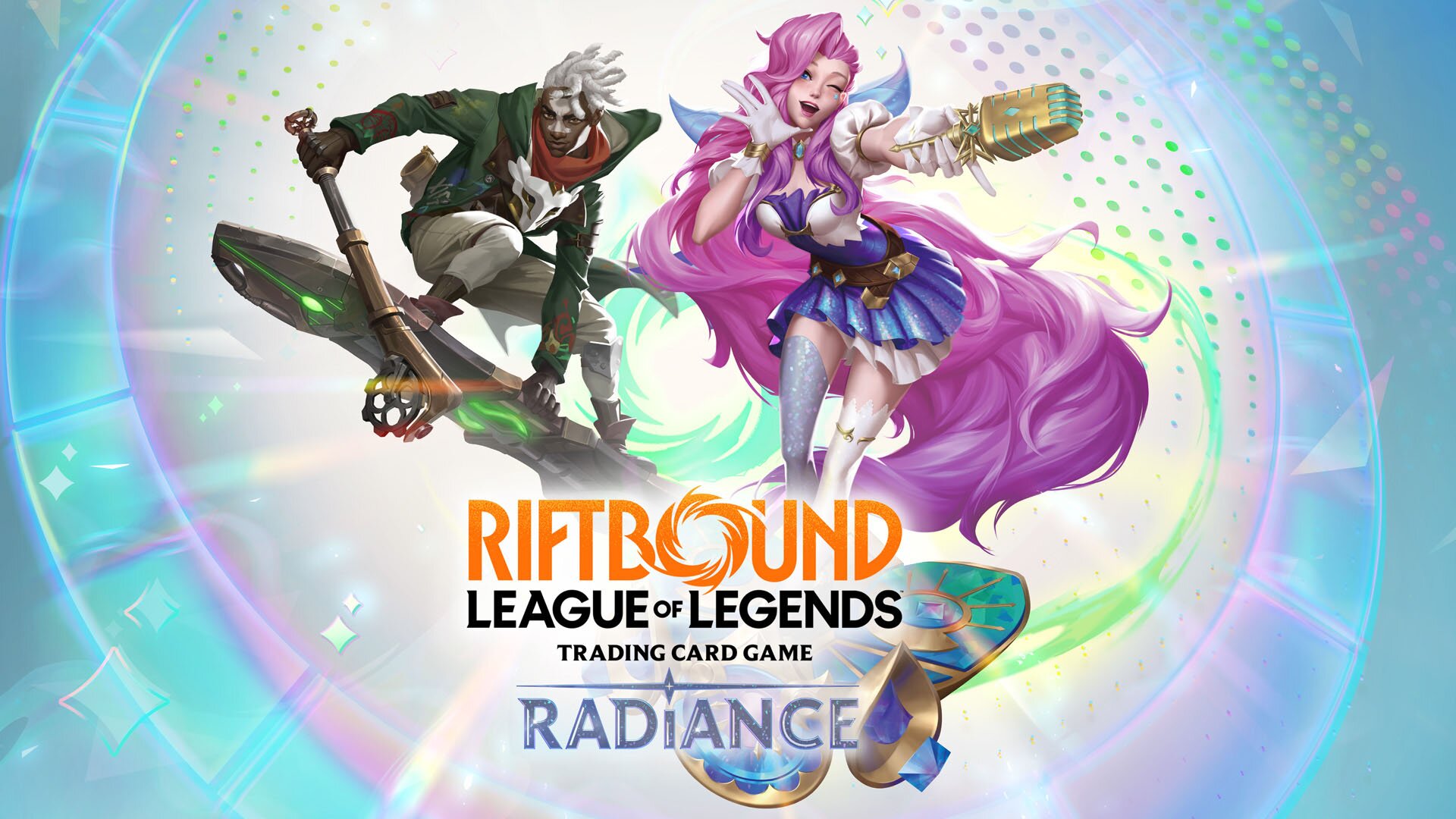
Riot’s “Riftbound” State of the Game announcement also included more details about the company’s plans for its next three set releases. Notably, the upcoming fourth Riftbound set, Vendetta, will round out the available color combinations for players using preconstructed decks, introducing red/green, blue/orange, and yellow/purple decks, which Guskin referred to as “enemy colors” due to their conflicting game mechanics. This set will also represent the first time a Riftbound set is released simultaneously in China and in English-language markets. The announcement also included the reveal of key art for Radiance, Riftbound’s upcoming fifth set.
Guskin told GamesBeat that he has “nothing specific” to share about updated game mechanics in the new set, but that he is still building out new ways to play, including combo decks and multiplayer formats.
“One of the things we’ve been trying to do with this initial batch of sets is trying to make sure that we’re delivering for all of the kinds of folks we think will be in our audience,” Guskin said.
Guskin and other members of their team previously worked at Wizards of the Coast, and Guskin told GamesBeat that the designers of Riftbound use a similar approach to the designers of “Magic: The Gathering,” using the psychographic profiles invented by lead “Magic” designer Mark Rosewater to describe each archetype of player much like the so-called Timmies, Johnnies and Spikes of “Magic,” although Guskin and his team put a unique spin on the terminology, with a Riftbound flavor.
“We developed a new language that I would not say is as formal as Rosewater psychographics, but in a similar space,” Guskin said.
The skyrocketing popularity of “Riftbound” has been a double-edged sword. In recent months, many players have taken to the internet to complain about “Riftbound” being sold out at their local card shops, with Riot acknowledging in a November 10 blog post that demand for the game’s first set had “greatly surpassed our wildest expectations.” To help more individual players get their hands on cards, Riot has announced that it will use a lottery system to sell future expansions, with Guskin adding in an interview with GamesBeat that the company is exploring other strategies to keep “Riftbound” accessible, including offering some products for direct sale via the Riot merchandise store and working more closely with local game stores.
In today’s “Riftbound” State of the Game update, executive producer Chengran Chai elaborated on Riot’s outlook toward reprints and accessibility.
“The team cares about players first and foremost,” Chai said. “We are keenly aware of both meanings of investment when it comes to our players, we want Riftbound to be a worthy investment of both our players’ time and their money. Our vision of a healthy Riftbound landscape is when everyone who wants to play is able to play.”