
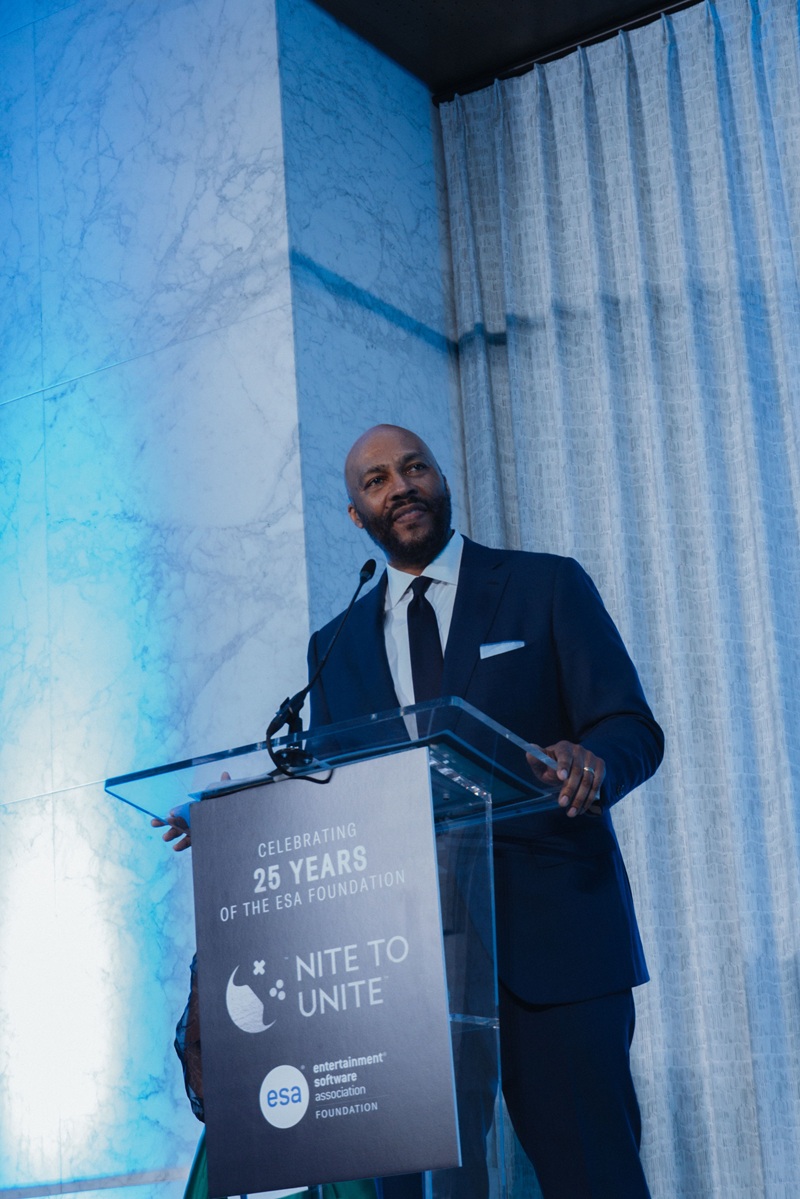
Stanley Pierre-Louis, CEO of the game industry lobbying group the Entertainment Software Association, sent a letter to lawmakers asking them to consider video game exclusions when drafting laws focused on fake AI images.
Pierre-Louis sent the letter to U.S. Senate members Charles Grassley and Dick Durban on the Judiciary Committee. In the letter, he warned the lawmakers about going to far in a band on look-alike imagery in media such as games. It appears that in trying to rein in AI fakery, the Senate could hit the video game industry at the same time.
The bill’s markup is set for Thursday.
“The NO FAKES Act as currently drafted creates a level of uncertainty that poses a real
threat to existing games and to the future of video game development in the United States. Importantly, the bill makes no distinction between harmful deepfakes and legitimate digital replicas, such as those in video games,” Pierre-Louis wrote. “The breadth of its current definition of ‘digital replica’ threatens to engender frivolous lawsuits by those who may, even by coincidence, resemble a game character, especially one of the thousands of background characters present in video games. While the industry would likely prevail against such claims in court in the end, the time and expense of litigating such suits would be economically devastating.”
Pierre-Louis also said, “Additionally, the NO FAKES Act creates liability for certain tools and services that are used to create digital replicas. Our companies have been honing digital technology for many years to create lifelike, interactive, fictional worlds loved by millions. Many of these tools are available to customers to create their own unique avatars and game
characters. We are concerned that the bill, as drafted, fails to adequately differentiate
between tools and services built specifically to enable the creation of harmful digital
replicas, and the potential for third-party abuse of innovative, multi-purpose, and
otherwise legitimate tools capable of creating digital replicas.”
Here’s the full letter
The video game industry has produced some of the world’s most iconic and beloved
fictional characters, including many realistic-looking ones found in games like Tomb
Raider, Call of Duty, Red Dead Redemption, and The Last of Us, to name a few. The
industry has also pioneered the realistic digital renderings of athletes, with millions of
Americans powering up their devices to enjoy video games embodying today’s most
popular professional sports, such as baseball, basketball, football, soccer, and hockey, among others
More than 212 million Americans play our games today, representing 67% of the
population and making video games one of the most popular forms of entertainment in
the nation. Our industry also has an outsized economic impact: we create and support
more than 250,000 jobs across the United States while contributing $65.5 billion to U.S.
GDP last year. The Entertainment Software Association (ESA) takes seriously its
responsibility to protect these valuable works for our member companies as well as the
millions of Americans who enjoy playing our games.
The NO FAKES Act as currently drafted creates a level of uncertainty that poses a real
threat to existing games and to the future of video game development in the United
States. Importantly, the bill makes no distinction between harmful deepfakes and
legitimate digital replicas, such as those in video games. The breadth of its current
definition of “digital replica” threatens to engender frivolous lawsuits by those who may,
even by coincidence, resemble a game character, especially one of the thousands of
background characters present in video games. While the industry would likely prevail
against such claims in court in the end, the time and expense of litigating such suits
would be economically devastating.
Additionally, the NO FAKES Act creates liability for certain tools and services that are
used to create digital replicas. Our companies have been honing digital technology for
many years to create lifelike, interactive, fictional worlds loved by millions. Many of
these tools are available to customers to create their own unique avatars and game
characters. We are concerned that the bill, as drafted, fails to adequately differentiate
between tools and services built specifically to enable the creation of harmful digital
replicas, and the potential for third-party abuse of innovative, multi-purpose, and
otherwise legitimate tools capable of creating digital replicas.
There are other problems with the bill as well, and ESA has offered common-sense
solutions to narrow this legislation in a way that addresses legitimate harms.
Unfortunately, some proponents of the bill have resisted accommodating our unique
concerns. Unlike other stakeholder products, video games are entirely digital creations.
While you may have heard there is no serious opposition to the bill, I am writing to
register our industry’s concerns with the bill as currently written. We would be grateful
for your leadership in revising this legislation so that it does not devastate our industry
and the video games that Americans know and love to play.
Sincerely,
Stanley Pierre-Louis
President & CEO
Entertainment Software Association