
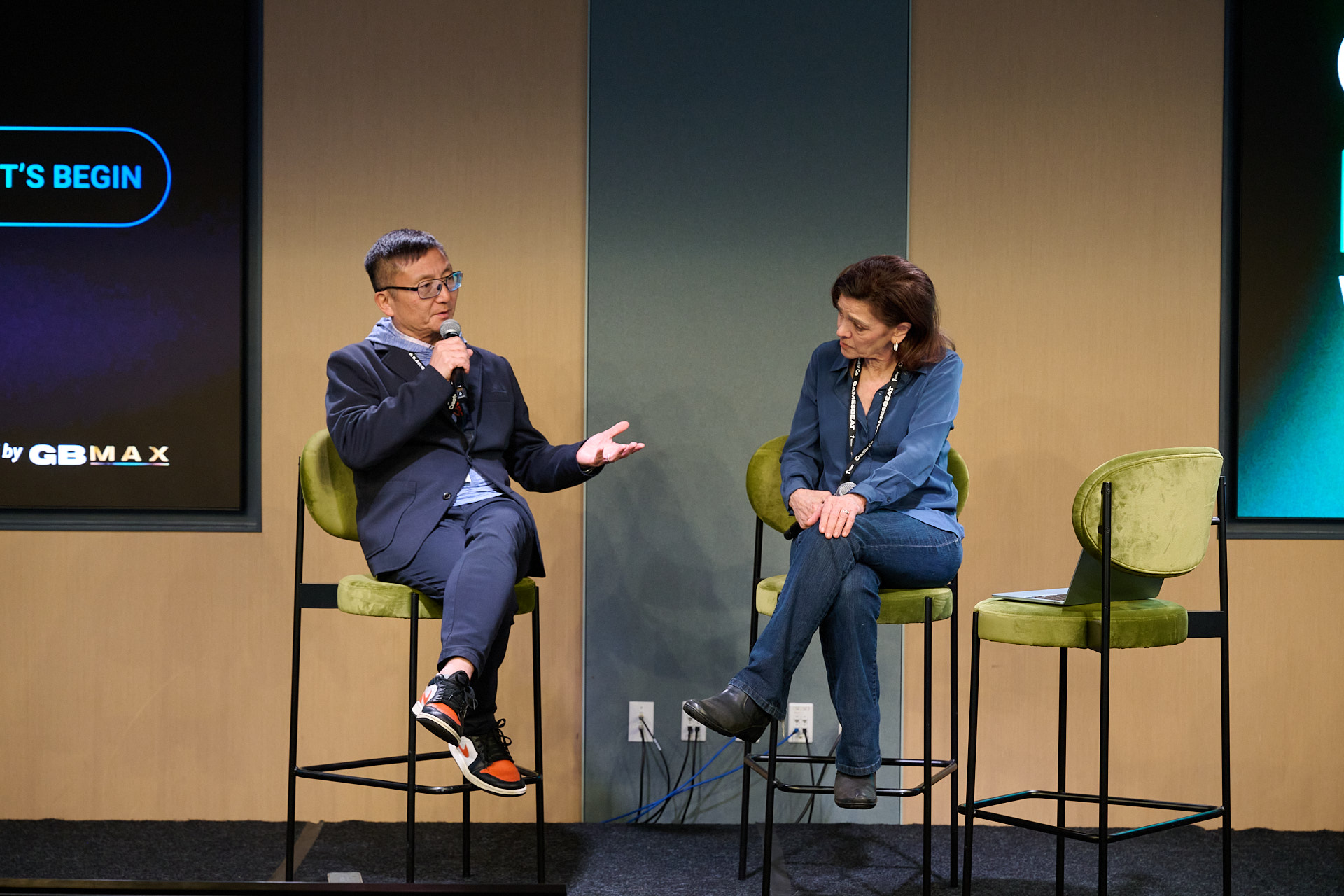
At GamesBeat Next 2026 in San Francisco, Nex Playground President Tom Kang took the stage for a fireside chat on why families will be the gaming industry’s next big audience. Game Thinking founder Amy Jo Kim moderated.
Kim noted that the industry has spent the past year or two waiting for the next big thing and asked Kang to make his case. Kang said Nex isn’t looking to be another console.
“This is an active play system,” Kang explained. “We are not serving an audience that’s already well served. We’re bringing new people into the ecosystem.”
Kang’s Nex Playground pitch relies on looking at the family living room as an underused space. “We believe the living room is underutilized,” he said, describing the TV as “a big 65, 80 inch iPad” that the company intends to use for their motion-based play. He also said the platform is meant to sit beside existing consoles.
“We’re not an ‘or’ platform,” he said. “You don’t choose to buy our platform or a Switch. It’s an ‘and’ platform.”
Kang also explained how sports are how the platform has aged up from its preschool roots. “100% linchpin,” he said, noting that the company has partnerships with the NBA, NHL and NFL. He said professional sports leagues have an interest in reaching younger fans earlier, and that living-room play could lower the barrier to their entry.
“We allow kids and families to play sports in their living room, which creates accessibility, so kids can understand the rules, learn basic skills, and create interest in the sport.”
Next, Kang described trust and safety within Nex Playground’s model as a growth strategy. He noted that Nex has hired a head of trust and safety, who’s primary role is to moderate all of the platform’s content, and that the company now ships the device with a camera cover.
“We want to make sure we’re starting the platform the right way, and that we have the right safeguards and measures in place, so that when we do get it to scale, we don’t have to retrofit backwards,” he said.
That approach to safety and family-friendly parameters is what shapes how multiplayer will work. Nex currently offers local play for up to four people at a time. Kang said device-to-device play will arrive later this year or early next, with parental permission.
“In the beginning, no video, no chat. It’s just presence,” he said. He acknowledged the cost. “It’s something we choose to do, and it’s a competitive advantage long term. We may lose some users in the short term.”
On the topic of global expansion, Kang said Nex plans to launch in Japan in 2027 with local IP, local pricing and a localized retail approach. At Tokyo Game Show, he said, nearly every interviewer asked whether the device could teach English.
“We always say kids learn better on their feet than on their seats,” he said, adding that learning content is not meant to replace core curriculum.
For developers, Kang said Nex has four first-party studios and accepts second- and third-party games on a curated platform.
“We’re not a crowded platform of thousands of games,” he said. “So if your game does well, top 20 royalty checks are big because we’re paying based upon engagement.”
Kang was candid about the company’s gaps. On the issue of AI, he said, “We are just starting our AI journey as a company.” On content, he said Nex has yet to produce a lasting franchise. “I can’t really say we made a breakthrough hit game that’ll be an everlasting IP like Nintendo has,” he said. He also named component pricing as a constant challenge as the company works to keep its hardware under the $300 price tag.