
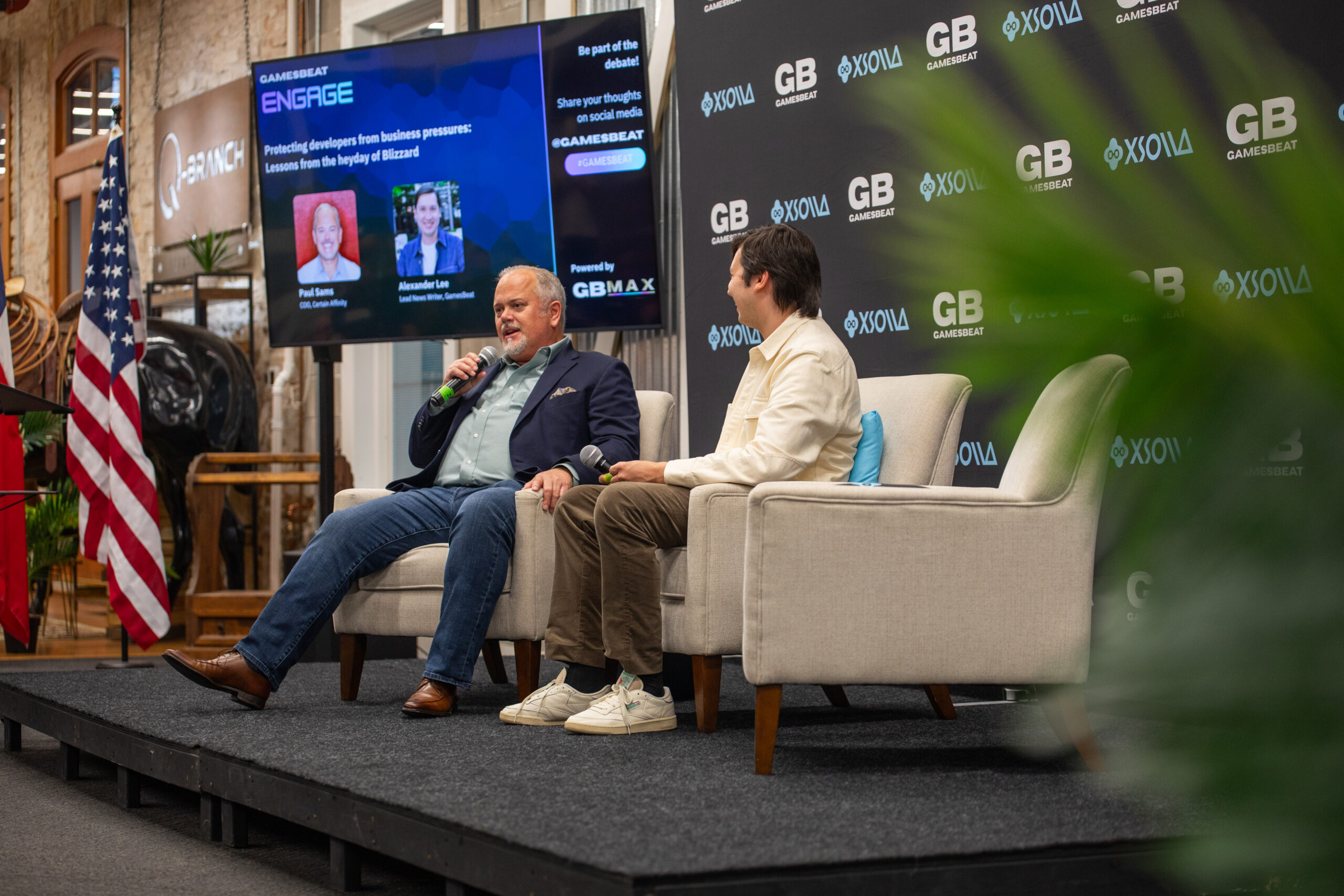
Paul Sams believes the secret to making good games is simple in theory — if not in practice.
At the GamesBeat Engage networking and discussion event hosted by GamesBeat in Austin, Texas, earlier this week, the Certain Affinity president and chief operating officer — and former Blizzard Entertainment chief operator — took the stage for an in-depth fireside chat with GamesBeat lead news writer Alexander Lee (that’s me). The topic: the importance of building a firewall between game developers and business pressures, both during Sams’ nearly 20-year tenure at Blizzard Entertainment and in his current role at Certain Affinity.
“When I came on board, one of the three founders, Allen Adham, said to me, ‘Listen, I want you to oversee running these companies so that I can make games,” Sams said during the fireside chat. “Protect us; allow us to prioritize what matters. Allow us to have the developers’ focus, and to not be bothered by all the business questions.”
The 30-minute fireside chat was inspired by Jeff Kaplan’s recent appearance on the Lex Fridman Podcast. During the five-hour podcast interview, Kaplan — who made his name at Blizzard as the lead game designer behind World of Warcraft and Overwatch — expanded on some of the frustrations that led to his exit from Blizzard, including the gradual dissolution of the once-strong divide between developers and business pressures at the company. During the episode, Kaplan specifically flagged Sams as a business-side executive who had developers’ best interests at heart, prompting Sams to reflect on how this approach had informed Blizzard’s success during its heyday.
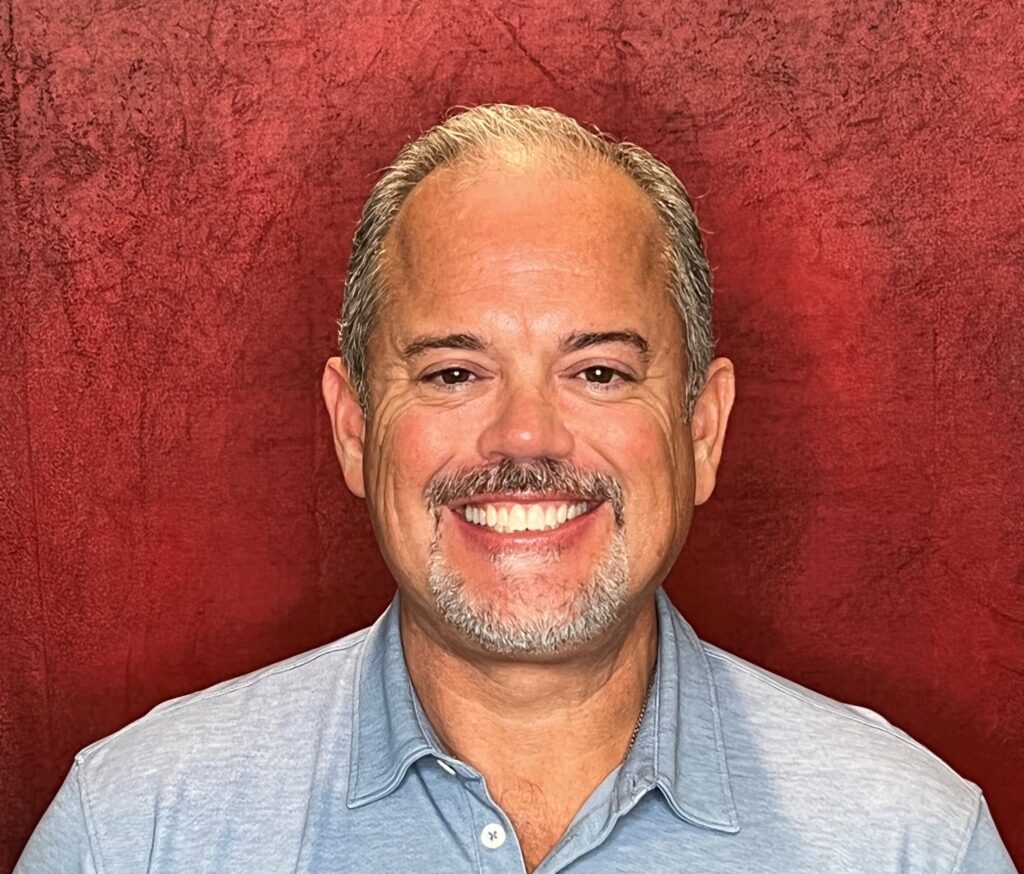
“In that period, we didn’t have to worry about whether or not we were going to hit our numbers; we almost always hit our numbers. Why? Because our players trusted us — they knew we were going to deliver something great to them,” Sams said. “On the non-development side of the house, our sole goal was to protect the developers to do what they do best. People don’t buy business models. They buy games — they buy fun.”
A major inflection point for Blizzard’s developer–business firewall came in 2008, when Blizzard’s parent company merged with Activision to form Activision Blizzard. Sams noted that Blizzard and Activision had very different cultures, with Activision’s traditional business focus contrasting with Blizzard’s developer- and player-first ethos. The merger also brought with it the hiring of more business-side executives, which Sams said disrupted the balance of power at the company.
“There were certain changes that occurred that changed how Blizzard was operating in some respects,” Sams said, although he declined to share specific names or hires during the onstage session.
During the talk, Sams shared his opinion on one of the most widely discussed viral moments from Kaplan’s podcast interview. During the interview, Kaplan reflected on a conversation he had had with a former Blizzard finance executive, during which the executive had told him that he would be responsible for the layoffs of 1,000 Blizzard employees if Overwatch 2 failed to meet certain benchmarks.
“I cannot fathom a scenario where I would ever say that to Jeff, because Jeff runs circles around me in the making of games,” Sams said. “He is a brilliant guy, and he understands what the players want far better than us.”
Sams credited many of the people currently leading and working at Blizzard for continuing to strive to build a firewall between developers and business pressures, but pointed out that the size and scale of many of today’s largest game companies can make this approach difficult or even impossible in some circumstances. But he still puts it into action where he can — including at Certain Affinity, where he helps steer the company through its co-development work on triple-A series like Call of Duty and Halo.
“I really do believe what Allen asked me to do back in ‘96, when I walked in those doors. Being a human shield for your developers is critical to their success, and critical to their focus,” Sams said. “If you give developers the opportunity to focus, and you give them the opportunity to do what they do best, and to not feel shackled and not feel constantly pressured by this month’s new big business model fad — let them just do their thing — you can have great results.”