
Plan A Games announced a new venture to provide growth capital to developers of mobile, free-to-play video games.
The company is backed by a structured capital investment from funds managed by affiliates of Fortress Investment Group, a leading, highly diversified global investment
manager with more than $50 billion of assets under management.
The Plan A management team is led by CEO Gary Rosenfeld and Chief Data Officer Huy
Nguyen, both video game veterans formerly at Pixel United (mobile and PC gaming division of Aristocrat), where they helped grow the business into one of the largest in the industry.
Now they’ve got a new kind of funding solution for game companies, who normally only get a certain kind of help. It brings to mind the saying, “If you have a hammer, every problem looks like a nail.” By contrast, Play A Games has a new kind of hammer.
Michael Lang, president of Lang Media Group and former CEO of Pixel United, is a member of the board and will lead the company’s investment committee. Lang helped make the connection to Fortress Investment Group.
The Plan A Games funding model provides game developer partners access to user acquisition (UA) capital to quickly market their games, without sacrificing publisher
independence. Plan A’s team, leveraging decades of experience in games management, data analytics, and marketing, will provide partners with strategic insight and tools to better monitor the effectiveness of their UA investment, game performance and content strategy.
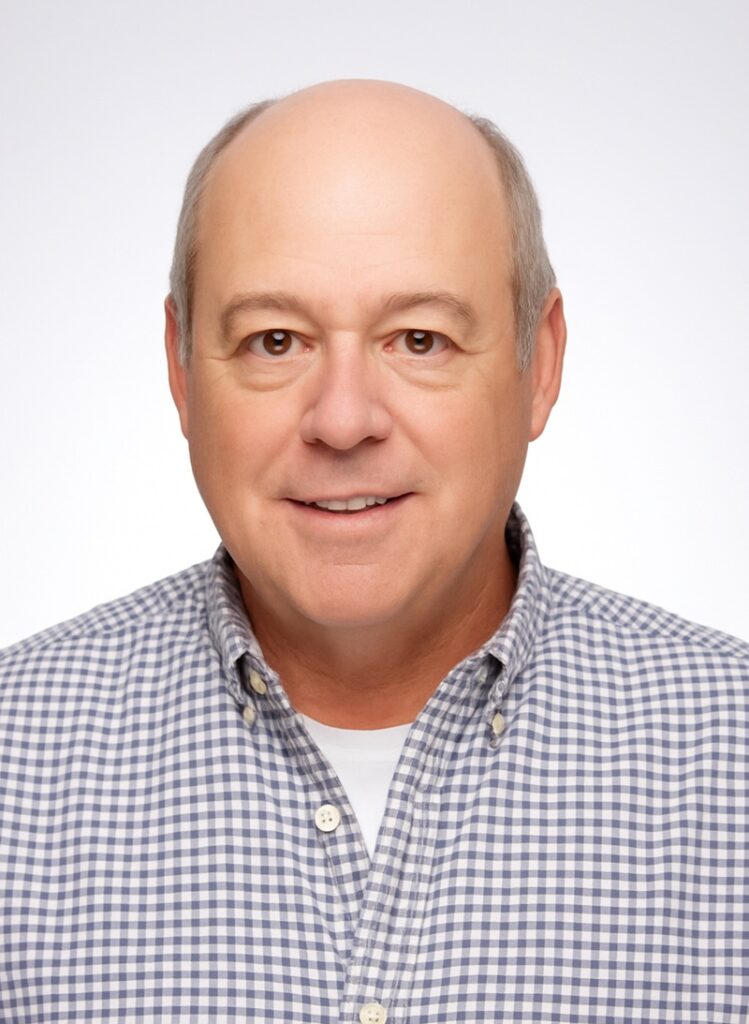
Additionally, Plan A will offer developers and their investors a more favourable financing
structure than alternatives in the market, which are typically higher-cost capital and limit the flexibility and independence that developers and investors require to achieve their long-term goals.
“Gary and Huy’s unmatched industry experience offers mobile game developers and their
investors an incredibly compelling opportunity to supercharge their growth strategy and build enterprise value,” said Lang. “Since departing Pixel United as CEO, I have been searching for the most strategic opportunity to get back into gaming. Plan A’s innovative approach, with Fortress, presents the right opportunity at the right time.”
“The cost of UA investment is consistently increasing, and I’ve seen the funding challenges
that game developers experience firsthand,” said Rosenfeld. “Plan A is a one-stop solution
for world-class developers who need UA marketing capital to grow. Our data-driven approach also includes proprietary technology that will identify fast-growing mobile games and provide developers with real-time performance monitoring that integrates seamlessly into their own back-end systems.”
Plan A will support all genres in the mobile games space, including casual, mid-core, social
casino and others. The company will also identify opportunities to support PC and emerging games platforms such as the Roblox ecosystem.
While at Pixel United, Lang, Rosenfeld and Nguyen led several multi-million-dollar game successes, including Plarium’s RAID: Shadow Legend, a top 20 free-to-play game and one of the fastest-growing RPGs of all time with more than 75 million downloads and $1 billion plus in lifetime revenue.
Also, the team worked extensively on the highly successful Product Madness social casino franchise games, the recently released NFL Super Bowl Slots game and the casual breakout game Evermerge.
The global video games market is bigger than film, television, and music industry revenues
combined, according to PwC’s recently released annual Global Entertainment and Media Outlook. In fact, PwC forecasts global video games revenue to grow from $224 billion in 2024 to $300 billion by 2029.
Plan A’s developer-first UA funding model and technology platform, combined with the strength of Fortress as a structured capital investor, is uniquely positioned to help developer partners take advantage of the growth opportunities in the sector.
Plan A Games is the third investment in which Lang Media Group has partnered with
Fortress. Other investments include Vice Media, where Lang is executive chairman and the fast-growing women’s jewellery retailer Gorjana. In addition, Lang serves as a Strategic
Advisor to the AI start-up ProRata AI. In addition to Fortress, co-investors in Plan A include
those participating in the Lang Media Group Fund.
Origins

Two of the founders are in the Los Angeles area and the rest are spread around. The company has seven people and it expects to grow.
Rosenfeld has been in video games since 1982. He made games for the Sega Genesis and Super Nintendo, working for a company called Trimark Pictures and worked with legendary game executive Kelly Flock. Flock was his mentor, Rosenfeld learned the business from Flock. Rosenfeld went to Playmates Interactive, working closely with Shiny Entertainment on MDK. They licensed a lot of properties for gaming.
Then Rosenfeld moved to work at Endeavour, a big talent agency, where he served in business affairs and business development. He got involved in the Ultimate Fighting Championship, and that brought him back together with Flock. Rosenfeld moved into web games and then he joined Fox, where he got to run the video game group. They made a game called Family Guy online.
The rise of user acquisition for mobile games
“That was in the super interesting early days of free to play, and then went out on my own as a consultant,” Rosenfeld said.
He wound up at Big Fish Games and worked on a variety of games. After that, Lang, Rosenfeld and others began to study the problems with mobile games and began to think of how to address the difficult problem of user acquisition.
Free-to-play mobile games have to go through a lot of players to find the ones who will spend money in a game. They spend money on advertising to reach those players, with varying degrees of success. Fortress has $50 billion in assets under management, and it was interested in expanding into games to capture its growing value as the biggest of alll entertainment industries.
“That’s how we came together. Fortress is our capital partner,” Rosenfeld said.
This is Fortress’ first foray into games. In general, that’s a good thing as private equity companies have big war chests for investment, and it’s good for that money to flow into games rather than other big industries. In this case, it can invest money in user acquisition, helping the fast-growing game companies find paying players just as they need the capital and are about to experience explosive growth.
“Our model is really kind of an antidote for some of the venture capital solutions as developers are scaling up,” Rosenfeld said. “Plan A is the solution.”
How it works
Basically, Rosenfeld’s company develops analytics to find the fastest-growing game companies and catch them just as they’re taking off but not so late that those companies are inundated with offers for investment. Rosenfeld these decisions have to be made based on solid analytics and happen more quickly than others like banks can handle.
This reminds me of the teamwork set up between Rick Thompson’s VC firm and Grow Mobile. The latter identified fast-growing mobile games in the early days of the iPhone, and Thompson’s firm would invest in the companies that were growing fastest, based on the analytcs from Grow Mobile.
This is exactly the same kind of business that Plan A and Fortress are setting up, using the help of Plan A’s cofounders’ knack for analytics. They can catch the companies on the way up just as they need money to scale.
“We are taking our learnings and we’re building a whole new, bespoke platform for Plan A Games that does exactly what you described (at Grow Mobile),” Rosenfeld said. “We’re very specific about the kinds of opportunities we want to pursue, and it’s all going to be driven by data. Others are hustling for deals so they can get whatever inbound they can. We’re going to identify partners and reach out to them.”
The competition
There are rivals out there like Tilting Point. But Rosenfeld hopes that his firm can be more efficient and quick at evaluations thanks to its support from private equity, rather than support from a traditional bank.
Like a banker, Plan A Games makes money lending money at a competitive interest rate. But the business model also provides for some upside triggers, based on success, if it helps the company grow. It shares in that success.
“In initial conversations with developers, they’re very much open to that because it aligns our interests really well with our partners’ interests,” Rosenfeld said.
By contrast, VC investments are dilutive toward an owner’s equity in a startup right off the bat, Rosenfeld said. “And publishers often take long-term commitments with revenue shares that are really expensive for a game developer, at maybe a 60-40 split. What we want to do is create a model where game developers that that need it have access to affordable capital and then also our support to help them grow their business.”
The modern era of user acquisition
User acquisition dwindled in its efficiency as Apple implemented policies that prioritized privacy over targeted advertising. That cratered mobile game revenues as the user acquisition funding was no longer able to surface users so easily. Over time, that problem has alleviated and now Rosenfeld believes solutions are in place. They just need funding.
Rosenfeld sees game studios benefiting from not having to pay 30% to mobile game platforms anymore like Google and Apple. But user acquisition costs can eat away at cash and that’s why outside help is needed.
The company is genre agnostic, but it is looking at categories of games that either are established, or have well established benchmarks and baselines for KPIs that then Plan A Games can identify and support. The company is also looking at emerging genres, such as rewarded games.
The main point is to focus on companies that show a capacity to be able to support a game over the long term and create lifetime value.
“Our goal is to be a catalyst for that,” Rosenfeld said. “We’ve already been looking at opportunities.”
The team will attend Gamescom and meet with potential partners.
Spending on user acquisition and then getting paid
Rosenfeld said, “Because we have so much data, we can actually fund user acquisition and have a really good understanding of how that game’s already performing, and then we can predict what the future looks like for the game.”
Rosenfeld said the company wants to support the games that are maybe top 150 and move them up the charts. In contrast to the way many game publishers operate, Plan A Games doesn’t take a stake and so it allows the game studios to stay independent.
“We felt this was the better solution to the problem out there,” he said.
“We’re in a position to fund as much money as these games can actually take for user acquisition, ” Rosenfeld said. “We’re prepared to to keep funding games that are generating the KPIs that indicate that they can absorb the UA funding but not get into the traps of overspending on UA, which we’ve seen.”
If companies eventually achieve liftoff with fast growth and then hit a wall in terms of additional user acquisition spending resulting in fewer new users, then Rosenfeld considers that a success.
“If that happens, that would be a good thing. The way our model works, if we help them get there, we’re going to be participating in that success. We hope that happens,” he said. “And the way our model works is we will be funding a number of games at the same time. Some of them won’t scale. We know that some of them will scale. We’ll get our investment back.”
Rosenfeld said that lack of access to growth capital is stalling the growth of a lot of game companies. At this time, it’s critical to understanding the tricks of the trade around user-acquisition strategy, Rosenfeld said.
“We want to help with that and make sure that they are spending the right money on the right platforms,” he said.