
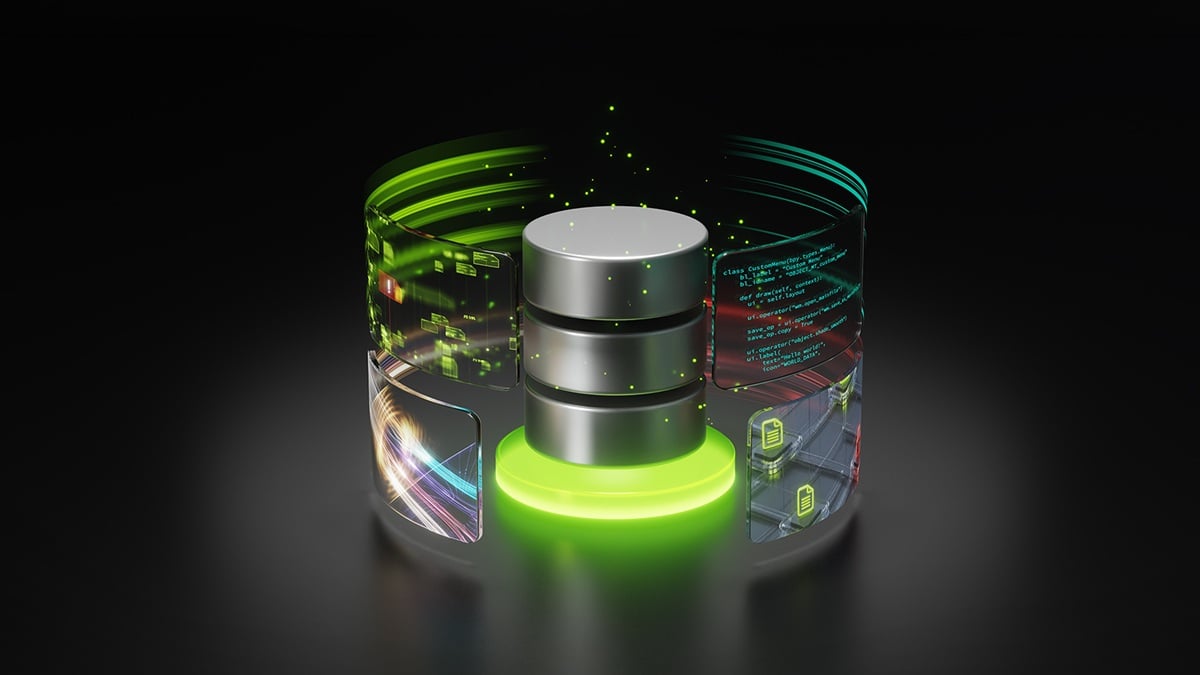
Nvidia today announced new Nvidia DOCA security innovations for Nvidia Vera BlueField-4 STX, defining a new class of secure-by-design storage for agentic AI factories.
As enterprises move from using AI chatbots to harnessing autonomous agents that reason, retrieve and act across business data, storage is becoming a real-time control point for intelligence. And Bluefield-4 STX storage systems provide rapid access to contextual memory that AI models need to provide fast answers.
Agentic AI systems depend on fast access to proprietary data and context memory. They also create new exposures as they continuously read, write and share information without direct human oversight.
Vera BlueField-4 STX extends Nvidia’s accelerated storage architecture withsecurity capabilities designed for the agentic AI era, said Jensen Huang, CEO of Nvidia, at Nvidia GTC Taipei and Computex 2026 in Taiwan.
Powered by a unified Nvidia DOCA security stack and enforced in Nvidia BlueField-4 silicon, STX-based platforms can inspect and govern interactions between agents, data and context
memory inline, helping enterprises enable continuous policy enforcement in the AI data path.
“Agentic AI turns enterprise data into a living, real-time system — and that system must be protected where data moves, where context is stored and where agents act,” said Huang, in a statement. “With Vera BlueField-4 STX, Nvidia and its ecosystem are building secure-by-design storage infrastructure that enforces trust in silicon at the speed of AI.”
The security innovations enhance the Nvidia STX-accelerated AI-native storage
foundation, which keeps data close and accessible for enterprise systems and long-context reasoning. Nvidia DOCA enables Vera BlueField-4 STX to provide up to 1,000x faster runtime threat detection than existing agentless runtime solutions, while enforcing network and file access policies at speeds of up to 800Gb/s.
Secure-by-Design Storage for Agentic AI
The expanded Vera BlueField-4 STX platform brings Nvidia DOCA security libraries and microservices to the AI storage layer, helping enterprises protect data, agents and context memory as agentic AI moves into production. They include:
● New Nvidia DOCA Vault microservices, which help ensure that only authorized AI workloads can access the right files with the right permissions.
● Nvidia DOCA Argus, which provides visibility into agent behavior and AI workload activity.
● Nvidia DOCA Flow, which helps isolate network traffic and protect sensitive data across multi-tenant AI environments.
These new and enhanced capabilities run on BlueField-4, where policies can be enforced in silicon while data continues moving at AI factory speeds. Together, they help partners deliver storage platforms that are secure by design, reducing the risk of unauthorized access, data extractions and sensitive context exposure without adding complexity to enterprise AI deployments.
Partners Build the Secure AI Storage Ecosystem
Cybersecurity leaders integrating enterprise security solutions with Vera BlueField-4 STX include Akamai, Armis from ServiceNow, Check Point, Cisco, CrowdStrike, EQTY, F5, Fortinet, Palo Alto Networks, TrendAI, Xage Security and Zscaler.
Leading storage providers and systems manufacturers are building on STX to deliver AI-native storage infrastructure for inference, training and analytics.
Storage providers building STX-based platforms include Cloudian, DDN, Dell Technologies, Everpure, Hitachi Vantara, HPE, IBM, MinIO, NetApp, Nutanix, VAST Data and WEKA.
Manufacturing partners AIC, ASUS, Foxconn, Gigabyte, Quanta Cloud Technology (QCT), Supermicro, Wistron and Wiwynn are developing STX-based systems.
Global systems integrators Accenture, Deloitte and Worldwide Technology are working with Nvidia and its partners to bring secure AI storage solutions to enterprises globally.
STX-based platforms are expected to be available from partners in the second half of 2026.