
MSquared has launched its interoperable avatars and asset network in the hopes of kickstarting metaverse applications.
This marks the platform’s first major product release since establishing itself as an operationally independent company, commercializing over a decade of immersive internet R&D incubated within Improbable. Now MSquared has spun out with more than $150 million in backing. And its tech will enable “very small teams” to build virtual worlds, said Rob Whitehead, CEO of MSquared, in an interview with GamesBeat.
MSquared Avatars gives developers full control over high-fidelity, interoperable digital identities. MSquared Atlas is powering a more open and secure virtual economy.
London-based Msquared bills itself as the platform powering the core network of the immersive internet, and today it revealed its first major product launches since spinning out from metaverse venture builder Improbable.
- MSquared Avatars, a high-fidelity, interoperable avatar system;
- MSquared Atlas, a scalable backend infrastructure service for moderating tokenised digital assets.
Together, these tools aim to solve the two biggest obstacles to virtual economies: identity and asset portability.
After more than a decade of developing immersive infrastructure under Improbable, MSquared was spun out to bring that technology to market. Now the company is focused on delivering production-ready tools that enable brands and developers to build connected, high-performance virtual experiences.
Rob Whitehead, CEO and CTO of MSquared, said, “We’re building the infrastructure to unlock what virtual experiences can truly become. For too long, fragmentation: walled gardens, broken identity, and unscalable tools has held the industry back. MSquared powers the core network that connects it all.”
MSquared Avatars: Solving the identity gap in virtual worlds
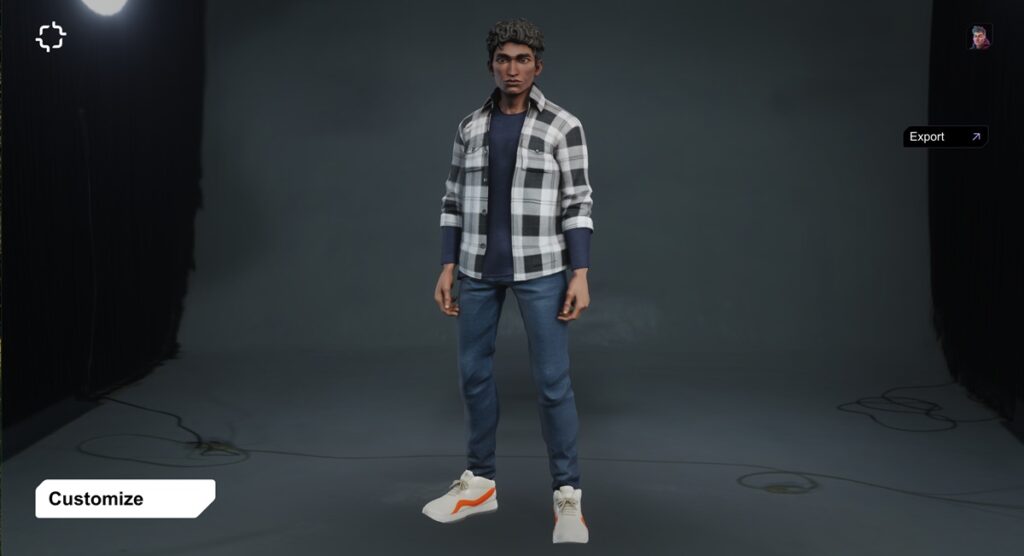
Most avatar systems today are closed, rigid, and hard to scale, forcing brands and developers to trade off performance, control, or interoperability. MSquared Avatars solves this with a high-fidelity system built for scale, platform freedom, and real-world use, Whitehead said.
Interoperable across web, mobile, and major game engines (including Unreal Engine 5), it includes a React-based component library and a future-proof SDK designed for developer flexibility.
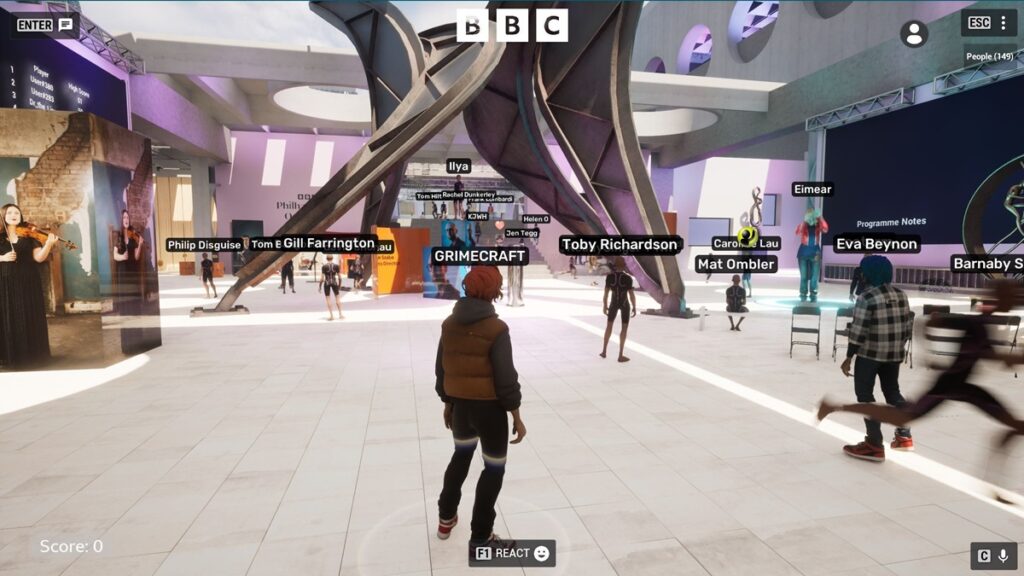
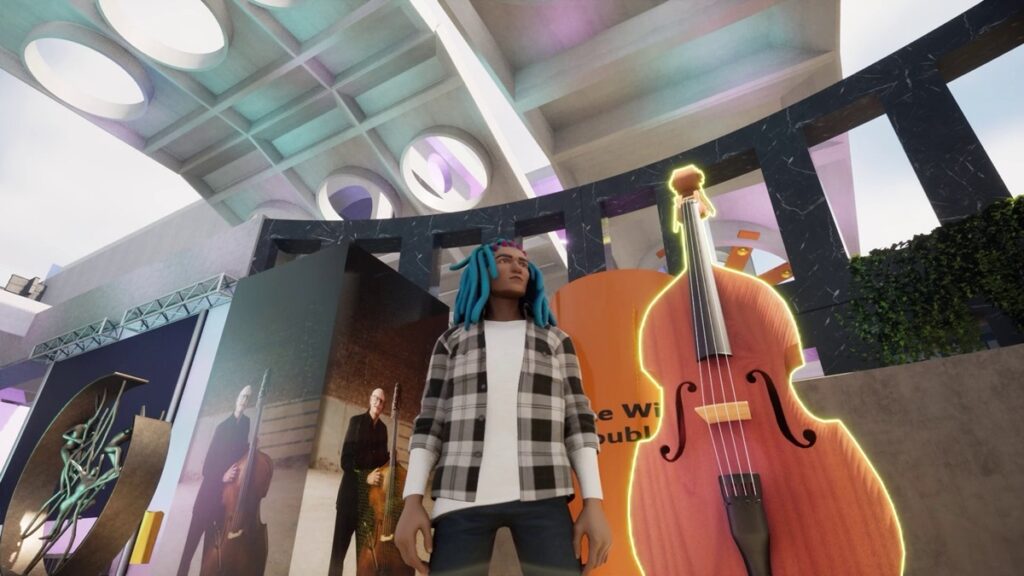
Whitehead said, “We built MSquared Avatars for real production, not just demos. When thousands joined the BBC Philharmonic’s virtual concert via browser-based avatars, it proved we could scale without compromise, something most platforms still can’t do.”
MSquared Atlas: A foundation for trusted content and interoperable worlds
As the open metaverse continues to take shape, digital assets and user and AI generated content are becoming its creative lifeblood. But with that creative explosion comes a critical challenge: in a world where users can freely bring items between experiences, how do platforms solve the safety, trust, and performance challenges that result?
- Discovering user-owned assets in an increasingly fractured world with hundreds of platforms and blockchains
- Impacting performance by loading highly unoptimized or incompatible assets – especially AI-generated content
- Bringing in items that are inappropriate for the space
- Bringing in items that infringe on IP
- Reporting and management mechanisms for all of the above
MSquared Atlas addresses this challenge by offering a secure, scalable solution for integrating tokenised content across virtual experiences. While it functions as an asset management tool, Atlas is designed to serve as a foundational layer for a more open and navigable metaverse. Atlas delivers today:
- Cross-chain indexing – Track and manage NFTs from multiple platforms and blockchains in a single trusted view.
- Immutable asset snapshots – Lock in asset metadata at the point of ingestion to prevent post-mint manipulation.
- Multi-tier moderation – Apply ESRB-style classification through AI and human review to meet platform standards.
- Custom enforcement APIs – Define how assets are displayed, gated, or restricted by brand, region, or content type.
- Governance-ready tooling – Resolve issues with built-in takedown processes and IP protection controls.
In the coming phases, Atlas will evolve into a living index of the open metaverse, connecting users, AI agents, creators, experiences, and events into a shared social graph.
Developers can explore a live demo at atlas.msquared.io, where real-time indexing, moderation, and permissioning are live today.
MSquared’s investors include Andreessen Horowitz, SoftBank, Ethereal Ventures, and Mirana.
Origins
Whitehead was one of the cofounders of Improbable alongside CEO Herman Narula. He served as founding CTO and was in that position for a decade as the company applied its distributed operating system software to the game industry. Now the virtual world platform technology has been spun out of Improbable with MSquared, he said.
During the pandemic, Improbable raised a lot of money amid the metaverse hype cycle. Improbable had its own vision for a kind of decentralized metaverse. But they saw the need for something else that didn’t have the greatest name: a meta metaverse.That is, there was a need for infrastructure and technology to tie the virtual worlds together.
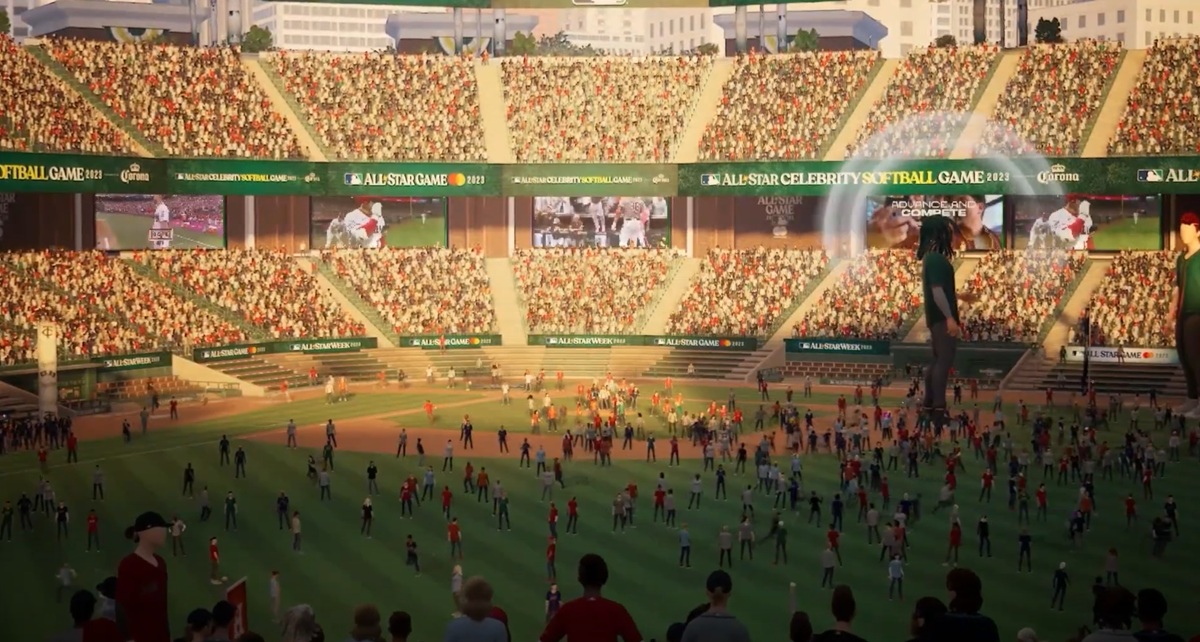
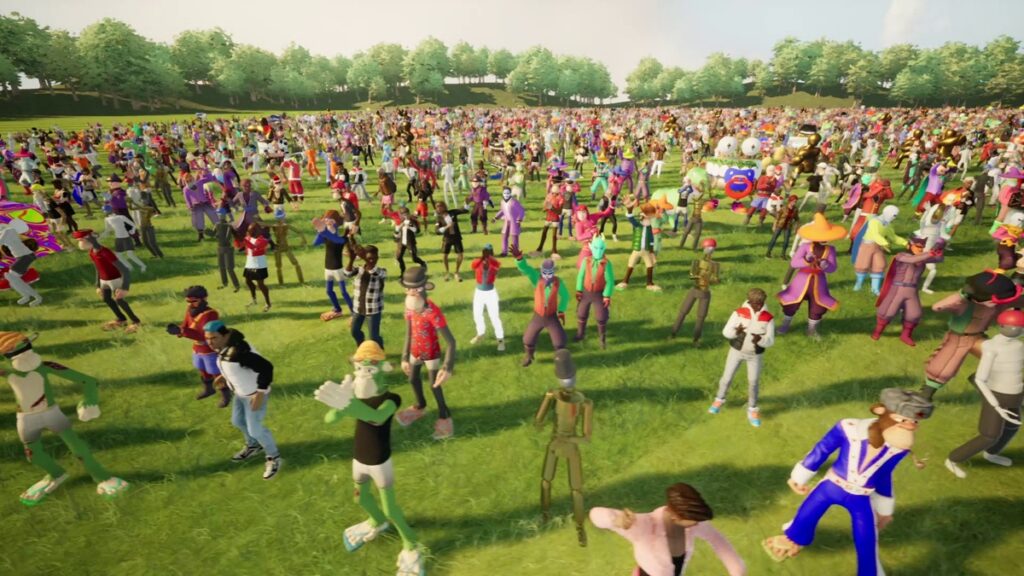
MSquared has been working on that problem for a few years, both inside Improbable and now as MSquared, Whitehead said. It did work for customers like Yuga Labs, creating the OtherSide gatherings of tens of thousands of people in the Bored Ape universe. And it also worked with Major League Baseball on virtual baseball stadium tech.
Of course, Yuga Labs is a big bet on blockchain-based gaming. Yuga Labs raised $900 million on a valuation of around $4 billion on the hopes of building out its OtherSide spaces in the Bored Ape universe. But its tokens have lost considerable value since debuting in 2022.
Regarding that, MSquared said,” Otherside is a major project and a great example of what’s possible with our infrastructure but MSquared isn’t dependent on any single launch. We’re already working with a broad range of partners from major media and automotive brands to gaming startups, showing healthy, growing demand across sectors. That diversity is intentional as we scale and it’s what makes us confident in the platform’s long-term value.”
The company is also working with a lot of metaverse virtual world creator studios, including multiple startups. It has tried to solve the problem of high density, or putting lots of players in the same virtual space, and turn it more into a full self-service platform. The company has validated it and is bringing it to the market.
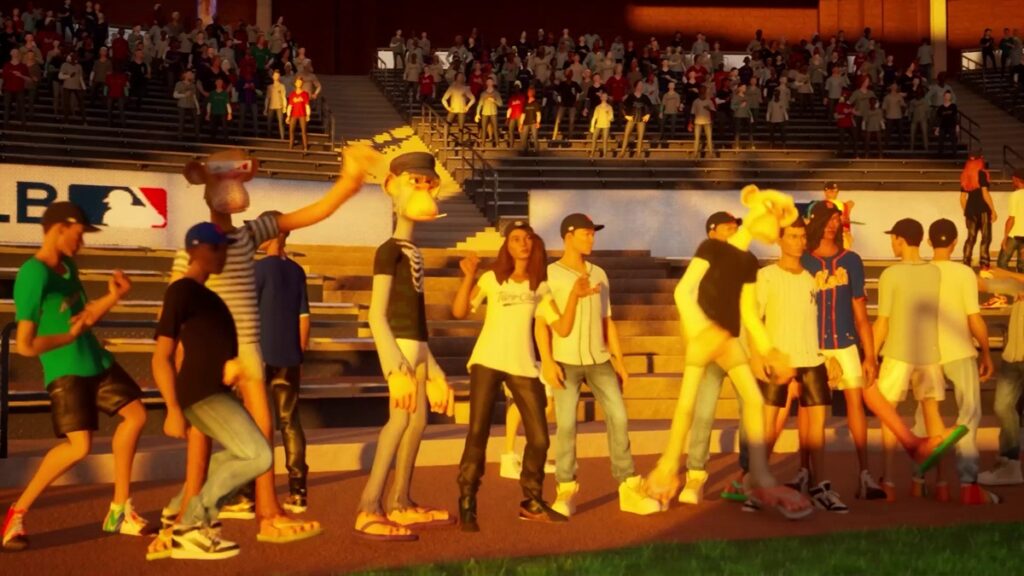
“With games today, you might have millions of players at the same time, but those players are actually quite siloed,” Whitehead said. “As you add players into a game world quickly, the amount of data you have to send snowballs and you have to build specialized systems to handle that amount of workload.”
He added, “If you have a game with 100 players inside of it, and then you want to scale that up to a game with 10,000 players inside of it, that’s not 100 times more complex to do. It’s actually 10,000 times more complex to do. So what started as a promising technical demonstration turned into an actual gameplay experience unlike anything any of us have been in before.”
MSquared was one of Improbable’s different projects. The other projects at Improbable include AI transformation, warehouse automation, blockchain (in a project called Somnia) and building virtual worlds for people.
“We’ve raised a lot of money over the years, and we’ve learned the pros and cons of ways of working,” Whitehead said.
Now Improbable is serving as a build, with central services like legal, finance, HR and other elements needed for a scalable business. It owned a variety of independent ventures with core technology and different market opportunities. Now Improbable has restructured itself, spinning out game studios to Keywords and MSquared is the latest spinout.
Spun up in 2022, MSquared was kind of like Amazon Web Services for virtual worlds. Now it’s able to execute its own vision, which is still synergistic with other things that Improbable is doing, Whitehead said.
“But MSquared has its own culture, its own mission. It has its own agency to go and do this,” White head said.
The team has about 43 people, most of the in engineering. They’re building rendering, networking, audio, platform, interoperability, standards, blockchain and other technologies.
“The big movement for us in 2025 is going fully to market,” Whitehead said. “We’re going from working with internal partners and customers to this being something that anybody can sign up and use.”
I asked Whitehead what he thought about the metaverse skepticism that has emerged since the pandemic lifted and since Meta co-opted the “metaverse” name that science fiction author Neal Stephenson created in his novel Snow Crash in 1992.
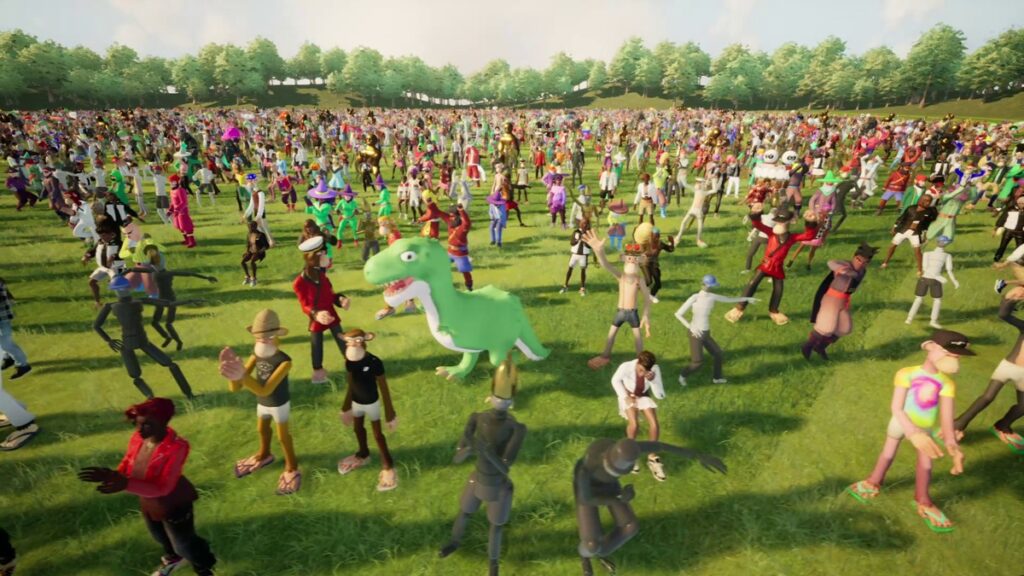
Whitehead noted that the tech has evolved. The core Morpheus technology in the 2020s was responsible for the breakthrough in density — getting more than 10,000 players into the same virtual space. But MSquared has had to rewrite the rendering stack so that every single one of the various 20,000 or so characters is now unique. It also had to rewrite the audio networking stack so people could hear people near them.
“Those core engine technologies are really hard and stable. We barely touch them,” he said. “The things we work on are more of the wrapping — the development tool and platform that powers it.”
The company has been working to get the tech into a place where it can be self-service so those in unique use cases can make use of it.
“The thing that really showcases the technology the best is these spectacle, high density, high-concurrency events,” he said.
This summer, MSquared will help Yuga Labs launch its persistent virtual world OtherSide this summer. It will have a lot of content ready for players, he said. It hasn’t launched yet as Yuga Labs is addressing how it can make the content fun and engaging all the time.
MSquared’s big responsibility is to make sure the OtherSide tech works without a hiccup. And other things are in the works too.
“We’ve got a lot of event based virtual worlds, but having our first persistent worlds coming online really starts to make it feel more like a connected metaverse, rather than just a series of activations the,” Whitehead said. “Another area we are talking about is around, like, the asset network and interoperability.”
Metaverse technology for self-service virtual worlds from small teams
One of the things that will differentiate MSquared are the virtual worlds and building on top of them. He noted many developers are choosing between developing for Unreal Editor for Fortnite and Roblox. But those developers have to abide by the rules of those platform owners. Going off on your own in a do-it-yourself effort can be very expensive.
“The tech we build now is a development platform that allows these very small teams to build their own virtual worlds and publish them,” Whitehead said. “Beyond even the scale is the fact that we have these really small teams able to build their own stuff. And they can do it, not within the walled gardens of UEFN and Roblox. They get to do it in a way where they own their users. They can have their own economics. If they want to be Web3, they can be Web3. If they want to be Web2, they can be Web2. And it’s allowing them to have their own virtual world, just like they have their own website.”
And these worlds will have interoperability.
“Any virtual item which isn’t locked in one virtual world can be used in the other, like a portable Steam inventory or a portable Steam workshop,” Whitehead said. “This is really important in this day and age of, you know, super-constrained budgets for development.”
The Sniper and the Metaverse problem
Some years ago, Tim Sweeney raised the problem of the “sniper and the metaverse.” Online game worlds of the past were carved up into servers that could each handle a certain number of users. When the number of users grew, the number of servers multiplied. But if the terrain was built in a way where players in one server were in combat with players in another server, the technology broke down. Delays occurred as players crossed server borders. So a sniper on top of a mountain in one server might take a shot at a player on the plain and try to send that bullet across servers.
To solve this tech problem, game developers just shied away from allowing snipers to get up on tall mountains in such games. Improbable and MSquared addressed this problem by creating tech that could render a single virtual world that wasn’t split up by servers. Rather, you could see every single player in the world at the same time if you wanted.
“A lot of the challenge of large-scale online worlds is that they make it so it works at large scale, but it doesn’t work in density,” Whitehead said.
He recalled how Second Life, the virtual world that launched in 2004, had celebrities show up in its world but the tech couldn’t accommodate more than 50 people in one space. Whitehead approach this problem by figuring out how to make as many people fit in the same spot in a world at the same time. He tried to work backwards from that challenge.
He tried to build rendering, networking and audio towards that kind of system while intelligently adapting the level of detail visible so that it would work in high density.
“You don’t have to load 10,000 models. You’re just loading fractions of geometry far away,” he said. “The client is able to on a 100 millisecond to 100 millisecond basis decide what it is interested in. What’s high priority, what’s low priority. And then from that, we’re streaming in on demand the networking fidelity and all these different pieces.”
The image keeps enriching something that’s already there when you zero in on something. With this kind of tech, MSquared envisioned how it could make such tech available, like having 10,000 bots running around in Minecraft.
“It’s because we’re able to intelligently scale up and down the fidelity of things,” Whitehead said. “We can do that so quickly, even if you’re moving around with a gun. You’re able to do that with thousands of people in a battle.”
Much of this kind of processing happens on the CPU, the central processing unit from companies like Intel, AMD and Arm, rather than on the GPU (graphics processing unit) from companies like Nvidia, AMD and Intel.
“If I’m loading a 3D model from the internet — which is what virtual worlds are all about, right? — it’s all about dynamic content being loaded in that’s being decoded and it’s being decompressed on the CPU as well. So a lot of the things that are critical path and actually visualizing the world, you’ve got this really slow CPU trying to figure things out, and then uploading to the GPU. What we built is a full GPU pipeline for everything. So even the geometry coming in from the cloud is being decompressed on the GPU, the animations being played in the entire state machine.”
He added, “We wrote a compiler that compiles the the Unreal animation system to the GPU as well. So for us, it’s been about sort of getting rid of the CPU dependency and leaning way more into GPU compute to achieve some of these things.”
The role of AI
Then there’s AI.
“We’ve also been leveraging a bunch of machine-learning approaches to how this is possible. So the world itself uses bandwidth compression technology, which is based on machine-learning approaches, and then even the geometry getting streamed from the cloud is also machine-learning compressed because there’s a lot of predictability in the data that doesn’t normally get compressed,” he said.
Then I asked what effect generative AI has had. One of the open standards that MSquared/Improbable created was the metaverse markup language, he said.
“If you think about interoperability, which was obviously a very hyped word a couple of years ago, it never really transpired to what it could be like.
“We never saw it,” he said. “However, the most successful interoperability project in human history, from a tech perspective, is HTML on the web. We (collectively) defined a bunch of elements where, on any device, on any browser, you can interpret the world in a common way. And we thought, ‘why aren’t we using the same thing within virtual worlds?'”
To tackle this, Sweeney and Epic Games launched their Verse programming language. MSquared opted for something more simple with its asset management tools. With things like images, videos and, characters in the world, each one of these things you can think of as visiting a 3D website that’s embedded within the space. But with the metaverse markup language, MSQuared created implementations of it for Unreal Engine, Unity, the web, and you can even interact with multiple engines at the same time.
That allowed it to create things with MML like a fully working Game Boy emulator running in Unreal.
“It’s almost like a synchronized web page,” he said, as he showed a demo of it.
“We’re seeing metaverse markup language as the ultimate GenAI (generative AI) ‘vibe coding’ (automated AI programming) way to build content once and have it run in different virtual worlds,” Whitehead said.
Whitehead noted that GenAI works better if it has more training data. He said the team found that large language models (LLMs) “completely understand this format.”
“We’ve had examples of just going and saying, ‘Hey, make me a traffic light.’ And then it just builds a traffic light out of the pieces,” Whitehead said. “So the lights change based upon this sequence, and it’ll write the JavaScript to go and script it. And now you have this portable object that isn’t just visualization. It’s also logic that you can take from place to
place.”
Given this technology, MSquared’s strategy is to go to the creator economy and give people the tools to build their own virtual worlds and the items that populate them, knowing full well that GenAI is going to be able to make a lot of the “last mile” things in a world. That is, AI is going to convert a lot of things to the right format just in time.
“You’re going to want to create a particular character for a world you can bring from place to place. Gen AI is going to harmonize all those different things and make it look photorealistic, even if the individual assets don’t necessarily get together. It’s going to be really interesting.”
“For us, MSquared is kind of like this like Amazon Web Services of virtual worlds. We’re trying to build the base plumbing that’s going to make this be possible. So it’s handling the idea of like defining an object in a way which is invariant to whether it’s in Unity, Unreal through Javascript or some new vibe-coded engine that someone might make in the future,” Whitehead said. “nd it’s handling the ownership and provenance of that between different environments, and it’s creating tools so that people can build these different pieces of the experience.”
In summary, Whitehead said Improbable helps the company run day to day, and operates as a venture builder.
“They provide us a lot of services to help us go and function. But we’re our own group, or own culture, our own team, pursuing things for our company in terms of how it’s structured. You’re going to see more things of this shape coming out over the next couple of years as well. This is increasingly how they’re starting to work, where they incubate, partner with early stage ventures and bring them into the fold, or incept ventures themselves, where they have their own central R&D function, looking at a bunch of different areas, like high-performance blockchains, generative AI, a bunch of really cool stuff.”