
Jest, the texting-powered app store, announced it has crossed a $1 million gross billings run rate in three months since enabling in-app purchases on the platform.
To capitalize on this growth, Jest is launching Fund II, offering up to $1 million in funding for mobile games and entertainment apps leveraging texting as a primary distribution channel.
“AI made building software easy. Distributing it is the real challenge,” said Deyan Vitanov, CEO of Jest, in a statement. “Traditional app stores are completely saturated. We built Jest to unlock a new distribution channel based on texting and our rapid growth proves how badly developers need an alternative to legacy stores.”
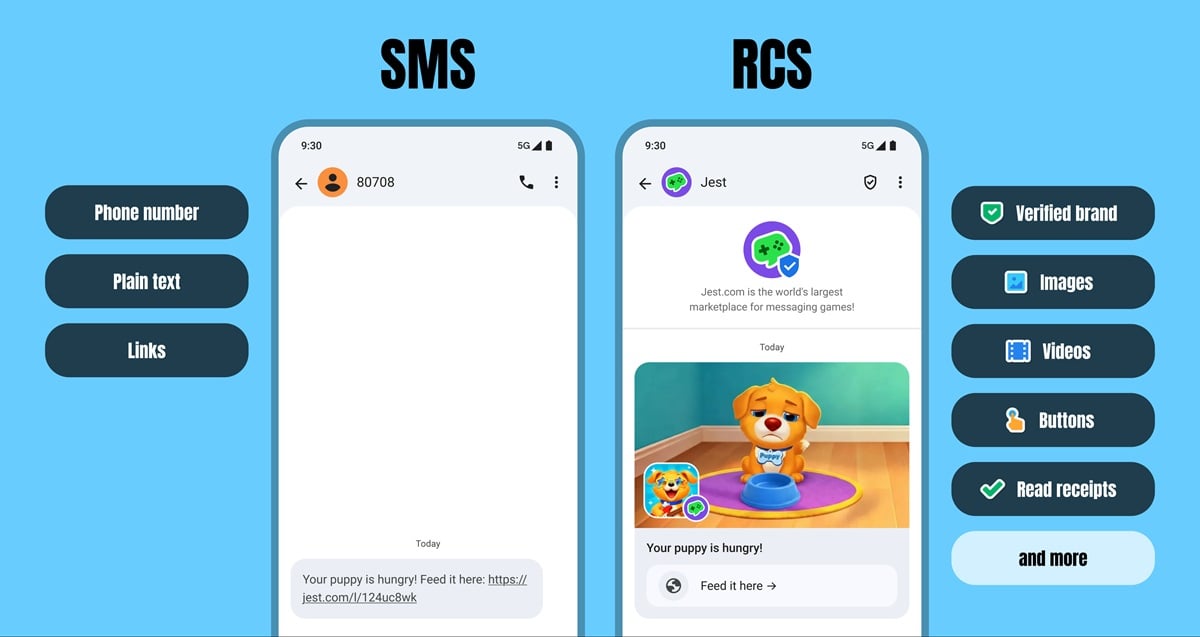
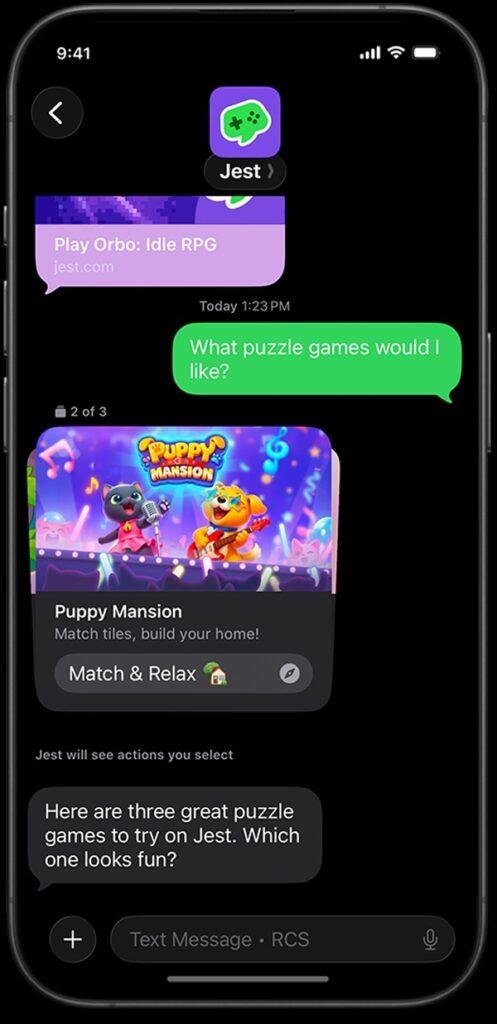
He said Jest is built on RCS (Rich Communication Services), the modern, carrier‑level upgrade to SMS/MMS — essentially “next‑generation text messaging” built directly into your phone’s default Messages app. It adds features people normally associate with iMessage, WhatsApp, or Messenger.
RCS is an open GSMA standard designed to replace SMS/MMS. It runs inside the phone’s built‑in messaging app (Google Messages on Android, Messages on iPhone since iOS 18). It uses mobile data or Wi‑Fi, not the old SMS channel.
Vitanov said in an exclusive interview with GamesBeat that there are three milestones here. The company has a million-dollar run rate, which it hit in less than three months after starting monetization. It also has a deep report about the state of Jest, and it has launched Fund II to offer growth funding for the ecosystem.
The Jest ecosystem is rapidly building momentum. In its newly released State of Jest Q3 report, the company details how leveraging the ubiquitous RCS standard makes Jest the premier surface for launching mobile games and entertainment apps. Findings reveal:
- Strong Monetization: Jest boasts a 15% payer conversion rate among active US users, outperforming standard mobile app benchmarks by nearly five times.
- Deep Engagement: Tripled average daily time spent on platform since Q2 to 24 minutes per user, proving strong daily habit formation and retention via messaging.
- Accelerating Adoption: Scaled usage by 400%, jumping from 1 million to over 4 million total apps and games played.
To fuel this momentum, Jest is launching Fund II, providing up to $1 million in growth funding for entertainment apps and games that join the platform. Its debut fund received over 200 applications earlier this year, accepted under 10%, and grew the active catalog from 30 to 60 titles.
“We expect people come for the app and stay for the platform,” said Vitanov.

Fund II is designed to back developers across three stages from concept to scale:
- Explore: Dedicated to early validation, rapid prototyping, and experimental concepts to test what resonates with audiences.
- Scale: Allocated for promising apps and games to deepen platform testing on their path to becoming flagships.
- Flagship: Reserved for breakout successes, established franchises, and high-performing titles ready to grow.
“The Jest Fund gave Orbo the early distribution rocket fuel we needed,” said Efe Kucuk, head of Gaming at Trilitech, in a statement. “The Jest platform offers better economics than the legacy mobile app stores, higher engagement, and a team that actually supports developers. We’ve shipped a lot of games through numerous channels and this is the first platform where the deal favours the developer. Jest provided the exact capital and support to take our game from early concept to a runaway hit.”
Beyond direct capital, Jest offers industry-leading economics where developers retain up to 90% of net revenue while Jest covers all of the messaging fees. The platform provides complete infrastructure out of the box—from payments and notifications to authentication and compliance—allowing developers to adapt existing web or mobile apps and go to market in days.
Developers interested in applying for funding or publishing on Jest can visit about.jest.com/fund or explore the developer documentation at docs.jest.com.
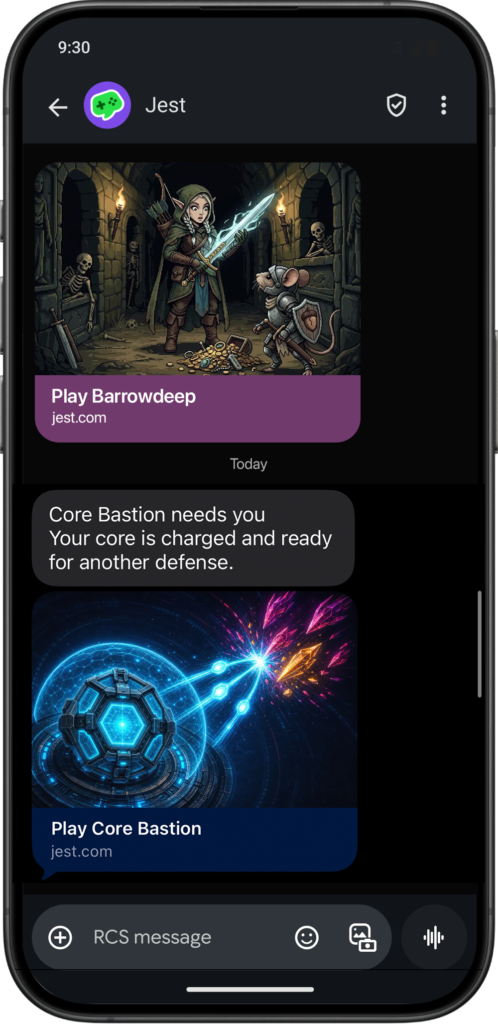
Vitanov founded Jest in 2025 as is the texting-powered app store. Built on RCS—the universal messaging standard native to iOS and Android—the platform transforms the messaging inbox into an instant distribution engine for apps and games. As a developer-first alternative to traditional app stores, Jest offers developers up to 90% revenue share with zero messaging costs.
Origins
Vitanov was previously the chief marketing officer of a company called Playco. That was an instant gaming platform and it’s still around. There, he saw firsthand the power of messaging because that’s a lot of what the firm did. He also worked with Facebbook Messenger, Line (the popular Japanese messenger, many others.
“And then when RCS came out, this new standard, I thought it was a once in a lifetime opportunity to build, you know, a new frontier, a new paradigm around texting, and I started the company about a year and a half ago,” Vitanov said.
I asked what made RCS, the successor to text message, special in terms of its significance. While WhatsApp is an app, RCS is a protocol that is live on Android and iOS. RCS, as a protocol, been in development for like a decade. But late last year, Apple decided to add support for it in their iOS operating system, and the differences have to do with bringing texting to the modern age.
And what is the idea here?
“We’re a marketplace. What that means is that we always start with a developer. We have had honestly an easy time talking to developers, and I think you know this already that gaming in general, and that includes mobile gaming, is a bit of a rough spot. I think a lot of people are talking about things like, for example, layoffs, about the lack of growth, the lack of opportunity, Insid
To developers, Vitanov said, “Our pitch for developers is don’t do the app store grind. Come test with us. It’s a brand new frontier. It’s a new paradigm around texting, and it works amazingly well. Give us your apps, and we’ll see if they work.”
He added, “All we need is a web-based build where you replace the app store key components with the SDK that we provide. So, for example, push notifications get replaced with messages. Integrated App Store payments get replaced with digital wallets. Instead of a mobile app like that you download, you ship a web app that you that you just you know instantly play on on in the browser. So it’s a very easy transition for most developers.”
Turning on monetization
“And then what we see is that consumers love this paradigm just because there’s no downloads, there’s no waiting, there’s no clutter, there’s no storage space,” Vitanov said. “You just click on the link and play. And because messaging is so sticky, we see incredible retention and engagement. We see because of digital ads, great monetization. We are at 15% conversion rate to to payers.”
The app has been in a soft launch since July 1.
“For us, it’s very complicated. We’re not a game. We’re not a content maker. We’re a platform, and what that means is that we have to have an SDK that allows developer to integrate payments and to accept payments and to properly process them,” Vitanov said.
Regarding payment, And then the payout.
“So in the Jest model, up to 90% of net revenue goes to developers, and we need to be able to accept the payment on behalf of a game, have the game process it, and then ultimately,
The app is only live in the U.S.
“In terms of the telecom infrastructure, the RCS bit and and the payments, it is set up only for the United States. We we do want to expand, and we we’re close, but you know haven’t gotten quite around to it,” Vitanov said.
“We expect that people come for an app and stay for the platform. And what that means is that you can be the only app on the platform and still acquire users and and monetize,” Vitanov said.
The typical monetization for Jest is exactly like in the app store. What that means is that developers decide on monetization. It’s their app, their game. They choose obviously the meta game and and what you charge consumers for typically there’s a virtual currency, he said.
“All the games are free to play, so people don’t have to, but if they decide to pay, they initiate a checkout. During checkout, we take over. We complete the checkout, preserving security, privacy, all these other good stuff. And then we tell the app, hey, this consumer has paid. You should credit them the right number of gems,” he said. “We take this payment, and then we obviously do a revenue split. We take 10% and we obviously do the rest, or allocate the rest, I should say, to the developers.”
As far as like the the biggest games or game companies go, midcore games are doing very well.